

Namaste Incense: A Complete Guide for Buyers and Resellers
You might be holding a box of incense because you want the room to smell calmer, or because you've seen Namaste on a label and wondered whether it means something more than a marketing word. That question is reasonable. Incense carries scent, ritual, culture, and practical tradeoffs all at once, so the useful answer has to cover both the experience and the facts behind it.
Table of Contents
What Makes Namaste Incense Meaningful Today - Why the name changes expectations
Understanding Typical Scent Profiles and Ingredients - Reading the scent before you buy
How to Light, Burn, and Care for Namaste Incense - A reliable burn routine
Safety, Air Quality, and Smarter Indoor Use - What the smoke actually contains - Smarter ways to reduce exposure
Using Namaste Incense in Meditation, Spa, and Retail Settings - Three settings, three priorities - A simple buyer test
Wholesale and Reseller Guidance for Namaste Incense - What to compare before you place an order - Retail versus wholesale thinking
Common Questions About Namaste Incense Explained - Is Namaste incense okay for small indoor spaces - Does heavier smoke mean better quality - Are eco-certified or low-smoke sticks worth it - How should incense be stored - What should a careful buyer check first
What Makes Namaste Incense Meaningful Today
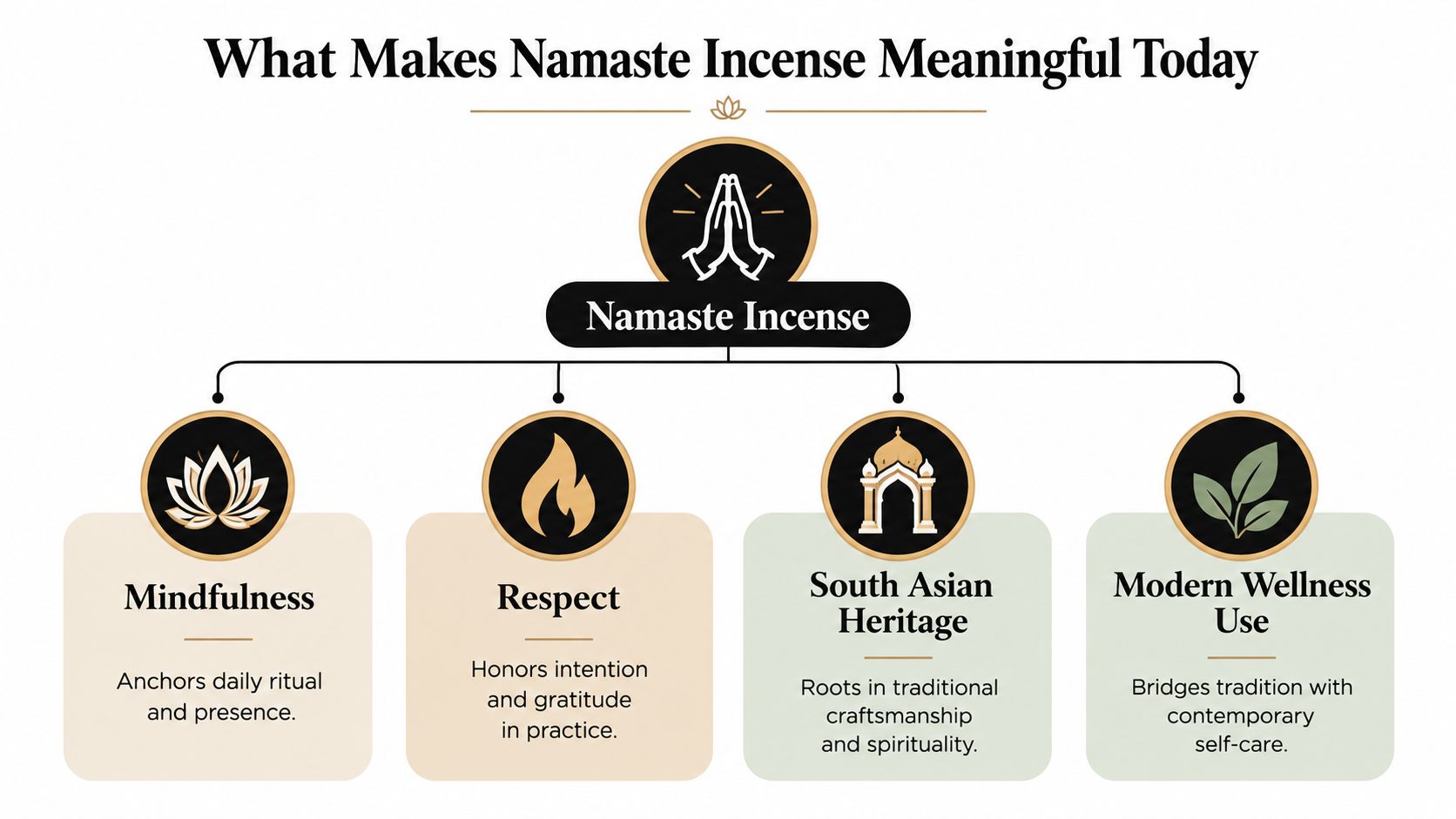
A stick of Namaste incense can seem ordinary until you notice what the name asks buyers to expect. In everyday use, Namaste signals mindfulness, respect, and a spiritual tone that many shoppers connect with South Asian practice, especially in meditation and devotional settings. That framing changes the experience before the box is even opened.
Why the name changes expectations
The word helps turn a fragrance purchase into part of a ritual. That matters in yoga rooms, home altars, spa menus, and gift shops, where customers often want products that fit calm, gratitude, or reflection. For a wider cultural context, Aroma Warehouse's guide to the cultural significance of incense in various religions is a useful companion read.
Market demand also helps explain why the label shows up so often. One overview places the global incense market at more than USD 3.69 billion in 2024 and projects it to exceed USD 5.51 billion by 2030. That kind of scale suggests ongoing demand, not a tiny niche, which is why mindful branding appears in wellness boutiques and larger online marketplaces alike.
Practical rule: if the label emphasizes serenity, heritage, or meditation, buyers usually expect a calmer ritual experience, not just a pleasant smell.
Modern wellness language also shapes how people read the product. A name like Namaste can make a stick feel more suitable for slow mornings, breathwork, or quiet evening routines, which helps it stand out on crowded shelves and in search results. The name does not create quality by itself, but it does shape the story customers think they are buying into.
Understanding Typical Scent Profiles and Ingredients
Most shoppers ask about scent first, then ingredients second, but the two are tied together. A Namaste incense blend often leans into familiar wellness-friendly profiles such as sandalwood, lavender, nag champa, and soft herbal mixes. Those notes are popular because they read as gentle, recognizable, and easy to place in a room without overwhelming it.
Reading the scent before you buy
The safest way to judge a product is to separate fragrance language from actual formulation. A name like “calming” or “meditative” doesn't tell you what the stick will smell like in the air. A description that names the dominant notes gives you more to work with, especially if you already know whether you prefer dry woods, florals, resinous sweetness, or green herbal edges.
For a good parallel on how scent descriptions work in adjacent categories, the Jackpot Candles fragrance guide is helpful because it explains how top, heart, and base impressions shape the user's experience. The same logic applies here, even though incense behaves differently from candles.
Stronger scent isn't always better. In incense, a dense fragrance profile can feel rich in a large room and cloying in a small one.
Product descriptions also help you match the stick to the setting. Sandalwood often suits quiet routines because it reads grounded and smooth. Lavender usually fits rest and wind-down moments. Nag champa tends to be richer and more familiar to people who already use incense regularly. Herbal blends can feel brighter and less sweet, which some users prefer for daytime spaces.
If you're comparing stock, Aroma Warehouse's patchouli and amber overview is useful for understanding how deeper base notes behave in aromatic products. That kind of reading helps resellers choose inventory with intent instead of guessing from packaging alone.
How to Light, Burn, and Care for Namaste Incense
Lighting incense seems easy until the stick keeps going out, burns unevenly, or drops ash on the table. The fix is usually simple. A steady burn starts with the right holder, enough airflow, and a little patience at the tip.
A reliable burn routine
Open a window or create light airflow before lighting. Hold a flame to the tip until it catches, then let the flame die and leave the ember glowing. Place the stick in a stable, heat-safe holder so the ash can fall cleanly instead of scattering across furniture.
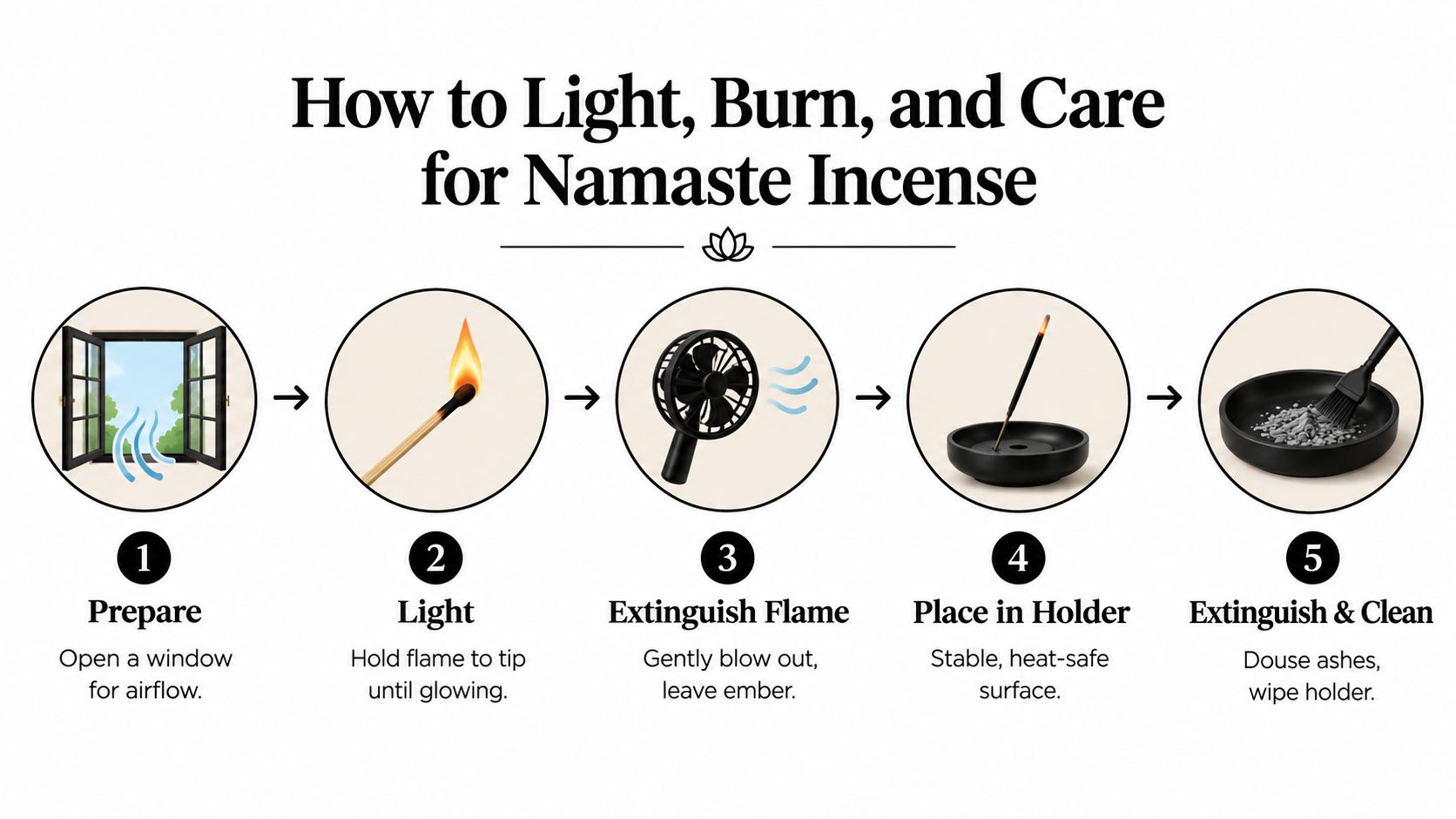
A drafty room can make the ember race faster than you want, while a completely closed space can make the scent feel heavy. If the stick goes out early, relight the tip rather than holding the flame too long. If the ash breaks unevenly, the holder may be tilted or the room may have too much movement.
The embedded video below is a practical companion if you prefer to watch the process once before trying it yourself.
Keep it simple: good incense care is mostly about stability, airflow, and a clean burn surface.
For troubleshooting, Aroma Warehouse's guide to incense stick burning problems is a useful reference. The main habit to remember is this, don't smother the ember, don't use a flimsy surface, and don't leave ash buildup where it can interfere with the next burn.
Safety, Air Quality, and Smarter Indoor Use
People often buy incense for calm, then worry later about what the smoke is doing indoors. That concern is valid. Burning incense releases particulate matter and gases, and the material itself matters less than many wellness pages imply.
What the smoke actually contains
A review of incense emissions reports combustion can release CO, CO2, NO2, SO2, VOCs, aldehydes, and PAHs, and it notes incense burning can generate more than 45 mg/g of particulates burned, compared with about 10 mg/g for cigarettes (PMCID review). That doesn't mean every stick is the same, but it does mean smoke is a real indoor exposure, not just a scent cloud.
Independent measurements also show that design affects output. A review reports smoke release of about 7.760±4.724 mg/m3 for disc incense, 3.122±0.866 mg/m3 for liquid, and 1.192±4.724 mg/m3 for mat formats, while a 2024 analysis found incense pyrolysis VOCs in the range of 840 to 2,900 μg per stick (PMCID review). In plain language, the product form and burn conditions change how much you breathe in.
Smarter ways to reduce exposure
The most useful precautions are practical, not dramatic. Burn in a ventilated room, keep sessions brief, and avoid heavy use in small enclosed spaces. If someone in the home has asthma, allergies, or sensitivity to smoke, the safest choice is to limit exposure or skip indoor burning altogether. Aroma Warehouse's incense safety guide is a solid starting point for household precautions.
Practical rule: treat incense like a ritual accent, not background air treatment that runs for hours.
Wellness marketing often calls products “low smoke” or “non-toxic,” but those phrases don't replace evidence. The better question is whether the product uses cleaner materials, how it burns, and how much smoke it produces in your room. If indoor air quality matters to you, the best habit is modest use, good airflow, and honest expectations.
Using Namaste Incense in Meditation, Spa, and Retail Settings
A meditation user, a spa manager, and a gift shop buyer all want different things from the same stick. The home user may want a scent that marks the start of a sitting practice. A spa may want a background aroma that doesn't dominate treatment rooms. A retailer may want a product that looks meaningful on the shelf and sells consistently.
Three settings, three priorities
In meditation, Namaste incense works best when the scent is steady and recognizable. People often use it as a cue, lighting it at the same time each day so the room begins to feel like a practice space. That predictability matters more than intensity.
In spa and wellness spaces, the goal is usually atmosphere. A soft sandalwood or herbal note can support relaxation without overwhelming massage oils, lotions, or other fragrances already in the room. Staff usually do better with short burns between appointments than with continuous smoke.
Retail and gift settings are different again. Here, the product has to communicate quickly. Packaging, naming, and scent family all matter because the buyer is deciding in seconds whether the stick fits a personal ritual, a gift, or a studio use case. For stores that want incense alongside burners, holders, and other aromatic accessories, Aroma Warehouse fits that kind of assortment naturally.
A simple buyer test
If you're choosing stock or trying a new blend, ask three questions.
Who is it for? Home meditation users want calm, while gift buyers often want familiarity.
Where will it burn? Small rooms need lighter profiles, while larger spaces can handle deeper scent.
How will it be used? A single session before yoga class calls for a different burn style than a long evening ritual.
That kind of matching keeps the product useful instead of decorative. It also helps resellers avoid stocking scents that are lovely in theory but awkward in actual rooms.
Wholesale and Reseller Guidance for Namaste Incense
A shop can sell a single box to a home user on scent alone. A reseller has to think about repeatability, margins, packaging, and whether the line fits the people already buying from that store.
What to compare before you place an order
Start with batch consistency. If one lot smells balanced and the next turns smoky or thin, returns and complaints arrive fast. Then check packaging, because display-ready boxes serve a different job than bulk packs meant for repackaging.
For studios, gift shops, botanicas, or ecommerce sellers, repeatable stock matters more than novelty. Aroma Warehouse's wholesale incense sticks guide helps frame sourcing, bulk buying, and assortment planning. The practical question is simple. Does the line give you enough range without leaving slow-moving inventory on the shelf?
Market structure matters too. Industry coverage describes incense as splitting between a low-margin commodity segment and a premium segment shaped by ingredient claims and experience-led branding. Another report says the U.S. depends heavily on imports, with supply from India, China, and Vietnam making up an estimated 80 to 90% of volume by 2026. For resellers, that points to two pressure points, supply consistency and product positioning both shape margin.
Retail versus wholesale thinking
Retail buyers ask whether they like the scent. Wholesale buyers ask whether their customers will reorder it. Those are different tests.
If your audience is wellness-focused, a Namaste incense line with clear scent notes and thoughtful branding can fit better than a generic mixed box. If your audience wants price-first commodity stock, the decision changes. A plain, low-cost line may move faster, even if it says less about the store.
Private label can help when a shop wants its own voice, but only if the product stays stable from one replenishment to the next. Ask for material details, packaging options, and the vendor's replenishment rhythm before you commit. That keeps the purchase grounded in what the shelf can actually support, not just what sounds appealing in a catalog.
Common Questions About Namaste Incense Explained
People usually ask the same questions once the scent description is no longer enough. They want to know whether the product works in small rooms, whether smoke level means anything useful, and whether eco claims are worth paying for. Those are the right questions, because they connect enjoyment with how the stick behaves indoors.
Is Namaste incense okay for small indoor spaces
Yes, with limits. Small rooms need shorter sessions and better airflow, because smoke builds faster than many buyers expect. A lightly ventilated bedroom or office can handle a brief burn more comfortably than a sealed bathroom or closet-like room.
Does heavier smoke mean better quality
No. Heavier smoke can point to a denser burn, a stronger fragrance load, or a stick that suits a larger space better. The more useful signs are whether the scent feels balanced, the ash falls cleanly, and the burn stays even from end to end.
Are eco-certified or low-smoke sticks worth it
Often, yes, if indoor air and material sourcing matter to you. Recent market data shows 53% of consumers now prioritize eco-certified or vegan-certified incense, and nearly 48% prefer sticks with biodegradable bamboo cores, per the industry report. The same report also notes that charcoal-based incense production fell 35% from 2022 to 2024. Those figures suggest the label is not just decoration, but the claim still needs to match the materials and the burn.
How should incense be stored
Keep it dry, closed, and away from strong competing odors. Fragrance fades faster when sticks sit open to humidity or pantry smells, so a sealed container works better than loose shelf storage. That matters whether you are buying for home use or holding inventory for resale.
What should a careful buyer check first
Start with the use case. Ask whether the stick is meant for ritual ambiance, daily meditation, gifting, or retail display. Then check the scent family, burn behavior, and material claims against the room where it will be used. Clear answers make the purchase easier to trust, the way a product label becomes more useful once you know what the space can actually handle.
Aroma Warehouse supplies incense sticks, burners, and wholesale options that fit meditation rooms, gift shelves, and resale inventory without guesswork. If you are comparing Namaste incense styles or building a broader aromatic assortment, visit Aroma Warehouse to review the current selection and source products that match your space, your customers, and your burn routine.


