

Wholesale Incense Sticks Buyer's Guide: How to Choose Quality Bulk Incense for Retailers 2026

You're probably in one of two spots right now. Either you already sell candles, crystals, bath products, soaps, or tea and you keep hearing customers ask, “Do you carry incense?” Or you've found a supplier list, opened three browser tabs, and realized that incense all looks similar until you start comparing ingredients, scent quality, order minimums, and packaging.
That's where many new buyers get stuck. A bundle of incense sticks can look simple, but the buying decision isn't. One box might smell strong on day one and fade in storage. Another might burn unevenly because the binder mix is off. A third might be cheap enough to tempt you into a large order, then sit on your shelf long enough to lose the fresh aroma customers expect.
The hidden issue is what I call the Scent Shelf-Life Paradox. Incense can remain physically usable long after its fragrance has started to flatten. If you buy too much, store it badly, or mix strong and delicate scents together, you can end up holding inventory that still burns but no longer sells well.
Table of Contents
Understanding Incense Types and Materials - Three common stick styles - What to ask about ingredients
How to Assess Incense Quality and Potency - What to inspect before you burn a sample - What the burn tells you
Navigating Wholesale Pricing and Minimums - How market demand shapes buying confidence - How to think about minimums
A Retailers Guide to Packaging and Storage - Why shelf life is more complicated than it looks - Storage habits that protect fragrance value
Private Label and Repackaging Opportunities - Start with repackaging before custom blending - When private label becomes worth it
Choosing and Working With a US Wholesaler - Why domestic sourcing simplifies risk - Questions worth asking before you place an order
Your Guide to Sourcing Wholesale Incense

A new retailer often starts with scent names. Sandalwood sounds safe. Lavender seems
easy. Nag Champa feels like a must-have. Then the first wholesale catalog lands in your inbox, and the true questions begin. Why are two sandalwood offerings priced so differently? Why does one supplier focus on hand-dipped sticks while another pushes masala? Why does one carton smell vivid and another smell dusty even before you light it?
That confusion is normal. Wholesale incense sticks sit at the intersection of fragrance, manufacturing, storage, and merchandising. If you treat them like a generic gift item, you'll probably overbuy, under-test, and end up discounting old stock. If you treat them like fragrance inventory, you'll make better decisions from the start.

A practical way to begin is to narrow your first buy around customer use cases, not just scent names. A yoga studio might want calming, clean-profile fragrances. A gift shop may need familiar classics and low-risk variety packs. A metaphysical shop may want richer, more traditional blends plus burners and resins.
If you're still building your vendor shortlist, this guide on finding and negotiating with suppliers is useful because it frames sourcing as a relationship, not a one-time transaction. For incense, that matters. You want a supplier who can answer technical questions, not just send a price list.
Practical rule: Your first order should teach you what sells. It shouldn't trap your cash in scents you picked only because the unit price looked attractive.
For a retailer who's still sorting out setup basics, this overview of starting an incense business and buying wholesale is a helpful starting point. Read it with one question in mind: “How quickly can I test, learn, and reorder without getting stuck with stale inventory?”
Understanding Incense Types and Materials
The quickest way to buy smarter is to stop treating all sticks as the same product. They aren't. The construction method changes the scent profile, burn behavior, target customer, and price position.

Three common stick styles
Think of incense the way you'd think of coffee. Some products are built for broad appeal and consistency. Others are chosen for depth, craftsmanship, or ingredient story.
Type | What it usually is | Typical appeal | Common tradeoff |
|---|---|---|---|
Base sticks dipped in fragrance oil | Broad scent range, easy to test many fragrances | Quality depends heavily on oil strength and storage | |
Dark stick base, often paired with perfume oils | Lower-cost, familiar, strong initial throw | May feel less appealing to customers asking for natural ingredients | |
Aromatic powders, resins, herbs, oils rolled onto a bamboo core | Richer, layered scent, often better for specialty retail | Usually costs more and needs clearer explanation at point of sale |
Hand-dipped incense is often the easiest entry point for a new store. You can test recognizable scents without committing to a complex educational sale. Charcoal-based products can also work if your shoppers want strong room fragrance and low price resistance.
Masala incense usually calls for a more informed customer. These buyers often ask what the stick is made from, how it burns, and whether the scent feels earthy, sweet, woody, or resinous rather than just “strong.”
What to ask about ingredients
Ingredient transparency matters more than many wholesalers admit. According to Puckator's incense guide, 70% of global wholesale incense is sourced from India, where production often mixes natural resins with synthetic oils and charcoal binders to lower costs. The same source notes a 25% increase in consumer queries for “non-toxic” and “makko-bark base” incense in the last year.
That tells you something important. Customers are getting more specific, but supplier language often stays vague.
Ask questions like these:
What is the base material? Is the stick charcoal-based, wood-based, or resin-and-powder based?
What is the binder? If a supplier mentions jigat, makko, or plant-based binders, ask them to be specific.
How is fragrance added? Hand-dipped with oils, blended into the dough, or both?
How are “natural” claims defined? Some sellers use that word loosely.
Can scents be grouped by customer preference? Floral, meditative, earthy, bright, traditional.
A useful companion read is this breakdown of the main types of incense, especially if you're trying to decide whether your assortment should stay focused on sticks or expand into other formats later.
If a supplier can describe scent names but can't explain the stick base, binder, or fragrance method, you're buying blind.
How to Assess Incense Quality and Potency
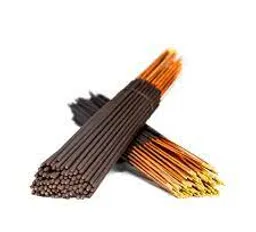
A supplier sample tells you very little if you only smell it through the wrapper. Quality shows up in construction, burn behavior, and how the fragrance carries in an actual room.
The first check is visual. Look at the coating. It should appear even, not patchy or dusty. If the stick looks thin in one area and overloaded in another, don't expect a consistent burn. That inconsistency often becomes a customer complaint long before it becomes a return.
What to inspect before you burn a sample
Set out several sample sticks on a clean surface and compare them side by side.
Coating consistency: A well-made stick should look uniform across the length.
Dryness and handling: It shouldn't feel damp, greasy, or crumbly.
Fragrance in cold throw: Before lighting, the scent should smell clear, not flat or muddy.
Pack integrity: If samples arrive in poor packaging, large orders may age badly in transit or storage.
If you want a quick baseline for what buyers usually look for, this guide to good incense sticks covers the practical signs without relying on marketing language.
What the burn tells you
Manufacturing details matter here. In high-volume production, a hydraulic press with a die plate containing 200 to 300 holes can form many sticks per cycle, which supports uniform density and steadier fragrance release, as shown in this manufacturing demonstration. The same source notes that the mass ratio of natural binders such as jigat or makko powder to aromatic powders affects burn consistency and ash residue.
That sounds technical, but the retail impact is simple. If the ratio is off, the stick may self-extinguish, burn too fast, drop messy ash, or produce a fragrance that feels sharp at first and weak later.
Use a simple burn test:
Light one stick in a small room.
Light the same scent in a larger room on another day.
Note how quickly the aroma becomes noticeable.
Watch whether the ember travels steadily without constant relighting.
Check the ash. Excessive clumping or messy fallout can signal a poor mix.
Burn quality builds repeat sales. Customers rarely say, “The binder ratio was wrong.” They say, “I liked the smell, but it didn't burn well, so I didn't buy it again.”
A final note on potency: test samples after they've sat for a while, not only the day they arrive. Freshly packed stock can impress you. A more stable product still smells like itself after time on your shelf.
Navigating Wholesale Pricing and Minimums
New buyers often focus on the price per pack. Experienced buyers focus on sell-through risk. The cheaper carton isn't always the better buy if it forces you into deep stock on scents your customers haven't proven yet.
The category itself is on solid footing. The global incense sticks market was valued at approximately $2.0 billion in 2024 and is projected to reach $2.6 billion by 2030, with a 4.4% CAGR, according to Research and Markets. The same source values the U.S. market at $541.3 million in 2024. For a retailer, that signals a stable, active product category rather than a passing novelty.
How market demand shapes buying confidence
Steady category demand doesn't mean every scent or format will work in your store. It means your risk management should happen at the SKU level.
A low minimum lets you test. A high minimum can improve your unit cost, but only if the product moves before scent quality fades. This is where many new retailers make a quiet mistake. They buy as if incense has endless shelf life because the sticks still look fine months later.
Use a buying lens like this:
Buying scenario | What it sounds like | What it often means |
|---|---|---|
Low MOQ, higher unit cost | “I'm paying more” | You're buying information and flexibility |
High MOQ, lower unit cost | “I'm saving money” | You may be buying slow-moving stock and storage risk |
Mixed-case ordering | “The pricing is less simple” | You're reducing guesswork across multiple scents |
How to think about minimums
Ask each supplier four direct questions:
Can I mix scents to reach the wholesale threshold? This matters more than the headline carton price.
Are there quantity breaks by scent or by total order? The answer affects assortment planning.
What arrives ready for retail, and what needs repacking? Labor is part of your true cost.
How quickly can I reorder proven winners? Fast replenishment can be more valuable than the lowest possible unit price.
A healthy first order usually favors breadth over depth. You're looking for signals from customers, not trying to “win” on unit cost on day one.
If a supplier offers wholesale access without forcing a complicated setup, that can help small retailers preserve cash while testing category fit.
A Retailers Guide to Packaging and Storage
Most retailers learn storage the hard way. The box looks fine. The sticks still burn. But the scent that sold well at arrival now smells dull, thin, or strangely blended with nearby fragrances.
That's the Scent Shelf-Life Paradox. Physical usability lasts longer than aromatic freshness.
Why shelf life is more complicated than it looks
According to Aroma Warehouse's wholesale incense overview, incense can remain burnable for years, but its aromatic profile can diminish by 30% to 40% within 12 to 18 months if it isn't stored in climate-controlled, opaque environments. For small retailers, that's a real inventory risk. You may still have “good” merchandise on paper while customers experience it as stale.
Delicate or fast-moving fragrance families can be especially tricky because shoppers often buy them for mood and freshness, not just habit. If the lavender smells tired or the sandalwood has flattened, the product can lose appeal even when the pack is undamaged.

Storage habits that protect fragrance value
You don't need a warehouse lab to do this well. You need disciplined habits.
Store in sealed containers: Airtight bins, bags, or drawers reduce scent evaporation.
Block light: Opaque storage protects fragrance compounds better than clear bins in sunlight.
Separate strong from delicate scents: Patchouli and similar profiles can contaminate lighter florals.
Keep temperatures stable: Avoid hot stockrooms, sunny windows, and car-trunk transport.
Rotate by arrival date: First in, first out keeps older inventory moving before it goes flat.
For front-of-store packaging, think about both preservation and presentation. Paper sleeves can look attractive, but inner protection matters. If you repackage bulk incense, use inserts, bags, or folded barriers that slow scent loss and keep one fragrance from bleeding into another.
A few practical packaging ideas work well:
Single-scent branded sleeves for staple scents.
Discovery bundles for slower trial and cross-selling.
Seasonal assortments only if you can move them promptly.
Backstock labels with arrival month so staff rotate correctly.
Stock age matters more in incense than many gift retailers expect. A small, fragrant assortment often sells better than a broad wall of aging inventory.
Private Label and Repackaging Opportunities
Private label sounds bigger than it is. In practice, it often starts with a simple move: buying bulk sticks, packaging them under your own store identity, and presenting them as a curated line rather than a random wholesale mix.
Start with repackaging before custom blending
The most accessible entry point is repackaging. You source a product you trust, then improve the customer experience through naming, bundling, and display.
That can look like:
Renaming familiar scents to fit your brand voice.
Creating themed sets such as meditation, grounding, floral, or evening wind-down.
Pairing incense with accessories like ash catchers or oil warmers.
Including scent notes and burn guidance so staff don't have to improvise explanations.
Retailers who want stronger branded presentation can learn a lot from this expert guide for promotional products. The useful takeaway isn't about gimmicks. It's about consistency. Packaging, labeling, and display should make the product feel intentional.
For buyers exploring the production side, this look at an incense extruder helps clarify how stick form and consistency are created before fragrance and branding decisions even enter the picture.
When private label becomes worth it
Private label makes more sense once you know which scent families your customers reorder. That's when you can decide whether to stay with repackaging or move into custom scent development using unscented sticks and selected fragrance oils.
The biggest mistake here is trying to create a huge branded range too early. Start with a small line. Keep it coherent. Write labels that explain what the customer will experience.
One practical option in this space is Aroma Warehouse, which offers bulk incense-related supplies including unscented incense sticks, fragrance oils, bottles, droppers, burners, and wholesale purchasing without a business license requirement. That setup can support both simple repackaging and more hands-on small-batch brand experiments.
Later, if your line starts to gain traction, video can help you explain the process and make the product feel more crafted.
A private-label incense line doesn't need to be huge to look credible. It needs to smell good, stay fresh, and make sense on the shelf.
Choosing and Working With a US Wholesaler
A domestic wholesaler doesn't solve every sourcing problem, but it simplifies many of the costly ones. Shipping is easier to predict. Reorders are usually faster. Communication is cleaner. Sample evaluation often happens on a more practical timeline.
Why domestic sourcing simplifies risk
Compliance is a major reason to buy through a U.S. partner. India remains central to the category, but standards are changing. The new Indian Standard IS 19412:2025 prohibits five insecticidal chemicals in incense sticks, including alethrin, permethrin, cypermethrin, deltamethrin, and fipronil, and also restricts certain synthetic fragrance intermediates, according to DD News coverage of the BIS standard release. That means import-related quality checks and chemical verification matter more than many retailers realize.
If you're buying direct from overseas factories, you may need to ask more technical questions than you're prepared for. A U.S. wholesaler can reduce that burden by screening product lines before they reach your shelf.
This becomes even more useful when you're also managing shelf-life risk. Domestic replenishment can let you order smaller, fresher batches instead of building a large reserve that slowly loses aromatic strength.
Questions worth asking before you place an order
A good wholesaler should give clear answers to practical questions.
How is stock stored before shipment? You care about fragrance age, not just fulfillment speed.
Are product descriptions specific about type and materials? “Natural” alone isn't enough.
Can I buy mixed assortments? This supports better testing.
What accessories pair well with the line? Burners and display tools can raise basket size.
How easy is it to reorder proven scents quickly? That matters more than an oversized opening order.
If you want a useful framework for evaluating vendor fit, this article on product sourcing gives a retailer-oriented lens for comparing options.
The right wholesale partner doesn't just move cartons. They help you avoid avoidable inventory mistakes.
A U.S. wholesaler is often the most practical path for new and mid-sized retailers who want incense that arrives faster, feels more manageable to test, and doesn't force them to untangle compliance questions on their own.
Frequently Asked Questions
1. What are the best wholesale incense scents for first-time retailers?
Popular starter scents include Nag Champa, Sandalwood, Lavender, Patchouli, Frankincense, and Dragon's Blood because they consistently perform well across gift shops, metaphysical stores, and wellness retailers.
2. How many incense fragrances should a new retail store stock?
Most new retailers do well start with 15 to 30 proven fragrances instead of purchasing large quantities of dozens of scents. This reduces inventory risk while helping identify customer favorites.
3. Can wholesale incense be sold under my own brand?
Yes. Many wholesalers allow retailers to purchase bulk incense for private labeling or repackaging, making it easy to build a custom product line without manufacturing incense from scratch.
4. What accessories increase wholesale incense sales?
Incense holders, ash catchers, burners, fragrance oils, smudging supplies, and gift bundles are excellent companion products that increase average order value.
5. How often should retailers reorder wholesale incense?
Most successful retailers reorder smaller quantities every few weeks or months based on sales history rather than buying excessive inventory that may lose fragrance strength over time.
If you're ready to build a tighter, fresher incense assortment, Incense Warehouse Wholesale is worth a look for bulk incense sticks, fragrance oils, burners, and repackaging supplies. Start small, test scent families carefully, store inventory like a fragrance product, and reorder based on actual customer pull rather than guesswork.


