

Bergamot and Neroli: Aroma, Uses and How to Choose

If both oils come from citrus trees, why doesn't one smell anything like the other? That question trips up many buyers, because bergamot and neroli sound like close cousins on a label. They're related by plant family, but they come from different plants, different parts of the plant, and different production systems. One gives you a bright peel note with a specific skin safety issue. The other gives you a soft blossom note tied to a short flowering season. Once you see that split, choosing between them, or blending them, gets much simpler.
Table of Contents
Bergamot and Neroli at a Glance - How to Read the Comparison
The Bright Peel Oil From Calabria - A Crop Built Around One Region - Why So Much Fruit Makes So Little Oil - What It Smells Like in Use
Blossom Oil and Its Short Harvest - A Harvest Measured in Weeks - Soft, Honeyed, and Not Really Citrus Forward - What Small Studies Do and Don't Show
How the Two Oils Work Together in a Blend - The Compounds Behind the Effect - Why the Same Name Smells Different
Skin Safety and Common Misconceptions - How Phototoxicity Actually Works - The Control That Actually Addresses the Risk - Two More Myths to Drop
Checking Authenticity and Batch Consistency - The Buyer's Checklist
Bergamot and Neroli at a Glance
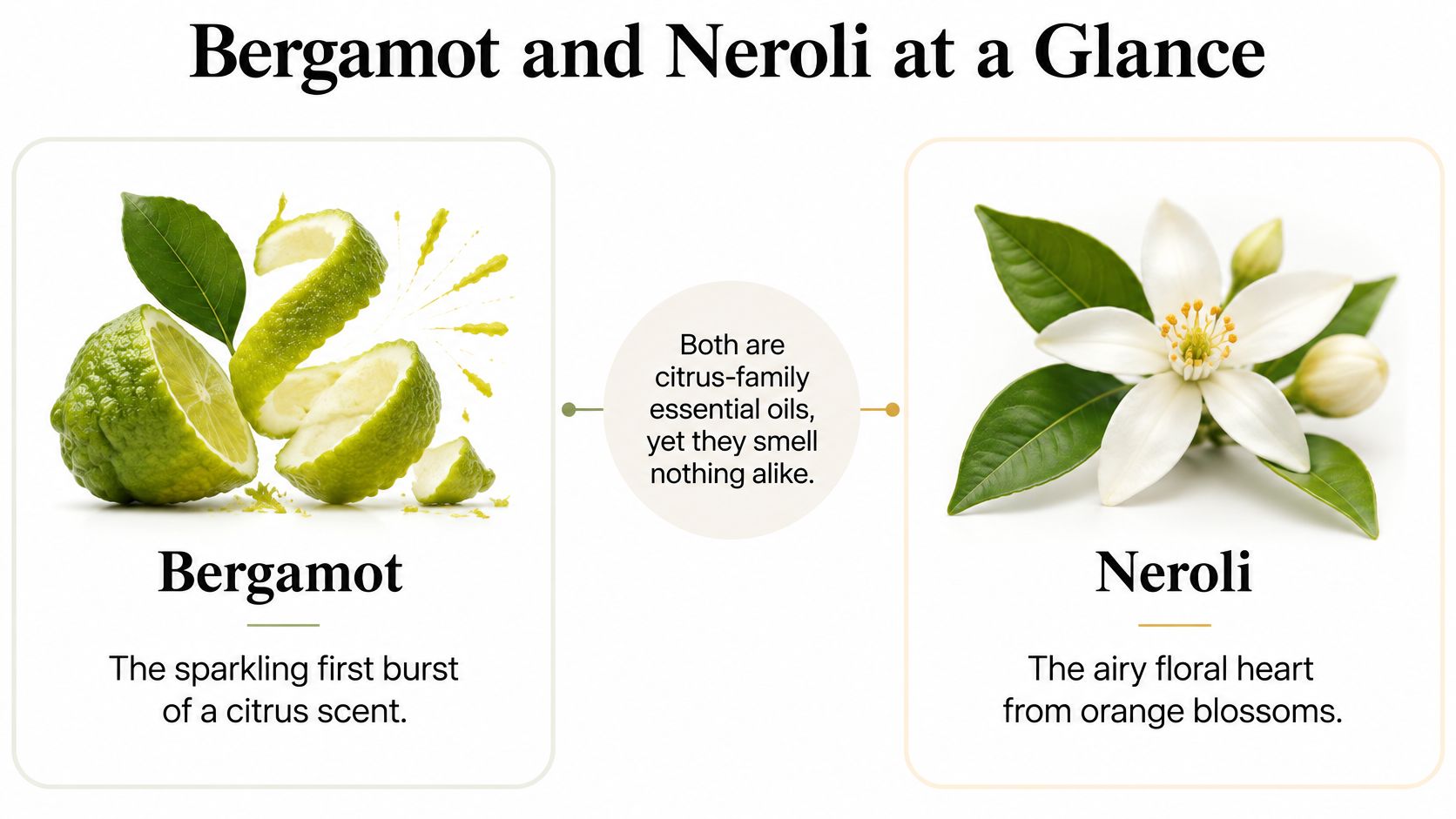
The core difference fits in one sentence. Bergamot is pressed from fruit peel, while neroli is distilled from bitter orange blossoms. Bergamot gives you the bright burst released when you twist citrus peel over a drink. Neroli gives you the warmer, honeyed scent of open blossom still on the tree. Same broad family, very different starting material, and very different buying risks.
Feature | Bergamot | Neroli |
|---|---|---|
Botanical source | Citrus bergamia, the fruit | Citrus aurantium, bitter orange blossoms |
Part of plant used | Peel of the fruit | Flowers |
Extraction method | Expressed (cold pressed) from peel | Steam distilled from blossoms |
Main production area | Calabria, Italy, the dominant share of supply | Mediterranean basin, concentrated production |
Harvest window | Fruit harvested in the winter months | Early May to mid-June |
Scent character | Bright, fresh, citrus floral top note | Soft, floral, honeyed with a green citrus lift |
Phototoxicity note | Yes, from furocoumarins such as bergapten | No, a distilled blossom oil carries no peel furocoumarins |
Typical use | Top note in fragrance, citrus blends, room scents | Floral heart in perfume and aromatherapy blends |
How to Read the Comparison
Don't weigh every row equally. Start with your end use. If you're buying for sun exposed skin, the phototoxicity row decides what you can use. If you're buying for a diffuser, incense, or room fragrance, scent character and batch consistency matter more. If you're blending perfume, look at where each oil sits in the scent order. Bergamot arrives first and fades early. Neroli sits in the middle and holds longer.
Production geography deserves a second look too. Bergamot supply is tied to one Italian region, and neroli oil production clusters around the Mediterranean, according to DataHorizzon Research's 2025 neroli oil market report. When a material grows in a concentrated region, weather in that area can move price and availability for buyers everywhere. That makes both of these oils materials where you verify what you receive, not just what the label promises.
The checking habit transfers beyond raw oils. Buyers who also shop for finished designer fragrances can see the same verify-first approach applied to a branded bottle in these Burberry Touch authenticity tips and alternatives. Whether the product is a wholesale oil or a retail perfume, the questions stay the same: is the source known, is the labeling accurate, and is one batch consistent with the last.
The Bright Peel Oil From Calabria
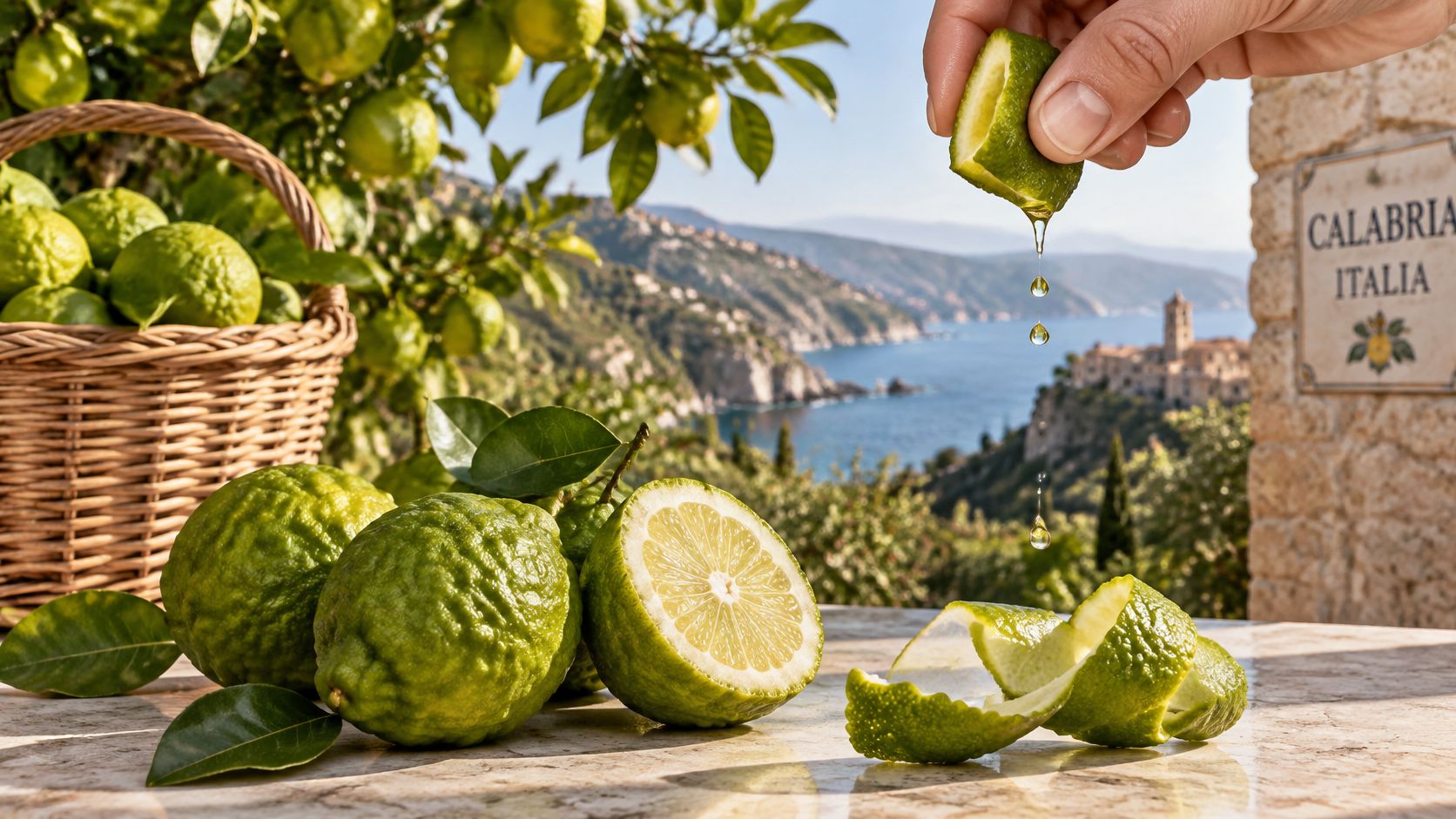
Bergamot is a small citrus fruit, but you don't buy the oil for the juice or pulp. The value sits in the peel, where aromatic oil glands hold the scent. Producers express, or cold press, that peel rather than distilling it with steam. That method captures a lively, true to peel aroma, and it also carries compounds from the rind into the finished oil. Extraction method isn't a minor label detail here. It shapes both scent and safety.
A Crop Built Around One Region
Bergamot's commercial story centers on Calabria, Italy, particularly around Reggio Calabria. Cultivation expanded there during the mid-18th century and reached as many as 4,000 hectares by 1960, and Calabria still produces more than 90% of bergamot, according to the American Botanical Council's HerbalGram bergamot profile preview. One southern Italian agricultural economy supports most of the world's supply.
For a buyer, that concentration cuts two ways. A long established growing region brings expertise, processing infrastructure, and a recognizable quality benchmark. It also means a poor harvest, regional disruption, or price shift in Calabria can ripple through the whole market. This is a specialized regional crop rather than a commodity grown evenly across several continents.
Why So Much Fruit Makes So Little Oil
Here's the part that surprises first-time buyers. Pressing captures oil only from the peel, and the peel yields a modest amount relative to the fruit it came from. The bulk of what arrives at a processor ends up as juice, pulp, and leftover rind, while the essence recovered is a small share of the total weight. The amount of oil produced also shifts with each harvest, so supply is never perfectly steady.
Two consequences follow. First, bergamot's price reflects scarcity built into extraction itself, not only demand. Second, when oil volume swings with the harvest, batch consistency becomes a real question. A supplier who can tell you which harvest your bottle came from is giving you information you can check.
Put the yield into everyday terms. If you've juiced citrus at home, you know how much fruit it takes to fill a small glass. Bergamot oil is far more concentrated than juice, yet the fruit-to-oil ratio is steep enough that a small retail bottle still represents far more fruit than its size suggests. The common assumption that citrus oils are cheap because citrus fruit is cheap breaks down here.
Vast amounts of fruit yield comparatively small quantities of oil. That low yield is the economic fact behind bergamot's price.
What It Smells Like in Use
Bergamot works as a top note. You'll smell it first, bright and fresh, with citrus sparkle plus a slightly floral and spicy edge that plain lemon or orange doesn't give you. It lifts a blend quickly, makes the opening feel clean, and then fades earlier than heavier materials. Perfumers use it to create a strong first impression rather than lasting depth.
Check two details on any bergamot label before price. Look for origin and extraction method. Origin tells you whether you're buying into that established Calabrian supply chain or another source. Extraction method tells you whether the oil was expressed from peel, which affects aroma and the furocoumarin question you'll need to handle for skin products. A low price without those two details tells you very little.
Blossom Oil and Its Short Harvest
Neroli is the essential oil obtained from bitter orange blossoms, and that single fact shapes its price, its availability, and the way buyers should plan around it. Bergamot works from sturdy fruit peel that producers can press on a schedule. Blossom opens, peaks, and fades. If you've ever picked strawberries or herbs at peak freshness, you already understand the pressure. A missed week doesn't mean a lower grade harvest. It can mean no harvest at all.
A Harvest Measured in Weeks
According to the South African Journal of Chemistry's account of orange blossom production, the principal orange blossom harvest generally runs from early May to mid-June and can exceed 1,000 metric tons in a good year, while less than 10% of the blossoms produced annually are needed for the tree's eventual fruit crop. Workers gather the fragile flowers by hand inside that window, and the blossoms need prompt processing because they don't store the way fruit peel does. Labor, timing, and weather all have to line up in the same few weeks.
That low percentage settles an obvious worry: picking blossoms doesn't rob the tree of fruit. Orange trees produce far more flowers than they can carry through to maturity, so the harvest draws on a surplus the tree creates anyway.
Supply risk sits elsewhere. A short season, hand collection, and a raw material that can't wait mean neroli's availability is set by the calendar rather than by demand. Blossom picked late or processed slowly is lost, and no stockpile can replace it until the next flowering. Buyers planning seasonal products, private label runs, or gift sets need to order ahead rather than assume fresh stock appears year round. The Aroma Warehouse guide to sourcing and retailing neroli essential oil covers the packaging and pricing questions that follow from that seasonality.
Soft, Honeyed, and Not Really Citrus Forward
New buyers often expect neroli to smell like orange juice or orange peel. It doesn't. Neroli smells soft, honeyed, and floral, with a green citrus lift underneath. The citrus connection is there if you look for it, yet your nose reads flower first. That makes neroli useful when you want floral character without the weight of rose or jasmine, and it explains why perfumers place it in the heart of a blend instead of the opening.
Bergamot works like the zest you grate over food for brightness. Neroli is closer to the flowering branch you bring indoors for scent. Both come from citrus trees, and you'd never confuse them side by side.
This gap between expectation and reality causes real buying mistakes. Someone ordering "a citrus oil" may feel the product is wrong when the flower arrives first. Smelling a sample before committing to volume saves wasted stock and reformulation later.
What Small Studies Do and Don't Show
Neroli has been studied for inhalation use in small, limited studies, so treat any claimed health effect as unproven.
That distinction matters for retailers especially. You can describe neroli as a blossom oil used in aromatherapy and examined in controlled inhalation research. What early evidence can't support is a general health promise on a label or product page, because a small study tells you about its own participants and conditions rather than every customer who will buy the oil. Precise language protects your customers and your business, and it keeps each product description honest about what the evidence covers.
How the Two Oils Work Together in a Blend
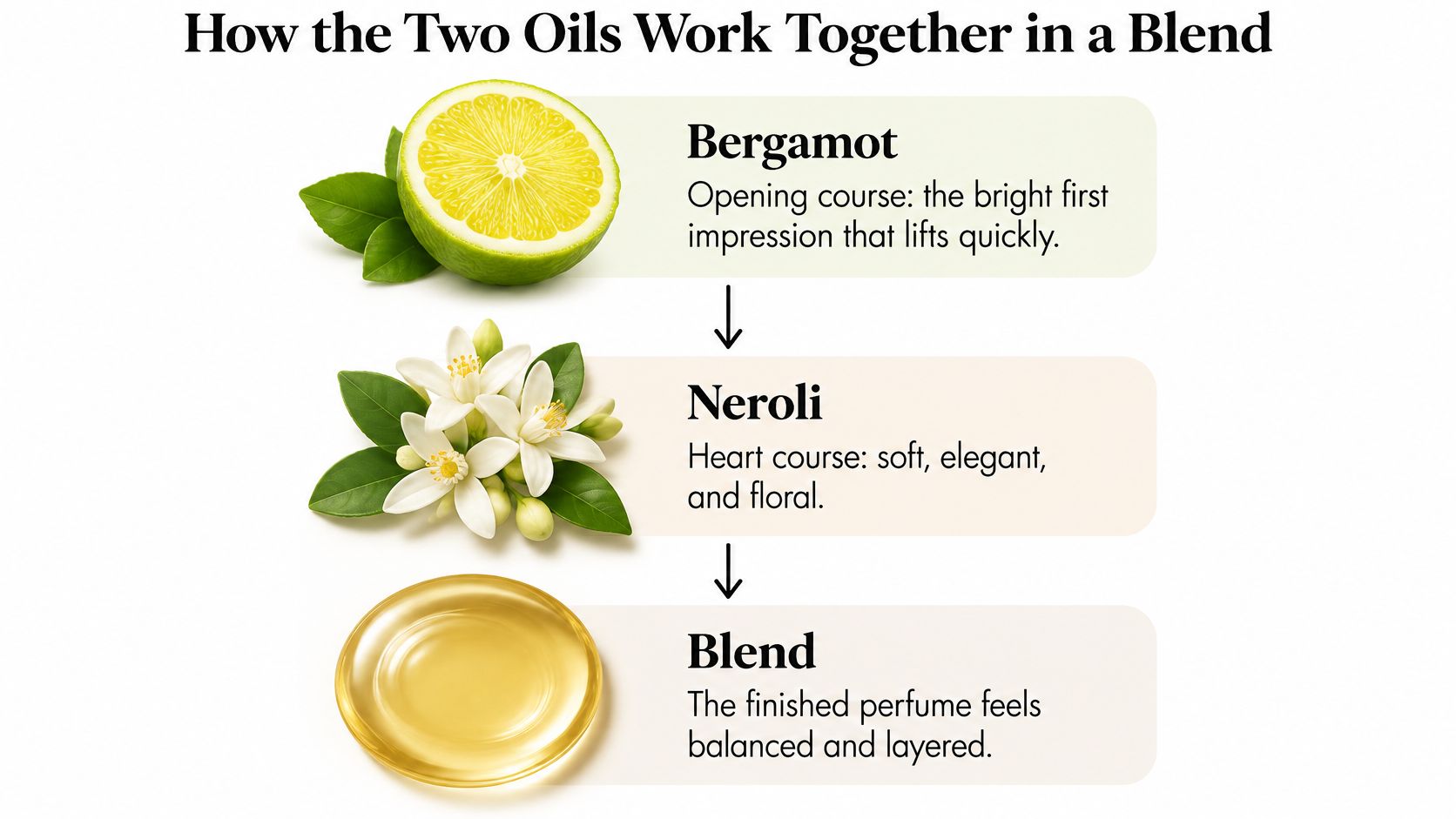
A perfume opens, develops, and settles in order, a bit like a three course meal served one plate at a time. Bergamot is the opening course. It's bright, quick, and designed to make the first impression. Neroli is the heart course. It's warmer, floral, and stays present on skin or fabric after the citrus sparkle fades. A base then carries what's left. When you blend bergamot and neroli together, you're not doubling a citrus note. You're building the first two stages of that sequence.
The diagram below shows that order from top to bottom.
The Compounds Behind the Effect
Chemistry explains why neroli can hold the middle. Linalool and linalyl acetate provide much of its floral, soft, lavender like character. Limonene and other monoterpene fractions contribute brighter citrus lift, which helps neroli connect smoothly with a bergamot opening instead of clashing with it. Heavier sesquiterpene alcohols such as nerolidol and farnesol evaporate more slowly, so they improve persistence compared with a purely citrus top note.
In a GC-MS study of Citrus aurantium blossom oil, 23 identified constituents represented 91.0% of the oil, with linalool at 28.5% and linalyl acetate at 19.6%, according to the Natural Product Communications composition analysis. A separate study of Egyptian neroli reported linalool at approximately 44 to 53% and linalyl acetate ranging from 2 to 15%. Same oil name, substantially different makeup.
Compound | Citrus aurantium blossom oil | Egyptian neroli | Role in a blend |
|---|---|---|---|
Linalool | 28.5% | 44 to 53% | Soft floral character |
Linalyl acetate | 19.6% | 2 to 15% | Floral sweetness |
Limonene | 4.6% | Not listed among major compounds | Bright citrus lift |
Alpha-terpineol | 4.9% | 5 to 6% | Fresh, slightly floral note |
Geraniol | Not listed among major compounds | 3 to 4% | Rosy floral note |
Nerolidol | 9.1% | Not listed among major compounds | Adds persistence |
E,E-farnesol | 9.1% | Not listed among major compounds | Adds persistence and depth |
The video below gives a useful visual walk through how layered fragrance notes develop over time.
Why the Same Name Smells Different
Read the table as a blender, not as a trivia list. The Citrus aurantium oil balances linalool and linalyl acetate, then adds 9.1% nerolidol and 9.1% E,E-farnesol for staying power. The Egyptian oil leans much harder into linalool, with far less linalyl acetate. You'd expect the Egyptian material to read softer and more floral up front, while the first oil offers more depth and persistence. Neither is automatically better. They're different tools.
That variability is the most confusing point for new blenders. A formula written around one neroli batch can shift when the next batch arrives from another origin or process. Judge by composition, not by the name alone. Smell test strips at intervals over several hours, note when the bergamot opening fades and the neroli heart takes over, and adjust ratios for the batch in front of you. If you're developing your own perfume recipes, these essential oil perfume blending recipes and methods give you a practical starting framework for that testing.
Skin Safety and Common Misconceptions
Misconception one. Natural means safe to put on skin. It doesn't, and bergamot is the clearest example in this pairing. Cold pressed bergamot oil carries a specific, well defined risk that has nothing to do with quality. A carefully produced natural oil can still cause a skin reaction if you use it in the wrong place and then go into sunlight.
How Phototoxicity Actually Works
The mechanism runs in a simple chain. Bergamot contains furocoumarins, including bergapten, also called 5-methoxypsoralen. The nonvolatile furocoumarin bergapten is present at approximately 0.2% in bergamot oil residue and becomes photoactive under ultraviolet A radiation, according to the European Medicines Agency assessment report on Citrus bergamia oil. UVA light activates the psoralen molecule in skin cells. That reaction can produce itching, erythema, pigmentation, and other acute skin reactions.
Notice what's required. You need the oil on skin and UVA exposure afterward. That's why route of use matters so much. The University of Minnesota guide on essential oil safety warns that bergamot and several other citrus oils can cause severe skin reactions when applied topically before sunlight or tanning bed exposure, while inhalation does not create the same phototoxic mechanism. Diffusing bergamot and wearing bergamot are two different safety questions. Don't let a label blur them.
The Control That Actually Addresses the Risk
Dilution alone isn't the control the regulators point to. The European Medicines Agency identifies removal of furocoumarins as the relevant safety control. For products intended for sun exposed skin, use material explicitly labeled bergapten free or furocoumarin free. Twice rectified or otherwise compliant materials are preferable for leave on formulations. If a supplier can't tell you which type you're buying, you don't have enough information to sell it for skin use.
Practical rule: If the bergamot isn't labeled bergapten free or furocoumarin free, treat it as fragrance and diffusion material, not leave on skin material.
Separate the two types in your product descriptions, wholesale documents, and labels. List cold pressed fragrance or aromatherapy oil on one side. List phototoxicity controlled material on the other. Don't recommend undiluted topical application. If you do formulate for skin, blend into a suitable base and follow documented dilution guidance, such as the principles covered in our guide to choosing carrier oils for skin. Readers who want professional skin treatments rather than DIY oils can also compare Bonna Beauty skincare options to understand how trained practitioners approach skin services.
Two More Myths to Drop
Misconception two. Neroli is a safe substitute that fixes the bergamot problem. Neroli doesn't carry the same furocoumarin peel risk, but that doesn't make any bottle of neroli automatically safe or identical. Composition varies by batch, and adulteration happens. Neroli still needs correct labeling, documented sourcing, and sensible dilution for skin products.
Misconception three. A bergamot and neroli blend is one standardized formula. It isn't. Two products with that name can use different bergamot types, different neroli batches, different ratios, and different dilution media. Also remember that the 0.1% and 0.5% neroli concentrations from the inhalation trial were study parameters for breathing the scent. They aren't topical dosing guidance, and you shouldn't copy them onto skin products as if they were.
Use bergamot confidently where the UVA hazard doesn't apply in the same way. Incense, diffusers, and room fragrance avoid the topical exposure route. Keep ordinary bergamot off sun exposed skin, and make your packaging claims match the exact extraction and processing specification of the material inside.
Checking Authenticity and Batch Consistency
Two bottles can carry the label "bergamot and neroli" and still hold very different materials. Words such as natural, premium, and therapeutic describe marketing, not contents. A peer reviewed analysis of neroli products identified non-compliance and adulteration issues, including unusually high 2-phenylethanol in one sample compared with the reference material, according to the peer reviewed analysis of citrus oil products in PMC. The same research detected furocoumarin related compounds in bergamot samples, with concentrations differing substantially among diluted products.
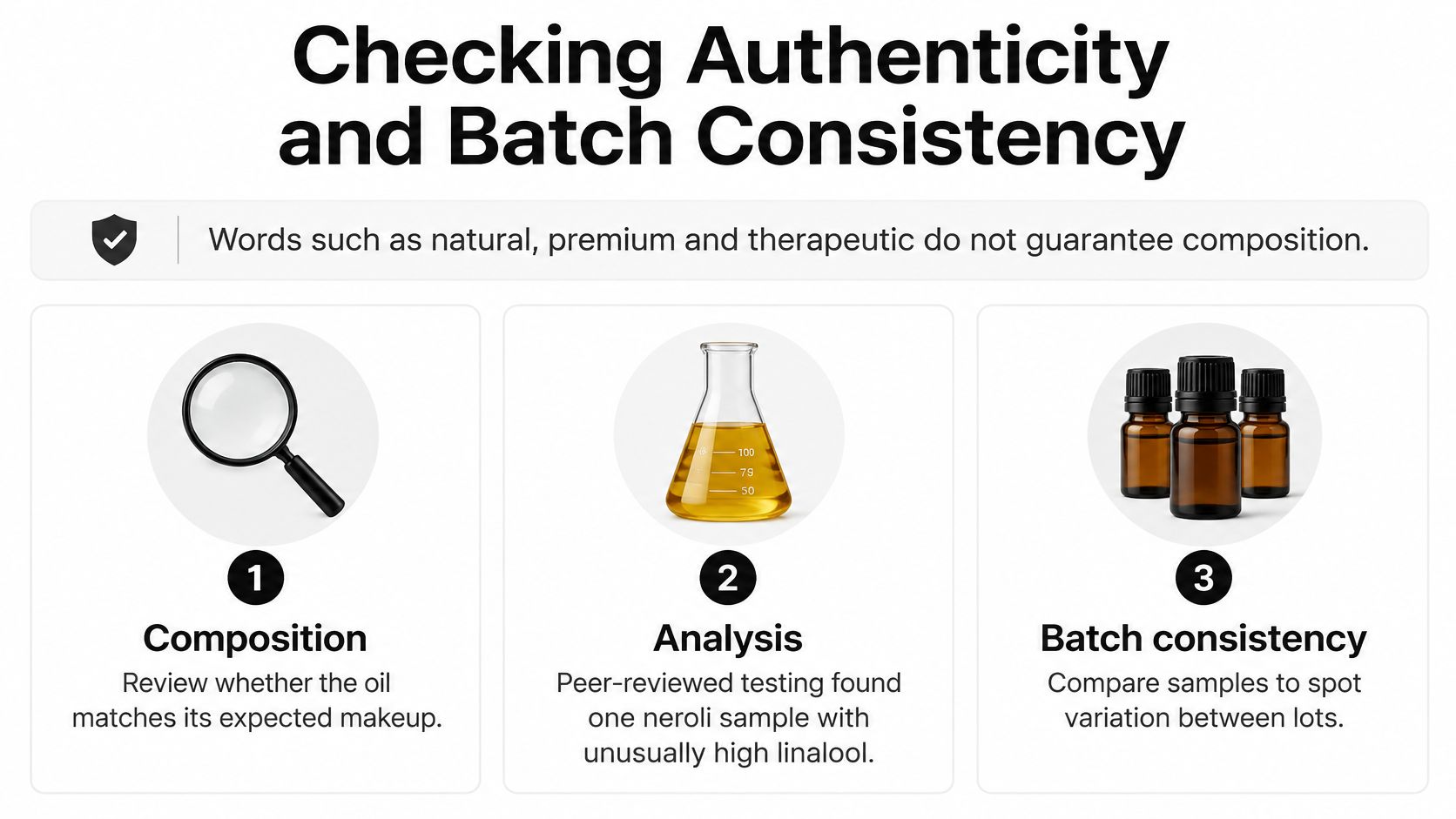
That outlier compound is the clue worth chasing. When one constituent sits far outside the expected profile, it can point to added fragrance material, substitution, or weak quality control. For bergamot, widely differing furocoumarin levels among diluted products mean two similar labels can carry different phototoxicity considerations. The label name alone cannot settle either question, which is why buyers need documents rather than adjectives.
Extraction method adds a second variable on top of batch. Steam distilled citrus materials can differ in composition from expressed oils, so a change in extraction method can change the blend even when the product name stays the same. The same named blend can also perform differently in incense, fragrance oil, diffuser use, or personal care products, because each application exposes different compounds to heat, air, or skin.
The Buyer's Checklist
Request these documents before you order, not after a customer complains.
Botanical name: Citrus bergamia or Citrus aurantium, stated in full, not just a common name.
Country and extraction method: Origin plus expressed, distilled, or rectified, so you know which material you're getting.
Batch or lot identification: A number you can record for every blend and trace if a problem appears.
Allergen information and dilution medium: What's in the bottle besides the named oil, and at what strength.
Current safety data sheet: Handling and hazard information for storage, shipping, and staff safety.
GC-MS or certificate of analysis data: Batch composition you can compare against the expected profile.
A safety data sheet covers handling and hazards. It does not prove therapeutic effectiveness, and it shouldn't be presented to customers as if it does.
Record the lot number for every blend you pour, sell, or repackage. When a supplier changes, or a new lot arrives that smells different, retest against your retained sample and the certificate of analysis before you promise customers the same aroma profile. Our overview of how to judge quality fragrance oils walks through that comparison process in more detail. Paperwork feels slow the first time you do it. It is still faster than relabeling, returns, and safety mistakes later.
Choosing Your Bergamot and Neroli Blend
Match the blend to the use case first, and let that decision drive everything else. For diffusers, incense, and room fragrance, you can combine bergamot and neroli when your supplier documents origin, extraction method, and batch. Our guide to bergamot fragrance oil and its uses is a good reference for those applications. For skin contact products, choose material labeled phototoxicity controlled, and don't apply undiluted ordinary bergamot to sun exposed skin. For perfume blending, build small test batches and judge the top, heart, and base over several hours instead of trusting the first sniff.
Work through these steps in order.
Name the use case: diffuser, incense, room fragrance, personal care, or perfume.
Request the documents: GC-MS or certificate of analysis data, the safety data sheet, and the lot number.
Order small first: test before committing to a full bottle or bulk order.
Record and compare: log the lot number for every blend and retest when the supplier changes.
That small first order matters more than it sounds. We pour our fragrance oils fresh upon order, and we sell 1/8 ounce tester drams for $1.10 each in over 100 different fragrances, so you can evaluate a scent before scaling up. We don't accept returns on fragrance, incense, or perfume oils because of the possibility of contamination, which is another reason to test small. Write down your intended use today, then send your supplier a documentation request before you place the purchase.
Frequently Asked Questions About Bergamot and Neroli Oils
1. How should bergamot and neroli essential oils be stored to preserve their fragrance?
Store both oils in tightly sealed, dark amber or cobalt glass bottles in a cool, dry location away from direct sunlight and temperature fluctuations. Keep the caps closed between uses to minimize oxidation and preserve their aromatic qualities. Always follow the supplier's recommended storage instructions.
2. How can you tell if bergamot or neroli essential oil has gone bad?
Changes in aroma, color, or consistency can indicate that an essential oil has deteriorated. An oil that smells unusually sharp, sour, stale, or noticeably different from its original scent may have oxidized or degraded. Check the manufacturer's recommended shelf life and avoid using questionable oils in finished products.
3. What is the difference between neroli essential oil and orange blossom absolute?
Both materials come from bitter orange blossoms, but they are produced differently. Neroli is obtained through steam distillation, while orange blossom absolute is generally produced through solvent extraction. Their aromatic profiles can differ, with absolutes often offering a richer, deeper floral character. They are not automatically interchangeable in fragrance formulations.
4. Can bergamot and neroli essential oils be used in homemade candles?
Both oils may be considered for candle fragrance formulations, but suitability depends on the specific material, formulation, and performance requirements. Essential oils can behave differently under candle-making conditions, so test small batches and consult the supplier's technical documentation and applicable fragrance safety standards before production.
5. Why should fragrance makers keep samples of previous essential oil batches?
Keeping retained samples makes it easier to compare new deliveries against previously approved materials. Natural essential oils can vary in aromatic composition between harvests and production batches. Comparing samples helps fragrance makers identify noticeable changes before adjusting established recipes or producing larger quantities.
Ready to put this into practice with a small, low risk test? Visit Aroma Warehouse to browse fragrance oils poured fresh upon order, pick up inexpensive tester drams, and stock the bottles, droppers, and incense supplies you need to evaluate your bergamot and neroli blend properly. Start with one documented batch, record the lot number, and build your blend on evidence instead of a label claim.


