

Monkey Fart Fragrance Oil Guide: Scent, Safety, Pricing

The advice to buy monkey fart fragrance oil and use a few drops wherever you want skips the decisions that matter. The name doesn't tell you what it smells like, how concentrated it is, or where you can safely use it. Buying by the joke alone is a poor way to choose a candle ingredient, a diffuser refill, or stock for a gift shop.
Treat it as a fragrance purchase with unusually memorable packaging. Evaluate the scent, confirm the intended application, and compare the actual cost before committing to bulk.
Table of Contents
What Monkey Fart Fragrance Oil Really Smells Like - Decode the scent rather than the name
Where the Oil Works and the Load Limits by Format - A maximum isn't a recipe
Safety Limits, Dilution and Who Should Avoid It - Make the safety decision by exposure
How to Test a Blend Before You Commit to a Batch - Build a repeatable test
Compare Supplier Prices per Ounce - Compare usable cost, not bottle price
Labeling and Claims Retailers Must Get Right - Keep the joke separate from the required information - Review implied claims as well as explicit promises
Order Steps, Substitutes and FAQs - Order with a defined purpose - Substitute by profile - Frequently asked questions
What Monkey Fart Fragrance Oil Really Smells Like
Monkey fart incense sticks or oil doesn't necessarily smell fecal, sulfurous, or anything like intestinal gas. It's a trade name, not a standardized formula. A supplier can use it for a conventional fruity, creamy, musky, or deliberately funky accord.
Playful naming fits the broader interest in childhood-inspired scents and bold packaging described by Brenntag's fragrance trend overview. That context explains the merchandising appeal, but it doesn't establish the ingredients or scent profile of a particular bottle.
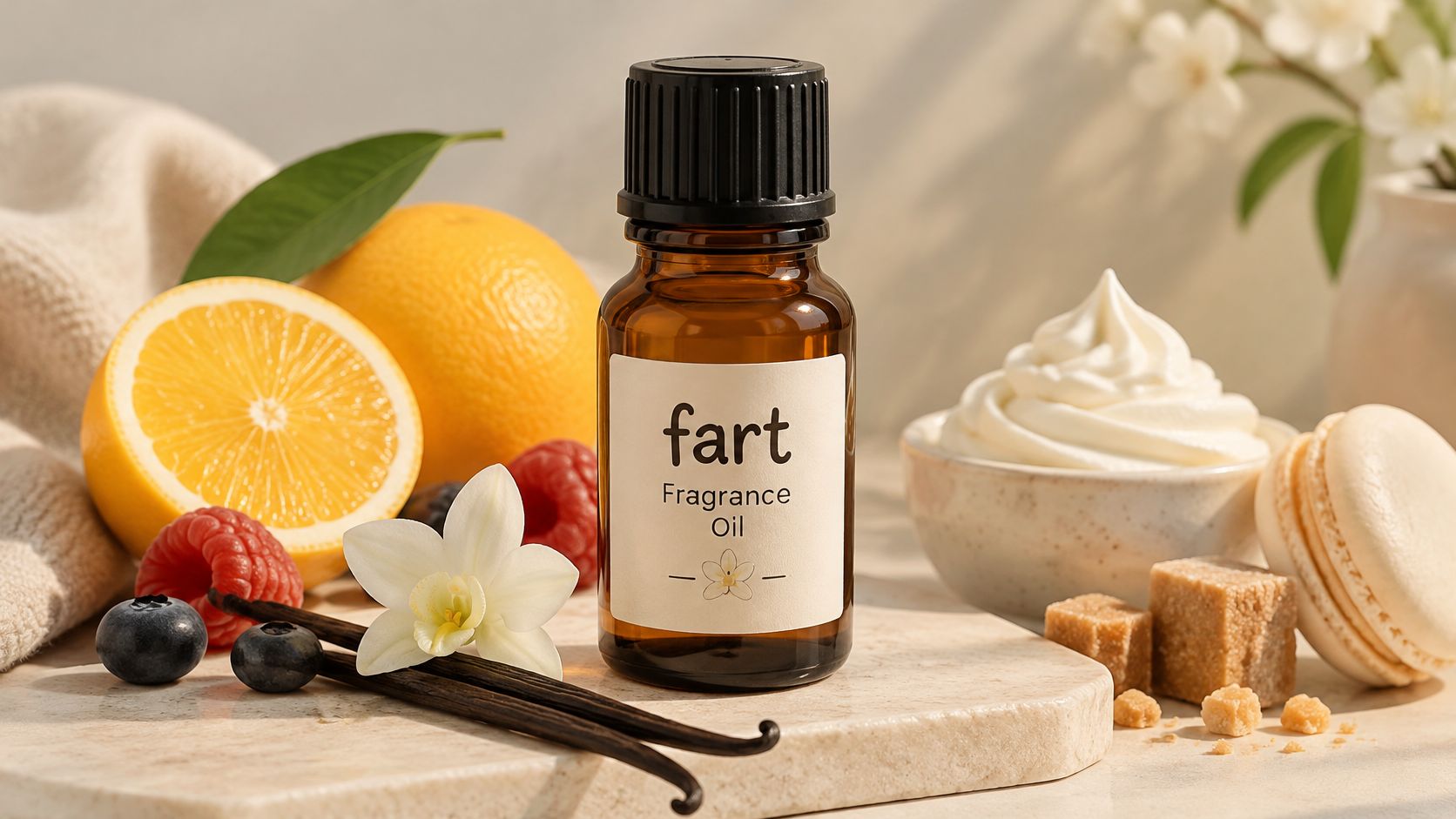
Decode the scent rather than the name
Use the following facets as an evaluation checklist, not a guaranteed ingredient list. In particular, don't assume there's a sulfur accent unless the supplier describes one or the sample presents one.
Scent facets in a typical monkey fart oil
Facet | How It Reads | What It Means for Buyers |
|---|---|---|
Trace sulfur accent | Skunky or onion-like when prominent | If present, keep its sensory impact low; it can provide the comic contrast |
Green or fruity lift | Bright, fresh, sometimes apple-like | Can soften a funky impression and make the blend more approachable |
Sweet gourmand base | Creamy or candy-like | Evaluate whether the sweetness remains balanced in candles and wax |
Musky or animalic depth | Warm or skin-like | Check customer acceptance; odor character alone doesn't establish irritation risk |
A sweet sample might suit a novelty gift display without delivering any realistic bathroom odor. A more animalic version could make an effective joke but be a poor choice for customers expecting a cheerful fruit scent.
Throw matters as much as the note description. A balanced impression close to a blotter doesn't guarantee a comfortable room fragrance. Evaluate whether people notice fruit first, sweetness first, or an unpleasant background note when they enter the space.
Buy the scent your customers will live with, not just the name they'll laugh at.
Ask for a written description that identifies the dominant notes, intended medium, and expected intensity. Sample before buying, retain your approved reference, and compare subsequent lots against it rather than assuming an identical name guarantees an identical result.
Where the Oil Works and the Load Limits by Format
Monkey fart fragrance oil may be suitable for candles, wax melts, incense, or liquid air care, but only when the exact supplier formula supports that application. There's no defensible universal load for every bottle sold under this name.
CandleScience's guide to using an IFRA certificate distinguishes reed diffusers under Category 10A from candles and incense under Category 12. Check the current certificate for the exact formula and product use rather than borrowing a category or limit from a competing supplier.
Uses, categories and loads by product format
Format | IFRA Category | Typical Load | Check Before Use |
|---|---|---|---|
Candles (wax) | Category 12 | Supplier's wax-specific starting load | Fragrance maximum, wax capacity, and burn performance |
Reed diffusers | Category 10A | Documented liquid-air-care starting load | Applicable maximum and diffuser-base compatibility |
Incense or oil warmers | Category 12 for incense; confirm warmer application | Carrier- or device-specific recommendation | Burning or warming instructions and ventilation |
Soap | Confirm the applicable rinse-off category | Supplier's documented rinse-off level | Written authorization for the exact soap application |
Bath and body or perfume | Confirm the exact topical category | Not for use without skin-use authorization | Full application-specific documentation |
A maximum isn't a recipe
An IFRA maximum tells you a restriction for a defined application. It doesn't tell you which concentration gives the best throw, whether a wax holds the oil successfully, or whether a diffuser base remains clear and stable.
For candles, start with the supplier's recommended working load, provided it also fits the wax manufacturer's guidance. Then evaluate the complete candle, including the wick, container, and burn behavior. Adding more fragrance isn't a reliable fix for poor performance.
For liquid air care, identify the actual base and device. A reed diffuser, an electric warmer, and another fragrance-delivery system shouldn't receive interchangeable mixing instructions just because none is intended for skin.
Keep the technical specification beside the production worksheet. It should identify the medium, starting concentration, applicable maximum, storage instructions, and formula or lot reference.
Our guide to fragrance oil uses can help separate applications before you select a product. Before making a saleable batch, obtain the matching IFRA documentation and safety data sheet, then confirm that neither belongs to a different formula revision.
Safety Limits, Dilution and Who Should Avoid It
If the supplier can't document an application, don't sell the oil for that application. A fragrance oil isn't a finished cosmetic, candle, or diffuser refill because someone has bottled it.
The expansion into body oils, solid perfumes, and other formats described by Cosmetics Business's fragrance trend coverage makes clear application language especially useful. A shopper familiar with wearable fragrance may otherwise mistake a home-fragrance concentrate for something ready to apply.
Make the safety decision by exposure
Intended Use | Proceed Only When | Stop When |
|---|---|---|
Home fragrance | The medium and device are supported, with suitable placement and ventilation | The instructions don't identify the application |
Leave-on skin product | Written authorization and a documented finished-product maximum are available | The seller offers only generic skin-safe wording |
Soap or bath product | The exact rinse-off or bath application is supported | Candle suitability is the only evidence offered |
Shared studio or spa | Occupants can decline exposure and staff can discontinue use | Customers can't comfortably avoid the fragrance |
Keep concentrates and finished products out of reach of children and pets. Use stable containers and follow device instructions rather than improvising with open dishes near heat.
Customers with asthma or fragrance sensitivities need an easy way to avoid exposure. In an enclosed yoga room or treatment space, choosing a fragrance-free session is often more practical than trying to find a universally acceptable dilution.
Safety distinction: Disliking a smell isn't the same as experiencing irritation, and enjoying it doesn't prove it's suitable for your skin or airways.
A patch test doesn't authorize an undocumented formula or establish that a product is safe for everyone. For authorized topical products, follow the supplier's testing instructions and obtain appropriate finished-product safety advice before sale.
A comforting name isn't a safety credential either. Apply the same scrutiny to a familiar profile such as baby powder fragrance oil rather than treating novelty scents as the only products that need assessment.
Request a usable document set:
Intended-use statement: Identifies supported applications and exclusions.
IFRA certificate: Matches the formula and intended finished product.
Safety data sheet: Provides handling, storage, and emergency information.
Allergen disclosure: Supports the assessment and labeling of the finished product.
How to Test a Blend Before You Commit to a Batch
Test in the actual medium, not on a blotter alone. Paper helps you compare odor character, but wax, diffuser base, heat, and room conditions determine what the customer experiences.
The Journal of Gastroenterology and Hepatology discussion of intestinal malodor identifies hydrogen sulfide, methanethiol, and dimethyl sulfide as important trace sulfur compounds and emphasizes the sensory impact of low-threshold odorants. That doesn't prove a commercial fragrance contains them; it explains why a sulfurous facet needs careful evaluation rather than heavy-handed dosing.
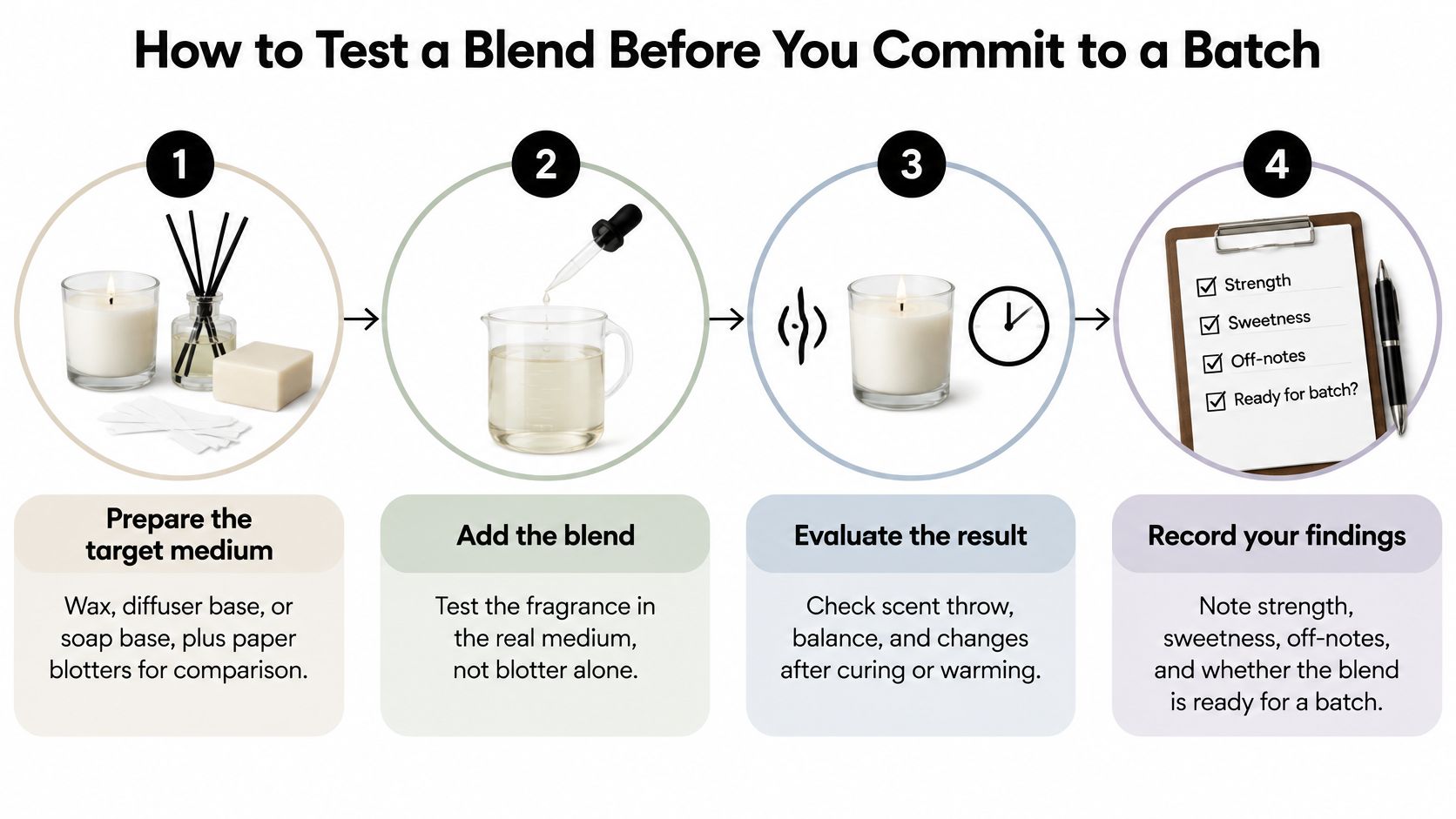
Build a repeatable test
Prepare the materials. Set out paper blotters, labeled glass vials, a suitable balance, and the intended wax or base. Keep the sample identity concealed during initial smelling so the joke doesn't dictate the verdict.
Make a dilution ladder. Use a supplier-compatible evaluation solvent, such as DPG when appropriate, and prepare progressively weaker samples. Record the actual masses, dilution basis, date, and lot so another person can reproduce the comparison.
Record the first impression. Note the dominant family before looking at the marketing description. Separate recognizable fruit or cream notes from vague judgments such as pleasant or strange.
Return after the opening fades. Compare the initial impression, the settled scent, and the remaining drydown. A sample that starts bright may leave an unexpectedly heavy musk or objectionable background note.
Collect independent judgments. Ask testers to score sweetness, sulfurous character, fecal impression, and overall acceptability using the same verbal scale. Don't let the most enthusiastic person answer for everyone.
Move into the finished medium. Use the documented starting load and evaluate the intended device or product under controlled conditions. Candle work also needs proper burn testing; our guide to blending fragrance oils for candles helps organize that development work.
Retain the reference. Keep a sealed sample and the test worksheet. Record the room conditions, base, processing details, and reason for accepting or rejecting the result.
Small formats are useful for broadening your scent vocabulary without buying full bottles. You can shop mini fragrances on Loyaltie for that kind of comparison, but a finished wearable fragrance isn't a substitute for testing the manufacturing oil.
Don't rescue an unpleasant trial by increasing the load. Identify whether the problem is balance, medium compatibility, or the fragrance itself before changing the formulation.
Compare Supplier Prices per Ounce
For weight-based listings, convert pounds to ounces before dividing price by quantity. Keep fluid ounces separate from weight ounces: they aren't interchangeable without the product's density.
The table preserves that distinction and rounds calculated unit prices to the nearest cent. These are historical listing snapshots, not live quotes.
Listed price per ounce by supplier and size
Supplier | Listed Size | Listed Price | Price per Ounce |
|---|---|---|---|
1 oz | $2.50 | $2.50 | |
Same listing | 8 oz | $10.95 | $1.37 |
Same listing | 16 oz | $15.95 | $1.00 |
Same listing | 4 lb (64 oz) | $55.80 | $0.87 |
Same listing | 8 lb (128 oz) | $95.60 | $0.75 |
Same listing | 25 lb (400 oz) | $273.75 | $0.68 |
2 fl oz | $6.10 | $3.05 per fl oz | |
25 lb (400 oz) | $511.25 | $1.28 | |
Same listing | Size not stated | $23.75 | Unknown |
Size not stated | $3.39 | Unknown |
Compare usable cost, not bottle price
The lowest listed unit price is useful only after the sample passes. A bulk bottle of the wrong scent leaves you with inventory you can't confidently sell.
Missing sizes also matter. A low headline price without a stated quantity isn't evidence of better value, and a fluid-ounce listing shouldn't be ranked directly against weight-based listings.
Include these costs in your purchasing worksheet:
Delivered cost: Add shipping and any applicable order charges.
Development waste: Allow for rejected trials and retained samples.
Documentation: Confirm that the supplier can support your intended application.
Inventory exposure: Consider how long the opened stock will remain in storage.
Ask about the pour date and storage guidance, but don't treat freshness alone as evidence of compliance or better performance. Review our guide to where to buy fragrance oils for candles when evaluating a source beyond its advertised price.
Start small, establish a finished-product specification, and only then price the bulk purchase. Recheck the current listing before ordering because historical prices don't guarantee today's quote.
Labeling and Claims Retailers Must Get Right
For U.S. fragranced cosmetics, GCI's fragrance regulatory guidance identifies 21 CFR Parts 701 and 740, together with the Fair Packaging and Labeling Act, as the principal labeling framework. It describes core information including product identity, net contents, applicable warnings, manufacturer or distributor name and address, and ingredient disclosure.
That framework concerns fragranced cosmetics, not a universal label template for every candle, incense product, or diffuser. Define the finished product before deciding which requirements apply.
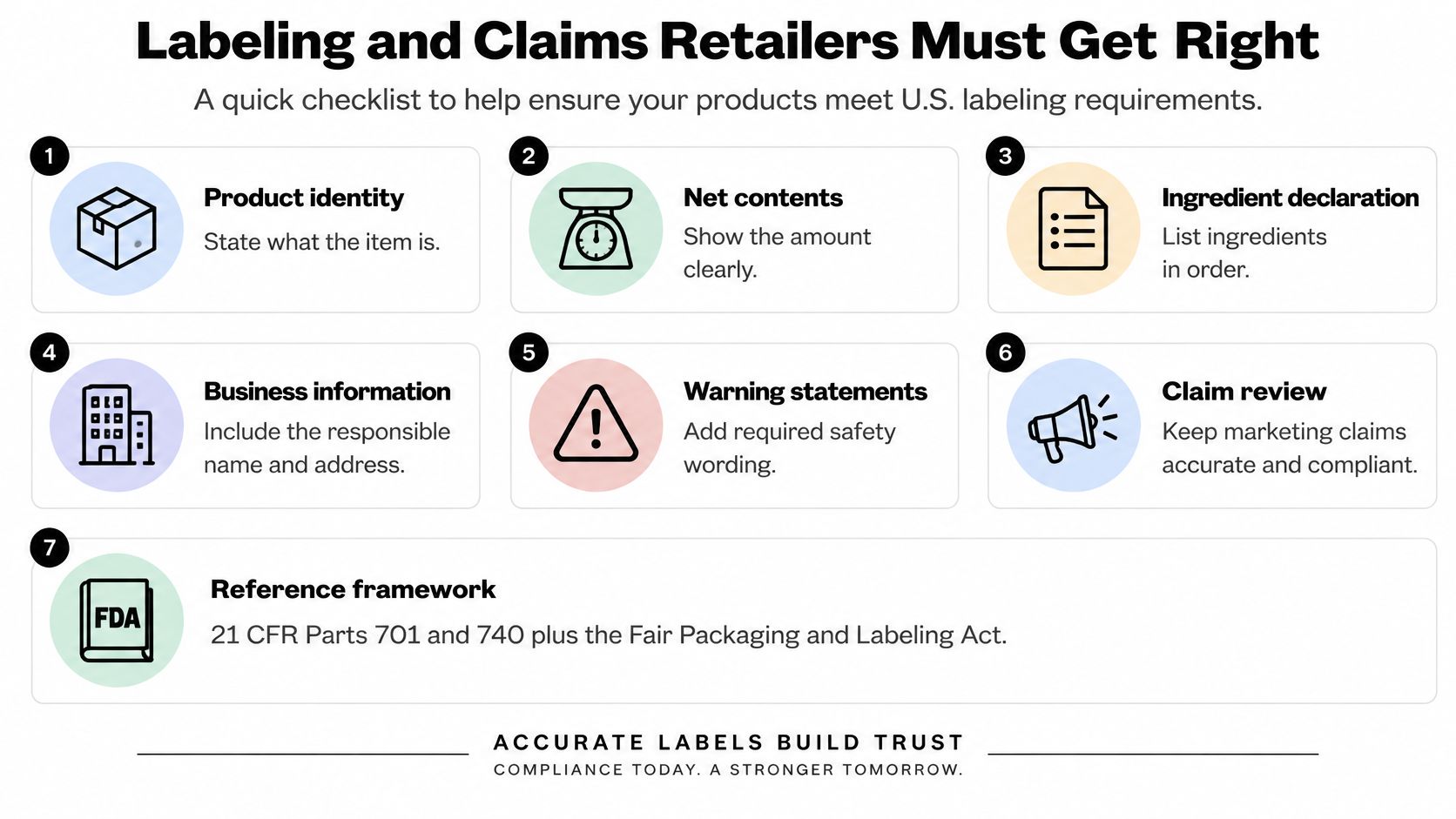
Keep the joke separate from the required information
A humorous trade name doesn't replace a clear product identity. A customer should be able to distinguish a manufacturing fragrance concentrate from a finished room fragrance without guessing from the artwork.
Cosmetic fragrance materials may be grouped under Fragrance rather than individually naming every aroma chemical. That convention doesn't remove the rest of the ingredient declaration or other applicable label obligations.
Use a preprint review sheet:
Product identity: State what the product is.
Net contents: Use the quantity declaration appropriate to the product.
Business details: Include the responsible manufacturer's or distributor's information.
Ingredients: Prepare the declaration for the finished formula where required.
Warnings: Carry the applicable safety wording onto the actual package.
Claims: Review the label, product page, imagery, and playful tagline together.
Review implied claims as well as explicit promises
Describing a fruity or creamy aroma is different from claiming that the product treats anxiety or improves a medical condition. Don't let casual wellness language turn a novelty fragrance into an unsupported therapeutic promise.
California may add requirements, including volatile organic compound controls for applicable categories. Distribution plans therefore belong in the compliance review, particularly when an online shop sells beyond its home state.
Packaging should tell the same story as the technical specification.
Avoid skin-application imagery on a product restricted to home fragrance. Likewise, don't place body-care instructions on a candle ingredient because a similar-sounding oil elsewhere is approved for cosmetics.
Our fragrance labeling requirements guide is a practical starting point for organizing that review. Have the final artwork checked against the exact formula, use, and sales territory before printing a production run.
Order Steps, Substitutes and FAQs
Place the first order as a qualification exercise, not an inventory commitment. The useful outcome is an approved sample, a matching document set, and a clear purchasing specification.
Order with a defined purpose
Request the specification. Identify the intended medium, documented maximum, recommended starting load, and formula reference. Confirm which documents apply to the lot being supplied.
Check handling and freshness. We pour our fragrance oils fresh upon order. Record the receipt date and lot identification so you can connect a later production question to the correct purchase.
Qualify a small sample. We offer 1/8 ounce tester drams for $1.10 each in over 100 different fragrances. Confirm availability of the particular scent you're evaluating rather than assuming every fragrance appears in every format.
Approve before scaling. Store the accepted sample with its worksheet and write down what constitutes a match. Reordering by name alone gives receiving staff little basis for rejecting an unsuitable substitution.
Substitute by profile
If the preferred oil is unavailable, match the dominant scent family and finished-product behavior rather than chasing the same novelty label. A sweet fruity replacement may suit the display better than an aggressively funky interpretation.
Don't add sulfur chemicals to recreate the joke yourself. If a distinctive accent is necessary, obtain an appropriately formulated fragrance from a supplier who can document the revised blend and application.
Frequently Asked Questions
What fragrances blend well with monkey fart fragrance oil?
Fruity, creamy, vanilla, and musk fragrance profiles can complement playful novelty scents. The best combination depends on the dominant notes in your particular oil. Test small blends first and evaluate them in the intended finished product.
How should monkey fart fragrance oil be stored after opening?
Keep fragrance oil tightly sealed in a compatible container, away from direct sunlight, excessive heat, and moisture. Follow the supplier's storage recommendations and record the opening date and product lot to help monitor inventory.
Does monkey fart fragrance oil work for making scented incense sticks?
It may be suitable for making scented incense sticks if the supplier specifically documents the formula for incense applications. Check the applicable IFRA documentation, carrier compatibility, and recommended usage before dipping or producing a batch.
How can retailers sell novelty fragrance oils without confusing customers?
Use clear product descriptions, accurate scent notes, and straightforward application instructions. Explain whether the product is a concentrated fragrance ingredient or a finished fragrance product. Humorous product names can attract attention while clear labeling establishes customer expectations.
What is the difference between monkey fart fragrance oil and a fragrance oil blend?
Monkey fart fragrance oil is a novelty product name rather than a standardized fragrance formula. A fragrance oil blend describes a combination of aromatic materials developed to produce a particular scent profile. The actual composition and fragrance characteristics depend on the manufacturer.
Is monkey fart fragrance oil safe for skin? Only consider topical use when the exact formula has written authorization and a documented application-specific maximum. Otherwise, leave it out of body products rather than assuming dilution solves the problem.
Does the name mean it smells like gas? No. Evaluate the supplier's actual description and sample; neither a fecal note nor a sulfur accent is guaranteed.
Can it go in soap? Only when the supplier supports that soap application. Include a small processing trial before approving the fragrance for production.
Why do prices differ? Pack size, formulation, freight, and purchasing terms can change the cost. Compare matching units and qualified products rather than choosing the smallest price on the screen.
Can I return it if I dislike the scent? Check before ordering. We don't accept returns on fragrance, incense, or perfume oils because of the possibility of contamination, which makes sampling a practical purchasing safeguard.
At Aroma Warehouse, we offer fragrance oils, incense, and accessories for retail and wholesale buyers. Explore the available scents and tester options, then choose your monkey fart fragrance project around an approved sample and documented use rather than the name alone.


