

Uses for Eucalyptus: 10 Practical Ideas for Home and Body
You bought a bottle of eucalyptus oil because it smelled clean and sharp in the shop. Now it's sitting by the sink, and you're not sure whether to diffuse it, rub it on your chest, add it to a bath, or pour it into a spray bottle. That hesitation is where a good oil usually gets wasted: the right oil ends up in the wrong form.
Most practical uses for eucalyptus come down to matching form, concentration, and purpose. A few drops in a diffuser behave nothing like undiluted oil on skin, steam over a bowl, or dried leaves standing in a vase. The camphor-like bite that makes a room feel fresh can also irritate eyes, skin, and airways when you overdo it. Start low, give the scent room to fade, and stop if it bothers anyone in the space.
Eucalyptus has carried that caution for a long time. The history of eucalyptus oil records Australia's industry beginning in 1852, with medicinal oils commonly required to contain at least 70% cineole. The ten uses below are organized by form: diffusion, steam inhalation, smudging and incense, bath soaks, fragrance blending, household cleaning, topical massage blends, dried foliage, and hair care. One of them, mosquito repellent, calls for oil of lemon eucalyptus, a different product from standard eucalyptus oil, so the name on the label matters as much as the plant on the ingredient list. Most include a starting dose or a clear safety limit, plus a trade-off to watch and a line between a pleasant ritual and a claim you shouldn't make.
Table of Contents
1. Aromatherapy Diffusion and Inhalation - A Starting Routine That Works
2. Respiratory Comfort Steam Inhalation and Chest Rubs - Keep The Claim Modest
3. Smudging Incense and Ritual Cleansing - Retail Presentation
4. Bath Soaks Sea Salts and Spa Steam - Shower Steam Without A Tub
6. Natural Insect Repellent Oil of Lemon Eucalyptus - What To Tell Customers
10. Hair and Scalp Care Products - Formulation Habits For Sellers
How each eucalyptus use compares by typical amount, best form, and main precaution
Use Eucalyptus Well Start Small and Label Clearly - Safety Thresholds I Treat As Non-Negotiable
1. Aromatherapy Diffusion and Inhalation
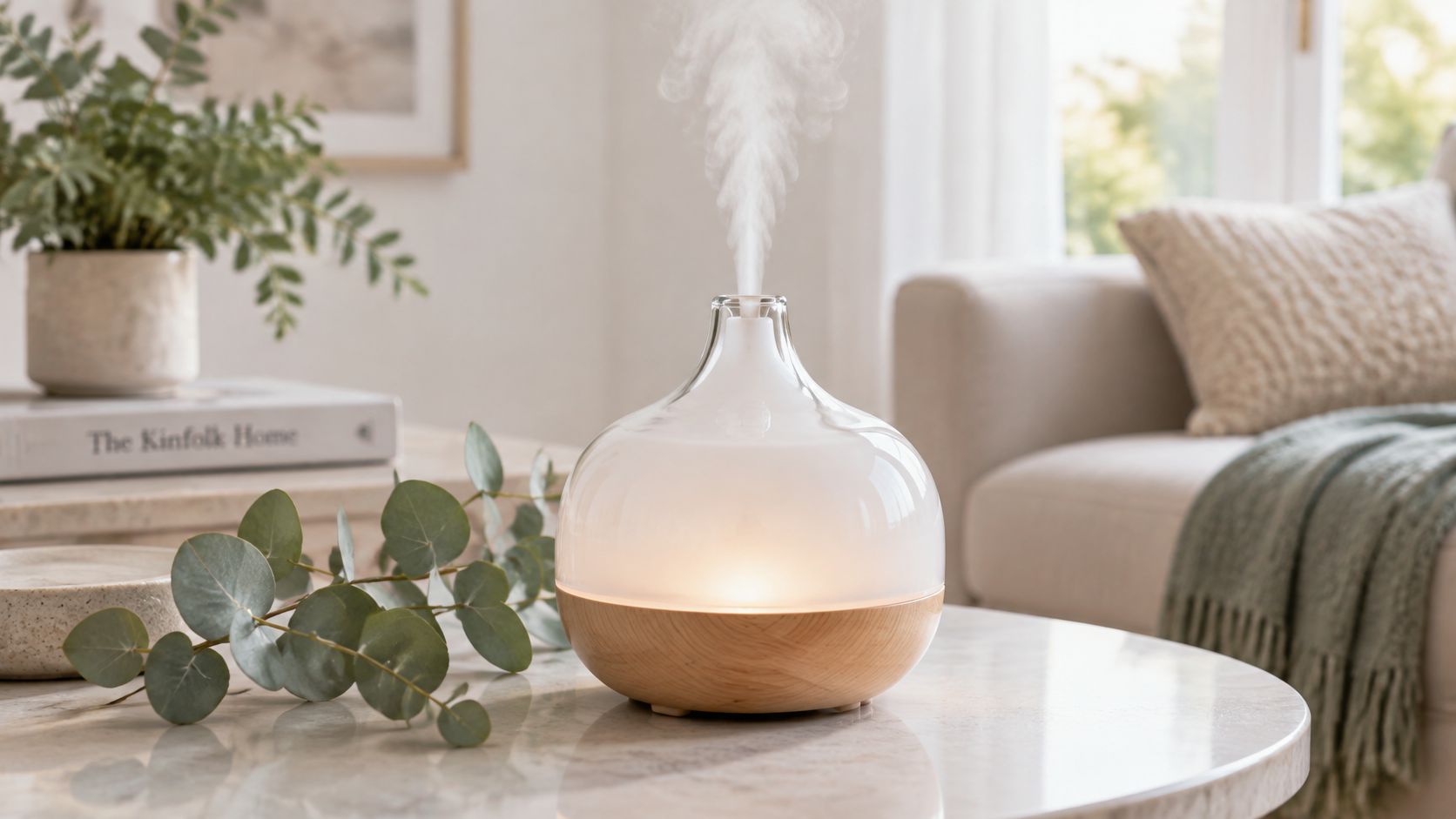
Diffusion is the easiest place to start, and the easiest place to overdo it. Eucalyptus is dominated by 1,8-cineole, also called eucalyptol, so a small amount fills a room fast, especially in a nebulizing diffuser. An ultrasonic model gives you more control for home use. A reed diffuser suits a hallway or bathroom where you want a faint background note, not a blast.
Wellness studios often diffuse eucalyptus during cool-down or breathwork because clients associate the scent with open, clear air. That perceived freshness matters, but it isn't treatment. A randomized trial of a five-oil aromatic spray found greater symptom improvement 20 minutes after use but no clear advantage after three days. I recommend selling the ritual with candor, as short-term comfort and atmosphere.
A Starting Routine That Works
Use 3 to 5 drops in a standard ultrasonic diffuser for 30 to 60 minutes, then turn it off and ventilate. Blend with lemon to lift it or peppermint to sharpen it, and read about eucalyptus and tea tree pairings before you build a stronger studio blend. If you're curious about the longer tradition, essential oils in ancient healing traditions gives useful context without turning scent into medicine. Keep bottles closed, labeled, and away from children and pets.
2. Respiratory Comfort Steam Inhalation and Chest Rubs
Steam is stronger than diffusion because you're breathing warm vapor at close range. Add 2 to 3 drops to a bowl of hot, not boiling, water, lean over it with a towel loosely over your head, and breathe normally for 5 to 10 minutes. Keep your eyes closed, since the vapor stings. If coughing or tightness starts, stop and step into fresh air. More oil doesn't open airways faster; it just makes the vapor harder to tolerate.
Chest rubs work differently. Products like Vicks VapoRub list eucalyptus oil among their ingredients, and the familiar cooling feel comes from the finished formula, not from straight oil on skin. For a homemade balm, dilute to about 1% to 2% in a carrier oil or unscented balm and apply to the chest, not inside or under the nose. Test a small patch on the forearm first if a customer's skin is reactive. Steam inhalation and homemade chest rubs are for adults only; children and infants should not use them without advice from a pediatrician.
Keep The Claim Modest
A 2025 systematic review of eucalyptus and cineole found only 3 eligible trials with 309 participants, and the total nasal-symptom score didn't reach conventional statistical significance. That's reason enough to describe steam and rubs as traditional comfort measures rather than cures for colds, sinus infections, or allergies. For technique and realistic expectations, see this guide to eucalyptus for sinus and cold comfort and the SleepHabits guide to stuffy nose relief.
Practical rule: If a customer needs medical care for breathing trouble, steam and rubs aren't a substitute. Sell comfort, explain dilution, and refer persistent symptoms to a clinician.
3. Smudging Incense and Ritual Cleansing
Dried eucalyptus burns with a cleaner, greener edge than sweet resins. You'll see it tied into bundles with sage, cedar, or palo santo, and ground into loose blends for charcoal. Metaphysical shops stock it for customers who want a fresh room-clearing scent without a heavy, perfumed trail. Meditation studios sometimes use a brief smolder before a session to mark a transition into quiet.
The trade-off is smoke. Eucalyptus smoke still irritates asthma, allergies, birds, and anyone sensitive to particulates, so ritual cleansing shouldn't mean filling a closed room. Light the tip, let it catch, blow out the flame, and let the bundle smolder over an abalone shell or heatproof bowl to catch ash. Crack a window before you start, not after your eyes water.
Retail Presentation
Describe the scent plainly: Say crisp, camphoraceous, and leafy so buyers don't expect a floral burn.
Pair it thoughtfully: Offer bundles beside incense and fragrance oil for customers who want scent without smoke every day.
Give burning instructions: Print ventilation and ash safety on the tag, not just on a website.
If you merchandise this category, this guide to the best essential oils for smudging rituals helps you answer blending questions without promising spiritual or medical results you can't verify.
4. Bath Soaks Sea Salts and Spa Steam
A bath is where customers most often make a basic mistake. They drip oil straight into water, watch it float in beads, then sit on undiluted oil. Eucalyptus doesn't dissolve in bathwater on its own. You need a carrier to spread it out, or you'll trade a spa soak for stinging skin in exactly the wrong places.
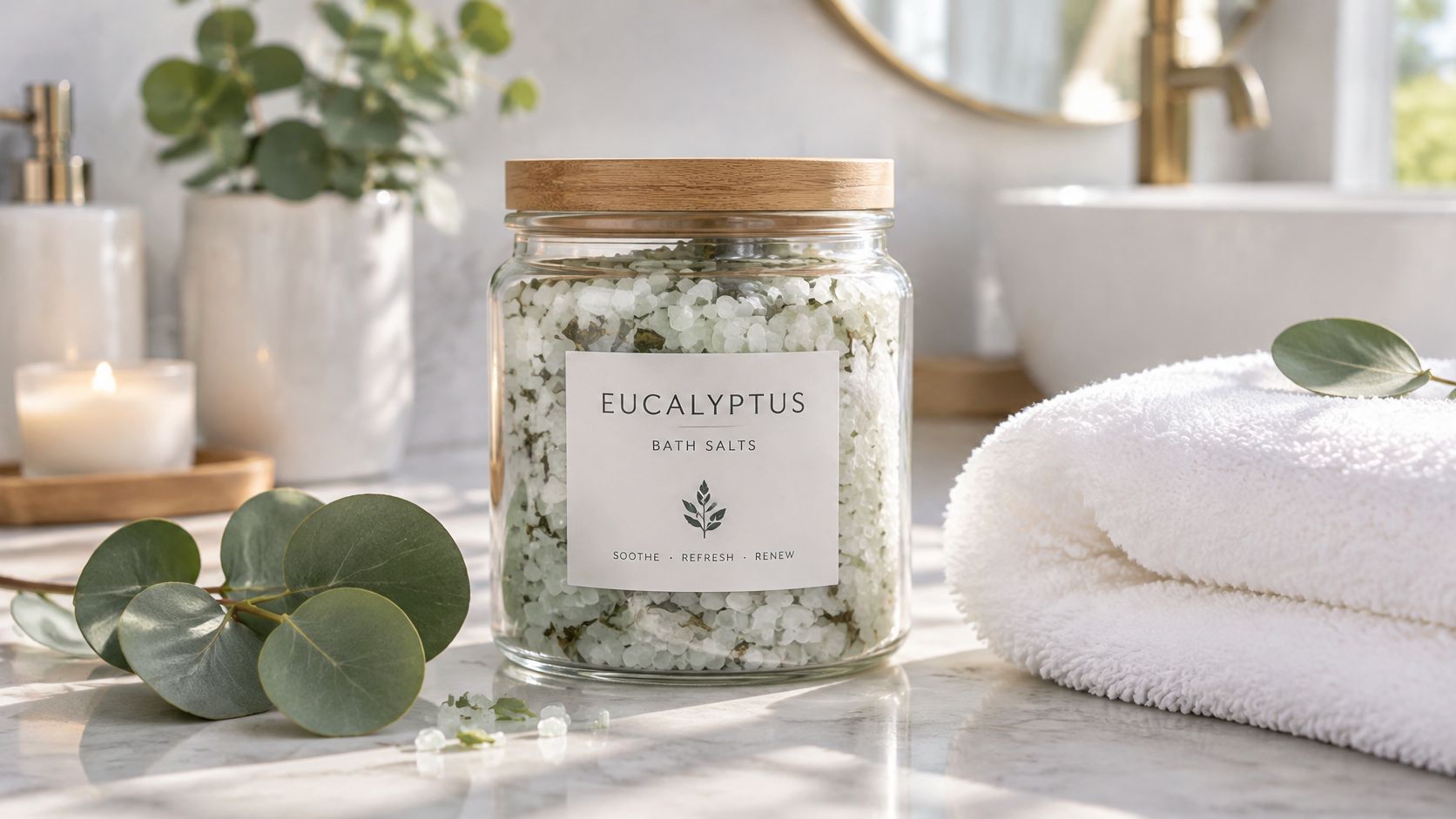
Mix 5 to 10 drops into 1 cup of Epsom salt or sea salt first, then add the salt to warm running water. For an oil bath, blend the drops into a tablespoon of fractionated coconut oil before pouring it in. Spas build relaxation packages around eucalyptus and mint salts for a reason, the scent reads clean without smelling like candy, and a little peppermint or lavender softens the medicinal edge.
Shower Steam Without A Tub
Shower steamers and a hanging bundle give a shorter, gentler exposure. Keep total essential oil in homemade bath products around 1% to 3% for general adult use, and use less for sensitive skin. I advise anyone who's pregnant, has high blood pressure, or reacts easily to strong vapors to check with a clinician before a hot, heavily scented soak.
5. Fragrance Blending for Candles Soaps and Room Sprays
Makers love eucalyptus because it cuts sweetness. In a candle, it keeps vanilla from turning flat. In soap, it gives tea tree and peppermint a clean top note that customers recognize in the shower. In a room spray, it reads as freshly aired, not covered up. That versatility is why eucalyptus and spearmint shows up in so many winter and spa collections.
You do need to choose between essential oil and fragrance oil. Essential oil gives a truer leaf character but can fade, accelerate trace in soap, or behave unevenly in wax. Fragrance oil poured for candle and soap use gives more consistent throw and stability. Neither choice is automatically better. It depends on whether your buyer pays for botanical sourcing or for scent that survives curing and storage.
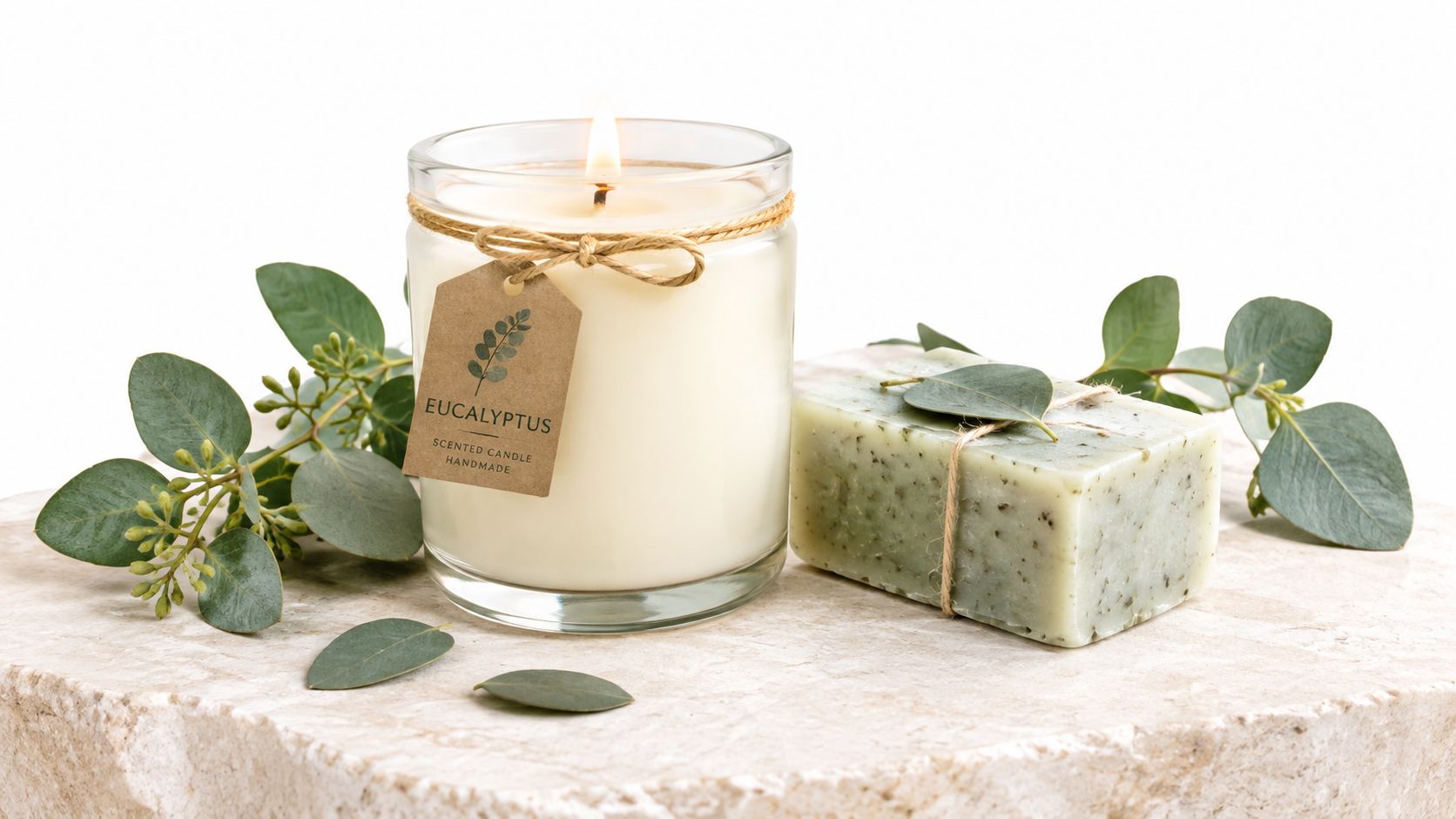
Test in small batches before you scale. For candles, start near your wax supplier's recommended fragrance load, often 6% to 10%, and check for sweating, poor burn, and fade after curing. In soap, keep eucalyptus low, typically under 3% of oil weight, and record the exact ratio, temperatures, and cure time so your next wholesale batch matches the first.
6. Natural Insect Repellent Oil of Lemon Eucalyptus
This is the distinction I correct most often at the counter. Oil of lemon eucalyptus, or OLE, is not the same product as standard eucalyptus essential oil. OLE comes from Corymbia citriodora and is processed to concentrate para-menthane-3,8-diol, or PMD. A bottle of ordinary eucalyptus oil for a diffuser hasn't been tested or registered to protect you from mosquito bites in the same way.
Outdoor brands sell OLE sprays and lotions for camping, gardening, and travel because the finished products carry label directions for reapplication. Follow those directions, especially after swimming or sweating. Don't apply repellent to cuts, irritated skin, hands that will touch food, or near eyes and mouth. Wash treated skin when you come back inside.
What To Tell Customers
Name the active product: Label OLE repellents separately from aromatherapy oils so nobody buys the wrong bottle for a hike.
Respect the label: Reapplication time, age limits, and warnings belong to the registered formula, not to eucalyptus in general.
Avoid borrowed claims: Don't promise disease protection from a homemade eucalyptus spray.
For a broader shelf talker, link shoppers to these essential oils used to repel mosquitoes while keeping the OLE distinction front and center.
7. Natural Household Cleaning and Deodorizing
Eucalyptus earns its place in a cleaning caddy as a deodorizer, not as a magic disinfectant. It makes a vinegar spray smell less like a salad and leaves a bathroom smelling aired out. Eco-focused brands pair it with citrus in plant-based sprays for that reason. Customers like the signal that a surface is clean, even though scent alone doesn't prove anything is sanitized.
A GC-MS study of Eucalyptus globulus oil reported laboratory antibacterial activity against organisms including Staphylococcus aureus and Escherichia coli, while calling for further research before pharmaceutical applications can be confirmed. Lab activity in a dish isn't the same as a registered disinfectant claim on a kitchen counter. If you sell a spray, call it fragrant or deodorizing unless the finished product has passed the required efficacy testing.
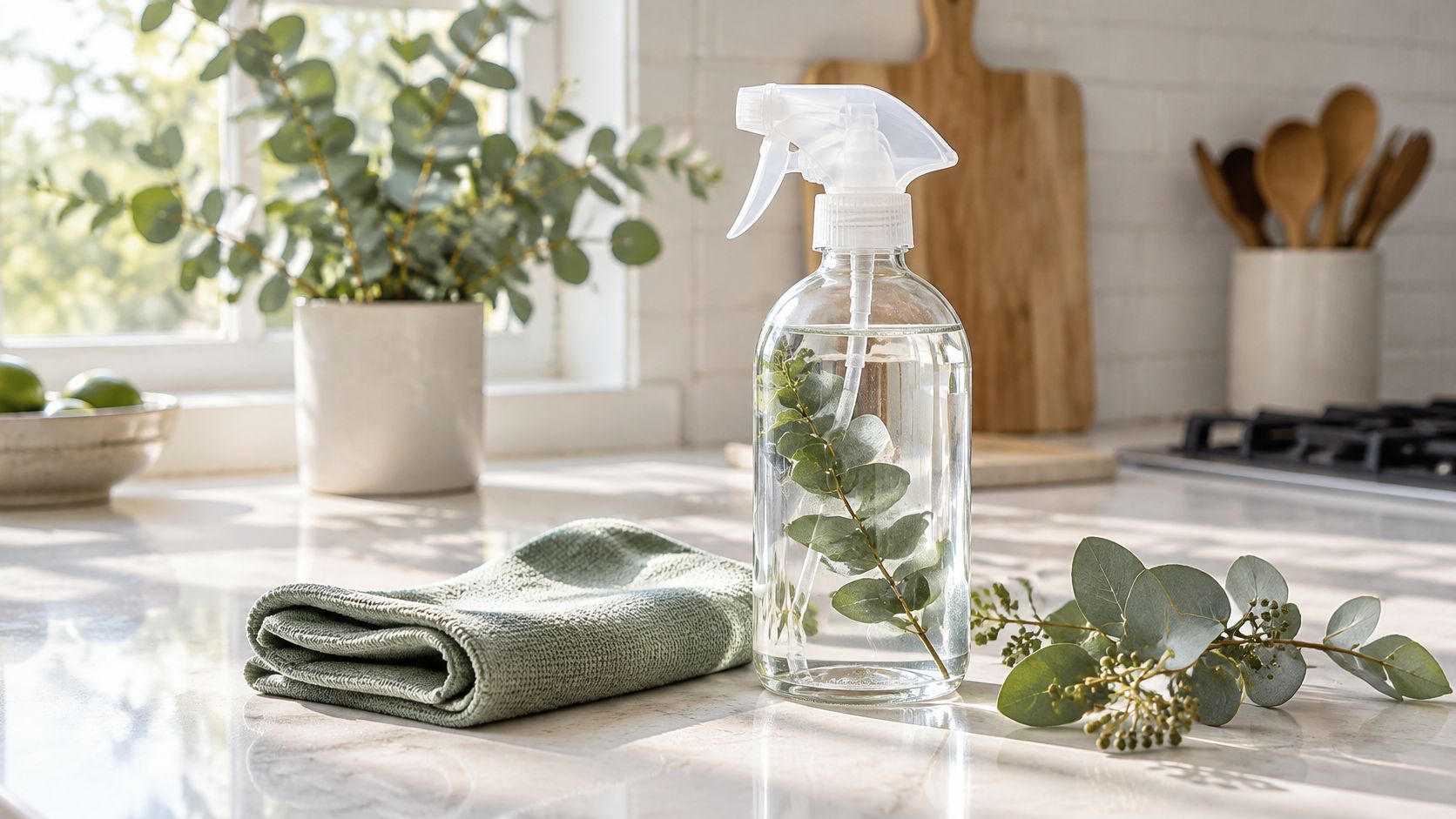
For a home spray, add 10 to 20 drops per 16 ounces of your water, vinegar, or castile soap base, and shake before each use because oil separates. Never mix essential oils into bleach or other chemical cleaners. Test stone, wood finishes, and grout sealers in a hidden spot first.
8. Topical Massage and Muscle Comfort Blends
A diluted eucalyptus massage oil gives a brisk, cooling feel that clients notice immediately after a workout or a long drive. Massage therapists often blend it with peppermint for shoulders and calves. Sports balms pair it with menthol for the same reason. If you want the mechanism in plain terms, how menthol works on pain signals explains why cooling ingredients change what you feel without fixing the underlying strain.
Dilute to 1% to 2% in fractionated coconut, jojoba, or sweet almond oil. That's a practical adult starting range for a limited area. Patch test on the inner forearm and wait 24 hours before a full application, especially if you're selling the blend. Skip broken skin, the face, and the chest of infants, and wash hands after use so you don't rub residue into your eyes.
Don't let the word natural do your safety work. Concentration and route of exposure decide whether a blend is sensible.
Poison Control guidance on eucalyptus oil warns that pure oil can irritate or burn the mouth, digestive tract, skin, and eyes, and should never be swallowed. Label every bottle with dilution, external use only, and storage away from children and pets. That label protects your customer and your shop.
9. Dried Foliage for Décor Florals and Gifting
Say a gift shop wants a natural add-on that doesn't need power, water, or instructions. Dried eucalyptus solves it. Silver dollar rounds soften a wreath, seeded stems add texture to wedding centerpieces, and a plain bunch in a tall vase fills a corner without looking fussy. Florists use it because the blue-green color sits comfortably beside white flowers, dried grasses, and wood.
Sourcing still matters. An FAO assessment of planted eucalyptus forests reported planted eucalyptus occupied more than 18 million hectares worldwide, which reflects large-scale commercial cultivation rather than small wild harvests alone. Ask suppliers for species and origin when you can, and don't claim every stem is environmentally benign just because it's a plant.
The video below shows simple handling and display ideas you can adapt for a retail table or home vase.
Hang fresh bunches upside down in a dry, dark, ventilated spot to preserve color, then store finished stems away from sun and humidity. Bundle dried eucalyptus with a candle, incense, or diffuser for a seasonal gift set. Mist very lightly if the scent fades, and keep arrangements where curious pets can't chew the leaves.
10. Hair and Scalp Care Products
Eucalyptus shows up in shampoos and scalp oils because it makes a heavy formula feel awake. Natural brands pair it with peppermint for a cooling wash that suits an oily scalp after exercise. Salons sell a short eucalyptus scalp massage as an add-on because clients remember the tingle and the clean smell when they leave. The benefit you're selling is the experience, not regrowth.
Keep leave-on scalp products under 1% and keep rinse-off formulas low enough that they don't sting. Patch test first, keep product out of eyes, and rinse thoroughly. If a customer has flaking, sores, sudden hair loss, or persistent itching, a scented shampoo isn't a diagnosis. Suggest a dermatologist instead of a stronger blend.
Formulation Habits For Sellers
Balance the base: Use eucalyptus to lighten rich oils, not to mask a formula that already irritates.
Write honest copy: Say refreshing, cooling, or cleansing in the ordinary cosmetic sense, and avoid hair-growth promises without evidence.
Protect sensitive users: Flag fragrance allergens and tell buyers to stop if burning or rash appears.
Home formulators can compare approaches in this guide to essential oils for hair and scalp care, then keep their own labels tied to scent and feel rather than treatment.
How each eucalyptus use compares by typical amount, best form, and main precaution
Item | Typical Amount | Best Form | Main Precaution |
|---|---|---|---|
Aromatherapy Diffusion and Inhalation | 3–5 drops per diffuser session | Diffuser or reed diffuser | Keep away from children and cats; use caution with asthma or respiratory conditions |
Respiratory Comfort: Steam Inhalation and Chest Rubs | 2–3 drops in hot, not boiling, water; topical blends at 1–2% | Steam inhalation or diluted chest rub | Never swallow; use caution around young children and people with asthma |
Smudging, Incense, and Ritual Cleansing | No fixed amount; use a small bundle as needed | Dried leaves, smudge bundle, or incense | Ventilate well; smoke may irritate respiratory conditions |
Bath Soaks, Sea Salts, and Spa Steam | 5–10 drops per cup of bath salts | Oil mixed into salts or a suitable carrier | Do not add undiluted oil directly to bath water; may irritate sensitive skin |
Fragrance Blending for Candles, Soaps, and Room Sprays | Candles: about 6–10%; soap: typically under 3% | Essential oil or fragrance oil suited to the product base | Test compatibility and follow supplier guidance |
Natural Insect Repellent (Oil of Lemon Eucalyptus) | Follow the registered product label | Registered OLE/PMD repellent spray, lotion, or wipe | Do not confuse with standard eucalyptus oil; not recommended for children under 3 |
Natural Household Cleaning and Deodorizing | 10–20 drops per 16 oz of solution | Diluted cleaning spray or laundry additive | Do not mix with bleach; do not claim disinfection unless properly registered |
Topical Massage and Muscle Comfort Blends | 1–2% dilution in carrier oil | Diluted massage oil, balm, or cream | Patch test; avoid broken skin and use caution with sensitive individuals |
Dried Foliage for Décor, Florals, and Gifting | No set amount; use as desired in arrangements | Dried branches or leaves | Store away from humidity and direct sunlight |
Hair and Scalp Care Products | Typically under 1% in leave-on products | Shampoo, conditioner, or diluted scalp product | Avoid eye contact; patch test and dilute appropriately |
Use Eucalyptus Well Start Small and Label Clearly
The pattern across all ten uses for eucalyptus is simple. Match the form to the job. Diffuse for room scent, use steam for brief personal inhalation, dilute for skin, choose dried stems for décor, and buy a registered OLE product when mosquito protection is the goal. Trouble starts when one bottle gets treated as if it can do every job at full strength. It can't, and pretending otherwise creates irritated skin, overwhelmed rooms, and labels that promise more than the product can deliver.
Start with the lowest amount that gives you the effect you want. Count drops instead of pouring by feel. Write down the carrier, the percentage, the room size, and how long the scent lasted. That small record turns a one-off experiment into a repeatable home routine or a consistent wholesale product. If you're blending for resale, it also gives you a batch history when a customer asks why one jar smells stronger than another.
Safety Thresholds I Treat As Non-Negotiable
Keep undiluted oil away from children and pets, never swallow it, and don't apply it near the face of very young children. Use extra care around pregnancy, asthma, reactive airways, and sensitive skin, and ventilate during diffusion, steam, and smudging. Cats deserve particular caution because they groom residues from fur and lack some metabolic pathways people rely on, so don't apply eucalyptus products to them and don't diffuse heavily in a closed room they can't leave. If irritation, coughing, wheezing, rash, nausea, or eye burning starts, stop, move to fresh air, and wash skin with soap and water. For accidental swallowing, get urgent medical or poison guidance instead of waiting to see what happens.
Pick one use this week: Choose diffusion, a salt soak, a cleaning spray, or a dried bundle, not all four at once.
Measure it: Record drops, percentage, carrier, and exposure time before you judge the result.
Label it: Put the date, dilution, ingredients, and external-use warning on anything you keep or sell.
Review it: Note scent strength, skin response, and whether anyone in the room disliked it.
I recommend that retailers train staff to ask one question before recommending a product. Ask how the customer plans to use it. The answer tells you whether they need a diffuser blend, a diluted balm, a bath salt with a carrier, a fragrance oil for wax, or a registered repellent. That question prevents most misuse and most returns.
If you source ingredients for resale, Aroma Warehouse is one option for fragrance oils, sea salts, diffusers, bottles, and incense supplies that fit several of these projects. Buy only what you can label, store, and explain clearly. Eucalyptus rewards that discipline. Used in the right form and at a sensible dose, it gives you a sharp, clean scent that works across a home, a studio, and a product shelf without asking you to exaggerate what it does.
Browse eucalyptus-friendly fragrance oils, customizable sea salts, diffusers, glass bottles, and incense supplies for your home, studio, or resale shelf at Aroma Warehouse. Pick one project from this list, measure your first batch carefully, and build your routine or product line from a formula you can repeat.


