

Sage and Lavender Incense: A Complete 2026 Guide
You close the curtains on a quiet Sunday morning, light a stick, and watch a thin ribbon of smoke change the room. The sage feels clean and grounding, while lavender softens the edges with a familiar floral note. For many people, that small ritual supports meditation, a reset after a busy day, or a more intentional atmosphere.
The product also deserves a clear-eyed explanation. Sage and lavender incense combines traditional plant symbolism, home fragrance, and combustion, so its appeal and its trade-offs belong in the same conversation. The scent may feel gentle, but smoke still affects indoor air. This guide covers what the blend is, how it smells, how to use it carefully, and what retailers should check before stocking it.
Table of Contents
The Scent Profile of Sage and Lavender Blends - How the blend changes as it burns
Benefits and Traditional Uses You Should Know - The appeal and the trade-off
How to Burn Sage and Lavender Incense Safely - A simple burn sequence
Storage, Pairing, and Simple DIY Blending Ideas - Pairing the fragrance - A cautious DIY approach
Buying and Wholesale Tips for Retailers and Resellers - Supplier checks that protect your shelf - Wholesale Sage and Lavender Incense Tier Comparison
Is It Safer Than Pure Sage and When to Choose a Smoke-Free Alternative - Match the format to the room - Burning vs Smoke-Free When to Choose What
What Sage and Lavender Incense Actually Is
Sage and lavender incense is a blended aromatic product made by combining dried sage with lavender in a form designed to smolder. The sage may refer to white sage, Salvia apiana, or common sage, Salvia officinalis. Lavender is usually associated with Lavandula angustifolia, although a product label should identify the actual ingredients rather than relying on the scent name alone.
The blend commonly appears in three formats:
Bamboo-core sticks: A combustible incense mixture is rolled around a thin bamboo support. Sticks release fragrance gradually and suit longer, steady rituals.
Hand-rolled cones: A compact mixture burns from the outside toward the center. Cones usually release scent more quickly and can feel stronger in a small room.
Loose herb and resin blends: Dried plant material, wood powder, resin, or charcoal-based material is burned in a suitable heat-safe burner.
Manufacturers may use makko powder, a natural wood powder that helps incense bind and burn, or charcoal as part of the combustible base. Some products are made specifically as incense, sometimes called dhoop in broader incense traditions. Others use essential oils or fragrance oils applied to an unscented stick. Those are different formulations, so the ingredient list matters if you're comparing products.
The distinction between incense and a sage bundle also matters. A smudge bundle contains loose dried plant material bound together, while a stick or cone is a manufactured fragrance format. Sage and lavender incense often feels milder than a pure white sage smudge, which makes it easier to position as an everyday aromatic product rather than a strictly ceremonial item. Still, the format doesn't remove the need for careful burning.
For a wider look at how incense categories developed and how modern products are presented, explore this guide to new age incense. It helps place sage and lavender blends alongside woods, resins, florals, and spiritual fragrance products without treating every form as interchangeable.
The Scent Profile of Sage and Lavender Blends
Start with the two materials separately. Sage contributes an herbaceous, dry, slightly medicinal character, often with a camphor-like sharpness and a resinous undertone. It can smell clean and grounding, but a high-sage formula may feel intense or austere to someone expecting a soft floral fragrance.
Lavender brings a different shape. Its aroma is floral, sweet, cool, and gently herbaceous, with a balsamic quality that can read as calming or familiar. Depending on the formulation, lavender may lean toward fresh garden stems, dried flowers, soap, or perfume. That variation explains why two products with the same name can smell noticeably different.
How the blend changes as it burns
When the two materials are balanced well, lavender rounds off sage's sharper edges without erasing its character. Sage, in turn, keeps lavender from becoming overly sweet, powdery, or soapy. The result often moves through three stages:
Opening notes: A bright herbal lift appears first, especially as the tip catches and the initial smoke rises.
Heart notes: Lavender becomes more noticeable as the incense settles into a steady ember.
Dry-down: The final impression is warmer, drier, and more rooted in the sage or wood base.
The formula's ratio makes a practical difference. A blend with more lavender may feel brighter and more approachable for general home fragrance. A sage-forward version can feel more meditative, dry, and ritual-oriented. Because scent labels don't always disclose exact ratios, the most reliable test is a small burn in the room where you'll use it.
Format affects scent throw too. A cone releases fragrance faster, while a stick usually spreads it more gradually. Loose resin-and-herb blends can vary even more because the amount placed on charcoal changes the intensity. Before choosing a product for meditation, sleep, or retail display, compare both the formula and the format. This deep dive into popular incense scent profiles offers useful context for comparing sage and lavender with other fragrance families.
Benefits and Traditional Uses You Should Know
You light a sage and lavender stick before meditation, after cleaning, or at the end of a busy day. The scent can make that moment feel intentional, but its meaning comes from several traditions rather than one proven health effect. White sage has been used in purification and spiritual practices by Indigenous Californian communities. Lavender has a long European folk history associated with calm, sleep routines, and sachets for clothing and household spaces. Together, those traditions help explain the blend's connection with clearing, comfort, and transition.
Retailers often describe the same product in wellness language. Lavender is commonly associated with relaxation, while sage is described as clarifying or cleansing. These impressions may reflect personal experience and ritual context, not evidence that burning the plants treats anxiety, infection, poor sleep, or another medical condition. Incense can mark a pause in the day. It cannot replace medical care, cleaning, ventilation, or treatment.
The appeal and the trade-off
The ritual may still be useful. Lighting a stick, settling into a familiar fragrance, and protecting a few quiet minutes creates a repeatable cue for meditation or decompression. The cue can support a routine without making the smoke therapeutic or turning traditional use into a verified medical benefit.
Air quality adds a practical trade-off for both households and shops. A review of incense smoke composition describes a complex mixture of gases and particles, including carbon monoxide, nitrogen oxides, sulfur oxides, polycyclic aromatic hydrocarbons, benzene, and heavy metals. The 2009 review of incense smoke composition by Kumar and colleagues reports particulate matter up to 4.5 times the level associated with cigarettes. A Scientific Reports review of incense exposure provides further detail on the research.
The practical balance: A pleasant scent and a meaningful ritual do not cancel out smoke exposure. Sell or use the product for its atmosphere, while treating indoor air as part of the experience.
Herbal blends may feel lighter than resin-heavy products, yet “natural” does not mean particle-free. Room size, airflow, burn duration, and frequency shape the experience more than the lavender label alone. For a retailer, that distinction belongs in product guidance. For a customer, irritation in the eyes, throat, or lungs is a clear reason to stop burning and choose a smoke-free format.
How to Burn Sage and Lavender Incense Safely
Treat incense like a small open flame, not like an ordinary air freshener. Before lighting, choose a stable holder that catches ash, place it on a heat-safe surface, and clear nearby paper, fabric, curtains, books, and other flammable items. Keep the burner where a child or pet can't knock it over.
A simple burn sequence
Prepare the space. Open a window slightly or create another route for fresh air. A small apartment shouldn't become a sealed container for smoke.
Light the tip. Hold a match or lighter to the end until a flame catches. Let it burn briefly, then gently blow the flame out so the tip glows.
Watch the ember. Place the stick in its holder and stay nearby. Use less material if the room begins to smell heavy or your breathing feels uncomfortable.
Extinguish completely. Press the ember into sand or a suitable snuffer dish, then check that no glow or smoke remains before disposing of ash.
The exact burn time depends on the product's size and construction, so follow its label rather than assuming every stick behaves alike. Cones generally burn faster and release scent more intensely. Loose resin-and-herb material on charcoal can create a much denser smoke plume than a stick, so use a small amount and provide stronger ventilation.
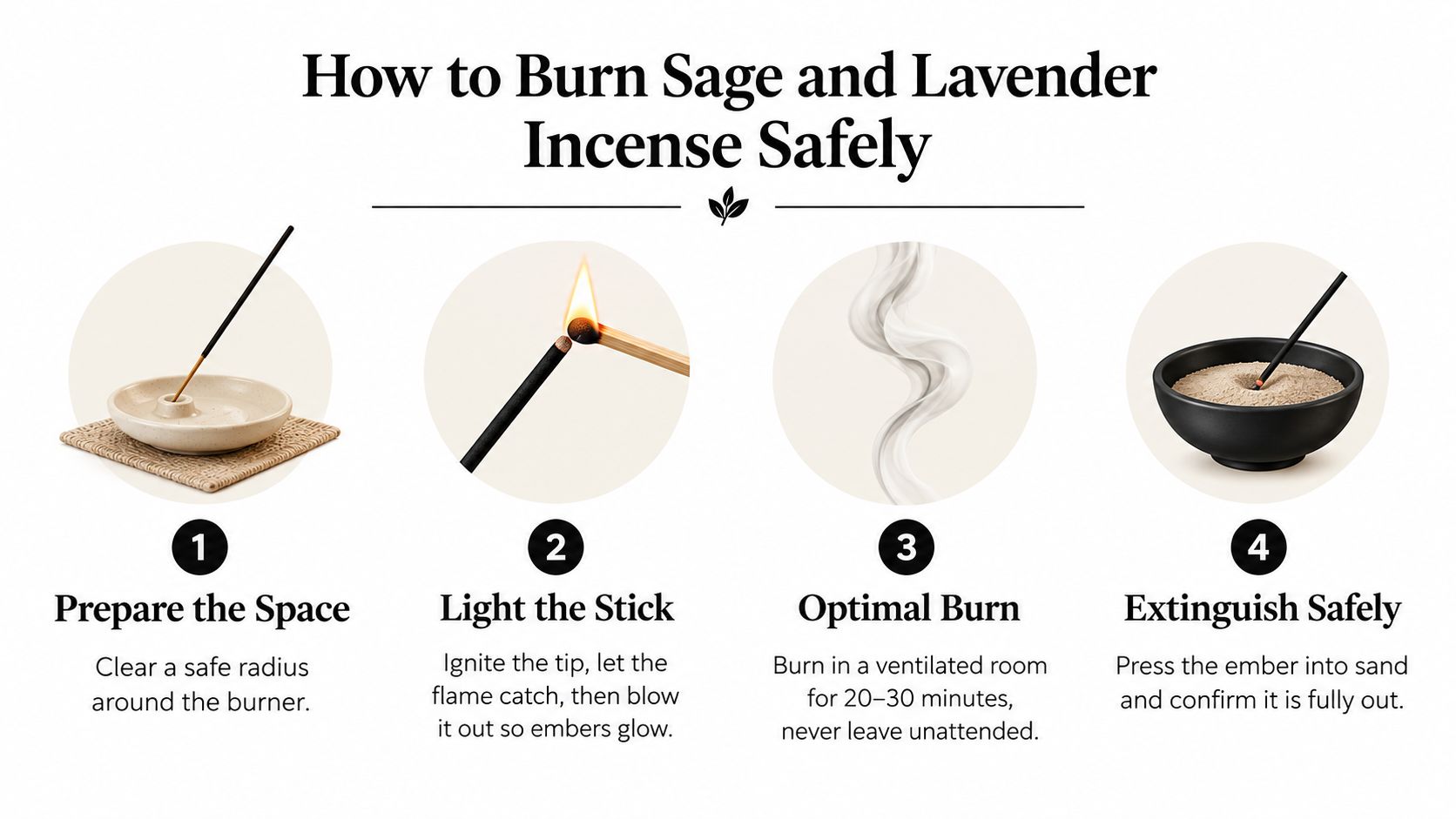
Children, pets, and smoke-sensitive adults need extra consideration. Never leave burning incense unattended, and don't burn it near a curious cat, a bird, or an animal's sleeping or feeding area. Healthline's guidance on burning sage and smoke exposure also supports ventilation and caution around children, pets, people with asthma, and pregnancy.
For a visual demonstration of basic lighting and extinguishing, watch this short guide:
Afterward, remove ash only when it's cool, inspect the holder for heat, and air out the room. The fragrance should feel balanced rather than thick. If the room still feels smoky, the solution is more fresh air and less combustion, not another stick.
Storage, Pairing, and Simple DIY Blending Ideas
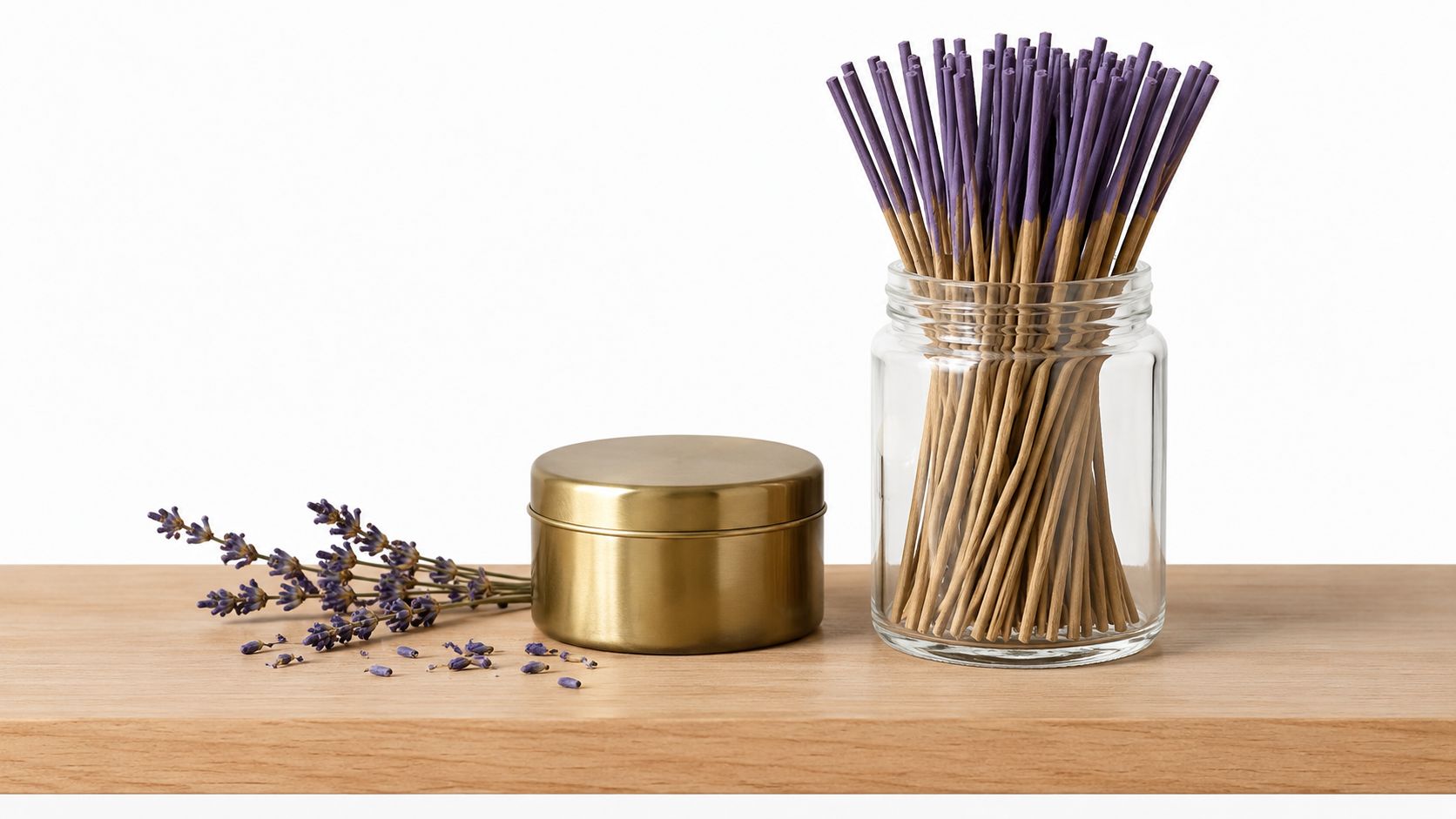
Incense loses character when heat, sunlight, and humidity work on it. Store sticks and cones in an airtight tin or glass jar in a cool, dry cupboard. The bathroom is a poor choice because repeated humidity can soften binders, weaken packaging, and flatten delicate lavender notes.
Strong fragrances can migrate between products, especially in a shared container. Keep sage and lavender separate from heavy patchouli, oud, or resin blends if you want to preserve its cleaner profile. Label jars with the scent and format so you don't confuse a quick-burning cone with a slower stick.
Pairing the fragrance
Sage and lavender works well beside dry woods and bright herbs. Try pairing it with:
Cedar: Adds a warm, pencil-wood depth to the herbal blend.
Lemongrass: Brings a sharper, more energetic lift.
Frankincense: Makes the atmosphere richer and more ceremonial.
Palo santo: Adds sweetness and a soft woody accent.
Test combinations in separate burners before burning them together. Sweet florals can clash with sage's dry, camphor-like edge, and a crowded scent profile becomes tiring faster than a simple one.
A cautious DIY approach
For loose blends, begin with a small sample of dried sage and lavender buds rather than preparing a full jar. A practical starting point is roughly 60% sage and 40% lavender by volume, but this ratio is a test formula, not a universal standard. Adjust it according to the scent you prefer, then burn-test a small amount in a suitable charcoal burner.
You can also layer dried material in a sachet for passive fragrance, which avoids combustion while preserving the plant pairing. Never assume a mixture is safe to burn because each ingredient smells pleasant on its own. Check how it catches, how much smoke it creates, and whether the room remains comfortable before storing the blend.
Buying and Wholesale Tips for Retailers and Resellers
A retailer needs to inspect more than the front label. Start with ingredient transparency. Ask whether the aroma comes from essential oils, fragrance oils, or a combination, and look for clear information about the base, additives, and origin. “Natural” by itself doesn't tell you enough about the finished product or its smoke characteristics.
Physical consistency gives you another useful signal. Examine whether sticks are evenly coated, cones stand upright, and packaging seals in the aroma. Ash color can offer clues about the formulation, but it isn't a standalone safety or quality test. A sampler box lets you assess scent throw, breakage, packaging, and customer fit before committing to a larger order.
Supplier checks that protect your shelf
Ask prospective suppliers for:
A certificate of analysis: Request COA documentation where applicable, especially for fragrance or raw-material claims.
Samples: Burn-test products in a real room, not only by smelling an unopened package.
Shipping terms: Confirm lead times, freight arrangements, damaged-goods procedures, and reorder availability.
Returns information: A clear return policy matters if a shipment arrives broken, stale, or incorrectly packed.
Be cautious when a supplier makes vague origin claims, refuses to explain ingredients, offers no return process, or prices products far below comparable goods. Wholesale cost should be evaluated alongside consistency, packaging, documentation, and the amount of customer education the product requires.
The table below provides a qualitative tier framework. Exact minimum order quantities and per-stick prices vary by supplier, formulation, packaging, and negotiated terms, so request a current quote rather than treating these categories as fixed market figures.
Wholesale Sage and Lavender Incense Tier Comparison
Tier | Typical MOQ | Per-Stick Cost Range | Best For |
|---|---|---|---|
Budget | Supplier-defined small case quantity | Lower relative cost | High-volume gift, smoke, and convenience retailers |
Mid-range | Supplier-defined case or mixed-case quantity | Moderate relative cost | Independent shops balancing quality and accessibility |
Premium | Supplier-defined smaller curated run or specialty case | Higher relative cost | Wellness boutiques, studios, and customers seeking detailed sourcing |
For a deeper sourcing checklist, review this guide to wholesale incense sticks. Build the shelf around your actual customer mix, then add depth only after the product proves it can sell repeatedly. A budget, mid-range, and premium option can work better than overstocking one untested fragrance.
Is It Safer Than Pure Sage and When to Choose a Smoke-Free Alternative
You are preparing a small apartment for meditation. The sage-and-lavender stick smells gentler than a strong white sage bundle, but the ember still creates smoke. That distinction matters: lavender can change the fragrance without changing the basic combustion process.
A blended stick may produce a softer scent or a lighter-looking plume than pure sage. Neither detail proves lower particulate exposure. The practical answer to “Is sage and lavender incense safer than pure sage?” is not necessarily. Compare the product format, ingredients, burn time, and airflow rather than judging safety by scent alone.
Match the format to the room
A smoke-free option suits households with asthma, fragrance sensitivity, smoke restrictions, or shared indoor air. A diffuser, lavender mist, or another non-combustion product can retain part of the sensory ritual without adding incense smoke. It will not reproduce the ember, ash, or ceremonial movement of burning, and for some customers that is the benefit.
Check these points before lighting:
Room size: Small rooms accumulate fragrance and smoke faster than larger, open spaces.
Ventilation: A cracked window and moving air are preferable to a sealed room.
Household needs: Account for children, pets, asthma, pregnancy, and individual sensitivity.
Lease or workplace rules: A no-smoke policy still applies when the product is marketed as natural.
Ritual purpose: Burn incense when the ember and smoke are part of the experience, rather than just seeking lavender in the air.
Research on regular incense exposure has raised health questions, particularly where burning is frequent and ventilation is poor. A 2024 meta-analysis of nine case-control studies reported a pooled lung-cancer odds ratio of 1.33 among exposed groups in Asian populations. This population-level association does not predict an individual outcome, but it supports a cautious approach to repeated indoor burning.
Burning vs Smoke-Free When to Choose What
Scenario | Best Pick | Why |
|---|---|---|
Open, ventilated room and an intentional ritual | Sage and lavender incense | Provides smoke, ember, and fragrance as part of the experience |
Small apartment with limited airflow | Passive diffuser or room spray | Reduces the need for indoor combustion |
Asthma or strong smoke sensitivity | Smoke-free fragrance | Avoids adding incense smoke to a sensitive environment |
Shared office or rental with smoke restrictions | Room spray or diffuser | Fits practical building and workplace rules |
Retail customer who loves the scent but dislikes smoldering | Both formats as separate SKUs | Lets the customer choose ritual or convenience |
Retailers can stock smoke-free formats alongside incense instead of presenting one as a universal replacement. A customer might choose sticks for occasional meditation and a diffuser or spray for daily home fragrance. The guide to alternatives to sage smudging gives retailers a useful way to explain those options while respecting the sensory and cultural value of smoke.
Decision rule: If you want smoke, can ventilate well, and have no smoke-sensitive people or animals nearby, burn a small amount carefully. If you mainly want the scent, choose a smoke-free format.
Aroma Warehouse supplies sage and lavender-related incense, fragrance oils, burners, ash catchers, and diffuser accessories for home users, wellness spaces, and resellers. Visit Aroma Warehouse to compare incense and smoke-free fragrance formats, request products for your setting, and build a retail assortment around customer use.


