

Rain Incense Sticks: The Complete Guide for 2026
You've lit an incense stick, expecting the room to smell like cool rain on warm pavement. Instead, the fragrance may come across as sweet, woody, sharp, or just smoky. That mismatch usually isn't a failure of the rain concept. It comes from differences in fragrance formulation, bamboo quality, burn behavior, and how much air the room can exchange.
Rain incense sticks occupy an interesting space between home fragrance and ritual incense. They're atmospheric rather than traditionally heavy, which makes them appealing to dedicated users, wellness spaces, gift shops, and retailers looking for something softer than classic woods or resins. The right product should suggest freshness without losing the warm, familiar character that makes incense practical to burn.
Table of Contents
What Makes Rain Incense Sticks Different - A lighter mood with a practical retail role
Scent Profile and Typical Incense Composition - What each component changes
Comparing Rain Incense with Popular Incense Types - Stock by customer mood
How to Burn and Store Rain Incense Correctly - Storage that protects lighter notes
Scent Pairing and Blending Ideas for Home and Studio - Three useful pairings
Safety, Air Quality, and Responsible Use - Controls that work in real spaces
Wholesale and Retail Guidance for Selling Rain Incense - A practical display plan
What Makes Rain Incense Sticks Different
Rain incense works best in a quiet setting. A stick burns beside an open window while the room is still cool from a passing shower. The scent doesn't need to dominate. It should create the impression of damp greenery, clean air, wet stone, and a faint floral softness, even though the fragrance is being delivered through smoke.
That's the distinction. Rain isn't just a lighter version of sandalwood, nor is it a generic “fresh” fragrance. Well-made rain blends often combine green, watery, mineral, floral, and earthy impressions. Some lean toward petrichor, the smell associated with rain meeting dry ground. Others feel more like monsoon foliage, clean linen, or a rain-washed garden.
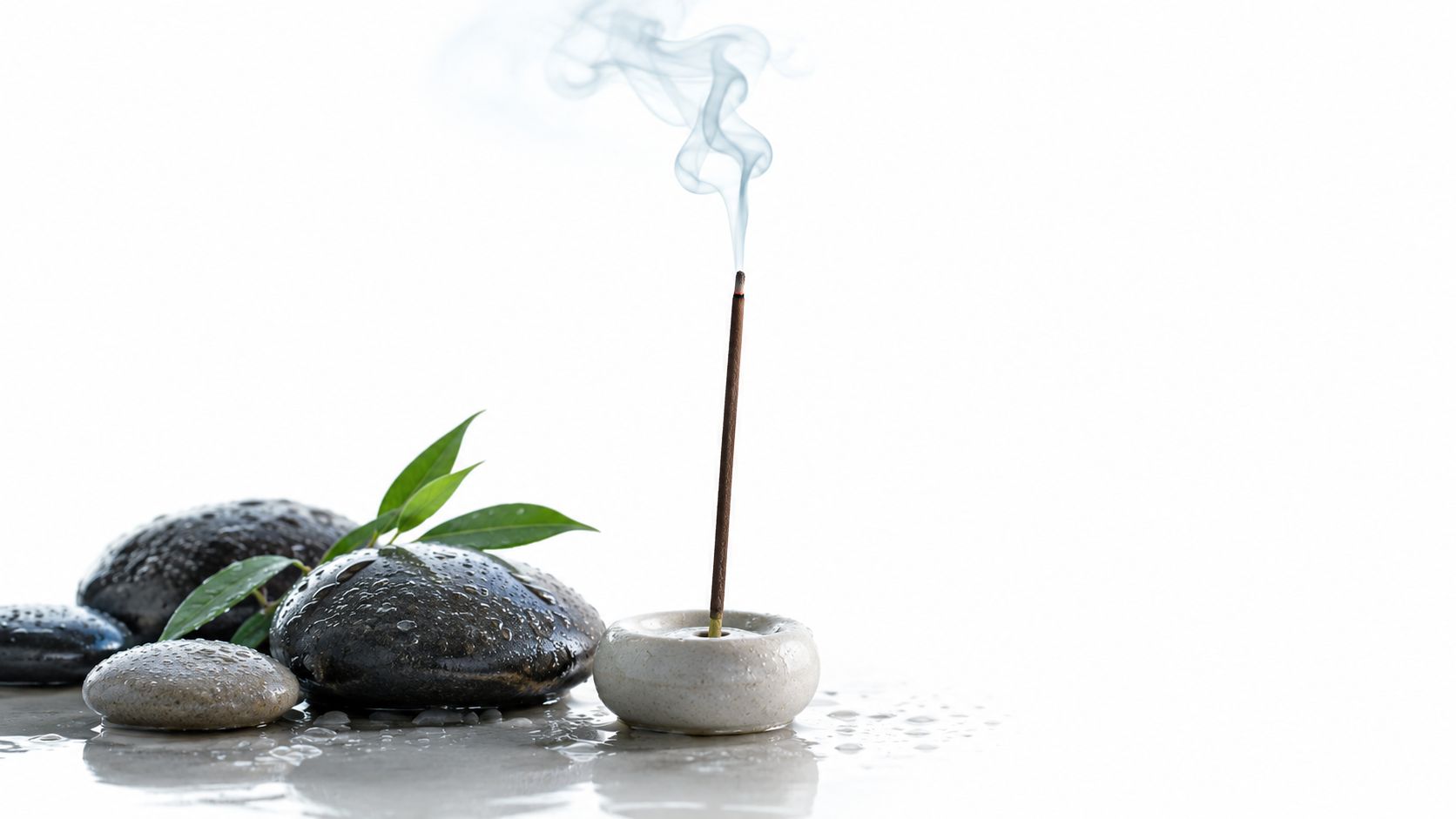
A lighter mood with a practical retail role
Heavy woods such as sandalwood and agarwood create warmth and depth. Sweet florals can feel expressive and decorative, while spicy blends often bring a stronger ritual presence. Rain incense usually sits closer to freshness and transition, making it suitable for morning routines, post-cleaning ambience, meditation, reception areas, and seasonal displays.
The format also gives the category commercial reach. One market estimate values the global incense sticks market at US$2.0 billion in 2024, with a projection of US$2.6 billion by 2030 and a 4.4% CAGR across that period, according to Research and Markets' incense stick market overview. A separate estimate places incense sticks at about US$1.02 billion in 2025, or roughly 70.7% of worldwide incense revenue, as reported by PMR's worldwide incense market research.
For a buyer, the implication is straightforward. Rain is a thematic variation inside a familiar, dominant format, not an isolated novelty. It can attract customers who want a fresher atmosphere while still fitting alongside established incense families.
Scent Profile and Typical Incense Composition
A rain fragrance has to balance delicacy with enough body to survive combustion. If the blend is too thin, it disappears quickly. If the base is too dense or smoky, the green and watery character gets buried.
Typical incense sticks combine herbal and wood powder, fragrance material, adhesive powder, and a bamboo core. One representative formulation gives about 21% herbal and wood powder, 35% fragrance material, 11% adhesive powder, and 33% bamboo stick by weight, based on the composition described in this technical review of incense ingredients. Those proportions aren't a universal recipe, but they show why the stick behaves as both a fragrance product and a small combustible structure.
What each component changes
Herbal and wood powder provides the combustible body and contributes the dry, earthy foundation beneath the fragrance.
Fragrance material determines the main scent impression, throw, and much of the perceived smoke character.
Adhesive powder holds the coating together, so the stick can be handled without cracking or shedding.
Bamboo provides the core that supports the coating and influences how the stick burns from the inside outward.
Think of the formulation as a wick, a carrier, and a scent delivery system working together. Too much binder can make the coating hard and affect the burn. An uneven bamboo core can produce irregular combustion. An overloaded fragrance can create a powerful opening but an unpleasantly dense room atmosphere.
For rain incense, ask suppliers whether the fragrance is intended to smell green, aquatic, earthy, floral, or clean. Product descriptions often use “rain” as a broad label, but buyers should still look for the dominant direction. A rain blend with ozone and citrus will sell differently from one built around moss, vetiver, and damp earth. For more background on the fragrance idea itself, see this guide to China rain fragrance oil.
Comparing Rain Incense with Popular Incense Types
Retailers rarely choose rain incense in isolation. The more useful question is where it belongs in a balanced scent selection. A customer who likes rain may also want sandalwood for grounding, lavender for a softer evening routine, or nag champa for a familiar temple-style profile.
The table below is a practical starting point. Intensity and smoke depend on the individual formula, so treat these descriptions as merchandising guidance rather than fixed technical specifications.
Incense Style | Scent Intensity | Smoke Level | Best Use Context |
|---|---|---|---|
Rain | Light to medium | Light to medium | Home freshness, morning routines, studios, spring and summer displays |
Sandalwood | Medium to strong | Medium | Meditation, grounding rituals, quiet evening use |
Lavender | Light to medium | Light to medium | Relaxation, bedtime routines, spa ambience |
Nag champa | Medium to strong | Medium | Meditation, spiritual practice, familiar home fragrance |
Smoky or spicy blends | Strong | Medium to strong | Ritual settings, dramatic ambience, cooler seasons |
Stock by customer mood
Rain is often the easiest entry point for someone who says they want incense but dislikes a heavy room scent. Lavender serves the customer seeking softness, while sandalwood gives a more traditional wood profile. Nag champa acts as a recognizable anchor for shoppers who already know incense. Smoky and spicy options add contrast and prevent a collection from feeling too uniform.
The distinction between hand-dipped and masala products also matters because manufacturing method can affect texture, fragrance character, and how customers perceive quality. Retailers comparing those categories can use this explanation of hand-dipped incense versus masala incense when building a more informed assortment.
Merchandising rule: Let rain represent freshness, not weakness. Place it beside a deeper scent so shoppers understand it as a different mood rather than an inferior version of a stronger stick.
For home users, choose based on the room and routine. Rain suits spaces where you want the atmosphere refreshed without making the fragrance the main event. If you need a scent to hold its ground in a large, active room, a denser wood or floral profile may perform more reliably.
How to Burn and Store Rain Incense Correctly
The cleanest rain profile usually comes from a steady burn and a suitable holder. Light the coated end, allow the flame to catch briefly, then extinguish the flame so the tip glows rather than burns with an open flame. Place the stick in a heat-resistant holder on a stable, nonflammable surface where ash can fall without touching fabric, paper, wood finishes, or plant material.
Ventilation should begin before burning, not only after the room feels smoky. An open window, a slightly open door, or a properly managed air exchange system helps the fragrance disperse instead of collecting in one stagnant area. For troubleshooting uneven burning, tunneling, or repeated extinguishing, use this practical guide to incense stick burning problems.
Storage that protects lighter notes
Rain fragrances often include green, airy, and floral elements that can lose definition when exposed to heat, sunlight, humidity, or competing odors. Store unopened stock in a cool, dry, dark place, preferably inside its original packaging or a sealed container. Don't display sample packs beside strongly scented oils, soaps, or cleaning products, since porous incense can absorb surrounding odors.
A retailer should also rotate display stock. Keep the quantity on the sales floor practical, and hold reserve inventory in a closed cabinet away from windows and heating equipment. Home users can separate opened sticks from unrelated fragrances, then close the container promptly after each use.
Never leave a lit stick unattended. When you're finished, press the glowing tip gently into ash or another suitable extinguishing medium. Waiting for the stick to burn itself out creates unnecessary exposure and fire risk.
Scent Pairing and Blending Ideas for Home and Studio
Rain incense becomes more versatile when it's treated as the fresh layer in a scent composition. Rather than burning several strong fragrances at once, pair rain with a single complementary profile and give each scent enough space to remain recognizable.
Three useful pairings
Rain and light sandalwood create a balanced meditation setting. Rain supplies lift and airiness, while sandalwood contributes a dry, grounded base. This pairing works well in a home meditation corner or a studio where the scent should feel calm without becoming overly sweet.
Rain and a subtle floral suit spa routines and personal care spaces. Choose a restrained floral, such as a soft lavender or transparent white-floral direction, rather than a dense bouquet. The result feels clean and composed, especially after cleaning or before a quiet appointment block.
Rain and vetiver or another green-earth accord produces a more botanical atmosphere. This combination appeals to shoppers who interpret rain as wet soil, roots, leaves, and garden air rather than ozone or laundry freshness. It's a strong choice for plant shops, wellness boutiques, and nature-oriented gift displays.
A pairing display can sell the idea more clearly than a shelf of isolated boxes. Place rain beside one grounding fragrance and one botanical fragrance, then add a simple card describing the mood each combination creates. The principles behind choosing fragrance for atmosphere are also covered in this resource on mood-enhancing scents.
A short visual demonstration can help customers understand how the scent fits into a routine. Keep the video separate from the product image so the display or article doesn't feel crowded.
For studios, test pairings outside appointment hours first. Smoke and fragrance can linger in textiles, curtains, mats, and adjoining rooms, so a blend that seems pleasant for a brief personal session may feel excessive during a full day of shared use.
Safety, Air Quality, and Responsible Use
A rain label doesn't make incense smoke harmless. Combustion releases particulate matter, gaseous products, and volatile organic compounds, including benzene, toluene, xylenes, and isoprene, according to this review of incense smoke and indoor air quality. Incense generally burns at roughly 200 to 300°C, and incomplete combustion can produce fine and ultrafine particles alongside carbon monoxide, nitrogen oxides, sulfur dioxide, aldehydes, and PAHs.
That doesn't mean every user must abandon incense. It means the useful buying question is not whether a product smells natural. The practical questions are how much is burned, where it burns, and how quickly the room exchanges air.
Controls that work in real spaces
Use ventilation deliberately. Open a window or use an effective exhaust path before burning, then continue exchanging air afterward. Evidence summarized in indoor air research on incense combustion indicates that ventilation can reduce particle pollution by about 70% after incense use.
Burn less in smaller rooms. A compact bedroom, treatment room, or retail nook has less air volume than a large studio. One stick may be appropriate where several would make the atmosphere dense.
Choose placement carefully. Keep the holder away from fabrics, shelves crowded with paper goods, drafts that scatter ash, and areas where children or animals can reach it.
Watch the neighboring space. Smoke can move beyond the room where the stick is placed. Research on incense particles has highlighted persistence and spread, which matters in apartments, shared studios, and connected retail areas. The comparison of incense stick and cone emissions supports a measured approach rather than a blanket assumption that every format behaves the same.
People with respiratory sensitivities should be especially cautious, and commercial operators should ask whether clients are comfortable with incense before using it. Fragrance enjoyment depends on consent, airflow, and moderation as much as on scent quality.
Wholesale and Retail Guidance for Selling Rain Incense
Rain incense sells more effectively as part of a thought-out fragrance family than as a one-off novelty. Give it a clear position on the shelf, such as fresh, green, watery, or rain-washed, then place it near complementary products that help shoppers understand the difference.
Packaging should communicate the atmosphere without making unsupported claims about health or purity. Use scent cards, short note descriptions, and sample packs where possible. “Green rain with soft floral notes” tells a shopper more than “refreshing incense” alone. If the product has a stronger smoky character, say so plainly rather than allowing the customer to expect a nearly smoke-free experience.
A practical display plan
Create a fresh-scent group. Place rain with clean green, lavender, citrus, or light floral products.
Add a contrast shelf. Put sandalwood, nag champa, or resinous scents nearby so customers can compare intensity.
Pair accessories with purpose. A burner or ash catcher makes the purchase feel complete and gives staff a natural way to discuss safe placement.
Use controlled demonstrations. Burn samples only where ventilation is adequate, and avoid filling the entire store with one fragrance.
Offer business-friendly formats. Resellers may need bulk sticks, unscented bases for custom dipping, private-label packaging, or coordinated oils and accessories.
Pricing should reflect more than scent novelty. Consider coating consistency, packaging quality, burn reliability, fragrance strength, reorder availability, and the cost of supporting accessories. A low-priced stick that burns unevenly or arrives with inconsistent scent can create more customer service work than its margin justifies.
Retailers building awareness can also explore Retail influencer campaigns when a fragrance collection needs demonstration rather than static shelf exposure. The strongest content usually shows the product in a real routine, with clear language about scent character and responsible use.
Final Thoughts on Choosing Rain Incense Sticks
Rain incense stands out because it offers a different emotional register. It can make a room feel greener, cleaner, and more open without relying on the dense sweetness or deep woodiness associated with many traditional incense profiles. That makes it useful for home users, wellness settings, gift collections, and retailers who want a fresher point of entry into incense.
The scent description still matters, but it shouldn't be the only buying criterion. Look for a formulation that balances fragrance load with a stable bamboo core and an even coating. Ask whether the finished stick produces the atmosphere your customer expects, or whether smoke overwhelms the rain impression once it's lit.
A responsible evaluation includes four questions:
Does the scent fit the intended mood? Distinguish aquatic, green, earthy, floral, and clean interpretations.
Does the stick burn predictably? Check the coating, ash behavior, and consistency across samples.
Can the space be ventilated? A small enclosed room needs a more restrained approach than a well-aired studio.
Can the supplier support repeat sales? Reliable packaging, replenishment, bulk options, and suitable accessories matter to retailers.
Rain incense isn't automatically better than sandalwood, lavender, nag champa, cones, or resins. It serves a different purpose. Choose it when freshness, atmosphere, and a lighter scent direction are central to the experience, then protect that experience with sensible burning and storage practices.
Aroma Warehouse offers hand-dipped incense sticks, fragrance oils, burners, ash catchers, bulk supplies, and unscented sticks for repackaging or private-label projects. Visit Aroma Warehouse to compare rain-style fragrances, supporting accessories, and wholesale options for your home routine or retail assortment.


