

Cinnamon Incense Benefits: A Complete Guide to Mood and Use

You're at a desk with a laptop open, half a report on the screen, and just enough brain fog to make the next sentence feel sticky. A cinnamon stick burning nearby can seem like a small reset, a way to make the room feel warmer, cleaner, and easier to work in.
That's why cinnamon incense benefits get talked about so often. People reach for it to sharpen focus, soften stress, set a seasonal mood, or create a quiet ritual before prayer or meditation. The key question is more specific, though: does the aroma do anything measurable, or is it mostly memory, comfort, and atmosphere?
The answer sits in the middle. Cinnamon aroma has some interesting lab support, but burning incense also adds smoke exposure that many sales pages leave out. The practical value comes from understanding both sides, the scent itself and the air quality tradeoff, so you can use it with clearer expectations and better habits.
If you like shaping a room around a calm routine, a guide to spiritual room design tips can help you think about placement, texture, and light in a way that makes incense feel intentional instead of random.
Table of Contents
Lighting the Stick and Setting the Mood
Morning light hits the desk, the room is quiet, and a cinnamon stick waits in its holder beside a mug that has gone cold. That small act is why people keep cinnamon incense nearby. It gives a room a warmer scent and gives the mind a clear starting point for work, prayer, reading, or rest.
The appeal is easy to follow. Cinnamon brings warmth, a familiar spice note, and strong links with cooking, comfort, and seasonal routines. Those links matter because scent is never only chemistry. It is also memory, habit, and the setting around it.
Aroma works like a cue. Light the same fragrance before meditation, study, or the end of the day, and the ritual starts to carry part of the meaning. For readers who care about ambiance and placement, this meditation room decor guide helps because incense feels more intentional in a room already arranged for stillness.
Treat cinnamon incense as a signal that marks the start of focus or rest. It does not replace sleep, air movement, or a proper break.
That is the practical frame for the rest of this guide. Cinnamon incense can be pleasant, but its value depends on what is in the stick, how the smoke affects the room, and how you use it. The next step is to separate the material from the myth.
What Cinnamon Incense Actually Is
Cinnamon incense is a combustible fragrance product, not a pure cinnamon source. Most versions are sticks, cones, or rope-style forms built around a binder, then coated with cinnamon bark powder, cinnamon oil, or fragrance materials that mimic cinnamon's aroma.
Two cinnamon sources show up most often, Cinnamomum verum and Cinnamomum cassia. Cassia usually appears more often in commercial incense because it tends to give a stronger room scent and works well in lower-cost blends, while Ceylon cinnamon is softer and more delicate. If a label says only “cinnamon scented,” it may mean the fragrance is synthetic or heavily blended rather than made from true bark.
The shape matters too. A stick smolders along its length and gives a steadier release, while a cone burns hotter and can feel sharper and more immediate. That difference is one reason cones can seem stronger even when the underlying fragrance is similar.
Label reading helps more than marketing copy. If the package doesn't say whether the scent comes from bark, essential oil, or fragrance oil, you're usually looking at a general aroma product, not a specific botanical claim.
For a plain-language overview of scent profile and product style, the internal guide on scent of cinnamon is a useful companion. The important takeaway is simple, incense is a burning product, so the aroma you smell is part scent, part smoke, and part carrier material.
Cognitive and Mood Effects of Cinnamon Aroma
Controlled human studies have linked cinnamon aroma with better performance on attention, virtual recognition memory, working memory, and visual-motor response speed. One later summary described cinnamon as outperforming peppermint, jasmine, and no-odor conditions on several cognitive measures, and the effect was seen across both retronasal and orthonasal exposure routes. The strongest reading is not that cinnamon makes everyone smarter, but that it can support short-term alertness in certain tasks.
That task dependence matters. Cinnamon doesn't seem to act like a universal brain booster. The benefit shows up more clearly when the task is narrow, repetitive, or attention-heavy, which fits what many people notice in practice when they use scent during desk work, reading, or quiet studio time.
Why the effect may feel real
Part of the explanation is sensory. Cinnamon carries a familiar, warm-spice profile that many people associate with comfort and wakefulness. Another part is biological. Some researchers point to cinnamaldehyde as a plausible contributor to alertness-related effects, although the human scent studies don't make it into a medical treatment claim.
What the evidence does not support is the idea that cinnamon incense should be treated as a cognitive enhancer in the supplement sense. The studies are narrow, the setting is controlled, and the exposure method often involves odor or flavor rather than burning incense smoke. That makes the findings interesting, but not automatic proof for every cinnamon product.
Claim | Evidence level | Caveat |
|---|---|---|
Cinnamon aroma may support attention and working memory | Human controlled studies | Effects are task-dependent, not universal |
Cinnamon can feel warm and comforting | Strong practical plausibility | Scent associations vary by person and season |
Cinnamon incense will improve all types of thinking | Weak | No evidence for broad, guaranteed performance gains |
If you want a broader framing on scent and mood, the internal article on mood-enhancing scents helps put cinnamon in context. The useful takeaway is modest, cinnamon aroma may support focus and a calm-warm mood, but it works best as a complement to sleep, breaks, and a well-structured routine.
Anxiolytic and Anti-Inflammatory Evidence
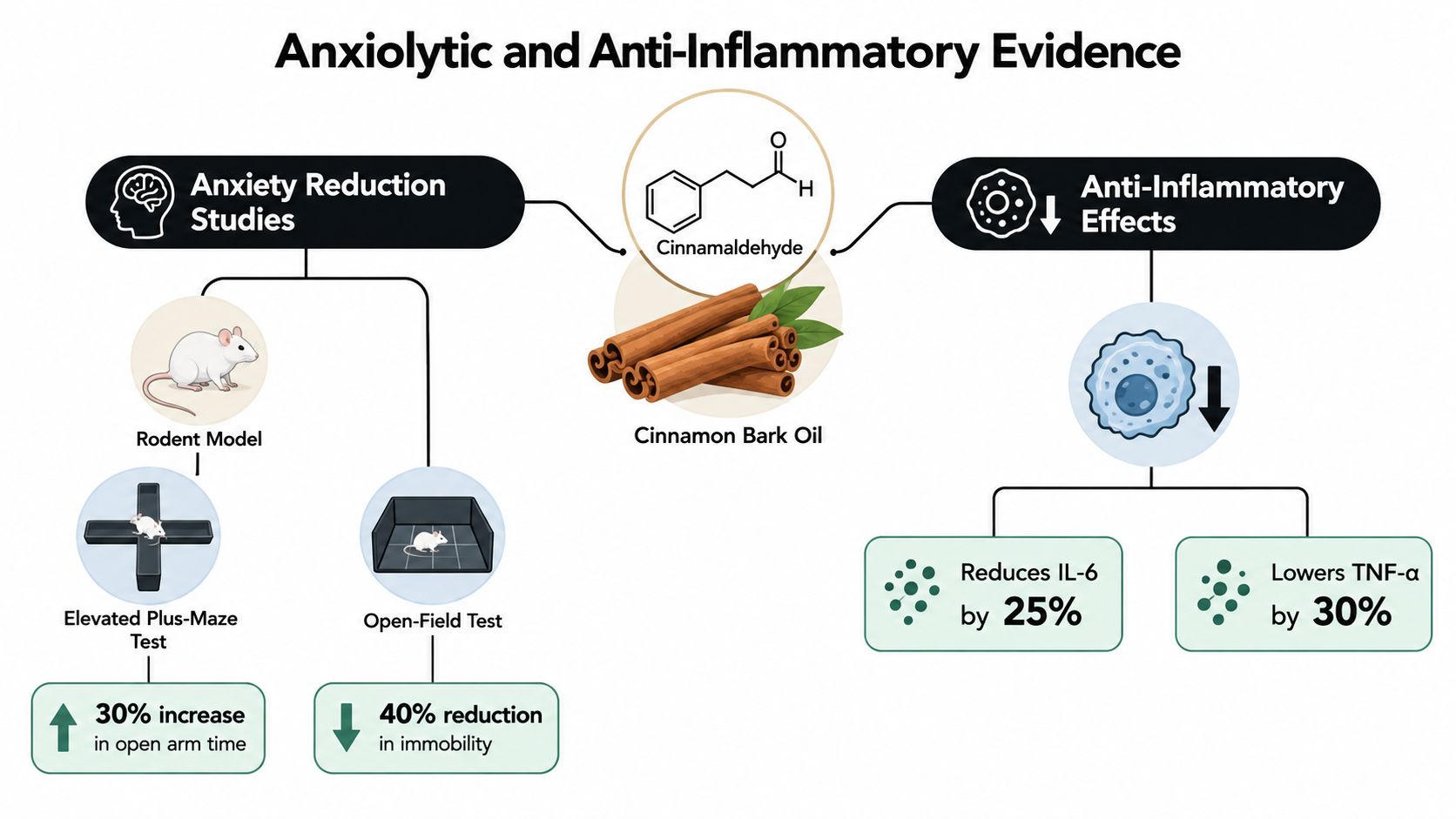
Animal inhalation research adds another layer. In controlled work, cinnamon essential oil and cinnamaldehyde showed anxiolytic-like effects after inhalation, with mice and zebrafish spending more time in the open arm of the elevated plus maze and less time in the closed arm. The same line of research tied the effect to genes involved in neuroinflammatory response and neuronal death, and GC/MS identified cinnamaldehyde as the dominant active compound.
That sounds promising, but the delivery route matters. Those findings come from inhaling essential oil under experimental conditions, not from burning a retail incense stick in a bedroom. Smoke from incense is a more complicated aerosol, and the user gets whatever scent survives combustion plus the byproducts of burning.
Plain truth: a diffuser, an inhalation study, and a smoldering incense stick are related, but they're not interchangeable.
For businesses and home users, that distinction is the whole story. Cinnamon incense may support a calmer headspace as part of a ritual, and it can be a strong mood-setter in meditation or retail environments. It shouldn't be described as a proven anti-inflammatory intervention, because the smoke itself changes the exposure picture.
For a product-level look at cinnamon oil blends, this cassia essential oil resource is a useful reference. The cautious conclusion is that cinnamon's aroma may feel soothing, but any health claim should stay modest unless you're talking about controlled inhalation or another clearly defined use.
Why Burning Cinnamon Is Not the Same as Eating It
A lot of cinnamon incense marketing borrows the credibility of cinnamon supplement research, but the route into the body is completely different. When people eat cinnamon, they ingest polyphenols and other compounds that act through digestive and metabolic pathways. When they burn incense, they inhale only the volatile fraction that survives combustion, and even that arrives mixed with smoke.
That distinction matters because supplement research tracks things like fasting glucose, lipid profiles, blood pressure, and inflammatory markers over time. Burning a stick doesn't do that. It gives you a short exposure to aromatic smoke, not the concentrated oral dose used in supplementation studies.
The third difference is the one most pages ignore. Burning incense also introduces particulates, carbon monoxide, and other combustion byproducts from the stick base and binder materials. Those pollutants have no counterpart in a capsule, which means the scent experience and the health profile are not remotely the same.
Factor | Burning Cinnamon Incense | Taking Cinnamon Supplements |
|---|---|---|
Main route | Inhalation of smoke and volatile aroma | Ingestion through digestion |
What reaches the body | Aroma compounds plus combustion byproducts | Cinnamon compounds delivered orally |
Research context | Sensory and exposure studies | Supplement and biomarker studies |
Health claim fit | Atmosphere, ritual, odor masking | Metabolic and cardiovascular research, where applicable |
The practical result is straightforward. Cinnamon incense can create a pleasant room and a familiar ritual, but it is not a shortcut to the metabolic effects people discuss when they talk about cinnamon capsules or powder. Treat those as two different categories, because they are.
Practical Burning Tips and Indoor Air Safety
The best cinnamon incense experience starts with control, not intensity. Put the stick or cone in a heat-resistant holder on a stable surface, keep it away from drafts, and trim or relight the tip so it smolders cleanly instead of flaring.
Ventilation matters just as much. A small window crack or a slow fan helps dilute particulate buildup, and short sessions are easier on the room than letting scent linger all afternoon. The internal guide on incense for small apartments is a good reminder that tight spaces need gentler use.
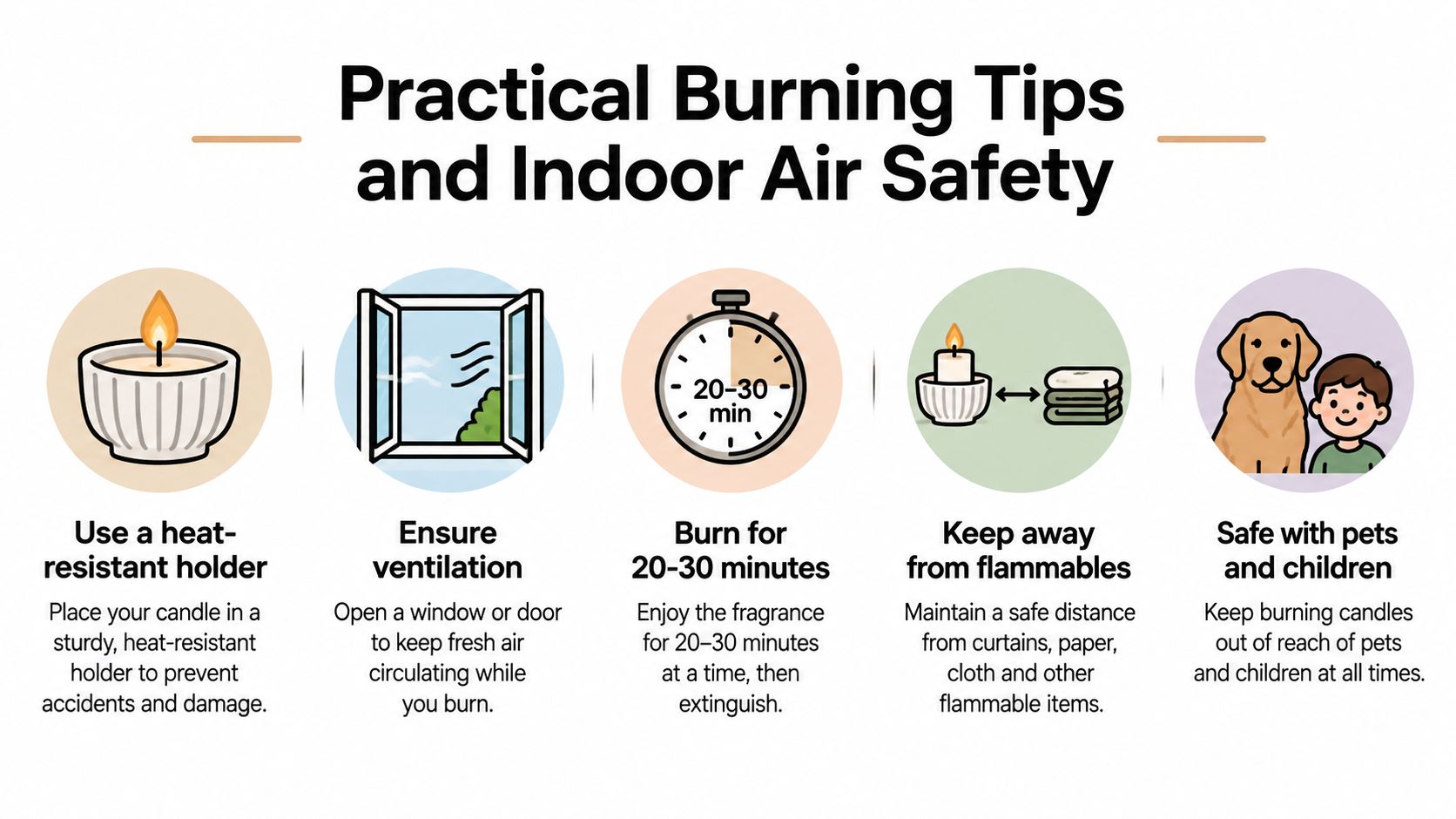
Use one stick, then reassess the room. If the smoke feels sharp, the space is too small, the draft is poor, or the scent is too concentrated for your comfort.
A few situations call for extra caution. Homes with infants, toddlers, pregnant people, cats, birds, or small mammals are better off with very light use or an alternative like a diffuser or non-smoke fragrance option. If a stick tunnels, the room may be too humid, the burn tip may need a cleaner light, or the product may be uneven.
When it's time to stop, extinguish the ember in sand rather than water. That keeps residue down and avoids the sloppy ash that some people get when they dunk the end and relight it later.
Video for a quick visual on setup and airflow:
Scent Pairings That Make Cinnamon Shine
Cinnamon gets heavy if you use it alone for too long, so pairing matters. The right partner can brighten the blend, round off the spice, or give the room a more meditative feel.
Four pairings that work for different settings
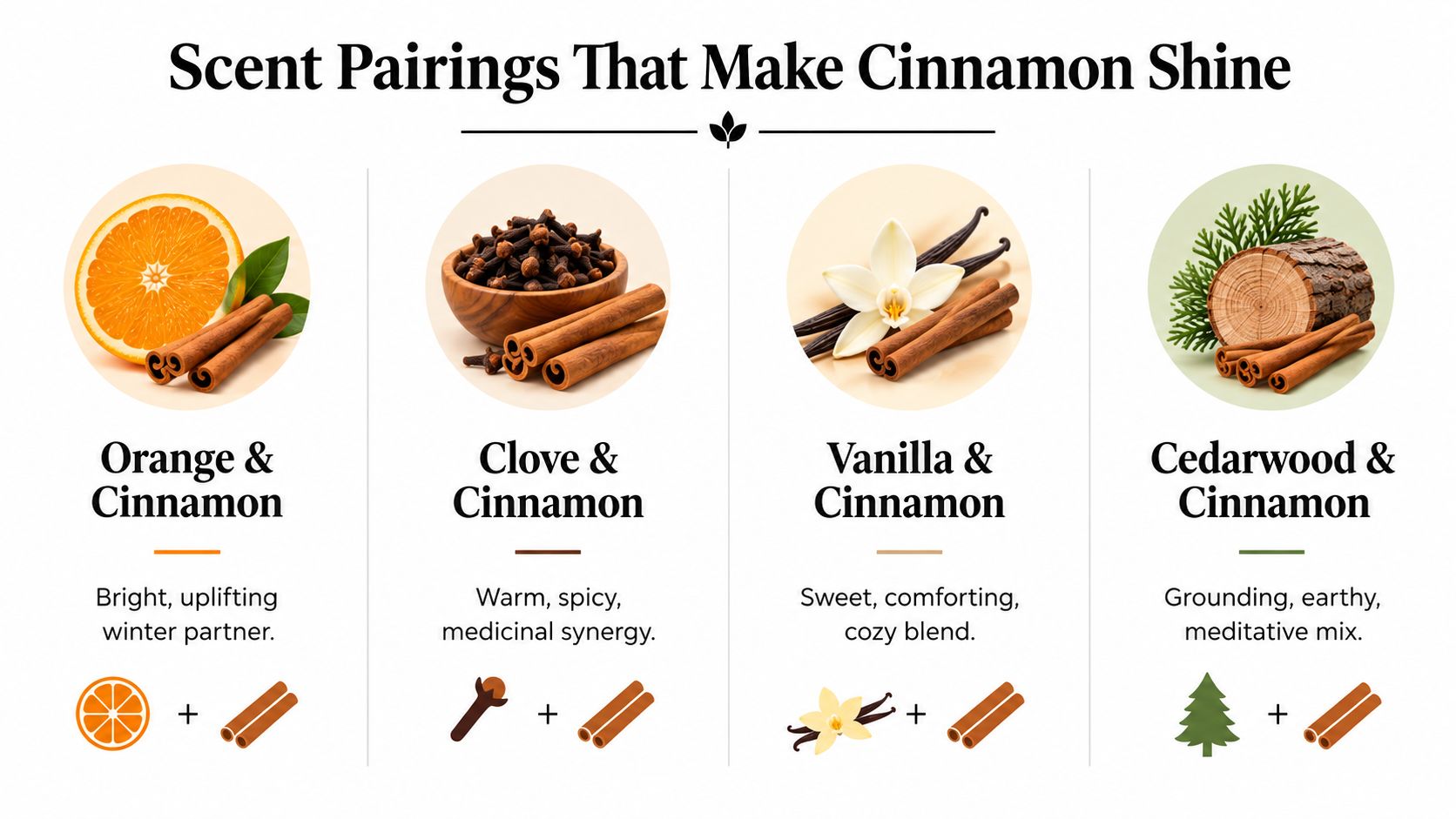
Orange and cinnamon feels bright and welcoming. It works well for winter mornings, entryways, and short mood-lifting sessions because citrus softens cinnamon's dense base without hiding it.
Clove and cinnamon pushes the blend into a classic holiday register. It suits brief rituals, gift displays, and seasonal retail tables, but it can feel dense if burned for too long.
Sandalwood and cinnamon is the more grounded option. It works for meditation or reading because sandalwood slows the profile down and keeps the spice from feeling sharp.
Frankincense and cinnamon creates a cleaner, resinous balance that fits spiritual spaces and retail blends where you want warmth without sweetness.
For a simple DIY tray, layer cinnamon with orange peel and a cedar stick. That mix reads as autumnal without becoming sugary, and it's easy to build with common materials instead of specialty stock.
FAQs
How long does cinnamon incense scent typically last in a room?
The lingering scent depends on room size, ventilation, the incense format, and how long it was burned. A well-ventilated room will generally clear the aroma faster than a small enclosed space.
Can cinnamon incense help make a room smell less stale?
Cinnamon incense can mask unwanted odors with its strong warm-spice aroma, but it does not remove the underlying source of an odor. Cleaning and ventilation are still the better first steps for persistent smells.
Is cinnamon incense a good choice for seasonal home decorating?
Yes. Its warm, familiar spice profile naturally fits autumn, winter, holiday, and harvest-themed settings. It can complement seasonal décor without requiring a strong visual change to the room.
Are cinnamon incense sticks suitable for use in a retail store?
They can be used in retail environments when the business permits burning incense and adequate ventilation is available. Because scent preferences vary, retailers should consider whether a strong cinnamon aroma fits the shopping environment and customer experience.
What should I look for when choosing cinnamon incense for a gift?
Consider the recipient's preferred scent strength, the incense format, packaging, and intended use. A milder cinnamon profile may be more versatile for someone who is new to incense, while stronger blends may suit experienced incense users.
If you're interested in how aroma pairings can support heat-based rituals, the SunnyBay heat therapy blog is a helpful adjacent read. The point isn't to stack strong scents just because they're strong, it's to balance brightness, depth, and burn time so the room feels intentional.
Buying Cinnamon Incense for Retail and Wholesale
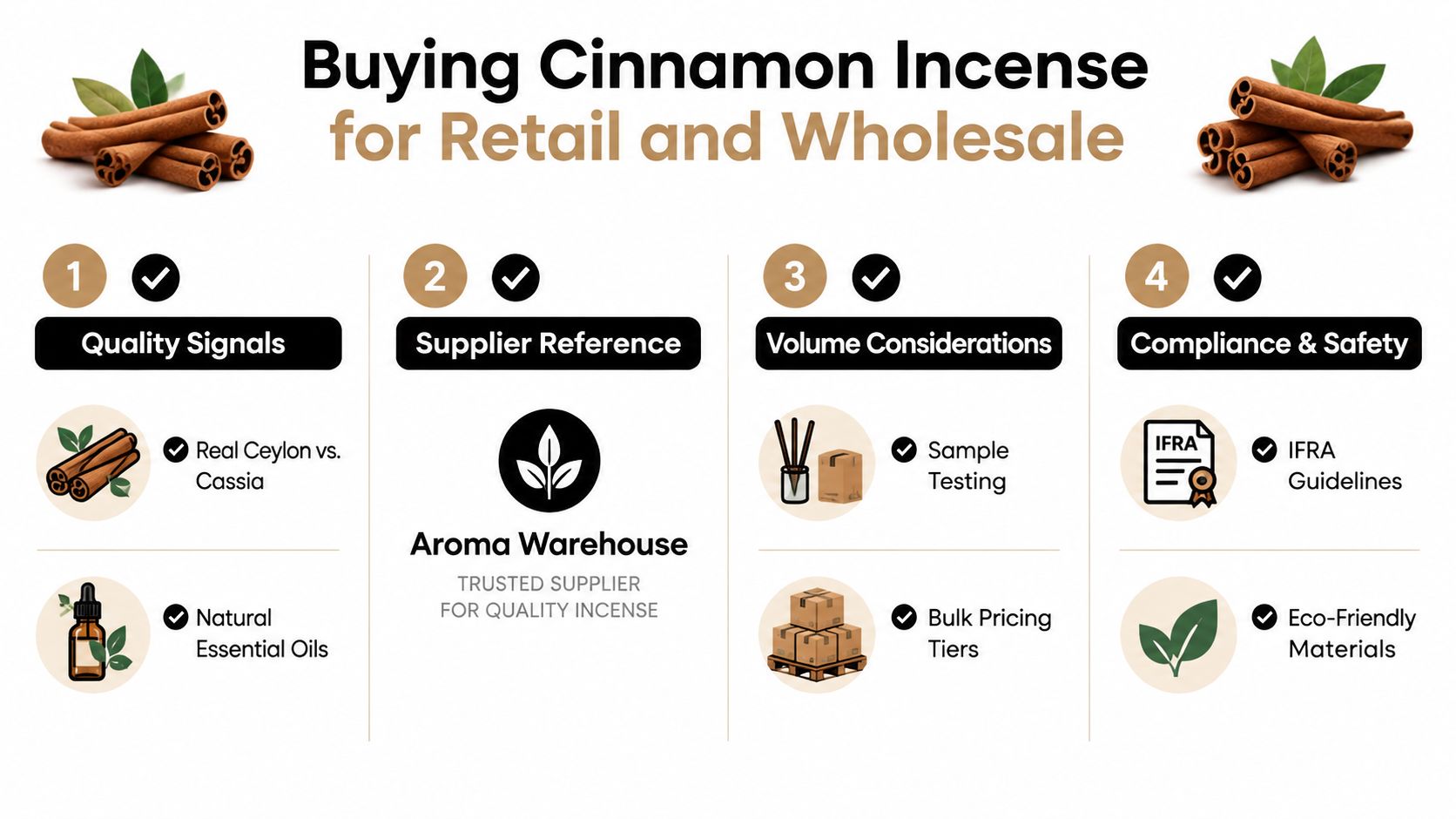
Buying cinnamon incense well means checking more than scent strength. Look first at labeling, because real Ceylon vs. cassia, bark-based fragrance, and synthetic cinnamaldehyde notes don't smell identical. Cassia usually gives a bolder throw, but the sharper, one-dimensional profile can be a clue that the blend leans heavily on fragrance rather than botanical depth.
Aroma Warehouse is one option in the wholesale and retail space, and its wholesale incense sticks page is a practical reference point for buyers comparing formats and pack styles. For any supplier, the same basic checklist still applies.
What to ask before you place an order
Ingredient disclosure. Ask whether the cinnamon note comes from bark, essential oil, fragrance oil, or a blended base.
Burn-test samples. A clean sample should smolder evenly, hold its form, and avoid heavy soot.
Packaging format. Retail shelves often need individual sleeves, while bulk buyers usually do better with resealable pouches.
Documentation. Ask for MSDS paperwork and lead-time consistency, especially if you're planning seasonal resets.
Private label options. If you're building a holiday line, ask whether custom blends or white-label cinnamon sticks are available.
Price comparisons should focus on what you receive, not just the headline rate. Freight, import handling, and minimum order quantity all affect whether a cinnamon stick is profitable on your shelf. A cheaper stick that crackles, tunnels, or smokes too hard usually costs more in returns and customer complaints than the better-made option.
For retailers, the right cinnamon incense is the one that matches your customer, your room size, and your safety standards. For home users, the same rule applies, because the best experience is a clean burn, a manageable smoke level, and a scent that feels warm without overwhelming the space.
If you want to stock or use cinnamon incense with more confidence, browse the current selection and product details at Aroma Incense Warehouse. You'll find incense, burners, and related fragrance supplies that make it easier to choose the right format for home use, retail shelves, or seasonal displays.


