Cinnamon Scent: Aroma Profile, Types, Uses & Fragrance Blends
Updated: Aug 10

You know the moment. You open a shop door, lift the lid on a new incense box, or switch on a diffuser, and cinnamon rolls out first, warm and familiar, almost like someone just baked something sweet in the back room. People rarely stop at “nice smell.” They lean in, because the scent of cinnamon carries memory, comfort, and a little bit of ceremony all at once.
That reaction isn't accidental. Cinnamon has a very long history as a prized aroma, from ancient Egyptian use to classical-era status value, and its scent still reads as cozy and luxurious in modern homes and retail displays (historical overview). If you curate fragrance for customers, or you want your own space to smell intentional, understanding what makes cinnamon feel so rich helps you choose better incense, oils, and diffuser blends. For a broader selection mindset, many readers also compare warm scents with guides like AI image upscaling options, then use that same “compare the layers” instinct when shopping fragrance.
Cinnamon also behaves differently depending on format. A bottle of oil, a hand-dipped incense stick, and a warmer each reveal different parts of the aroma, so the same label can lead to very different experiences. That's why the practical details matter, especially if you're comparing products alongside resources such as best aromatherapy oils for relaxation.
Table of Contents
Why the Scent of Cinnamon Captivates Us - Why it feels warm so quickly - Why shop owners pay attention to it
The Aroma Anatomy of Cinnamon - The middle note does most of the work - Why tiny changes matter
Ceylon vs Cassia Choosing the Right Cinnamon Scent - Side by side for buyers - How to choose by setting
Fragrance Pairings That Elevate Cinnamon - Start with the classics - A few practical blend directions
Cinnamon in Aromatherapy and Incense - Why format changes the experience - Use it with restraint
When You Smell Cinnamon but None Is There - Association is not the same as a phantom smell - What to do first
Selecting and Storing Cinnamon Fragrance Products - What to look for before you buy - Keep the scent intact
Why the Scent of Cinnamon Captivates Us
Walk into a room where cinnamon is already burning, and the scent usually reaches you before the décor does. It feels intimate and polished at the same time, which is why shops, spas, and seasonal displays rely on it so often. That first impression carries weight because cinnamon has a long history in ritual use, funerary practices in Rome, and embalming in Egypt, long before home fragrance became a retail category (historical context).
Why it feels warm so quickly
Cinnamon does not smell flat. It opens with a sweet-spicy snap, then softens into a rounder finish, so the aroma feels immediate and lingering at once. That layered effect helps a single cinnamon note make a room feel settled rather than merely scented.
For buyers, that difference matters. A cinnamon product that feels sharp in the package may turn smoother once it is warmed or burned, while a gentler blend may read as more refined in a quiet room. The result depends on whether the product was built for a quick burst, a steady background presence, or a fuller seasonal profile. Shoppers often notice the contrast most clearly in incense, oil burners, and diffuser blends, where heat and airflow change how the note unfolds.
Practical rule: if a cinnamon product smells one-dimensional in the package, check how it behaves when warmed or burned, because the lived aroma often tells a more accurate story than the label.
Why shop owners pay attention to it
Retailers value cinnamon because it signals a mood fast. Customers do not need a long explanation to understand it, and they usually know within seconds whether they want something stronger, sweeter, or more refined. That makes cinnamon a useful anchor note in incense walls, holiday displays, and mixed fragrance assortments.
The same logic helps home users. If a room already carries wood, vanilla, or spice notes, cinnamon can tie them together and soften rough edges. If the space feels bright and airy, cinnamon can add contrast and make it feel more grounded.
For a clearer sense of how scent presentation shapes perception, it helps to compare fragrance descriptions with product imagery and sourcing notes, including AI image upscaling options and fragrance oils and essential oils understanding the key differences. Buyers who understand those differences usually judge cinnamon products more accurately.
A close look at the fragrance side also helps. If you want to see how relaxing blends are built around warm notes like cinnamon, this overview of aromatherapy oils for relaxation gives useful context for how scent profiles are chosen in practice.
The Aroma Anatomy of Cinnamon
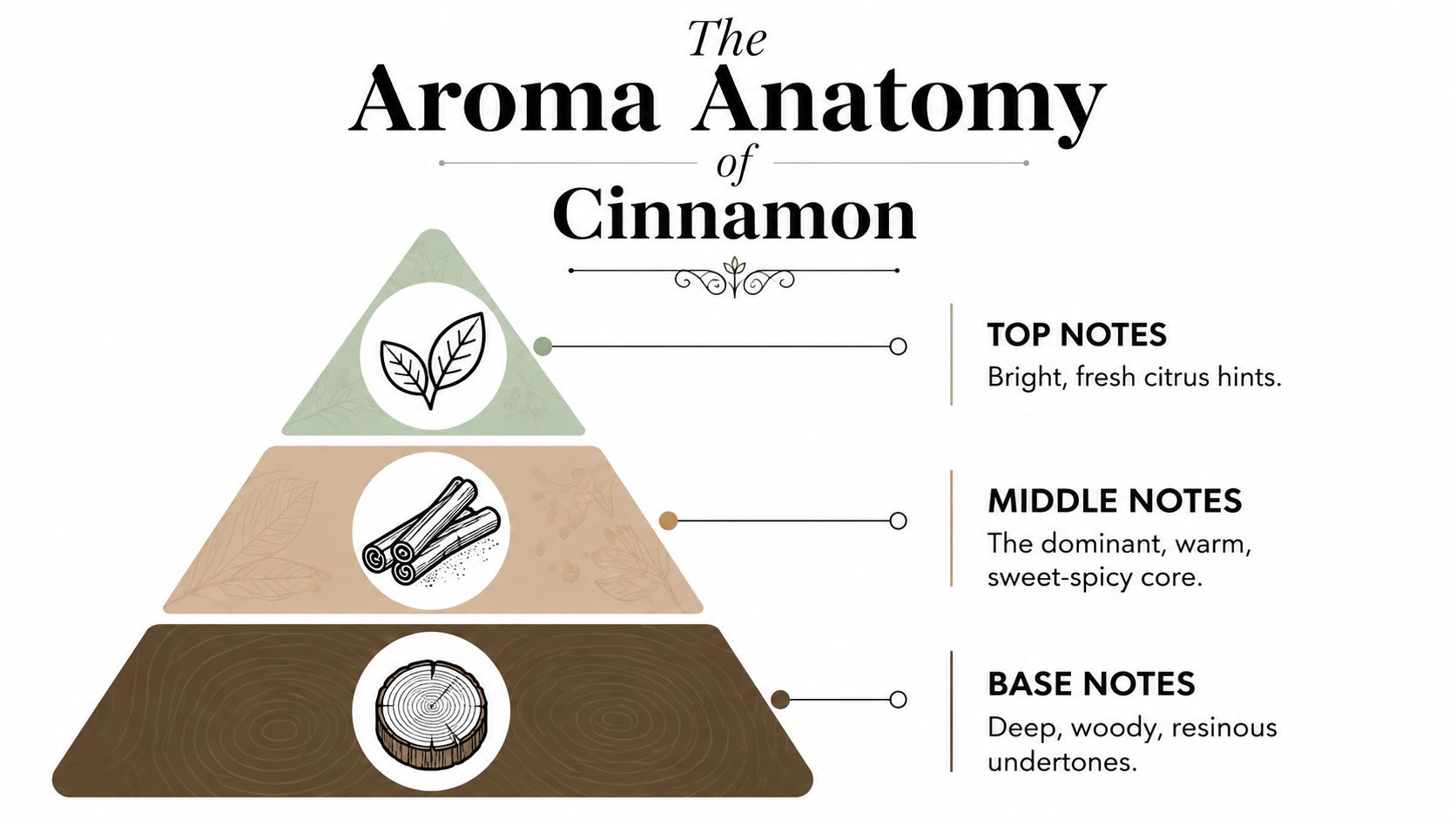
Open a bottle of cinnamon oil, light an incense stick, or run a diffuser blend with cinnamon in the mix, and the first impression usually feels immediate. That quick hit comes from a layered aroma structure, where the strongest molecules lead the way and the quieter ones shape the finish. The scent of cinnamon works like a chord, with one note carrying the melody while smaller constituents add texture, lift, and depth. The dominant odorant is trans-cinnamaldehyde, which typically makes up about 65–75% of cinnamon bark oil, while bark oil itself represents roughly 1–4% of the bark by mass (chemical profile). That concentration is a big reason cinnamon can smell intense even when you use very little.
The middle note does most of the work
In fragrance language, cinnamon usually sits in the middle of the scent experience. It arrives quickly, feels warm and sweet-spicy, and gives the impression of body. That is the part most customers recognize right away, whether they are smelling an oil bottle, a diffuser blend, or an incense stick.
The middle note does not act alone. Eugenol adds clove-like warmth, while cinnamyl acetate, coumarin, and terpenes bring woody, sweet, and balsamic dimensions (ingredient composition overview). These trace compounds are easy to overlook on a label and easy to notice in the air. A product with more of those softer materials may feel fuller and more rounded, while one that leans harder on cinnamaldehyde can come across as brighter and more piercing.
That difference matters on the shelf and in the room. A cinnamon incense with a softer blend can seem smoother as it burns, while a sharper oil may project faster in a diffuser and read as more assertive in the first few minutes. Shop owners often see that same product described as sweet, spicy, woody, or resinous, because the supporting compounds shift how the main note is perceived.
Why tiny changes matter
Small shifts in trace constituents can change how cinnamon diffuses and how long the scent feels balanced in a room. A freshly opened oil can smell bolder and more direct, while a heated incense may seem smoother because combustion adds its own smoky layers. A diffuser can highlight the top of the aroma first, then let the warmer middle settle in as the room fills.
Practical rule: if a cinnamon fragrance smells harsh in one format and elegant in another, the formula may be fine. The delivery method changed what your nose heard first.
Like a painting under different light, the same colors remain, but the contrast shifts. That is why product descriptions that mention spice, balsamic depth, woodiness, or sweetness are more useful than vague “cinnamon scent” labels.
For shoppers who want to compare product types, the distinction between a true fragrance oil and a plant-derived essential oil matters in how the aroma is experienced and used. A useful reference is fragrance oils and essential oils understanding the key differences, because cinnamon products often sit across both categories in real retail settings.
Ceylon vs Cassia Choosing the Right Cinnamon Scent
Cinnamon is not a single note on a shelf. In fragrance products, the two names shoppers meet most often are Ceylon and cassia, and they do not settle in the air the same way. Ceylon usually reads as lighter and more layered, while cassia comes across as bolder and more direct, so the better choice depends on how much presence you want in the room.
The aroma structure helps explain that split. Cinnamon scent carries eugenol for clove-like warmth, along with cinnamyl acetate, coumarin, and terpenes that add woody, sweet, and balsamic depth. Those trace compounds act like supporting instruments in a song, changing whether the blend feels polished, spicy, or smooth. In product terms, the variety and the formula both shape the final impression, which is why a well-made retail description matters as much as the ingredient name. For a supplier-style look at cassia-focused products, readers can refer to cassia essential oil.
Side by side for buyers
Characteristic | Ceylon Cinnamon | Cassia Cinnamon |
|---|---|---|
Overall feel | Lighter, softer, more layered | Stronger, sharper, more forceful |
Best impression | Elegant background warmth | Bold spice presence |
Diffuser behavior | Softer room fill | Faster, more noticeable projection |
Incense use | Subtle seasonal blends | Rich, festive blends |
Shopping cue | Nuanced and refined description | Strong and spicy description |
How to choose by setting
A spa, meditation room, or boutique that wants a quieter warm atmosphere usually fits Ceylon-style descriptions better. The scent supports the space without taking over it. Cassia-style products work well in a gift shop, holiday stall, or smoke shop display, where a more immediate statement helps the fragrance stand out against other smells in the room.
Safety questions also come into view, especially with concentrated cinnamon products. Labels matter here more than with many softer fragrances, because the aroma can be potent and the delivery method changes how intense it feels. Resellers do better when they match the product to the intended use, rather than assuming every cinnamon item will behave the same way in a diffuser, an incense blend, or a bottled oil.
The practical shortcut is simple. Choose the version that matches the mood you want to create, not only the scent name on the front of the package.
Fragrance Pairings That Elevate Cinnamon
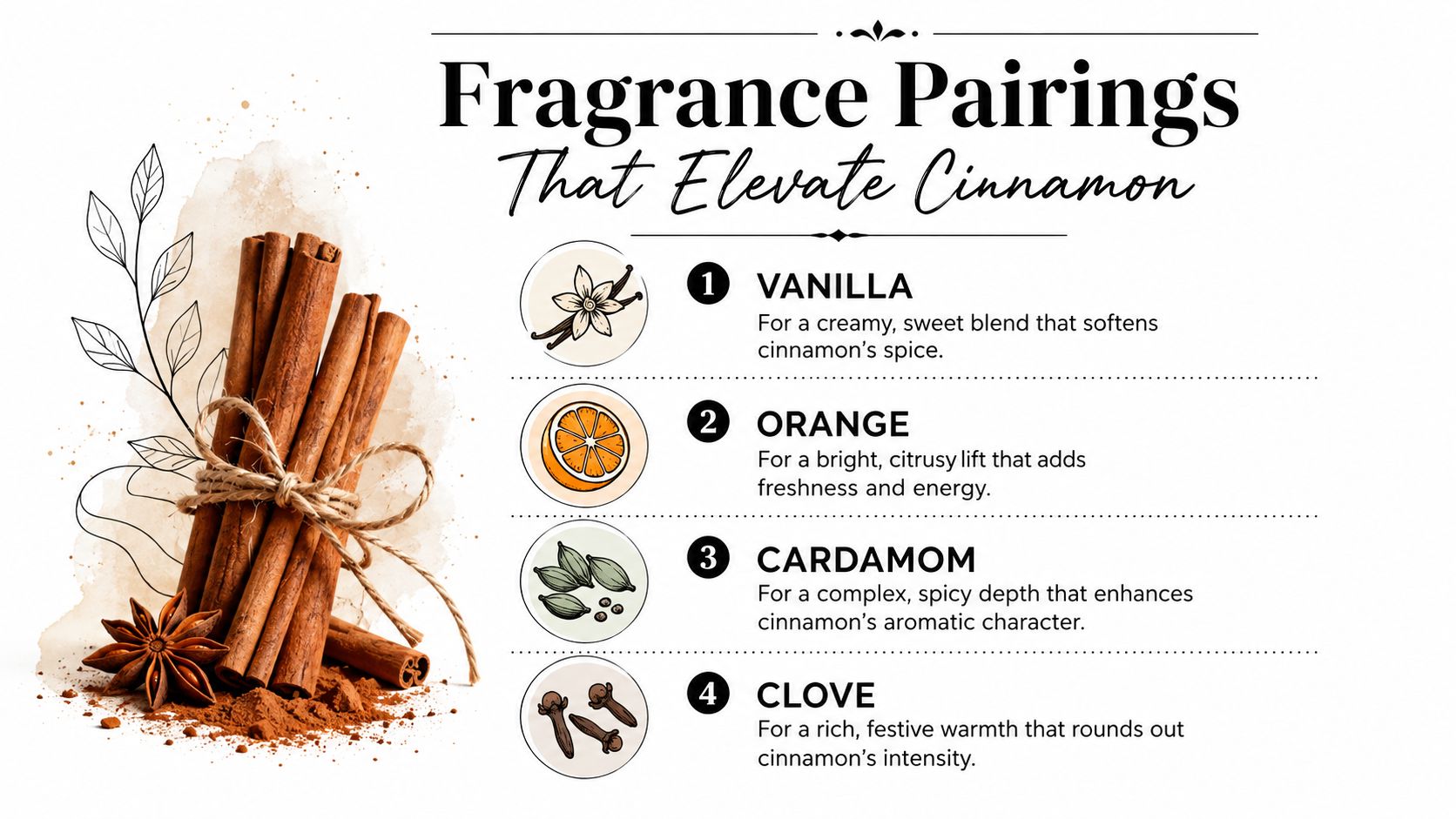
Cinnamon blends well because it already carries sweetness, warmth, and spice. The easiest pairings either soften its edges or brighten its top notes. That's why vanilla, orange, cardamom, and clove show up so often in seasonal fragrance lines and incense blends.
Start with the classics
Vanilla gives cinnamon a creamier finish. It smooths the sharper spice and makes the blend feel rounder, which is why a product description that mentions vanilla often signals a more comforting, dessert-like aroma. Orange works differently. It lifts cinnamon with a fresher, brighter top note, so the blend feels more cheerful and less dense.
For formulations that need a richer profile, cardamom adds complexity without crowding cinnamon. Clove pushes the blend deeper into festive territory, which is useful for incense, holiday candles, and warmer room fragrances. A supplier can use these combinations to nudge a product from “simple spice” into a more layered seasonal profile. For a vanilla-based comparison, vanilla fragrance oil is a useful pairing reference.
A few practical blend directions
Vanilla plus cinnamon gives a smooth, cozy profile for bedrooms, living rooms, and softer incense lines.
Orange plus cinnamon reads brighter and more inviting, especially in entryways or retail displays.
Cardamom plus cinnamon feels more nuanced, which works well in premium oil blends.
Clove plus cinnamon creates a dense, festive character that can hold up in stronger burners.
A cinnamon blend usually fails when every note competes for the same space. The best pairings give one note a job, then let the others support it.
For adventurous blenders, patchouli and frankincense can add earthier structure, while bergamot can keep the blend from feeling too heavy. The trick is to think in roles, not just ingredients. Cinnamon can be the center, the bridge, or the accent, depending on what surrounds it.
That's also why seasonal product lines often mix spice with fruit or resin. The blend becomes easier to sell because customers can recognize the mood before they identify every note.
Cinnamon in Aromatherapy and Incense
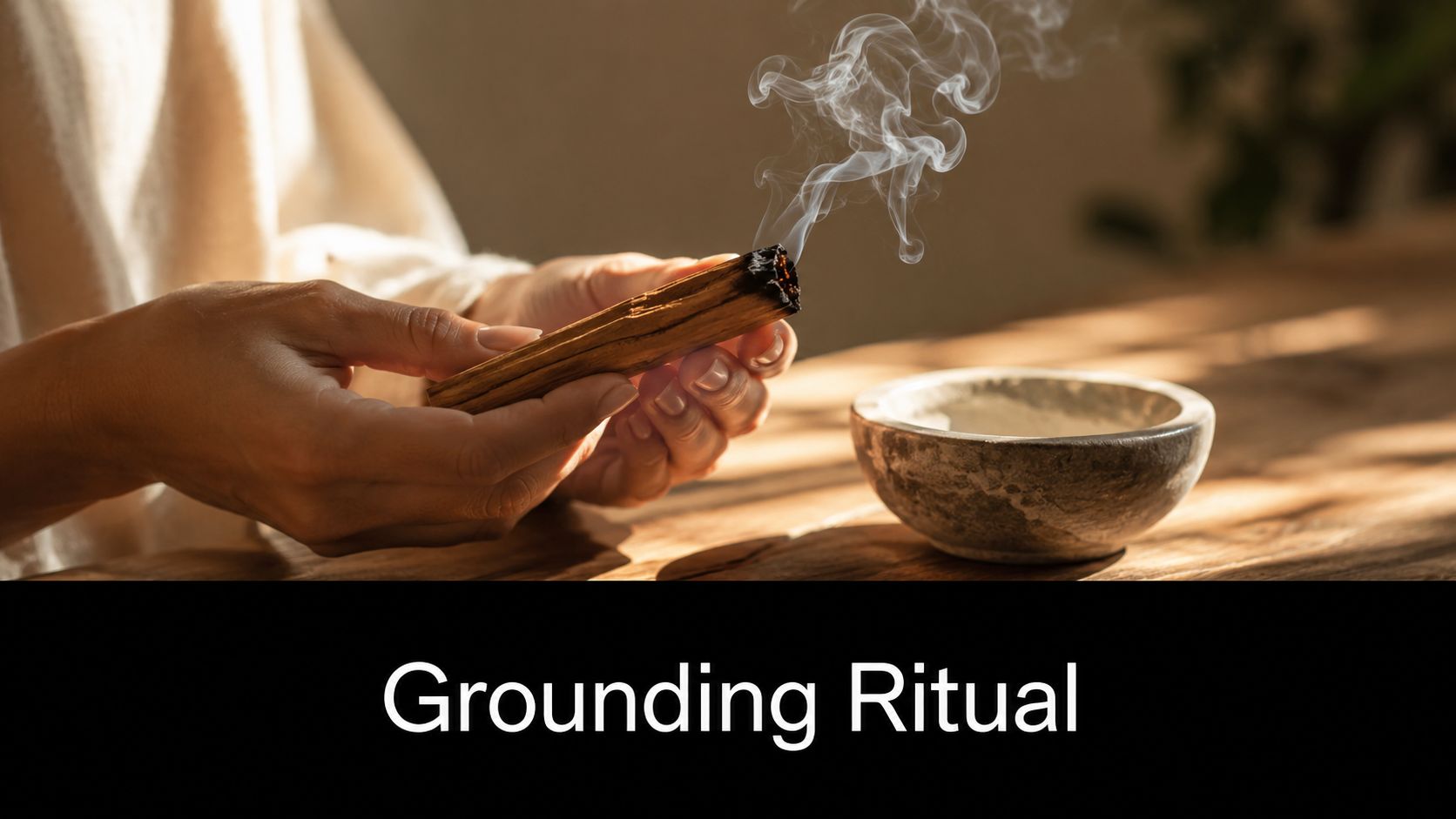
Cinnamon shows up in aromatherapy because the scent feels both comforting and alerting. It can make a room feel lived-in, especially in colder seasons or in spaces where people want a sense of ritual. Retailers and home users also like it because one aroma can support multiple moods, from cozy to ceremonial.
If you're browsing for a ready-made option, you can find spiced incense for relaxation, but the format matters as much as the note itself. Incense, oil, resin, and warmer each express cinnamon differently. A stick tends to project faster and feel more atmospheric, while a diffuser can keep the scent cleaner and more controlled.
Why format changes the experience
Hand-dipped incense often adds a smoky frame to cinnamon, which can deepen the fragrance and make it feel more textured. Resin incense can feel richer still, especially if the surrounding materials are woody or balsamic. Diffusers and warmers usually keep cinnamon clearer, so the spice note stays more recognizable and less charred.
That is why the same cinnamon label can satisfy different buyers. One customer wants a cozy room scent for evening use. Another wants a stronger ritual burn for meditation or seasonal display. They are both asking for cinnamon, but they want different kinds of diffusion.
The old history of cinnamon as a luxury aroma also helps explain why it still works in atmosphere-building products today (historical trade context). The scent already carries a built-in sense of value, so it behaves well in curated spaces.
Use it with restraint
Cinnamon oils can be potent, so moderation matters, especially in small rooms. Good ventilation keeps the scent pleasant instead of heavy. If you sell or use cinnamon products often, test them in the exact format they'll be used in, because a fragrance that smells balanced on a blotter may feel much stronger in a closed room.
Aroma Warehouse is one place that supplies cinnamon incense sticks alongside burners, diffusers, and fragrance tools for customers who want to build a warmer home scent profile. That kind of product range makes it easier to match the format to the setting rather than forcing one cinnamon product to do every job.
When You Smell Cinnamon but None Is There
You catch a cinnamon note in the air, then check the room and find no candle, no incense, no spice jar, and no diffuser running. That kind of experience often starts with a simple scent association. A bakery down the block, a neighbor's fragrance, or even weather, holiday décor, or a passing memory can make cinnamon seem present when there is no clear source. Online discussions often jump straight to spiritual meanings, but that is only one way people try to explain it, as seen in discussion of unexplained smell experiences.
Association is not the same as a phantom smell
A familiar aroma can surface in the mind without a strong physical source. Cinnamon does this easily because it is tied to comfort, baking, incense, and seasonal routines, so even a faint cue can feel surprisingly vivid. The nose may be picking up a nearby trace, while the brain supplies the rest, like a label placed on a scent that is only partly there.
Phantosmia is different. It is the medical term for smelling odors that are not present. That does not mean every unexplained cinnamon scent points to a health problem, but repeated or distressing phantom smells should not be dismissed without thought. Consumer advice often skips that distinction, which leaves readers unsure whether they are dealing with fragrance memory or a true odor distortion.
If the smell appears once, fades quickly, and fits the setting, it often points to association. If it keeps returning with no source, it deserves more attention.
A fragrance that has gone stale can also confuse the picture. Oils and incense lose clarity over time, especially when they are stored badly, so reviewing how to tell if your oils have gone bad can help separate a weak product from a genuine smell perception issue.
What to do first
Start with the room, not the sensation. Check for real sources such as incense residue, simmer pots, stored spices, nearby food, or another person's fragrance product. Cinnamon is a layered aroma, so even a trace from another item can register as the full scent in a quiet space. If nothing explains it and the experience repeats, pay attention to context, especially if other smell distortions show up too.
The wider conversation around smell disorders has become more serious in recent years, so odd odor experiences deserve more care than internet folklore usually gives them. That does not mean panic. It means keeping both possibilities in view, a harmless fragrance association and a true phantom smell, until the pattern becomes clearer.
For shop owners, the practical step is simple. If customers mention a cinnamon smell that is not tied to a product on the shelf, ask whether they mean an ambient aroma, a memory, or a repeated unexplained odor. Those are three different situations, and each one calls for a different response. If they are looking for a familiar warm scent to compare against, you can find spiced incense for relaxation and test how a real product behaves in the room.
Selecting and Storing Cinnamon Fragrance Products
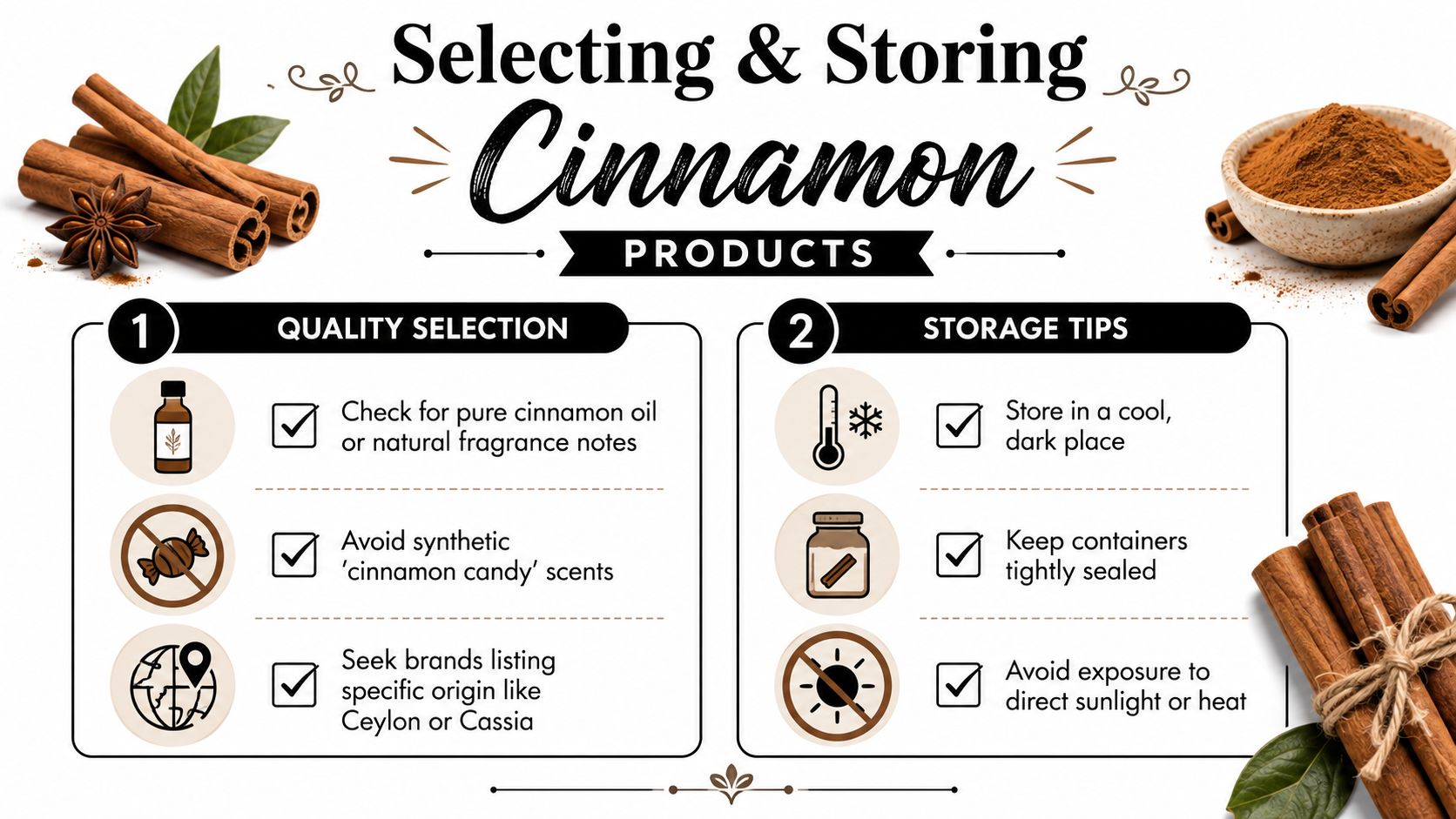
A good cinnamon product should smell clear, not muddled. Whether you're buying incense for a shop shelf or oils for home use, look for descriptions that tell you what kind of cinnamon you're getting and how it's intended to perform. When a label is vague, you're usually guessing about strength, warmth, and longevity.
What to look for before you buy
Check the wording: product pages that name Ceylon or cassia are usually more useful than generic “cinnamon scent” labels.
Watch the style: if you want a natural-leaning profile, look for clear mention of pure cinnamon oil or natural fragrance notes instead of candy-like descriptions.
Match the mood: a “cinnamon candy” style product can be fun, but it won't behave like a warm, woody fragrance in every room.
For storage and shelf life questions, it also helps to read do essential oils expire how to tell if your oils have gone bad. That kind of guidance is useful because cinnamon products can lose freshness if they sit in heat or light for too long.
Keep the scent intact
Store oils in a cool, dark place and keep lids tightly sealed. Heat, sunlight, and air exposure can flatten the aroma or change the balance of the top notes. Incense should stay dry and protected from strong ambient odors, since cinnamon can pick up surrounding smells more easily than some buyers expect.
For resellers, consistency matters just as much as freshness. A cinnamon line that smells strong in one batch and flat in another will confuse customers quickly. Clear labeling, stable storage, and careful rotation help prevent that problem.
The goal is simple. Buy cinnamon products that tell you what they are, then store them so the scent still feels warm and distinct when you open them months later.
Five New Frequently Asked Questions
These avoid repeating the questions/topics already directly covered in your article.
How long does the scent of cinnamon typically last in a room?
The longevity of cinnamon depends on the product format, concentration, ventilation, and room size. Incense generally creates a noticeable aroma while burning and for some time afterward, while fragrance oils and diffuser products can provide a more controlled, extended scent experience.
Is cinnamon considered a strong fragrance note?
Yes. Cinnamon is generally considered a powerful fragrance note because its spicy, sweet, and warm character can become noticeable quickly. A small amount can add significant presence to an incense or fragrance blend.
Does cinnamon smell different in incense compared with fragrance oil?
Yes. Cinnamon incense can develop smoky, toasted, or deeper woody qualities as it burns, while fragrance oil generally presents a cleaner and more direct cinnamon aroma. The base ingredients and delivery method also influence the final scent.
What fragrances can make cinnamon smell less sweet?
Woody, earthy, citrus, and resinous notes can reduce cinnamon's sweeter impression. Patchouli, frankincense, cedarwood, orange, and certain herbal notes can create a more balanced or sophisticated cinnamon fragrance profile.
How can retailers choose cinnamon fragrances for different customers?
Retailers can offer several cinnamon profiles, such as sweet cinnamon, spicy cassia, softer Ceylon-inspired aromas, and cinnamon blends with vanilla, citrus, woods, or resins. Offering different formats such as incense and fragrance oils also lets customers choose how strongly they want the scent expressed.
Aroma Warehouse offers cinnamon incense sticks, fragrance oils, burners, and related aroma tools for home users, shops, and resellers who want to build warm seasonal scent displays. If you're comparing cinnamon notes across incense, oils, and diffuser formats, visit Aroma Warehouse Wholesale Fragrance Oils and browse the products that fit your space, your shelf, and the aroma profile you want to create.