

Vanilla & Sandalwood: A Guide to Blending and Selling
Updated: Aug 22

You want your home, studio, or shop to smell warm and welcoming, but the first spray of a sweet fragrance can quickly turn into a dense cloud of sugar. Vanilla & sandalwood solves that problem when it's blended with restraint. Vanilla supplies the creamy, familiar comfort people notice first, while sandalwood gives the composition a dry, polished foundation that keeps the sweetness from becoming flat or cloying.
That balance matters for both personal use and product development. A blend that smells beautiful in a bottle may feel heavy in a small room, and a fragrance that works on skin may disappear in a diffuser. The practical answer is to treat sandalwood as structure, not merely as another scent. The ratios, format, and supporting notes below will help you create a version that feels inviting, composed, and wearable.
Table of Contents
Why Vanilla and Sandalwood Work Together - Sandalwood gives vanilla structure - Why the pairing feels current
The Olfactory Profile of Each Note - Vanilla changes with origin - Sandalwood supplies the foundation
Choosing the Right Product Format - Incense for immediate atmosphere - Fragrance oils for control and resale - Electric diffusers for shared spaces - Bath salts require formulation discipline
Safe Blending Recipes and Usage Instructions - A balanced room spray - A grounding meditation oil - Bath salts and incense
Pairing Additions for Different Moods and Settings - Citrus for daytime and professional spaces - Lavender for evening rituals - Patchouli for earthy depth - Salt, musk, tea, and suede for a drier interpretation
Storage and Shelf Life Best Practices - Format-specific storage
Why Vanilla and Sandalwood Work Together
A treatment room can smell inviting after a long afternoon, yet a sweet vanilla product may quickly make it feel like a bakery. Sandalwood solves that problem by giving vanilla a dry, composed foundation. The room still feels warm, but the aroma reads as restful rather than edible.
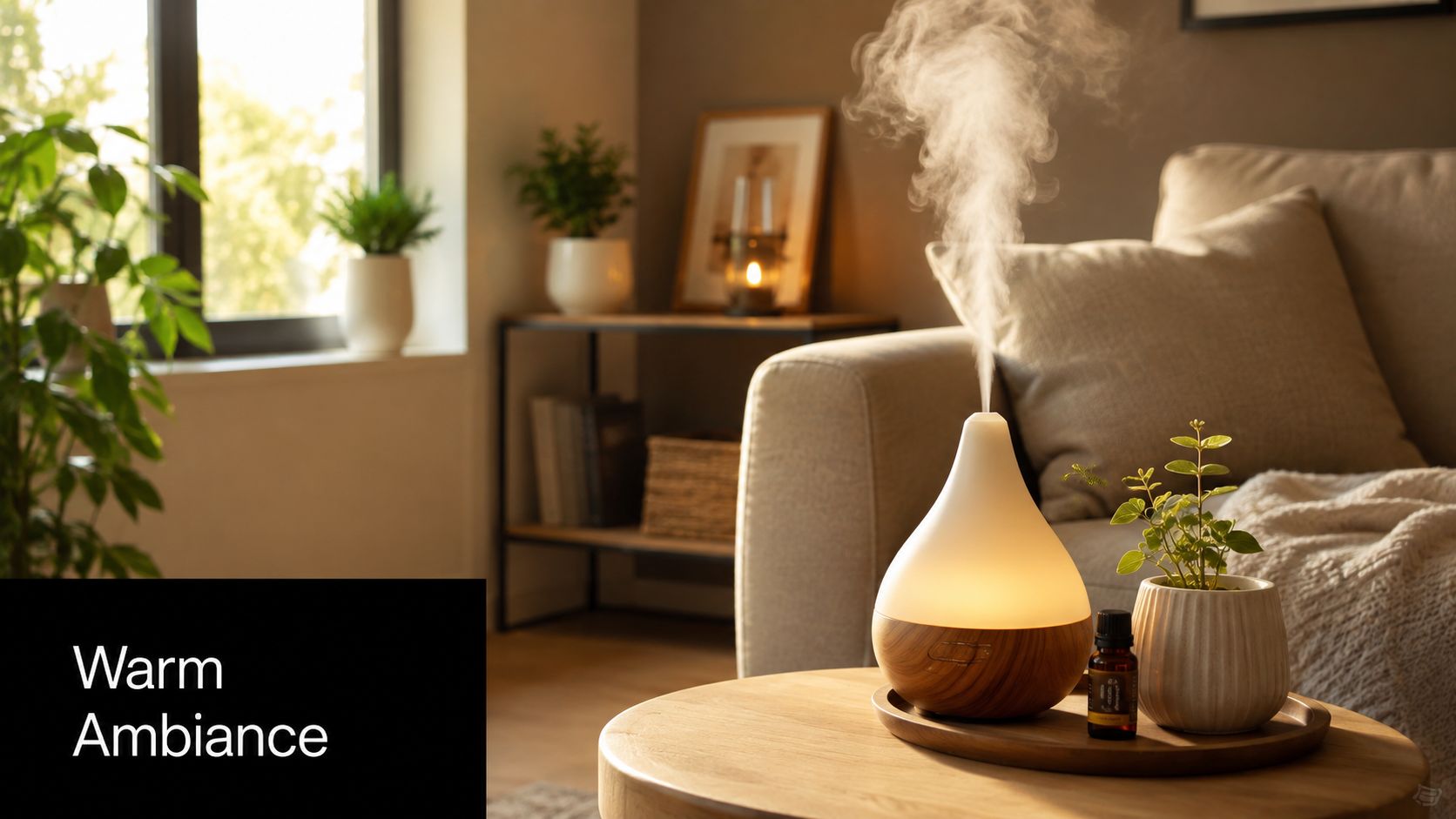
Vanilla creates the welcome. Sandalwood controls the landing. Vanilla brings creamy sweetness, balsamic warmth, and familiarity. Sandalwood contributes smooth wood, gentle dryness, and persistence. Together, they create contrast without a sharp edge. The result can feel intimate and polished, provided the vanilla does not dominate the formula.
Sandalwood gives vanilla structure
Vanilla supplies the first impression, while sandalwood supports the blend as that opening

softens. Without enough structure, vanilla may smell flat, sugary, or dense. Too much sandalwood creates a dry, medicinal effect and removes the softness customers usually want from this pairing.
For a home diffuser, start with a vanilla-to-sandalwood ratio of about 1:2. That sandalwood-led balance works well in a bedroom, treatment room, or small sitting area. For a softer personal fragrance, reverse the emphasis and try 2 parts vanilla to 1 part sandalwood, then assess the drydown on skin. A wholesale buyer should test both directions in the final format, because a room spray, candle, incense product, and skin product will not release the same balance.
The base note should do more than add another smell. It should keep the vanilla from becoming syrupy as the product warms, diffuses, or wears.
This pairing also suits incense, personal fragrance, room products, and contemplative settings. Vanilla makes wood approachable. Sandalwood gives sweetness discipline, helping the formula remain coherent instead of turning into a single dessert-like impression.
Why the pairing feels current
Current fragrance discussions favor airy, resinous, creamy, and less sugary vanilla styles, with sandalwood used as a smooth, skin-like base rather than a dessert accent, as described in recent 2026 fragrance trend coverage. The direction supports a practical formulation choice: keep vanilla noticeable, then let sandalwood carry the dry, lasting part of the composition.
For home users, test the blend in its actual space. A ratio that feels balanced in a large shop may overwhelm a small bedroom. For wholesale development, evaluate the first impression, the room impact, and the lingering drydown separately before approving a batch.
A useful related example is this guide to patchouli and vanilla fragrances. Patchouli is earthier than sandalwood, but the same principle applies. A deeper base can make vanilla feel deliberate, textured, and less sugary.
The Olfactory Profile of Each Note
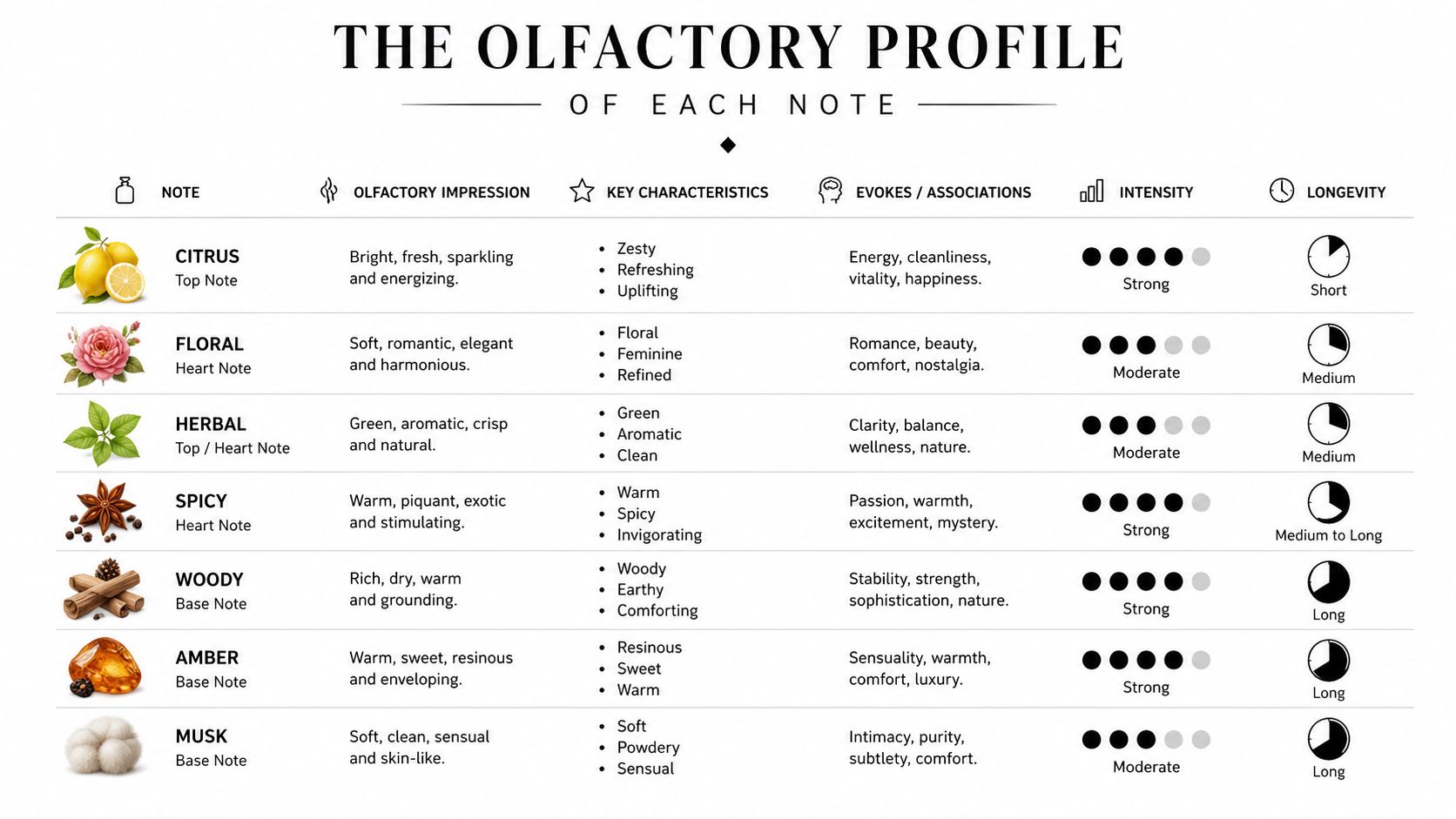
Vanilla and sandalwood don't just contribute “sweet” and “woody” impressions. Their performance comes from different families of odor-active molecules, and those molecules influence how a formula opens, develops, and lingers.
Vanilla's best-known aroma compound is vanillin, the molecule associated with its recognizable creamy, sweet character. Yet vanilla isn't a single-molecule fragrance. A 2024 ACS study found that vanillin had the highest odor threshold ratio in Vanilla planifolia, while 4-methoxybenzyl alcohol and 4-methoxybenzaldehyde showed stronger odor-dilution-test factors in Vanilla pompona and partly in Vanilla tahitensis as reported in the study document.
That distinction matters at the counter. Two vanilla materials may both be labeled vanilla, yet one can smell custardy and dense while another feels floral, balsamic, or softly powdery. Cultivar and growing region change the balance of odorants, so an origin-specific material gives a perfumer more control than a generic assumption about “vanilla.”
Vanilla changes with origin
Vanilla production is highly concentrated. Madagascar contributes roughly 42% of global supply, while Madagascar, Indonesia, Mexico, Papua New Guinea, and China together account for 85% to 91% of world output, and those countries have held the leading positions for 22 years, according to Choices Magazine's discussion of vanilla sourcing. The same source identifies Indonesia at 24%, with Mexico, Papua New Guinea, and China contributing 7%, 7%, and 6%, respectively.
Those figures are commercially relevant because weather, pollination, labor, and harvest disruptions in a small group of origin markets can affect availability and pricing. For formulation, the sensory takeaway is more important than the supply statistic. Madagascar Bourbon vanilla often serves as the familiar benchmark, while other origins and species can bring different floral, fruity, or balsamic dimensions.
Sandalwood supplies the foundation
Natural sandalwood's signature comes from a compact group of sesquiterpene alcohols, especially alpha-santalol and beta-santalol. A perfumery chemistry review describes sandalwood oil as containing more than 90% alcohols, while earlier GC-sniffing work identified alpha-santalol, beta-santalol, alpha-santalene, alpha-santalal, beta-santalal, and spirosantalol among its most intense aroma compounds, as summarized in this sandalwood fragrance chemistry review.
Sandalwood's alcohol-rich profile helps explain its smoothness and persistence. It doesn't merely add woodiness. It rounds sharp edges, supports diffusion, and helps a volatile creamy note feel anchored. In a vanilla blend, that makes sandalwood useful as a fixative-style structural base, particularly when you want a close, lasting aroma rather than an explosive opening.
Choosing the Right Product Format
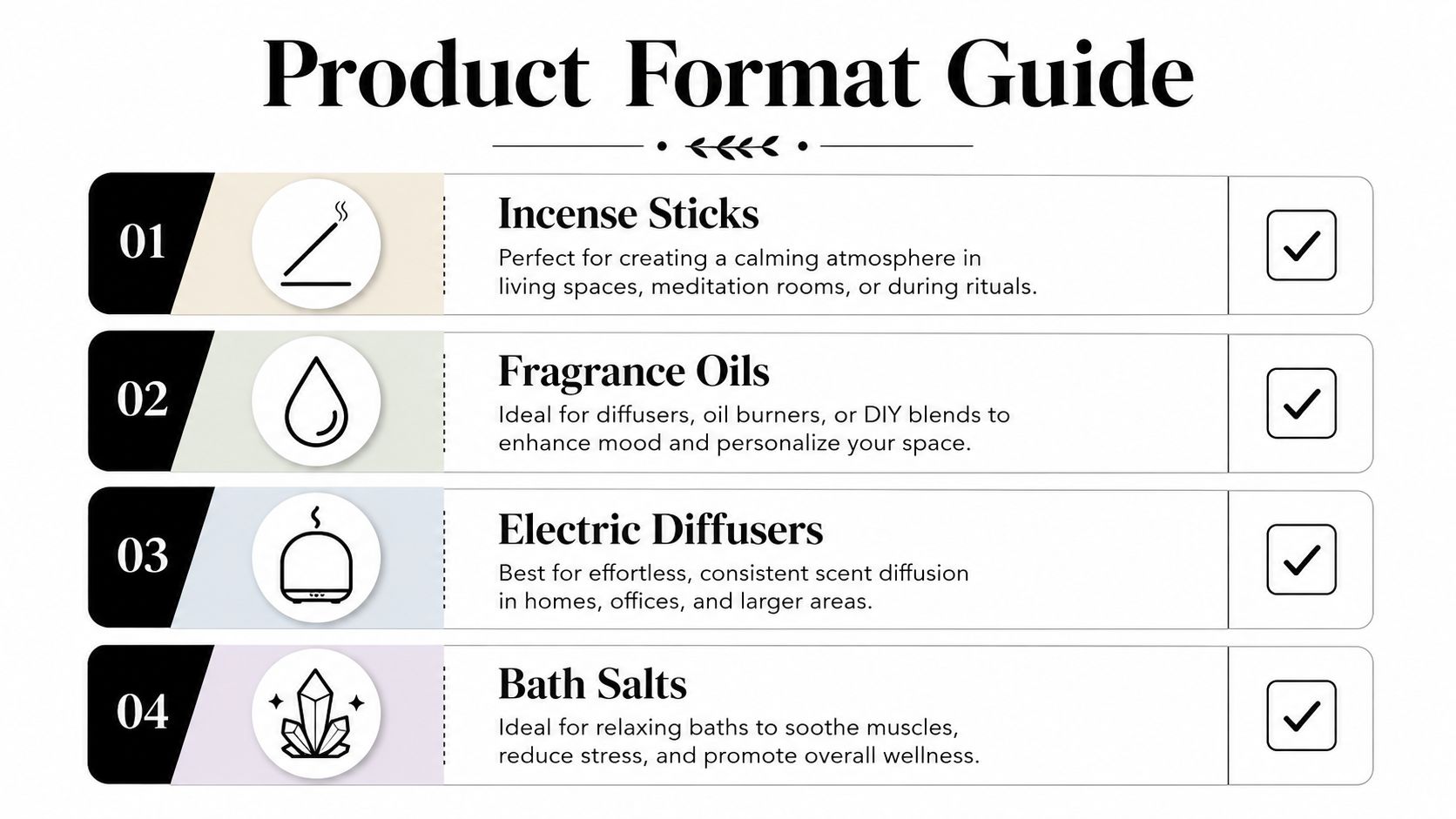
The same vanilla and sandalwood fragrance oil profile behaves differently in every delivery system. Incense gives you heat and smoke, a fragrance oil gives you adjustable concentration, an electric diffuser offers controlled ambient release, and bath salts depend on water, skin contact, and safe formulation.
Incense for immediate atmosphere
Incense sticks and cones work when you want a noticeable ritual moment. Heat transforms the fragrance quickly, which can make vanilla feel richer and sandalwood feel smokier than it does in a cold oil blend. That intensity is useful in meditation spaces, entryways, and evening routines, but it can be too much for a small, poorly ventilated room.
Burn one piece at a time, place it on a stable heatproof burner, and keep it away from curtains, paper, children, and animals. Never leave burning incense unattended. If the aroma becomes thick, extinguish it rather than trying to mask it with another note.
Fragrance oils for control and resale
Fragrance oils are the most flexible option for home makers and wholesale buyers. You can use them in oil warmers, room sprays, candles, reed diffusers, or custom packaging when the supplier's specifications support the intended application. They also make sampling easier because you can test a small amount on blotter paper before committing to a complete product line.
For a practical look at how sandalwood fragrance oil is typically positioned and described, see this sandalwood fragrance oil guide. Don't assume an oil is suitable for every use. Check its intended application, recommended dilution, IFRA documentation where relevant, and compatibility with the selected base.
Electric diffusers for shared spaces
Electric diffusers suit offices, studios, reception areas, and homes where flame-free operation matters. Follow the device manufacturer's water capacity and oil instructions rather than copying a universal drop count. Start with the lowest recommended amount, run the diffuser briefly, and evaluate the room after the aroma has circulated.
A blend with more sandalwood generally feels calmer and less sugary in shared spaces. A vanilla-heavy formula may work better in a larger area or for short periods, especially if the room already contains scented candles, cleaning products, or other fragrance sources.
Bath salts require formulation discipline
Bath salts can be attractive retail items, but fragrance oil doesn't automatically disperse safely in bathwater. Use a properly formulated bath product base or a suitable solubilizing system, and follow supplier guidance for skin-use concentration. Keep fragrance oils out of direct contact with eyes and undiluted skin, and label products with appropriate usage and allergy information.
The same principle applies to all four formats: the right scent can fail in the wrong delivery system. A beautifully balanced oil may become smoky under heat, overpowering in a small diffuser, or poorly dispersed in a bath.
For reed diffuser projects, pay particular attention to the carrier's evaporation behavior and reed compatibility. A fragrance can smell excellent but perform poorly if the base is too thick or the reeds don't draw it effectively. This reed diffuser base resource is useful when you're comparing bases rather than treating every carrier as interchangeable.
Safe Blending Recipes and Usage Instructions
A reliable vanilla and sandalwood blend usually starts drier than expected. Vanilla expands as it warms and diffuses, so adding a little more at the beginning can push a formula from creamy to cloying. The recipes below are starting points for small tests, not universal safety limits. Always confirm the supplier's application guidance before using any material on skin, in a bath, or in a product sold to customers.
Application | Vanilla Ratio | Sandalwood Ratio | Carrier/Base | Notes |
|---|---|---|---|---|
Room spray | 1 part | 2 parts | Finished room-spray base | Start sandalwood-led and test on blotter and in the room |
Meditation oil | 1 part | 3 parts | Jojoba or another suitable carrier | Use only within the finished product's skin-safe dilution |
1 part | 1 part | Prepared bath-salt base with solubilizer | Fragrance must disperse properly before skin contact | |
1 part | 2 parts | Appropriate incense solvent or dip base | Test on a small number of unscented sticks first |
A balanced room spray
Combine 1 part vanilla fragrance oil with 2 parts sandalwood fragrance oil, then add the fragrance blend to a finished room-spray base according to the base supplier's maximum load. Shake or mix thoroughly, fill a small glass or compatible plastic bottle, and allow the scent to settle before judging it.
Spray onto a blotter first, then into the intended room. If the opening feels too dry, add vanilla in small increments. If the room feels sugary after the spray has circulated, increase the sandalwood portion rather than adding another sweet note.
A grounding meditation oil
For a meditation oil, use a sandalwood-led concentrate at 1 part vanilla to 3 parts sandalwood, then dilute the concentrate in jojoba or another carrier suitable for the intended skin application. Patch test the finished product and keep it away from broken or irritated skin. Essential oils and fragrance oils aren't interchangeable, and a product labeled for room use shouldn't be applied to the body.
Use a clean glass bottle, a measured dropper, and a written batch record. Mark the date, materials, ratios, and intended use before you make the blend.
For background on working with vanilla fragrance oil, consult this vanilla fragrance oil guide. It can help you distinguish a fragrance material intended for product creation from a ready-to-use personal product.
Bath salts and incense
For bath salts, begin with equal parts vanilla and sandalwood in the fragrance concentrate, then add that concentrate only at the level permitted by your bath-salt base and supplier documentation. Mix the fragrance into an appropriate solubilizer or dispersing system before combining it with salts. Fragrance floating on the bath surface isn't a successful formula.
For incense dipping, use 1 part vanilla to 2 parts sandalwood in a compatible dip base and test a small batch of unscented sticks. Allow the sticks to dry fully in a ventilated area before evaluating them. Heat can intensify sweetness and smoke, so a formula that seems understated before burning may become ideal after combustion.
Small-batch rule: Test the scent in its final format, not just in the mixing bottle. Heat, water, air movement, and skin temperature can all change the balance.
Pairing Additions for Different Moods and Settings
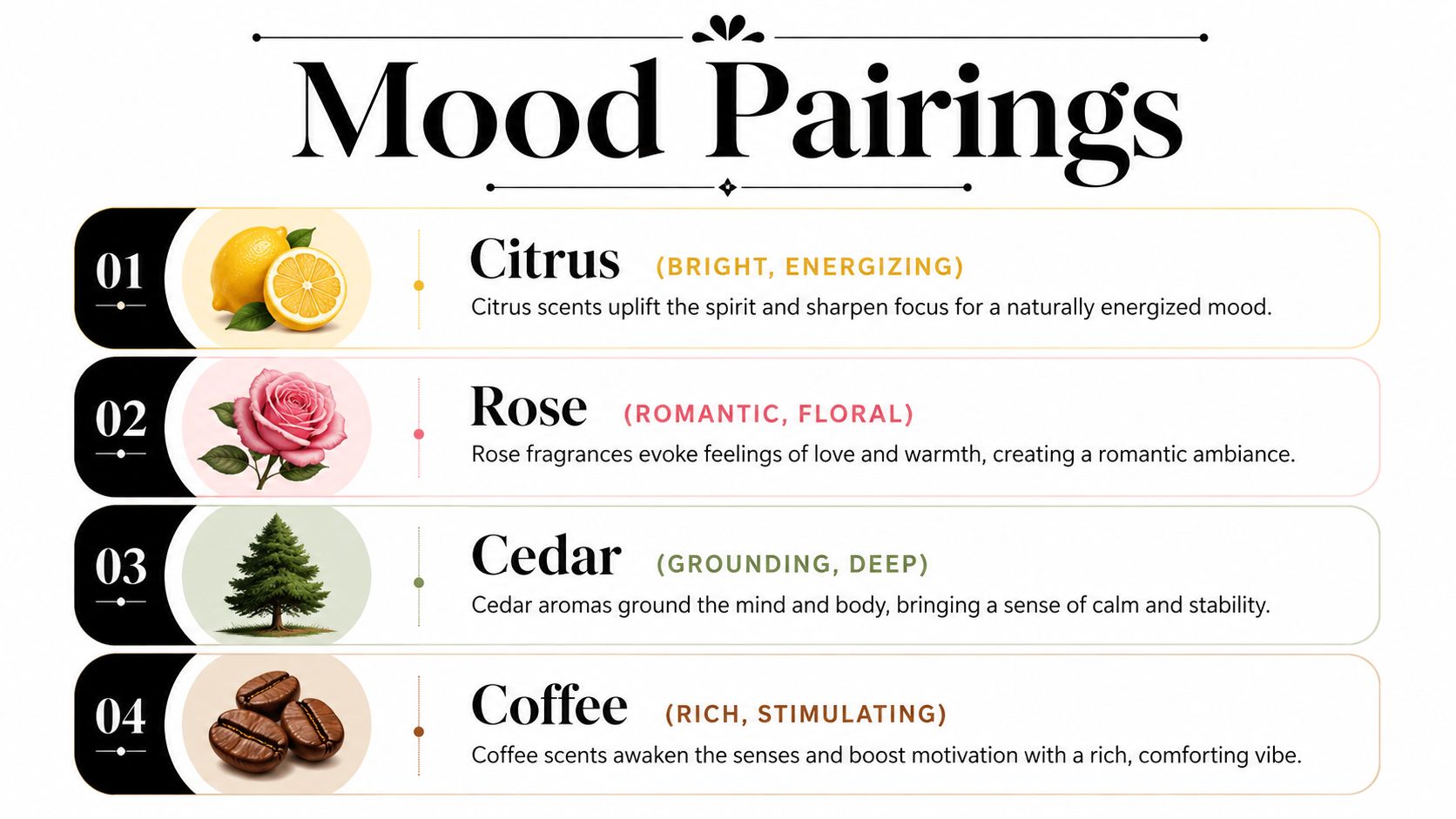
Vanilla and sandalwood provide a reliable base, yet the third note decides whether the blend feels bright, meditative, earthy, or modern. Choose that addition to correct a specific imbalance. If vanilla feels too sweet or heavy, use a note that adds lift, dryness, or texture. If the blend feels austere, add measured softness rather than just increasing the vanilla.
Citrus for daytime and professional spaces
Bergamot, mandarin, and other citrus notes brighten the opening and make the sandalwood base feel more transparent. They suit offices, reception areas, yoga studios, and warm-weather rooms because they cut through creaminess while preserving sandalwood's smooth structure.
Keep citrus in an supporting role. Too much can smell sharp at first, then leave the drydown disjointed once the top note fades. Smell the rested blend before adding more vanilla, since extra sweetness can make the final formula feel denser.
Lavender for evening rituals
Lavender adds a clean herbal-floral character and gives vanilla and sandalwood a calmer direction. It works in bedtime products, meditation oils, and quiet personal rituals. Heavy use can push the formula toward a medicinal smell, so measure it carefully and let sandalwood connect the herbal opening with the creamy base.
Patchouli for earthy depth
Patchouli contributes soil, leaf, and dark balsamic tones. It grounds a soft gourmand and can make the result feel more unisex, useful for autumn products or customers who avoid overtly sweet fragrance. Patchouli can take over quickly. Add it in small increments, then smell the blend after resting, when its presence may become more pronounced.
Salt, musk, tea, and suede for a drier interpretation
Salt and musk make vanilla feel airier and more skin-like. Tea and suede add dryness without the heavier earthiness of patchouli. These pairings suit the broader preference for less sugary, more textured gourmand fragrance, where vanilla appears with salt, musk, tea, incense, suede, and lactonic notes, as described in recent fragrance trend reporting.
Layering advice: Change one variable at a time. Adding citrus, musk, and patchouli together prevents you from identifying which material improved or weakened the blend.
A bottle test can mislead. Spray each version on separate blotters, label them, and compare them after the opening fades. For room products, test in the actual space. A combination that smells refined in a shop may feel dense beside upholstery, candles, incense, or cleaning products.
Storage and Shelf Life Best Practices
Vanilla and sandalwood products stay more consistent when you protect them from heat, light, air, and contamination. Store fragrance oils in tightly closed containers away from direct sunlight and strong temperature swings. Amber or opaque glass generally offers better light protection than clear glass, while compatible containers reduce the risk of the fragrance interacting with the packaging.
Don't leave a bottle beside a sunny window, radiator, hot car, or diffuser. Keep droppers clean and avoid returning unused material to the original container. Water, dust, and residue can alter a product more quickly than normal aging.
Format-specific storage
Fragrance oils usually tolerate storage better than finished incense because a sealed liquid container limits exposure to moving air. Incense sticks and cones should remain dry and sealed, since humidity can affect burning, scent release, and texture. Bath salts need protection from moisture, especially in packaging that customers open repeatedly.
Watch for practical warning signs:
Odor change: Sour, stale, plasticky, or unusually sharp notes can indicate oxidation or contamination.
Appearance change: Color shifts can occur with some vanilla-containing formulas, so compare appearance with the supplier's guidance rather than judging scent from color alone.
Performance loss: Incense that burns poorly, oil that smells muted, or salts that clump heavily may need review.
Packaging damage: Leaking caps, softened labels, and swollen containers should be removed from sale.
For wholesale inventory, use first-in, first-out rotation and record arrival dates by batch. Keep a retained sample from each production run so you can compare older stock with newer material. Home users can write the purchase date on the bottle and buy smaller quantities if they use fragrance slowly.
Storage can't rescue a poorly sealed product, and it can't make an unsuitable container compatible. Choose packaging as part of the formula, not as an afterthought.
Wholesale and Retail Guidance for Aroma Warehouse Customers
Vanilla and sandalwood remain useful category staples because they serve several customer motivations without requiring a highly specialized fragrance vocabulary. Meditation customers often want a calm, grounded profile. Gift buyers respond to warmth and familiarity. Home décor shoppers may prefer a room scent that feels polished rather than overtly sugary.
A sensible assortment gives each group a different entry point:
Incense sticks or cones: Accessible for ritual and home ambiance.
Fragrance oils: Useful for makers, oil-warmer customers, and custom product development.
Bath salts: Strong fit for spa, wellness, and self-care merchandising.
Accessories: Burners, ash catchers, droppers, bottles, and diffusers can raise the usefulness of the core scent.
Aroma Warehouse supplies incense, fragrance oils, bath salts, diffusers, bottles, droppers, DPG solvent, and unscented incense sticks for repackaging or private-label work. Its wholesale and retail pricing structure, along with the stated policy that no business license is required, gives small retailers and craft sellers a practical way to test a category before building a larger assortment.
Merchandise by use case instead of placing every vanilla product together. Pair a sandalwood incense with a burner for a meditation display, place a vanilla oil beside bottles and droppers for makers, and position bath salts with spa accessories. If you're developing a small brand, resources on how to get your creations on shelves can help you prepare packaging and retail presentation before approaching stores.
Review product economics by format rather than assuming one margin applies to everything. Compare your landed cost, packaging, labor, breakage risk, and display space using a framework such as retail versus wholesale pricing. Start with a focused mix, track which format customers ask about, and expand the winner instead of overbuying every variation.
Frequently Asked Questions About Vanilla and Sandalwood
1. Is vanilla and sandalwood considered a unisex fragrance?
Yes. Vanilla and sandalwood can be presented as a unisex fragrance because the combination does not depend on strongly gendered floral, fruity, or traditionally masculine fragrance characteristics. Vanilla contributes warmth and familiarity, while sandalwood provides a smooth woody element that can appeal to a broad range of fragrance preferences.
The final impression depends heavily on how the fragrance is developed. A sweeter interpretation may appeal to customers who enjoy creamy or gourmand scents, while a version with more emphasis on woods, musk, tea, or other dry notes can feel more understated and sophisticated.
For retailers, this makes vanilla and sandalwood useful when creating products intended for a broad customer base. Instead of marketing the fragrance exclusively toward men or women, it can be described according to its scent character, such as warm, smooth, creamy, woody, comforting, or refined.
2. Is vanilla and sandalwood a good scent for gifts?
Vanilla and sandalwood can be a strong choice for gift products because the fragrance combines two recognizable scent families without requiring the recipient to have highly specific fragrance preferences.
Vanilla provides a familiar and approachable element, while sandalwood adds a more sophisticated woody character. That combination gives retailers flexibility when creating gift sets, seasonal displays, or products intended for customers who are unsure which fragrance someone else will prefer.
The pairing can also be presented in different ways depending on the type of gift. A retailer might position it as a cozy home fragrance, a relaxing scent, a personal fragrance, or part of a self-care collection. The important advantage is that the fragrance concept is easy to understand without relying on an unusual or unfamiliar scent name.
3. Can vanilla and sandalwood appeal to customers who normally dislike overly sweet fragrances?
Yes. A carefully developed vanilla and sandalwood fragrance may appeal to people who normally avoid very sweet scents because the woody character can provide an alternative to a purely gourmand interpretation.
This distinction is especially useful when describing the product to shoppers. Rather than presenting the fragrance as simply “sweet vanilla,” retailers can emphasize the contrast between creamy warmth and smooth wood. That description sets a different expectation before the customer smells the product.
The article's broader discussion of modern vanilla also points toward less sugary interpretations, including combinations that use woods, musk, tea, suede, and other textured notes.
4. What type of customer is most likely to enjoy vanilla and sandalwood fragrance?
The combination can appeal to several customer groups rather than one narrowly defined audience. People who enjoy warm home fragrances may appreciate its comforting character, while customers interested in woody scents may prefer the sandalwood component.
It can also be relevant to shoppers looking for fragrances that feel calm, polished, familiar, or versatile. Gift buyers may be attracted to the recognizable vanilla component, while fragrance enthusiasts may be more interested in the contrast between creamy sweetness and dry woods.
For a retailer, this means the same fragrance can be marketed through different customer motivations. Instead of relying only on the fragrance name, product descriptions can explain the experience the customer should expect.
5. What should shoppers look for when buying a vanilla and sandalwood fragrance?
Shoppers should look beyond the fragrance name and determine what type of product they are actually purchasing, how it is intended to be used, and what information the supplier provides about the material.
A product described as vanilla and sandalwood could be a fragrance oil, incense, diffuser product, bath product, or another finished item. Those products are not automatically interchangeable. The article emphasizes that different delivery systems can change how the fragrance behaves and that buyers should check application information, dilution recommendations, and relevant supplier documentation.
For fragrance makers and small businesses, consistency is also important. Buyers should pay attention to supplier specifications, packaging, batch information, and intended application rather than choosing solely on the fragrance name.
For consumers, the simplest rule is to buy according to the intended use. A fragrance material designed for room products should not automatically be assumed to be appropriate for skin or bath applications.
Aroma Warehouse offers vanilla and sandalwood incense, fragrance oils, bath products, diffusers, and the bottles and accessories needed for home use or small-batch creation. Visit Save on Scents Incense to compare formats, build a sandalwood-led blend, and source a practical assortment for your shop, studio, or next product test.


