

Incienso De Santa Fe: What It Is and How to Burn It
Have you ever bought incense expecting a stick, only to open the package and find a small, dense wood brick? That surprise explains why Incienso de Santa Fe can be easy to love and frustrating to use. The scent may be familiar, especially if you know piñon, but the format behaves differently from a stick, cone, or loose resin.
Incienso de Santa Fe is a species-specific wood incense made in compressed bricks. It needs the right surface, airflow, and lighting technique. Once you understand those differences, choosing a wood, setting up a burner, and explaining the product to a first-time customer becomes much simpler.
Table of Contents
The New Mexico Origins and Why It Still Matters - Place changes the buying decision
Why Wood Bricks Are Not the Same as Sticks or Cones - Why the scent arrives differently
How to Light and Burn It Without Frustration - Establish the ember
Matching Wood Species to the Moment - Use the sampler as a decision tool
Merchandising Ideas for Shops and Studios - Build displays around questions
Common Questions from First-Time Buyers - How long does one wood brick burn? - Do I need a charcoal disc? - Which species is best for a beginner? - Can I burn it around pets or during pregnancy? - Are bulk packs different from gift boxes? - What should a gift shop or yoga studio ask a distributor? - Can I use a regular stick holder? - Why does my brick go out?
What Incienso de Santa Fe Actually Is
A curious shopper usually asks, “What is that compressed brick, and do I burn it like a stick?” The short answer is no. Incienso de Santa Fe is a New Mexico wood-brick incense, made from compressed wood material and designed to smolder on a heat-resistant surface rather than stand upright in a narrow holder.
The product line is organized by wood species, including piñon, cedar, juniper, hickory, alder, mesquite, and fir balsam. The material is described as compressed wood chips rather than a conventional perfumed incense formulation, so each variety gets much of its character from the wood itself. The product listing for the wood incense sampler is useful for seeing how the species-based format differs from fragrance-first incense collections.
The visual presentation also sets expectations. Buyers may see a muted Southwest palette, regional imagery, bilingual labeling, and sampler boxes that place several wood types side by side. The brick itself is usually square or rectangular, dense enough to hold its shape, and intended to rest flat or slightly raised on a suitable burner.
What it isn't
A wood brick isn't a Japanese-style stick, so it doesn't have a slender bamboo core that you light at the tip. It isn't a backflow cone, which is shaped to direct smoke downward, and it isn't loose resin that requires a separate charcoal disc. Treating it like one of those formats is the fastest way to create a poor first experience.
The product copy also warns that these bricks can be larger than many incense cones, harder to light, and prone to going out if they fall over. A buyer may need to reignite a piece, especially if the initial ember is too small or airflow is restricted. The fir balsam product information reflects the practical questions customers often have about lighting and burning.
For a first burn, think of the brick as a compact piece of aromatic wood fuel. It needs heat to establish an ember, a stable surface to remain in place, and enough air to keep smoldering.
The New Mexico Origins and Why It Still Matters
Why does the place of origin matter when the product is a small block of wood? With Incienso de Santa Fe, the answer begins in the early 1960s in Cimarron, northern New Mexico. The company says it moved to Albuquerque about 20 years after its founding, while family ownership and regional production remained part of its identity. The New Mexico Made profile of Incienso de Santa Fe describes an early business that combined Scout-related woodcraft items with an incense idea before becoming a lasting incense-and-burner company.
That history explains why the product feels unlike imported stick incense. Its identity grew from Southwestern wood, local craft, and place-based scent recognition, rather than from a perfume catalog organized around floral or heavily blended fragrances. Piñon became especially important because its resinous forest aroma connects the incense with the terrain many shoppers associate with northern New Mexico.
The company describes a recognizable product line that has continued for more than 50 years, with original burner designs still reproduced in nearly the same form. For a retailer, that continuity gives the brick more meaning than a generic “pine” fragrance. The customer is choosing a compact piece of regional character, as well as something to burn.
Place changes the buying decision
At a museum shop, gift store, or metaphysical counter, a wood name such as piñon or juniper gives shoppers both a story and a sensory reference. “New Mexico wood incense” sets a clearer expectation than “evergreen fragrance,” especially for someone who has never used a compressed wood brick.
The scent vocabulary also carries cultural associations. Piñon and juniper evoke the high-desert environment, while cedar and sage often appear in cleansing or grounding routines. Retailers should present those connections respectfully and specifically. A brick can support personal reflection or ritual, but it should not be marketed as a replacement for every regional or Indigenous practice. For additional context, retailers can review this guide to juniper smudge sticks and their common associations.
Origin becomes useful at the point of sale only when it comes with practical guidance. A customer who buys a regional gift and cannot light it may remember the difficulty more than the aroma. Pair the place-based explanation with a small card showing the appropriate burner and first-light method.
Retail rule: Sell the location and the format together. “New Mexico wood brick, burn it flat on a heat-safe dish” answers the two questions a first-time buyer is most likely to have.
Why Wood Bricks Are Not the Same as Sticks or Cones
A buyer who treats a brick like a stick will probably be disappointed. The three formats may all be called incense, but they differ in shape, material, position, airflow, and the way smoke enters a room.
A stick is usually a slender incense form, often built around a bamboo core and coated with a fragrant paste. It burns vertically from the lit tip. A cone is a compact, shaped mass that generally smolders downward from its surface. A wood brick is a dense slab of compressed wood material that needs to sit securely on a dish, screen, or other suitable support.
The practical difference is control. A stick holder stabilizes the stick while ash falls into a catchment area. A cone holder supports a small, upright mound. A brick needs a broader base because it can tip, and its lower surface needs enough exposure to air and heat to keep the ember alive.
Format | Material | Burn Position | Smoke Volume | Burner Needed |
|---|---|---|---|---|
Wood brick | Compressed, species-specific wood material | Flat or slightly raised | Steady, lower-volume wood smoke | Wide heat-resistant dish, screen, or sand-filled bowl |
Stick | Fragrance-coated stick, often with a bamboo core | Upright or angled | Depends on the formulation, usually a defined smoke trail | Stick holder or ash catcher |
Cone | Shaped incense paste | Upright | Often more concentrated near the start | Cone-safe dish or holder |
Why the scent arrives differently
Wood bricks release aroma from the actual wood feedstock, including compounds associated with the species' natural resins and terpenes. That creates a campfire-like, grounded profile rather than the pronounced top notes many shoppers recognize from floral or perfume-style incense.
The smoke also tends to move more gradually through a room. A cone can produce a noticeable plume from a small point, while a brick often gives a steadier, less dramatic stream. This isn't a flaw. It means the brick works better for someone who wants the room to develop a wood aroma over time rather than receive an immediate burst.
A brick can also be snuffed and relit. That makes it more flexible than a one-use assumption suggests, but only if the customer has a safe way to stop the ember. It shouldn't be left loose on a shelf, moved while hot, or placed in a narrow holder designed for sticks.
How to Light and Burn It Without Frustration
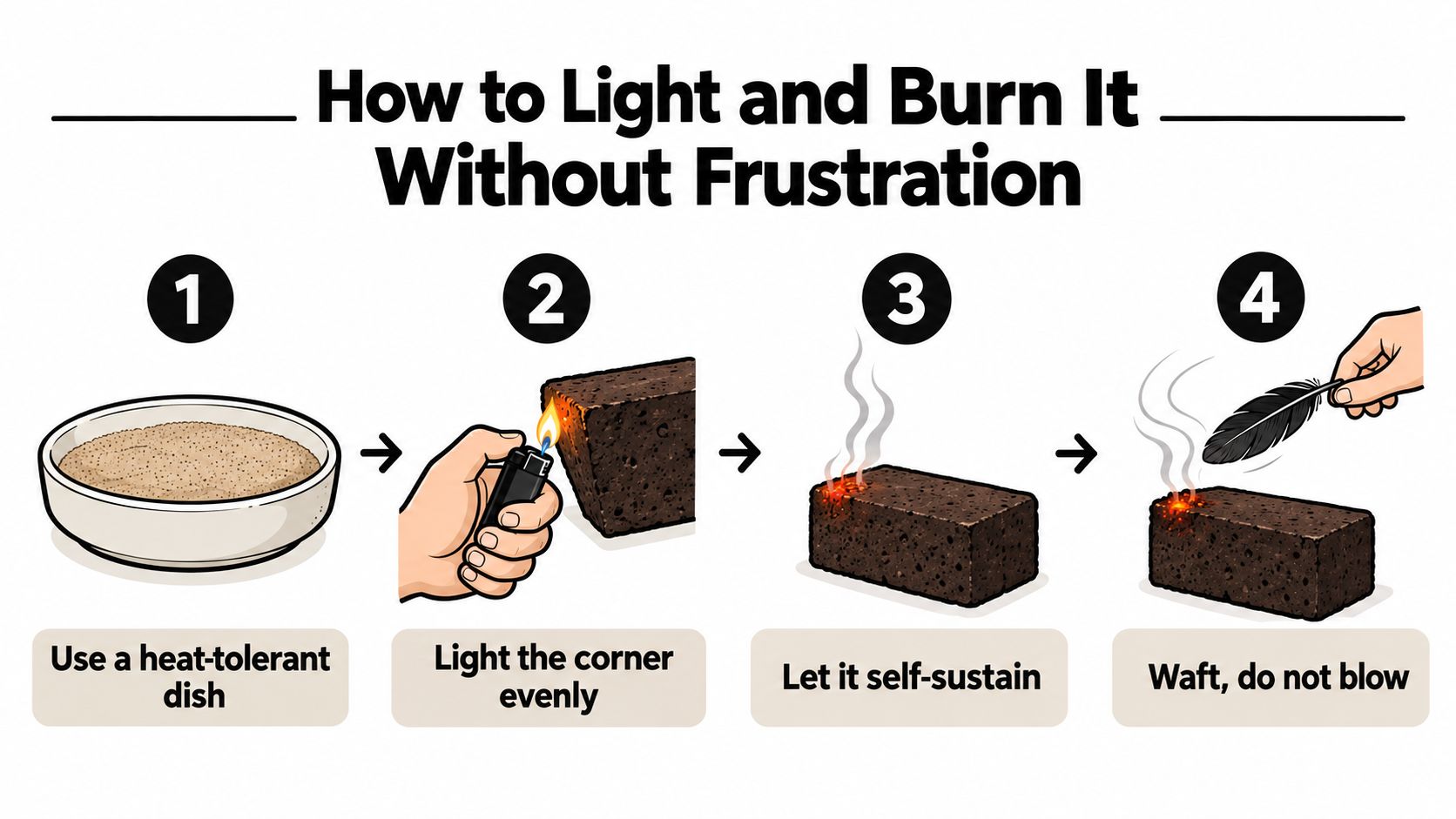
Start with the burner, not the match. Choose a wide, heat-tolerant dish or a bowl filled with coarse sand. The container should keep the brick stable, catch ash, and leave enough space around it for air to reach the ember. A narrow stick holder is the wrong tool because it doesn't support the brick's weight or shape.
Establish the ember
Set the brick securely. Place it flat on the dish or raised on a heat-safe screen. If the surface is completely solid, a small bed of coarse sand beneath it can help stabilize the piece and improve heat circulation.
Light one corner evenly. Hold a match or lighter to the corner and move the flame across a small area instead of touching one point briefly. A first attempt may require 20 to 30 seconds of direct flame, as reflected in practical burning guidance for this format. Don't quote that timing as a guarantee. Brick density, lighter type, and airflow all affect ignition.
Look for a self-sustaining ember. A momentary flame isn't enough. Wait for a glowing edge or small red ember that continues after you remove the lighter. If the ember disappears immediately, apply the flame again and give the brick more time before stepping away.
Keep the brick level. The product can go out if it falls over. If you move it between rooms, wait until it is fully cool. Carrying a warm brick can spill ash or disturb the ember.
The most common complaint is, “It keeps going out.” Usually, the brick hasn't developed a deep enough ember, or the burner restricts airflow. A deeper initial flame, a stable bed of coarse sand, and a position with air around the brick can help. Don't place it directly beside a draft, fan, or open window, because strong air can scatter ash and make the burn unpredictable.
Practical rule: Smoke proves that the surface is hot. A visible ember proves that the brick is ready to smolder on its own.
If you need a related method for a different incense format, this guide to burning incense resin explains why resin and wood bricks shouldn't be handled identically. Resin normally depends on heated charcoal, while the brick is its own compressed fuel source.
To extinguish the brick, remove oxygen rather than blowing hard across it. Cover it with a snuffer or carefully bury it in sand, then confirm that no glow remains before disposing of ash. Keep the burner away from children, pets, fabric, and anything that can catch fire.
First-burn checklist
Use the right dish: Choose a broad, heat-resistant base.
Light a corner: Keep the flame in contact long enough to build an ember.
Check the glow: Don't leave the brick until it keeps smoldering after the flame is removed.
Watch the position: Prevent tipping and keep the ember contained.
Extinguish fully: Use a snuffer or sand, never your fingers.
Matching Wood Species to the Moment
Which wood suits the moment you want to create? A sampler becomes more useful when each brick has a clear role. First-time buyers usually need practical guidance, such as which aroma works for an evening or which one feels clean without smelling like perfume.
Piñon is a natural starting point. Its warm, resinous character is the variety most closely associated with the line's popularity, according to the brand's retail profile. It suits everyday home fragrance, Southwestern gift sets, and customers seeking the most recognizable expression of Incienso de Santa Fe.
Cedar usually feels drier and more direct. Retailers can place it near cleansing or grounding products while explaining that a compressed brick produces a different experience from a loose cedar bundle. Juniper has a sharper, crisper character that fits a short meditation session or freshening a kitchen after cooking.
Wood Type | Scent Notes | Best For |
|---|---|---|
Piñon | Warm, resinous, forest-like | Everyday home fragrance and regional gifts |
Cedar | Dry, woody, direct | Grounding routines and cleansing displays |
Juniper | Crisp, green, clear | Meditation and freshening a room |
Hickory | Dense, smoky, robust | Customers who prefer a stronger wood profile |
Mesquite | Dry, earthy, campfire-like | Southwestern themes and rustic spaces |
Fir balsam | Evergreen, bright, resinous | Holiday displays and conifer-focused buyers |
Use the sampler as a decision tool
Match the wood to the setting, then explain the choice in plain language. For a calm evening, suggest piñon or fir balsam. Juniper can suit a morning routine, while cedar or sage may fit a cleansing-oriented display. Mesquite or hickory provides a more pronounced wood character for gatherings, so place the burner where smoke will not collect around guests.
Sage needs careful wording at the point of sale. A wood-brick sage product differs from a loose smudge bundle, so customers should not expect identical smoke behavior or ritual use. The compressed format gives the product its own lighting and fragrance experience.
For shoppers considering another wood aroma, this overview of sandalwood incense uses provides a useful comparison. Sandalwood should not be presented as an Incienso de Santa Fe species unless it appears on the specific package.
Travel customers need a simple setup: a sealed sampler or single wrapped brick and a small heat-safe dish. Advise them to check hotel rules before burning, since smoke alarms and indoor-use policies may restrict incense.
Merchandising Ideas for Shops and Studios
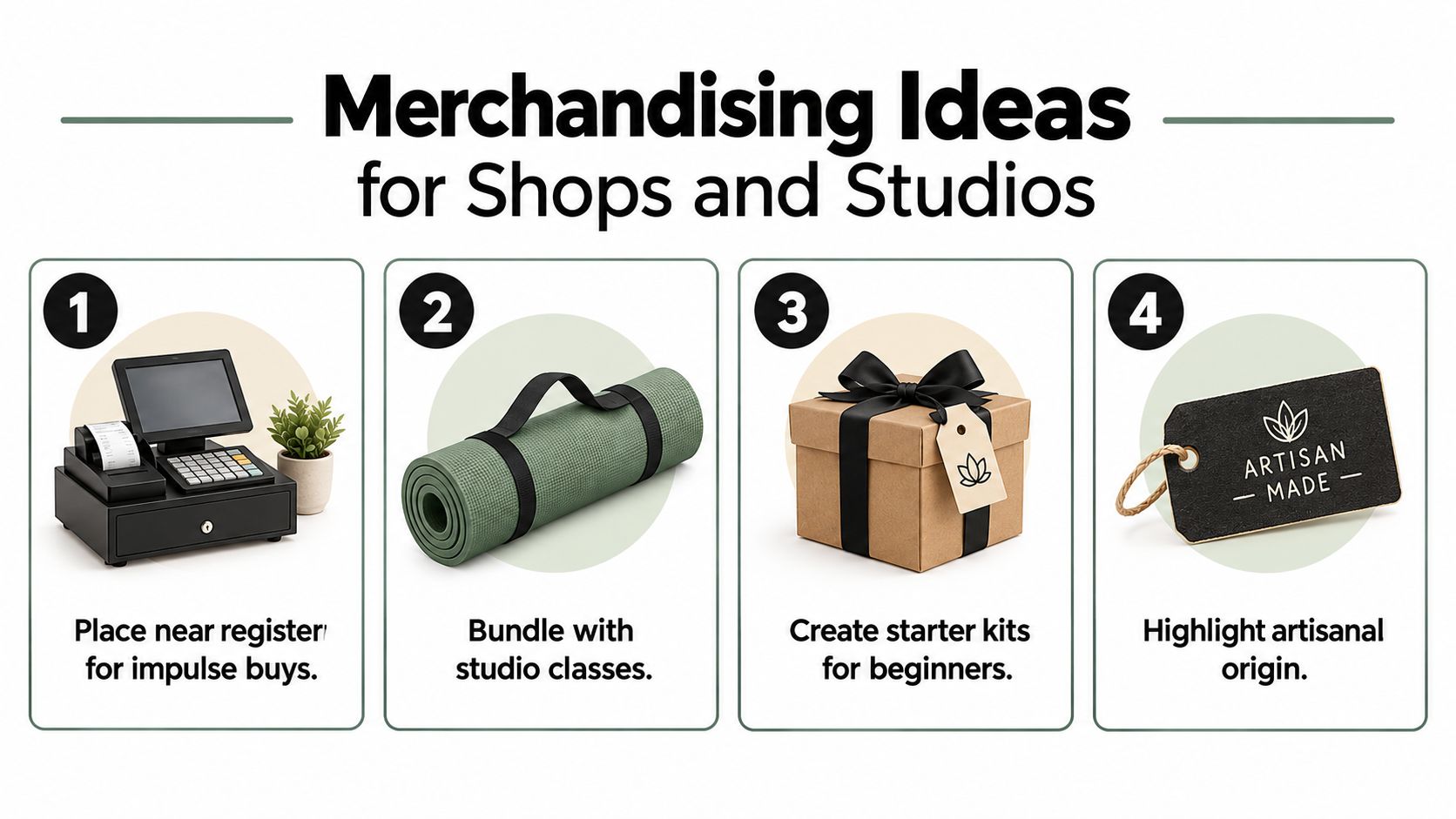
A wood brick creates a retail question before it creates an impulse purchase. That makes the package valuable near a register, where staff can explain the format in a sentence. A small sign reading “New Mexico wood incense, burn on a heat-safe dish” prevents the shopper from assuming it is a stick.
Build displays around questions
Place a few species together instead of scattering them across unrelated fragrance shelves. A piñon brick, a cedar brick, and a sampler create an immediate comparison. If your shop permits scent testing, use a demonstration burner during staffed hours and follow local ventilation and fire-safety requirements. Don't leave a burning product unattended as a permanent display.
Bundle by customer intention:
For visitors: Pair a piñon brick with a small ceramic dish and a card describing the New Mexico origin.
For beginners: Offer a sampler with a basic heat-safe burner and first-light instructions.
For cleansing shoppers: Combine cedar or sage with a suitable dish and respectful, non-prescriptive educational language.
For studios: Place a small selection near the reception desk, with a note that staff can explain the difference between bricks, sticks, and resin.
A yoga studio can connect the product to a class theme without claiming that incense creates a particular outcome. A meditation session might feature juniper as an optional room scent, while a gift shop can position piñon beside regional ceramics, textiles, or locally themed books.
Display insight: The package earns attention, but the instruction card closes the information gap.
Keep species visible without overcrowding the counter. A stepped stand, labeled trays, or a narrow wooden riser lets shoppers see the names from a short distance. Rotate the front-facing species with the season, using fir balsam for winter displays and piñon for year-round Southwest merchandising.
For wholesale planning, Aroma Warehouse's wholesale supplies for gift shops can help retailers compare related incense, burner, and display needs. The useful question isn't only how many packages fit on a shelf. It's whether the display gives a first-time buyer enough information to use the product confidently.
Quality, Storage, and Safety Basics
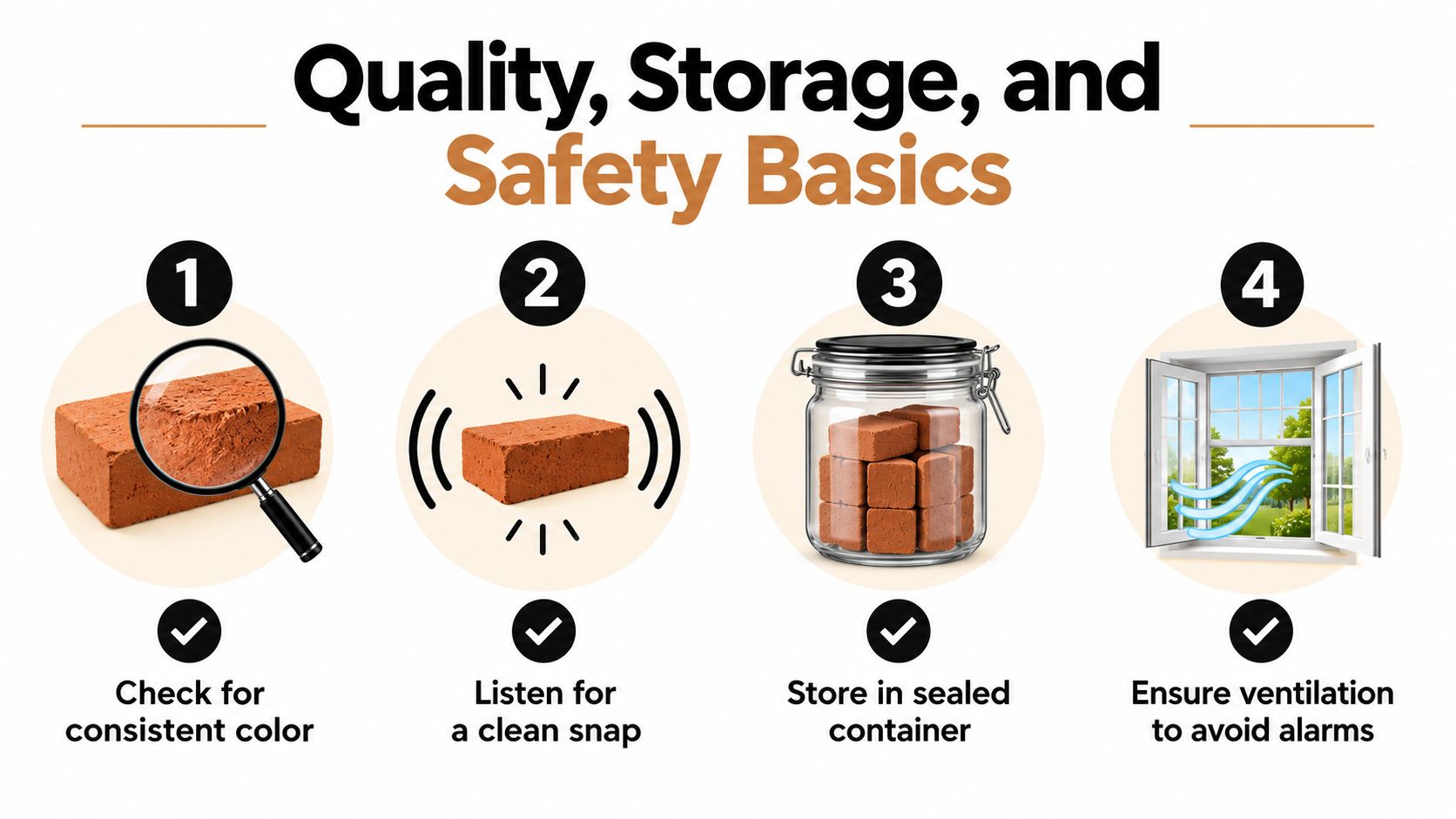
A good wood brick should look and feel consistent. Check for relatively even color, a firm structure, and a clear species label. A brick that crumbles before lighting may have been damaged in handling or storage, while a clean snap when a piece is divided suggests a more cohesive compressed material.
Packaging matters because wood absorbs environmental moisture and odors. Keep unopened and partial pieces in an airtight tin or glass jar, stored somewhere cool and dark. Separate partial bricks from full pieces when possible, and limit repeated exposure to humid air each time you open the container.
Burn with containment
Use a proper incense burner that can tolerate heat and catch ash. Keep the brick away from curtains, paper, drafts, children, and pets. Ventilation matters, especially in smaller rooms. If smoke begins collecting near a detector, stop the burn and air out the room rather than trying to mask the problem.
Never handle a hot brick with your fingers. Extinguish it with a snuffer or by covering it with sand, then wait until the burner and ash are cool. Don't move the container while an ember remains active.
Smoke sensitivity varies from person to person. People with asthma or fragrance sensitivity may need to avoid burning incense or consult a medical professional. Pregnancy also warrants individual medical advice, rather than a blanket claim that any smoke is safe.
For broader guidance on placement, ventilation, and responsible use, consult this incense safety resource. The simple decision rule is: if the brick is intact, keep it sealed and dry; if the burner is unstable, change it; if smoke irritates the room, extinguish it.
Common Questions from First-Time Buyers
How long does one wood brick burn?
Burn time varies with the brick's density, size, placement, and airflow. The product information emphasizes that the bricks are larger than many cones and may need to be reignited, so shoppers shouldn't assume the experience will match a stick. Treat the first burn as a test and record what happens in your specific burner.
Do I need a charcoal disc?
No charcoal disc is required for the normal wood-brick format. The brick is designed to light directly and smolder on a heat-resistant surface. Charcoal is associated with loose resin burning, which is a different setup and shouldn't be substituted automatically.
Which species is best for a beginner?
Piñon is a practical first choice if the buyer wants the scent most closely associated with Incienso de Santa Fe. A sampler is better for a customer who doesn't yet know whether they prefer resinous, crisp, dry, or smoky wood profiles.
Can I burn it around pets or during pregnancy?
Incense smoke can irritate people and animals, and individual sensitivities vary. Keep pets away from the burner, ventilate the room, and ask a qualified healthcare professional about incense use during pregnancy or with respiratory conditions.
Are bulk packs different from gift boxes?
The main difference is usually presentation and purchasing purpose. Gift boxes help a first-time buyer compare species and understand the regional story, while bulk packs may suit a retailer, studio, or repeat customer who already knows the preferred wood.
What should a gift shop or yoga studio ask a distributor?
Ask about species availability, pack configuration, burner compatibility, labeling, lead times, and whether related accessories can be ordered together. A studio should also confirm that its ventilation and fire-safety policies permit burning incense before planning a demonstration or class bundle.
Can I use a regular stick holder?
A narrow stick holder isn't a dependable choice because it doesn't give the brick enough support or surface area. Use a broad heat-resistant dish, screen, or sand-filled bowl that keeps the piece stable and contains ash.
Why does my brick go out?
The initial ember may be too shallow, the brick may have tipped, or airflow may be restricted. Relight the corner, keep the piece level, and confirm that the glow continues after removing the flame. If it still fails, inspect the burner and storage conditions before assuming the product is defective.
Aroma Warehouse offers incense, burners, ash catchers, fragrance oils, and related aromatherapy supplies for home users, retailers, studios, and resellers. Visit Aroma Warehouse to compare compatible incense formats and accessories, then choose the setup that gives your customers clear guidance from first light to safe extinguishing.


