

Agarwood Incense Sticks: A Buyer's Guide
You're standing in front of a customer who loves the smell of oud, but hesitates the moment they see the price tag. That moment happens in spas, gift shops, metaphysical stores, and wholesale buying meetings all the time. The answer usually isn't “it's expensive because it's exotic.” It's that agarwood incense sticks sit inside a constrained, regulated, and technically demanding supply chain, and the product you stock can be a premium resin format, a blended fragrance stick, or something in between.
Table of Contents
Evaluating Authenticity and Ingredient Transparency - Read the format before you read the marketing
Best Practices for Burning and Studio Safety - Set the room up before lighting anything - Match burn time to the room
Navigating Wholesale Sourcing and Bulk Purchasing - Build your buying plan around use case
Merchandising and Marketing Strategies for Retailers - Turn the shelf into a buying lesson
Understanding Agarwood Origins and Market Value
A shop owner once asked me why one incense stick could cost so much more than another when both were sold as “oud.” The short answer was that the label told only part of the story. Agarwood is the resin-saturated heartwood produced by Aquilaria trees after stress and infection, and the supply chain around it has been shaped by centuries of trade and modern conservation controls. Agarwood has a documented international-trade history reaching back to the 13th century, when India was already one of the earliest suppliers to foreign markets, and Aquilaria malaccensis was first listed in CITES Appendix II in 1994, with the broader Aquilaria and Gyrinops genera placed under Appendix II protections in 2004 because fragrance demand helped drive overexploitation CITES reference.
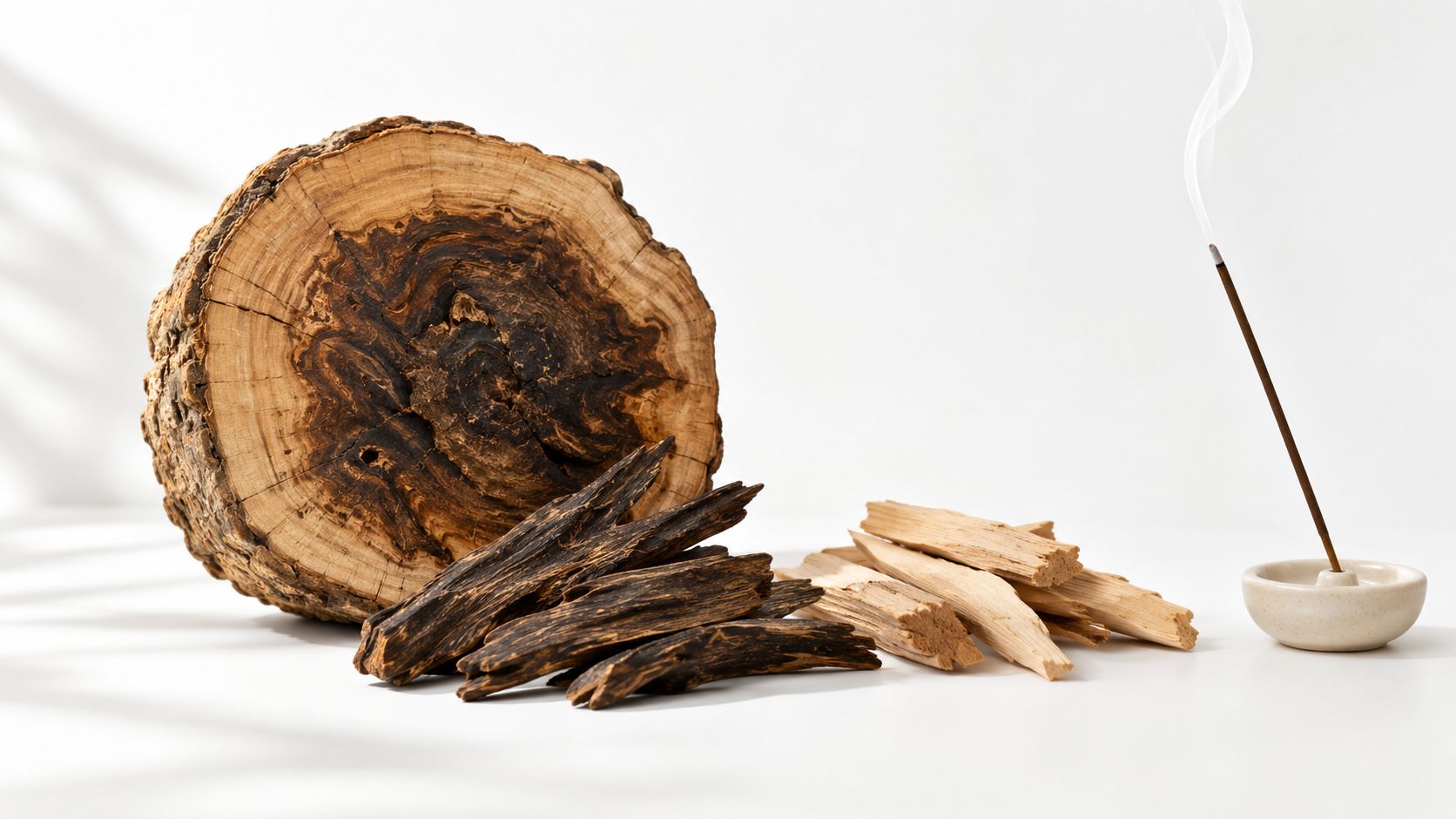
For a buyer, that history changes how you sell the category. You're not moving a simple commodity, you're moving a material that has been watched closely by conservation authorities for decades. That's why premium incense customers often accept a higher ticket price when you explain sourcing, provenance, and why resin-rich material behaves differently from a generic scented stick. If you need a broader background on the material itself, this overview of agarwood essential oil origins and use helps connect the incense category to the wider oud market.
Practical rule: if a supplier can't explain origin, plant source, and format clearly, they're selling branding first and material second.
The commercial reality is simple. Authentic agarwood isn't priced like a mass-market aromatherapy stick because the supply isn't built like one. That's useful in retail, too, because customers often buy the story only after they understand the scarcity behind the fragrance.
The Science of Scent Profiles and Burn Temperatures
Agarwood smoke doesn't behave like a fixed perfume. Its scent changes with heat, formulation, and the stick's physical makeup, which is why two products can both say “oud” and still smell completely different in a room. In one SHS-GC-MS study on natural and artificial agarwood incense, 180 °C was reported as an optimal heating temperature, and benzylacetone, baimuxinal, and guaiol were identified as significant classification markers thermal marker study.
The practical takeaway is straightforward. If heat is too low, volatile release stays incomplete. If it's too aggressive, the burn can move toward harsher smoke and a flatter scent profile. That's why the same supplier can send you a stick that smells elegant on one holder and muddy on another. Stick density, binder load, and airflow all affect how the aromatic material reaches the air.
Here's the part many buyers miss. You're not just evaluating aroma, you're evaluating how the product evolves. The smoke chemistry of agarwood incense has been shown to be complex, with a broad mix of compounds and a profile dominated by aromatic compounds smoke analysis. That matters in a studio or retail demo space, because customers don't experience one note, they experience the full burn curve.
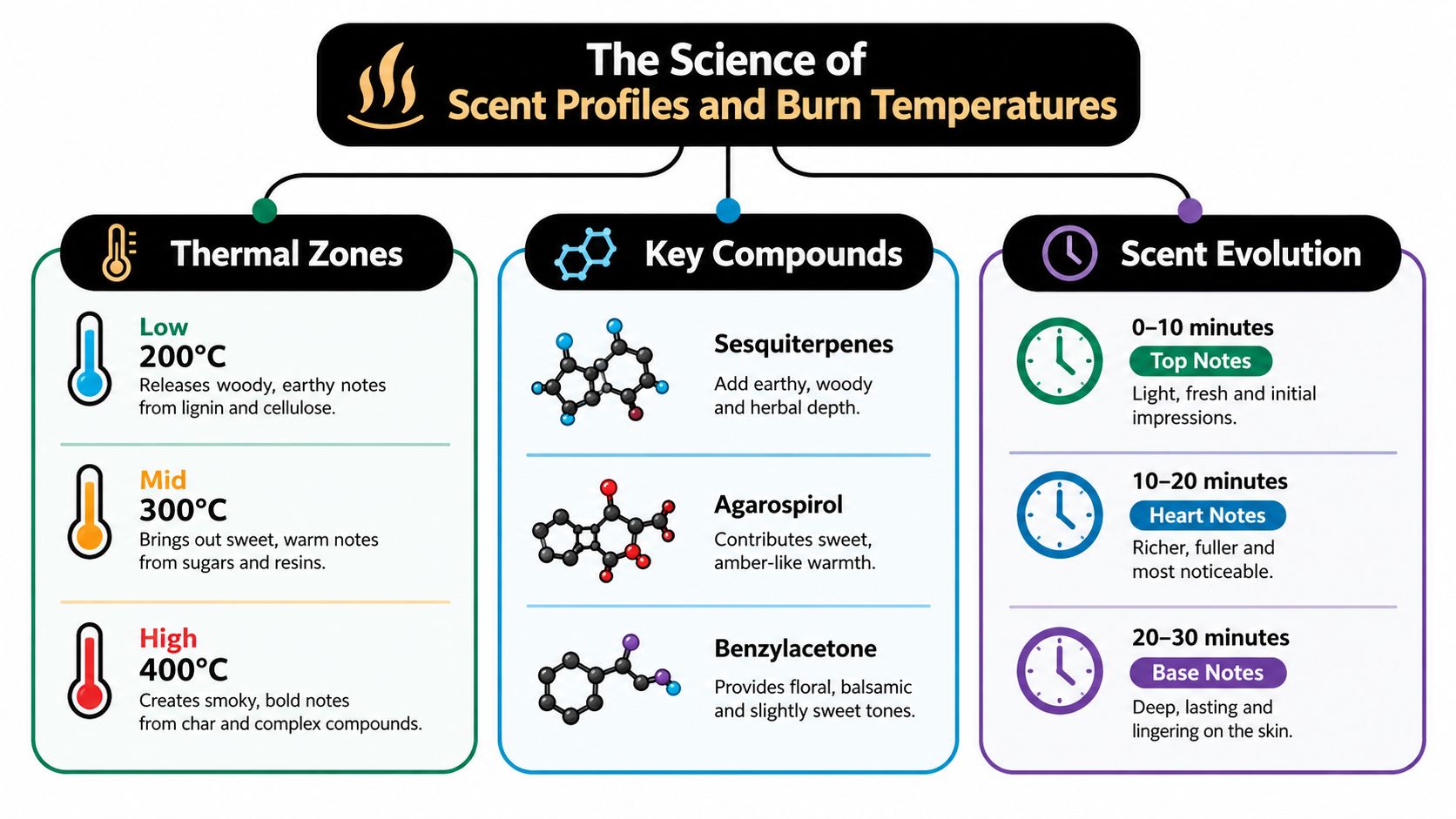
The physical build matters as much as the ingredient list. A dense stick with too much binder can suppress the finer notes, while a lighter, better-balanced stick can let the fragrance unfold more cleanly over time. That's why I never judge a sample on cold sniff alone.
A clean burn isn't just about less smoke. It's about whether the stick gives the resin room to express itself before the base material takes over.
For staff training, I always recommend describing scent in stages, not just as “woody” or “sweet.” Customers understand top, heart, and base notes much faster than they understand factory jargon. For a broader fragrance language reference, this incense scent profile guide is a useful internal resource.
Evaluating Authenticity and Ingredient Transparency
Agarwood retail gets messy when the packaging says “oud” but the stick inside behaves like a fragrance blend. That's why ingredient transparency is the first buying filter, not the last. The category can include agarwood powder, bamboo-core construction, binders, charcoal, herbs, or added fragrance, so the question isn't whether the product uses the name, it's whether the formula is disclosed well enough for you to trust it ingredient transparency overview.
Read the format before you read the marketing
A bamboo-core stick isn't automatically inferior. A coreless stick isn't automatically superior. What matters is whether the format matches the use case and whether the seller admits what's inside. A product can be great for casual home fragrance and still be a poor choice for a meditation studio if it throws too much smoke or hides the blend behind vague language.
Buying signal | More trustworthy | Needs caution |
|---|---|---|
Ingredient list | Clear, specific, complete | “Premium blend” with no breakdown |
Burn behavior | Even burn, stable ash, transparent smoke | Sharp chemical opening, sooty residue |
Formulation language | Notes resin, binder, and base material | Uses only “oud” as a catchall term |
Sourcing claim | Mentions traceable origin or plantation source | No origin detail at all |
A useful internal comparison is natural vs. synthetic incense guidance. I use that kind of framework with buyers because it separates scent character from marketing claims. A product can smell pleasant and still fail your transparency standard.
If you manage retail shelves, train staff to ask three questions before they recommend anything. What's the base material? What's the binder? Is there any added fragrance oil? Those questions protect your reputation better than any shelf talker.
Commercial reality: if the supplier won't distinguish formulation from format, your customer will eventually do that for you, usually after a complaint.
One more point matters for premium positioning. Recent market discussion points to certified sustainable plantation-grown sources and organic-certified products, and that kind of positioning can support higher-value merchandising. Don't sell that promise unless the documentation is there.
Best Practices for Burning and Studio Safety
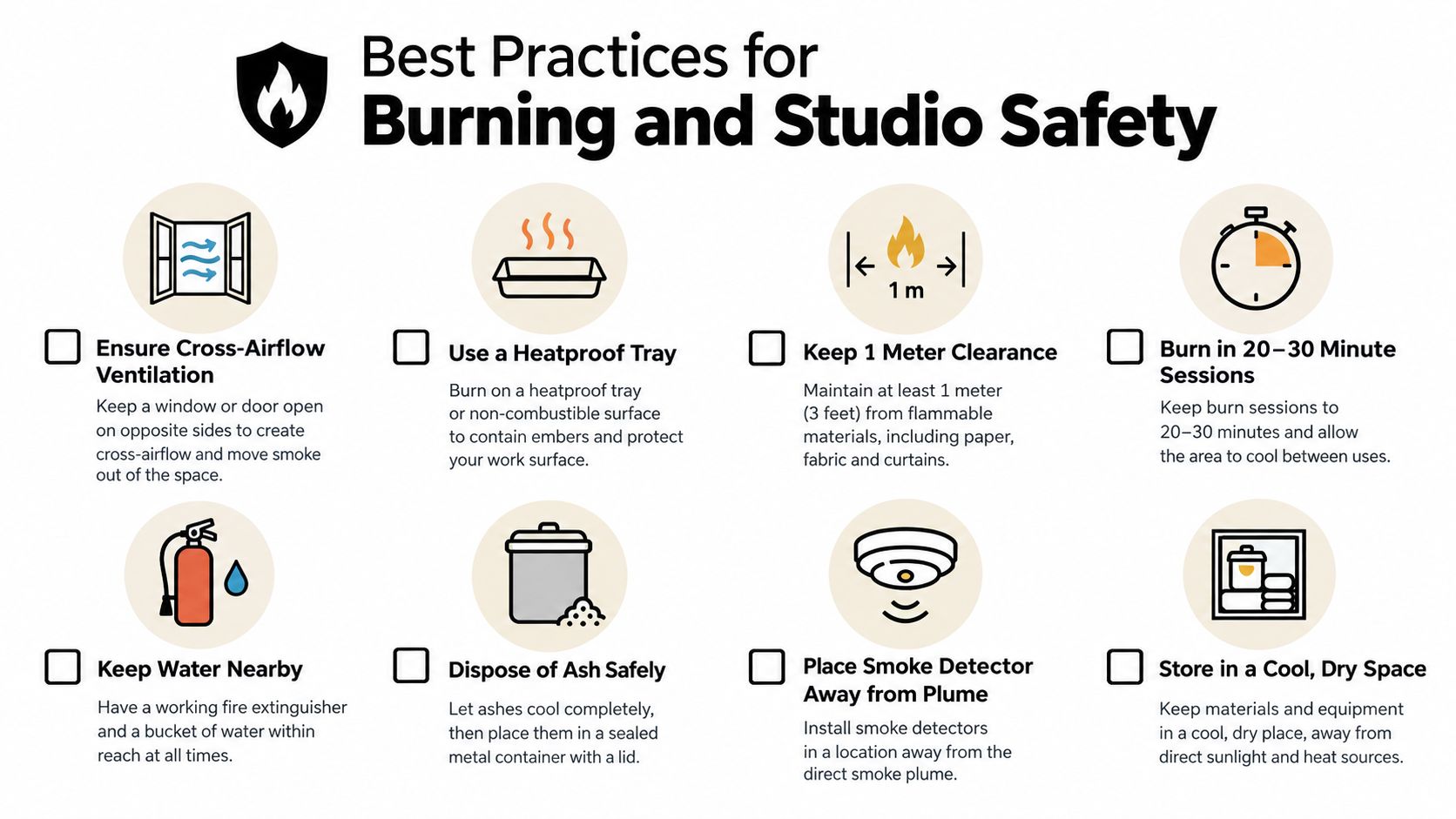
Agarwood incense performs best when the room setup is boring and controlled. That sounds unromantic, but it's what keeps the scent consistent in spas, yoga studios, and retail demo stations. Independent guidance says incense should be burned in a stable, heat-resistant holder, away from children and pets, with ventilation and supervision, and that burn time varies by format, density, binder, airflow, and environment rather than following a universal standard use and safety guidance.
Set the room up before lighting anything
Cross-airflow matters. If you place a stick in a dead corner, the smoke can pool and get heavier than the product deserves. A window cracked open, a fan on low, or a door positioned to pull air across the room is usually enough. In a small retail space, that's often the difference between a pleasant demo and a complaint about smoke.
The holder matters too. Use a heavy, heat-resistant base that catches ash cleanly and keeps the stick upright. If you're serving a spa or studio, don't put the burner near paper menus, dried florals, fabric displays, or product test stations. The goal is controlled scent, not a decorative hazard.
Match burn time to the room
For retail demos and studio sessions, shorter burns are usually easier to manage than long, unattended ones. Burn the stick during the window when clients are present, then let the room clear before the next appointment. Burn time is not a universal promise, it shifts with formulation and environment, so train staff to watch the actual stick rather than the box description.
Ventilation first: keep air moving gently so the fragrance stays readable instead of becoming heavy.
Heat-safe placement: choose a stable holder and a nonflammable surface every time.
Supervision always: never leave a lit stick unattended, even briefly.
Storage discipline: keep inventory in a cool, dry place so the sticks don't absorb moisture and change behavior.
I'd also keep a small ash disposal container nearby, especially in wellness spaces where staff are moving quickly. One of the easiest operational mistakes is leaving spent ash in an open dish too long, then wondering why the display area looks untidy or smells stale.
Navigating Wholesale Sourcing and Bulk Purchasing
Wholesale buyers don't just buy fragrance, they buy consistency, documentation, and repeatable burn behavior. That's especially true in agarwood, where demand has been large enough to shape the trade itself. One CITES-linked review reported more than 700 tonnes of Aquilaria malaccensis agarwood in international trade in 1997, and a recent industry estimate said incense accounts for about 21% of global agarwood essential-oil consumption industry trade reference.
That scale changes your purchasing strategy. You're not buying a novelty item, you're buying a category with enough volume to support distinct grades, formats, and pricing tiers. When I evaluate a wholesale supplier, I look at whether they can keep the same scent profile from one reorder to the next, not just whether the first sample smells good.
Build your buying plan around use case
A yoga studio doesn't need the same stick as a gift shop trying to impress collectors. A retail counter that needs a soft, elegant room note should buy differently from a boutique that wants a louder, more premium gifting line. The best bulk order is usually the one that matches room size, burn frequency, and customer expectation without bloating the SKU count.
Commodity Type | Share of International Trade |
|---|---|
Wood chips | 43% |
Oils and extracts | 27% |
Timber | 11% |
Powder | 8% |
That mix shows why incense buyers need to think beyond the stick itself. Your supplier may also move chips, oils, or powder, and that broader ecosystem often affects pricing and availability. For wholesalers, a supplier with range can be useful, but only if the paperwork stays clean and the product descriptions stay specific.
The wholesale incense sticks guide is useful if you're building a broader incense program alongside agarwood. I'd use it as a category-planning reference, not as a substitute for product-level vetting.
Procurement rule: buy the smallest sample quantity that lets you test burn behavior, then place the larger order only after you've checked repeatability.
In bulk, sustainability claims matter because they affect trust at the counter. If a brand positions plantation-grown material or organic certification, that claim should be supported by documentation you can keep on file. Buyers pay for confidence as much as fragrance.
Merchandising and Marketing Strategies for Retailers
Premium incense sells better when customers can see why it's premium. A plain box on a shelf tells them almost nothing, but a well-built display can explain origin, burn style, and use case without sounding technical. That's the difference between a passive SKU and one that earns its shelf space.
Turn the shelf into a buying lesson
Show the format next to the story. Put a stick sample, a clean holder, and a short ingredient card together so staff can point to the actual product while they explain how it burns. Then group by intent, not just fragrance, with separate merchandising for meditation, hospitality, and home ambience. Customers understand use more quickly than chemistry.
Cross-selling works best when it feels like part of the ritual. Pair sticks with ash catchers, stable holders, and basic fragrance accessories, then train staff to mention how each piece improves the experience. If you're building that kind of basket strategy, this article on effective upselling and cross-selling techniques offers a useful retail lens without changing the product story.
Agarwood also lends itself to education-based copy online. Product descriptions should say what the stick is made of, how it behaves in a room, and what kind of buyer it fits. That's much stronger than vague words like “luxury” and “premium,” which mean almost nothing on their own.
A few merchandising moves consistently help:
Use one simple story per SKU: origin, format, and room use.
Train staff on scent language: woody, resinous, balsamic, smoky, or sweet.
Display for the room, not the box: show how it looks when burned and where it belongs.
Separate quiet and bold fragrances: don't put delicate meditation sticks next to heavy room-fillers.
There's a place for Aroma Warehouse in this kind of assortment planning, too. It carries incense sticks and accessories that fit retail and studio setups, which makes it a practical reference point when you're building a mixed aromatic shelf. I'd still recommend choosing by format and documentation first, because the customer will remember the burn experience more than the branding.
Final Checklist for Sourcing and Selling Agarwood
Agarwood incense sticks are easy to sell badly and worth selling well. The businesses that do it right keep the buying process tight, ask for documentation before they ask for discounts, and treat burn behavior as part of the product, not an afterthought.
Use this checklist before you place the next order:
Confirm the material: ask whether it's pure agarwood, a blend, or a fragrance-dipped stick.
Verify the formulation: make sure the binder, base, and any added fragrance are disclosed.
Check the burn profile: test the stick in the room type you serve, not just on a sample card.
Inspect the ash and smoke: look for stable ash, clean smoke, and a fragrance curve that doesn't collapse too fast.
Match the format to the customer: quiet meditation spaces need different stock than hospitality retail.
Demand sourcing clarity: traceability matters in a category shaped by conservation controls.
Store it properly: keep inventory cool, dry, and sealed so it doesn't degrade before sale.
If you run a shop or studio, the smartest move is to buy the story and the stick together. That means asking better questions, stocking fewer but clearer SKUs, and training staff to explain the difference between marketing language and actual formulation. Customers notice that immediately, even if they don't know the terminology yet.
If you're building a retail or studio incense program, Aroma Warehouse can help you source incense sticks, holders, and related fragrance accessories in one place. Visit Aroma Warehouse to review the current selection and match your next agarwood purchase to a real selling environment.


