

Juniper Smudge Stick Guide: Uses, History, and Safe Burning
You've got a small bundle in one hand, a lighter in the other, and one practical question in mind, what happens if you light this thing? A juniper smudge stick looks simple on the shelf, but it behaves differently from loose incense, resin, or an essential oil diffuser, and that difference matters the moment flame touches the tip. If you want the historical background, the handling details, and the safest way to use it indoors, this guide walks through all of it in plain language.
Table of Contents
What a Juniper Smudge Stick Actually Is - What you're actually buying
The Ancient Roots of Juniper Smoke Cleansing - Egypt and the early documented use of incense - Scottish saining and the logic of smoke plus ventilation
Aroma Profile and Why Juniper Lights the Way It Does - Why it catches quickly - What the smoke feels like in practice
Juniper vs Sage vs Cedar vs Palo Santo - How to choose without overthinking it
How to Burn a Juniper Smudge Stick Safely - A simple routine that works indoors
Buying and Storing Juniper Smudge Sticks in Bulk - What wholesale buyers should inspect - How to store it after purchase
Ethical Sourcing and Smoke-Free Alternatives - What responsible sourcing looks like - When smoke isn't a good fit
What a Juniper Smudge Stick Actually Is
The first time you hold a juniper smudge stick, the main surprise is usually size. It's not a big ceremonial torch. It's typically a compact bundle about 3.5" to 4" long, roughly 10 cm, which makes it easy to control, easy to set down in a fireproof bowl, and better suited to short room-clearing passes than long burns. That smaller fuel load is part of why first-time users often find juniper less intimidating than heavier bundles as described in product listings.
What you're actually buying
A juniper bundle is hand-tied dried juniper foliage, and sometimes berries, shaped to smolder rather than burn like a candle. The point isn't an open flame. The point is aromatic smoke that you can move through a room, then extinguish safely once the bundle has given off enough smoke to do the job. Sellers also note that juniper foliage is less dense and lights more quickly than many other incense woods, so it usually needs only brief flame contact before the flame is blown out and the stick is allowed to smolder as noted by a seller.
Practical rule: if you're looking for a product that fills a room with smoke, a juniper bundle is the right format. If you want steady scent without open flame, an essential oil or hydrosol makes more sense.
That distinction matters because people often confuse smudge sticks with other aromatic products. Loose incense burns on charcoal and behaves very differently. Resin incense needs a heat source and produces a deeper, heavier burn. A juniper essential oil diffuser gives fragrance without smoke at all, which can be a better match for shared spaces or lungs that don't tolerate smoke well.
If the item on your counter is a bundled sprig with a tied stem, you've got the right kind of product. If it's a jar, a bottle, or a loose powder, you're dealing with something else entirely. For readers comparing smoke-cleansing formats, the distinction is similar to the one in this sage smudging overview, where the tool changes the way the ritual feels and functions.
The Ancient Roots of Juniper Smoke Cleansing
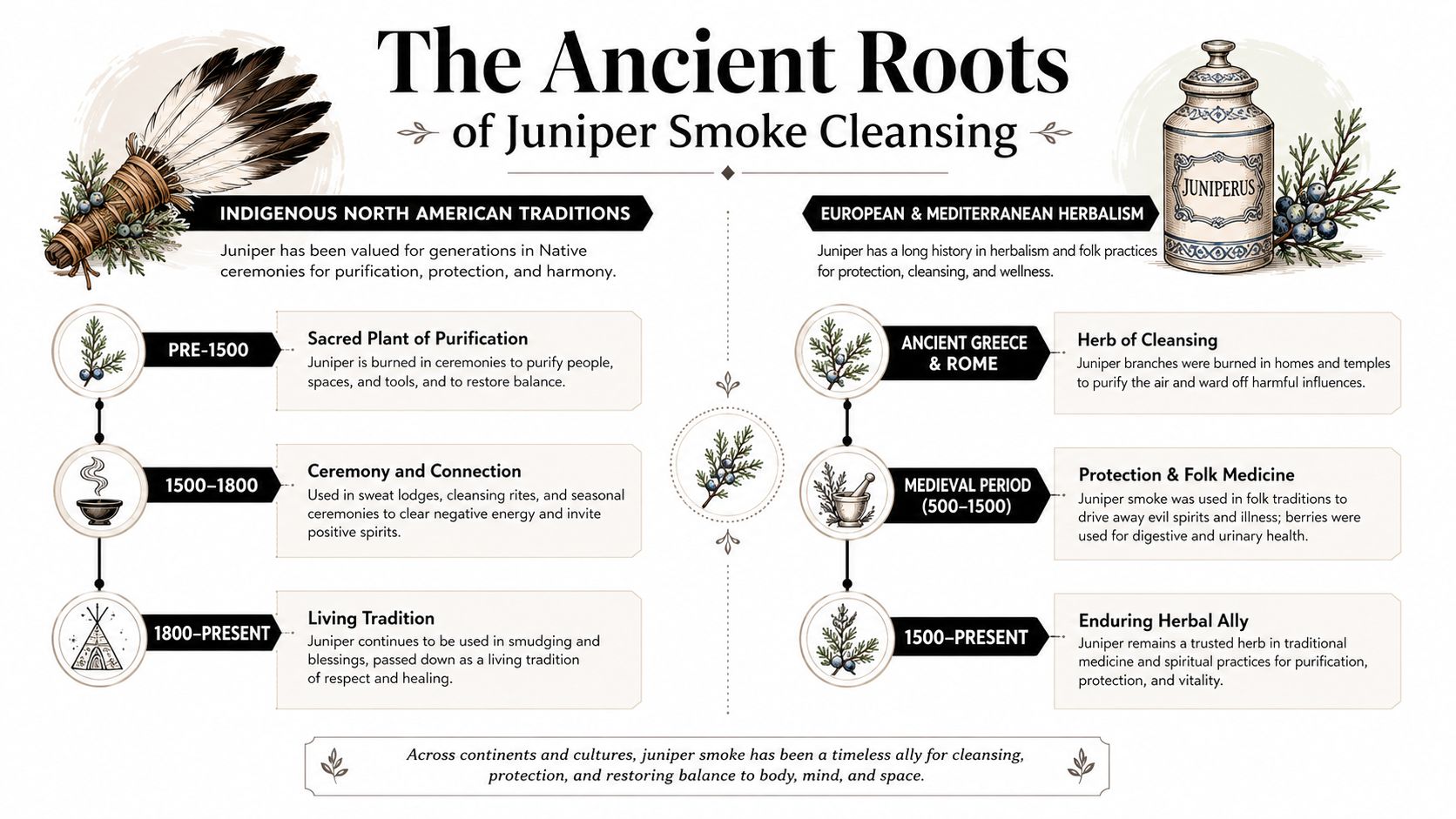
Juniper smoke-cleansing didn't start as a wellness trend, and that's worth saying plainly. Long before modern retail packaging, people were already using fragrant smoke in ritual spaces, homes, and practical daily life. The historical record points to a long continuity, with juniper fitting into a much older pattern of purification by smoke described in archaeological and historical sources.
Egypt and the early documented use of incense
One of the earliest anchors in this history comes from Egypt's 5th dynasty, with incense burners dating to the 25th to 24th centuries BC, or about 4,500 years ago according to the historical source. Juniper was part of a broader incense tradition in sacred and elite settings, where smoke carried both fragrance and meaning. That doesn't make every modern bundle a direct replica of an ancient temple item, but it does show that burning aromatic plants for cleansing has deep roots.
Scottish saining and the logic of smoke plus ventilation
A second thread comes from the Scottish Highlands, where a Hogmanay ritual called saining used juniper smoke to bless and protect homes and livestock as recorded in the same historical source. The house was then aired out after the ritual. That matters because it gives you a practical template still relevant today, burn, then ventilate. The smoke isn't meant to hang in a sealed room forever.
North American Indigenous practice adds another layer. Juniperus virginiana was burned as a spiritual incense, but it was also used very practically. The last foot of the branches could be cut, dried green like a smudge stick, and placed upwind of a campfire as a diffused insect repellent, while the berries could be simmered and the skimmed oil used topically for insect repellent purposes documented by Adkins Arboretum. That combination of ceremonial use and everyday utility is why juniper still makes commercial sense across so many markets.
Aroma Profile and Why Juniper Lights the Way It Does
Juniper is easy to recognize once you've smelled it. The aroma is bright, evergreen, slightly sharp, with a dry finish that feels closer to a forest after rain than to sweet floral incense. It's a clean scent, but not a soft one. That sharper edge is part of why some buyers prefer it for clearing a room quickly rather than lingering on a single perfume note.
Why it catches quickly
Juniper foliage is less dense than many incense woods, which means it offers lower ignition resistance and lights more quickly with brief flame contact as noted by sellers. You don't need to hold the flame there for long. A short touch, followed by a gentle blow, is usually enough to create a usable ember. That quick-lighting behavior is convenient, but it also explains why ember control matters, because a lighter bundle can flare if you overdo the flame or point it into a draft.
What the smoke feels like in practice
A juniper bundle usually gives off light, airy smoke rather than the thick, heavy plume people sometimes expect from denser woods. That makes it feel easier to manage in a room, especially for a first-time buyer who only wants a brief pass through a hallway, entryway, or living room. The experience is closer to scenting a space than to saturating it.
The same kind of clean, pine-adjacent profile is what many people look for in other forest notes, which is why juniper often sits in the same conversation as other evergreen botanicals. If you're comparing scent families, the logic is similar to what buyers look for in pine-scented sticks, where the appeal is crispness rather than sweetness.
Good handling starts with the fuel. If a bundle lights quickly, treat the ember like a live coal, not like a candle wick.
That's the main thing to remember. Juniper is forgiving at the start, but it still asks for attention once it's smoldering. The same quality that makes it beginner-friendly also means you shouldn't fan it aggressively or leave it near moving air.
Juniper vs Sage vs Cedar vs Palo Santo
People usually don't buy juniper in a vacuum. They're choosing between juniper, sage, cedar, and palo santo, and they want to know which one fits their space and their tolerance for smoke. A side-by-side comparison helps more than a vague flavor description.
How to choose without overthinking it
Juniper sits in the middle of the pack for many buyers. It feels lighter than cedar and palo santo, yet a bit sharper than white sage. That makes it useful for people who want smoke-cleansing without a heavy, lingering cloud. It's also often easier for beginners because it catches fast, while denser woods can frustrate someone who's never managed ember control before.
For buyers who want a broader picture of how these materials differ, the comparison between palo santo and white sage helps frame why one bundle can feel soft and fragrant while another feels more direct and assertive. Juniper doesn't replace either one. It fills the middle ground.
Some experienced users blend herbs rather than choosing just one. A juniper and sage bundle can feel cleaner and more aromatic than sage alone, while juniper with cedar can lean woodier and more grounded. That mixed approach is especially useful for resellers creating gift sets, because buyers often want a familiar core note with a second layer that makes the bundle feel distinctive.
How to Burn a Juniper Smudge Stick Safely
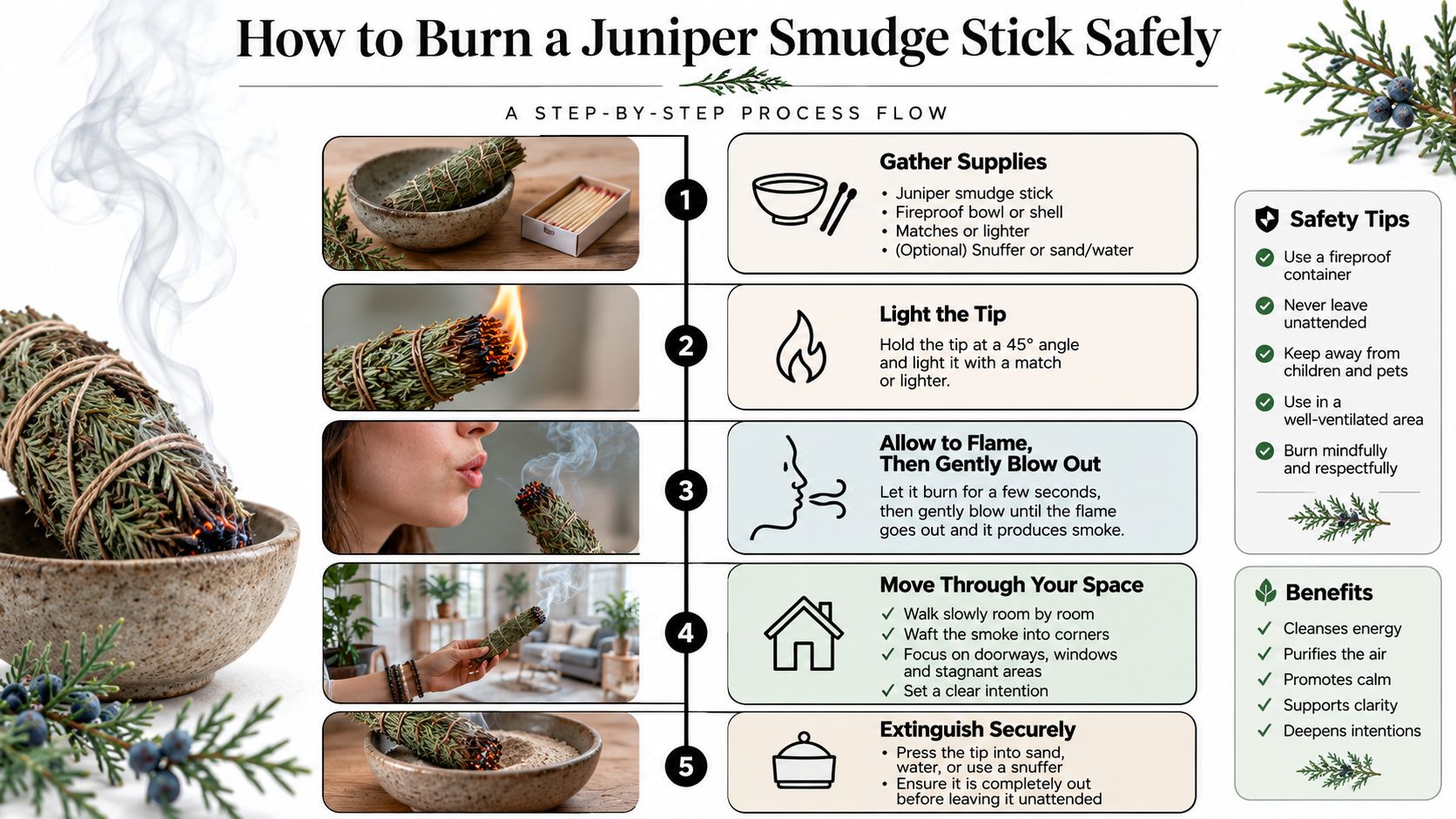
A safe burn starts before you light anything. Put the bundle in a heatproof bowl, ideally with a layer of sand or ash at the bottom so the hot tip isn't sitting directly on a hard surface. Keep one hand near the bowl, not the burning end. Juniper shrinks as it dries, and the tips can become sharp enough to poke skin if you grab it carelessly a warning highlighted in a DIY guide.
A simple routine that works indoors
Light the tip with a candle or lighter until a small flame catches. Let it burn for a few seconds, then gently blow it out so the bundle smolders instead of burning openly. Move slowly through the room, or hold the stick still while the smoke disperses. Keep a window partly open, because the historical pattern of burn and ventilate still makes sense in a modern home.
Practical rule: if the bundle starts flaring, stop moving it around and calm the flame down first. Drafts can make juniper flare more easily than people expect.
Never leave the smoldering bundle unattended. That sounds obvious, but most mistakes happen when someone sets it down for “just a second” and gets distracted by a phone call, a pet, or a knock at the door. When you're done, extinguish it fully by pressing the tip into sand or against a metal lid. Don't reach for water first. Water can damage the dried foliage and make the bundle messy for next use.
If you're smoke-sensitive or using the scent in a space where open flame isn't welcome, a juniper essential oil diffuser or hydrosol can give you a similar aromatic profile without a live ember. The main difference is obvious, no ritual smoke plume, no ember to manage, and no need to keep a bowl nearby.
Video guide for a visual walk-through:
For a broader safety checklist that applies to incense and smoke products in general, the guidance in this incense safety resource is worth keeping nearby.
Buying and Storing Juniper Smudge Sticks in Bulk
If you're buying for a shop, studio, or online store, the bundle itself tells you a lot before you ever open the case. Look for green-to-silver foliage that still smells aromatic when squeezed gently. Check that the ties are natural cotton or hemp, not loose synthetic string that can melt or look out of place on a retail shelf. A good lot should also look consistent in size, around that same 3.5" to 4" range, so customers don't think one bundle is underfilled next to another.
What wholesale buyers should inspect
Avoid stock with visible mold, damp packaging, or excessive crumbling at the base. Juniper can shed a little during handling, but a bundle that falls apart in your hands was packed or stored badly. If the foliage looks flat, dusty, and scentless, it probably won't sell well once displayed.
Packaging matters too. Breathable kraft sleeves or simple belly bands let the aroma come through without crushing the foliage. Sealed cello bags can preserve scent longer, but they can also trap moisture if the product was packed too soon after drying. That's a problem for both the seller and the end user, because trapped moisture can lead to mildew.
For buyers moving product between storage and sales locations, it helps to think in the same way you would with other fragile retail supplies. Clean, dry transport keeps bundles looking better when they reach the shelf, which is why a practical packing routine matters just as much as the product itself. If you're organizing mixed inventory, moving supplies from Storage & Removal Boxes can be a useful reference point for keeping the shipment intact without crushing the foliage.
How to store it after purchase
Retail stock should sit in a cool, dry place away from direct sunlight. End users should keep unused sticks in a paper bag or open container, not airtight plastic. The reason is simple, plastic can trap residual moisture and encourage mildew, especially if the bundle still has a little humidity left from packing.
Keep the stick dry, but don't seal it into a sweaty little box.
That rule applies to home users and resellers alike. If you're building a retail tier, many suppliers work comfortably with lot sizes of 25, 50, or 100, which gives you room for small-shop and wholesale pricing structures without complicating the buying process.
Ethical Sourcing and Smoke-Free Alternatives
A lot of buyers now ask two fair questions before they purchase. Where did the juniper come from, and what can I do if I can't burn smoke indoors? Both questions deserve direct answers, not vague marketing language.
What responsible sourcing looks like
Juniper is often treated differently from heavily poached white sage because Juniperus communis and Juniperus virginiana are generally more renewable, with faster regrowth than slow-maturing sage plants. That said, renewable doesn't mean automatic. Responsible harvesting still matters, especially when bundles come from stressed habitat or overcut plants. The safest buying habit is to choose suppliers who disclose origin and harvest method, and to avoid stock that looks stripped, brittle, or unusually sparse.
If you're comparing juniper with other smoke-cleansing botanicals, the discussion around smudging sage alternatives helps explain why many buyers are shifting toward less pressured plants while still keeping the same general ritual structure.
When smoke isn't a good fit
Some spaces can't handle open smoke. Wellness studios, rental homes, shared apartments, and homes with sensitive lungs need other options. Juniper essential oil in an electric diffuser keeps the botanical profile without the flame. Juniper hydrosol in a spray bottle gives a lighter aromatic pass over a room or textile. Even crushing a small amount of dried juniper between your hands can release a noticeable scent without lighting anything at all.
For packaging or bundling in a retail setting, natural twine can keep a set neat without adding plastic clutter. If you're assembling presentation materials for catered or gift products, jute twine for catering businesses is a practical example of the kind of simple tie that keeps a bundle looking natural and presentable.
The main point is straightforward. Juniper can serve both ritual buyers and practical buyers, but the format should match the room. Smoke is useful when the room can take it, and alternatives are better when it can't.
Your First Smudge and a Simple Checklist
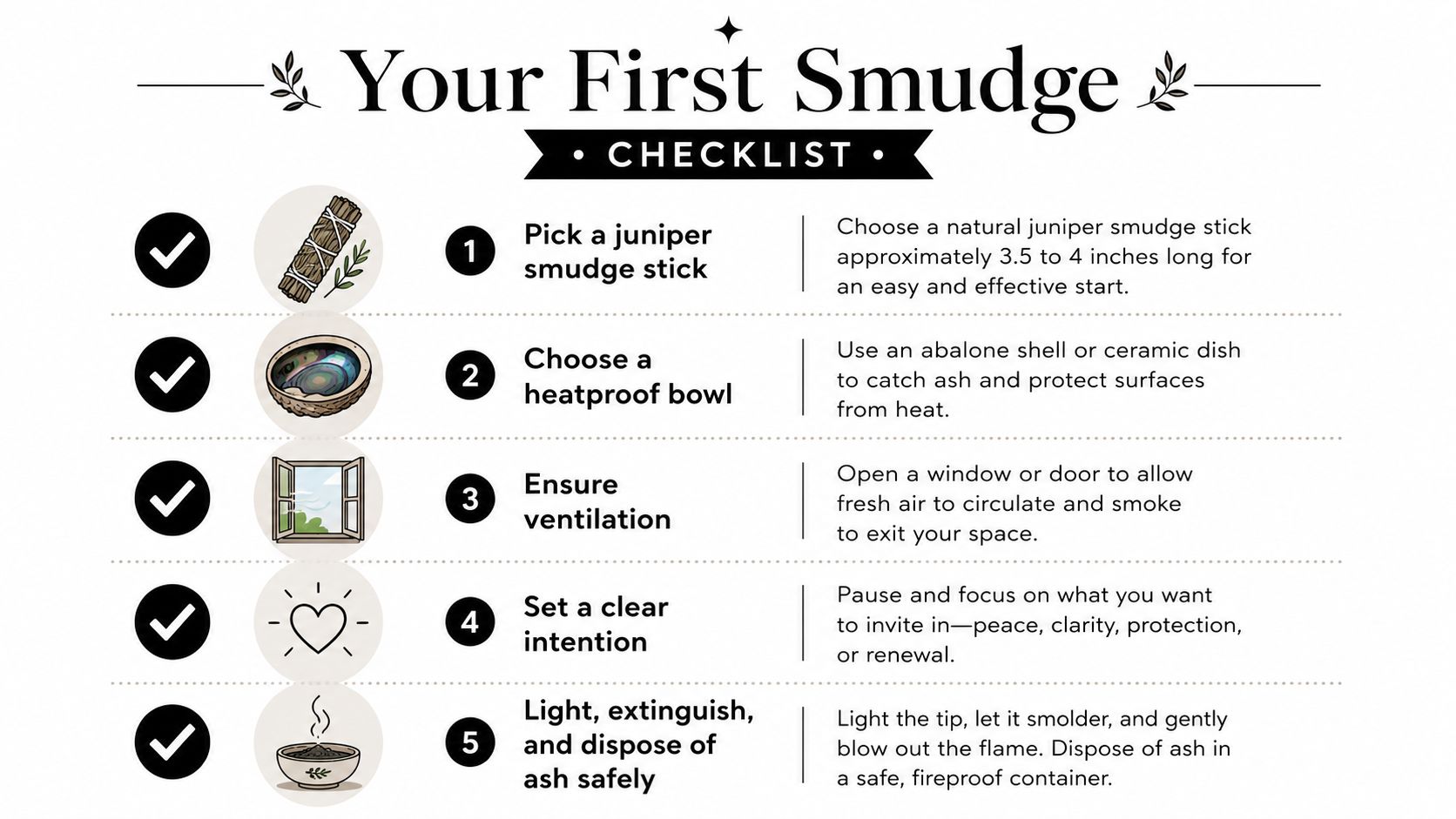
Pick a juniper smudge stick about 3.5" to 4" long with visible aromatic foliage. Set out a heatproof bowl with sand, open one window, light the tip, let it catch for a few seconds, then blow it out. Walk slowly through the room, extinguish the tip in sand when you're done, and store the rest loosely in a paper bag away from direct sun.
A smudge stick is a small, forgiving tool. The first pass is mostly about getting comfortable with the ember, not performing a perfect ritual.
Frequently Asked Questions
1. How long does a juniper smudge stick usually last? A juniper smudge stick can be used for multiple short sessions when it is extinguished properly between uses. The total number of uses depends on the bundle's size, how long it is allowed to smolder, and how much foliage is burned during each session.
2. Can you reuse a juniper smudge stick after extinguishing it? Yes. A partially burned juniper smudge stick can generally be reused after it has been completely extinguished and cooled. Store the remaining bundle in a cool, dry location away from direct sunlight and moisture.
3. Should juniper smudge sticks be burned inside or outside? Juniper smudge sticks can be used indoors when the space permits smoke and the bundle is handled safely. Good ventilation is important. Outdoor use can be a practical alternative when indoor smoke is undesirable.
4. What should you look for when purchasing a juniper smudge stick? Look for aromatic foliage, a dry but intact bundle, consistent sizing, and secure natural ties. Avoid bundles showing mold, damp packaging, excessive crumbling, or little remaining aroma.
5. Can juniper smudge sticks be used without burning them? Yes. If smoke is not appropriate for your space, alternatives include using juniper in an electric diffuser, using a juniper hydrosol spray, or gently crushing dried juniper to release its natural aroma without creating smoke.
If you want more guidance on smoke products, storage, and home fragrance routines, keep exploring related incense care, travel rules, and aromatherapy diffuser guides. And if you're ready to stock up on practical aromatic tools, browse Aroma Warehouse for options that fit both first-time buyers and resellers looking for dependable supply.


