

Halloween Incense Guide: Scents, Safety, and Retail Tips

Most Halloween advice treats incense like a cheap shortcut to “spooky.” That misses the point, and it misses the risk. Halloween incense works best when it's treated as a real atmosphere tool, one that blends scent psychology, indoor air reality, and retail presentation into a single buying decision.
The category also has more depth than novelty décor. Halloween sits inside a huge seasonal retail moment, with the National Retail Federation projecting $13.1 billion in Halloween spending in 2025, and the Census Bureau noting 41.1 million potential trick-or-treaters among children ages 5 to 14 in 2015 plus 118.3 million people in the broader holiday-tracked consumer group (Census Bureau Halloween facts). That scale explains why incense is rarely bought alone. It's usually part of a wider fall mood mix, alongside candles, décor, and fragrance products.
Table of Contents
Why Halloween Incense Deserves Serious Attention - A seasonal product with an old ritual backbone - What shoppers are really buying
Understanding Halloween Scent Profiles and Families - Earthy, warm, resinous, and dark - Matching scent to use case
Blending and Pairing Scents for Halloween Ambiance - Build from the base up - Choose the right format for the mood
Safety and Ventilation Considerations for Indoor Burning - Smoke is part of the product, not a side effect - What to do in real rooms
Retail Merchandising and Wholesale Strategies - Put it where the impulse happens - Wholesale decisions that protect margin
DIY Recipes and Sourcing Quality Ingredients - Start small and test the burn - What tends to go wrong
Why Halloween Incense Deserves Serious Attention

Halloween incense is not a filler item for a mantel or checkout counter. It sits where
seasonal mood, indoor air quality, and retail timing meet, so it deserves more judgment than it usually gets. Halloween itself became widely established in North America only in the mid-1800s after Irish and Scottish immigration, then shifted into a familiar consumer holiday in the 1950s as trick-or-treating and neighborhood celebration spread across the U.S. and Canada.
A seasonal product with an old ritual backbone
Incense has a much older record. Documented use reaches back to ancient Egypt around 3000 BC, India as early as 3300 BC, and China around 2000 BC; by the late 12th century, some Chinese buildings were even designed specifically for incense burning. That history matters because Halloween incense works best when it feels symbolic, not costume-like. A resinous stick or cone can suggest temple smoke, forest floor, or candlelit mystery without needing a fake haunted-house label.
The commercial side matters too. The global incense market was valued at USD 3.6 billion in 2023 and is projected to grow at a 5.2% CAGR from 2024 to 2032. For a retailer, that shows Halloween incense is not a one-week novelty. It is a seasonal expression of a durable fragrance category with broad use, and that makes assortment decisions worth treating seriously.
Practical rule: sell the mood, but stock the format people can actually use. A Halloween scent that smells rich in the bag but turns sharp in the room will stall after the first curious purchase.
What shoppers are really buying

Shoppers often ask for “spooky” incense, but the actual purchase is usually atmosphere control. They want a room to feel warmer, darker, more focused, or more theatrical. In practice, that means Halloween incense sells best as part of a broader fall display, not as an isolated incense wall.
Retailers who understand that split, décor plus fragrance, can build assortments that work for casual buyers and regular incense users alike. The category rewards tight curation because the buyer is judging both scent and setting at the same time, and that is where Halloween incense can do more than decorate a shelf.
Understanding Halloween Scent Profiles and Families
Halloween incense doesn't live in one scent lane. It breaks into families that create different emotional effects, and the best sellers are usually the ones that match a setting instead of shouting “October” from across the room. A small bedroom, a retail counter, and a yoga studio all need different scent intensity and different scent character.
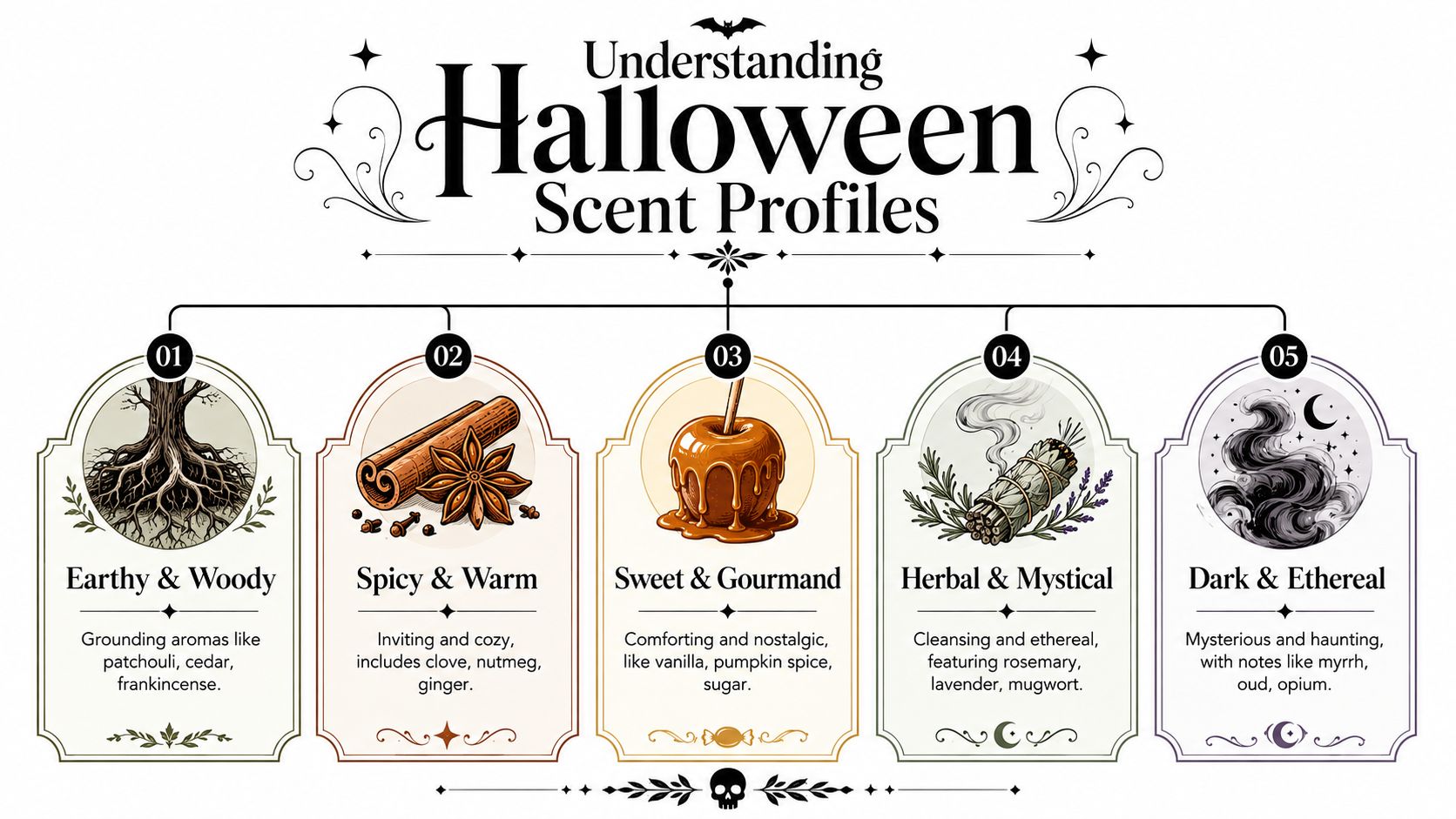
Earthy, warm, resinous, and dark
Earthy and woody scents work as the foundation for most Halloween displays. Patchouli, cedar, frankincense, and sandalwood feel grounded, and they tend to support other notes instead of competing with them. Warm spiced scents, such as cinnamon and clove, read more immediately festive, but they can become cloying if the room is small or the stick is too strong.
Resinous mystical scents sit in a different lane. Frankincense and myrrh suggest ceremony, age, and quiet drama. That makes them strong choices for meditation corners, altars, or moody retail setups where the goal is atmosphere rather than candy-like sweetness. Woodsy atmospheric scents, especially cedar and sandalwood, are safer bets for general audiences because they feel recognizable without pushing too hard.
Matching scent to use case
The most overlooked question is not “What smells Halloween-ish?” It's “What does this room need to feel like?” A shop with constant foot traffic benefits from moderate, readable scents. A home display might use darker, richer notes because the room has fewer competing smells. A quiet practice space usually needs cleaner, steadier scents that don't distract the user.
The research brief points to a helpful gap in seasonal content, and that gap is real. Most Halloween scent lists stop at the same familiar names, but shoppers need help deciding between earthy grounding scents and warm spiced scents depending on who's in the room and how long they'll stay there. A useful buying cue is to look for labels that tell you whether a product leans resinous, spicy, herbal, or woody, instead of relying on a vague Halloween theme.
For readers who want to compare fall scent structures beyond incense alone, the seasonal oil guide at Aroma Warehouse's fall scented essential oils overview is a practical reference point. It helps anchor incense choices inside a broader autumn fragrance palette.
Blending and Pairing Scents for Halloween Ambiance
Single-note incense has its place, but layered scent builds a better room. A good Halloween blend usually needs a base that holds the atmosphere, a middle note that adds motion, and a final accent that gives the whole experience a signature. If every stick in the room is equally loud, the result feels flat, not immersive.
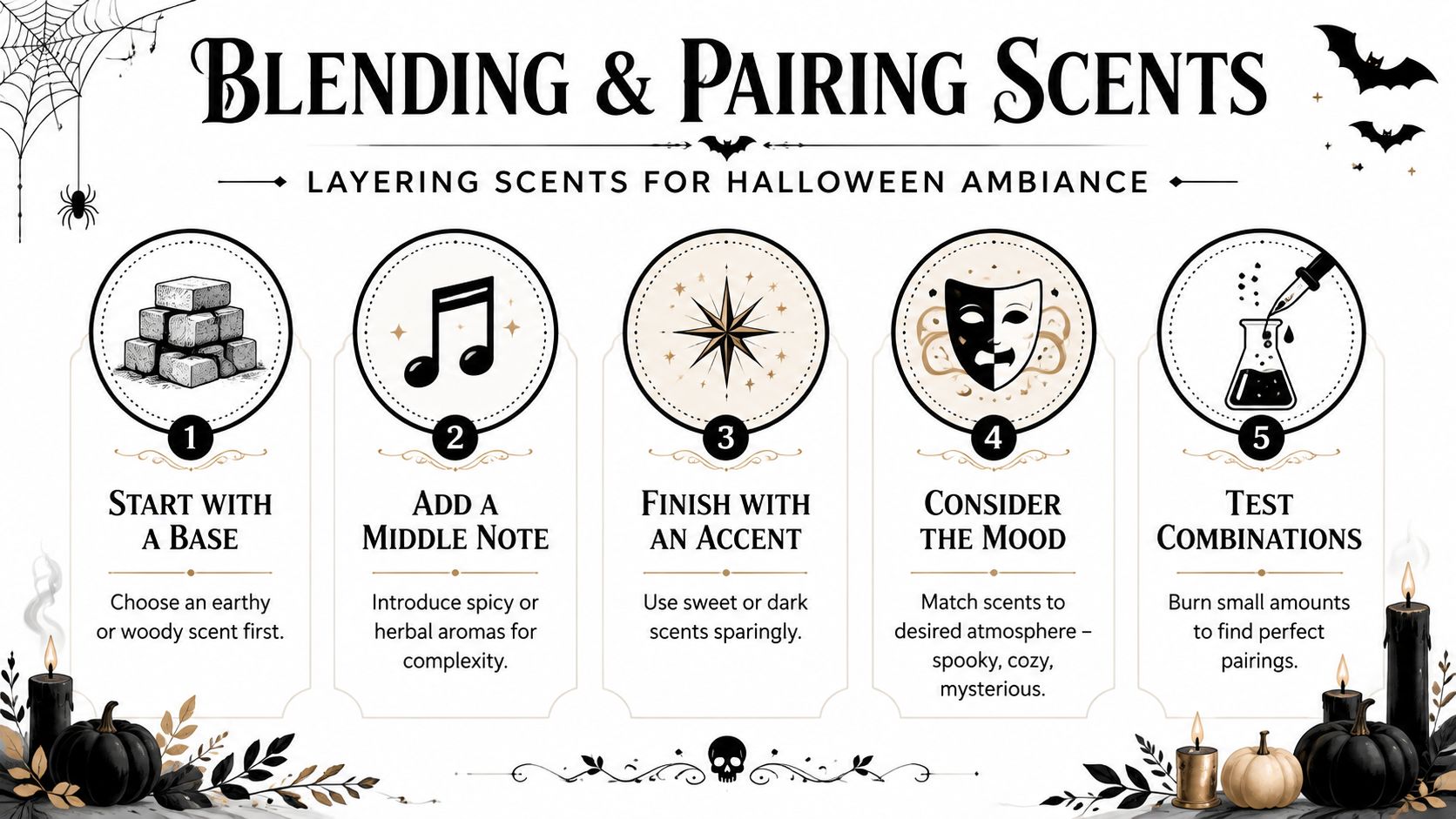
Build from the base up
Start with a grounding scent, usually something earthy or woody. Then add a spicy or herbal note if you want more texture. Save sweet, dark, or smoky accents for the last layer, and use them sparingly because they can take over fast.
A mystical forest blend usually works best with cedar or sandalwood at the base, a little frankincense in the middle, and a trace of clove as the accent. An ancient temple mood leans harder into resin, so frankincense and myrrh belong in front, with a dry wood note behind them. A harvest evening blend feels more approachable when cinnamon or nutmeg sits over a softer wood base, because it reads warm before it reads spooky.
Burn small test amounts first. A scent that smells balanced on the box can turn harsh once heat, airflow, and smoke all change the profile.
Choose the right format for the mood
Cones usually make sense for short events or quick atmosphere changes because they finish sooner and concentrate the scent burst. Sticks suit longer sessions, especially if the room is large enough that the fragrance needs time to settle. Resins can feel rich and ceremonial, but they also demand more attention to burner setup and ventilation.
If you're building a mixed display, a sampler pack gives buyers a low-risk way to compare blends before committing. That works especially well in stores where customers don't know whether they prefer earthy, spicy, or resinous Halloween incense. For readers who want to practice this kind of pairing beyond seasonal stock, how to blend fragrance oils for candles offers a useful way to think about top, middle, and base notes in another format.
Safety and Ventilation Considerations for Indoor Burning
Halloween incense creates atmosphere, but it also creates smoke. That smoke carries particulate matter and combustion byproducts, not just fragrance, and that's why room size and airflow matter more than most seasonal guides admit. Independent medical guidance also notes that incense smoke can worsen symptoms for people with allergies and asthma (ACAAI on incense and respiratory risk).
Smoke is part of the product, not a side effect
A combustible incense stick is made from roughly 21% herbal or wood powder, 35% fragrance material, 11% adhesive powder, and 33% bamboo stick, and a review found that incense burning produced more than 45 mg of particulates per gram burned, versus about 10 mg/g for cigarettes (incense composition and particulates). That doesn't mean incense and cigarettes are the same thing. It does mean smoke load can become meaningful quickly, especially in closed rooms.
Burn time affects exposure too. In one controlled study, a 3.42 cm cone burned for about 15 minutes, while several stick incense samples spanning roughly 13.37–22.00 cm burned for about 20 to 21 minutes (incense burn-time study). Short formats are better for brief scent bursts, while longer sticks extend the time a room is exposed to smoke.
What to do in real rooms
A small, closed bedroom is the wrong place for a strong Halloween stick if ventilation is poor. A living room with a cracked window, a stable burner, and a clear exit path is a better setup. Burner placement matters as much as the scent, because curtains, paper décor, and costume fabric can all catch heat or ash.
Use a lower-smoke format when airflow is limited, and don't stack multiple sticks just to “make it stronger.” That usually increases smoke faster than it improves fragrance. A practical guide to safer setup habits is Purified Air Duct Cleaning oil tips, which is useful as a broader reference for scenting indoor spaces responsibly.
Practical rule: if someone in the room is already coughing, sneezing, or reaching for a window, the scent load is too high.
For a product-level reminder on safe setup and storage habits, the internal guide on incense safety is worth keeping alongside any Halloween assortment. And if a room is unusually tight or stale, choosing a lighter fragrance or skipping burning altogether is the smarter call.
Retail Merchandising and Wholesale Strategies
Halloween incense sells better when it's merchandised as a mood builder, not a random stick holder. Buyers usually respond to context, so the display needs to show where the scent fits, whether that's a shelf, a gift basket, a meditation corner, or a seasonal checkout endcap. The assortments that move fastest are the ones that make the buyer think, “I know exactly where this goes.”
Put it where the impulse happens
Cross-merchandising works because incense is part of a larger atmosphere purchase. Put sticks or cones near candles, burners, seasonal décor, and giftable fragrance items so the customer sees a complete setup, not a lonely packet. Sampler packs help here because they lower commitment and invite trial, especially for shoppers who like the Halloween look but don't know the scent families yet.
Packaging matters too. Simple, readable labels usually beat vague mystical names when the buyer is standing in a store aisle. If the front of the package clearly says woodsy, spicy, resinous, or sweet, the customer can make a fast decision. That matters in gift shops and metaphysical stores where shoppers browse quickly and often buy on instinct.
Wholesale decisions that protect margin
For resellers, the biggest mistake is overbuying a scent that only looks seasonal. Start with a mix of core Halloween-safe notes, then add a few more dramatic options as smaller test quantities. Lead time and packaging quality matter because fall inventory needs to arrive before the season peaks, not during it.
If you source through Aroma Warehouse, its incense sticks, incense cones, fragrance oils, and unscented sticks can support both retail-ready and private-label style assortments. That's useful for shops that want a seasonal line without carrying a huge inventory of unfamiliar SKUs. You can also study the structure of their wholesale incense sticks guide to think through assortment planning more clearly.
Retailers should think in three groups. Trial items are sampler packs and shorter formats. Core items are the familiar scents that steady repeat sales. Accent items are the darker or more unusual notes that create visual drama and seasonal novelty.
DIY Recipes and Sourcing Quality Ingredients
Understanding incense composition makes DIY decisions much easier. Combustible incense usually depends on herbal or wood powders, fragrance material, adhesive powder, and a bamboo core, and each part changes the burn. Too much fragrance can make a stick smoke heavily, while too little binder can leave the incense crumbly or unstable.
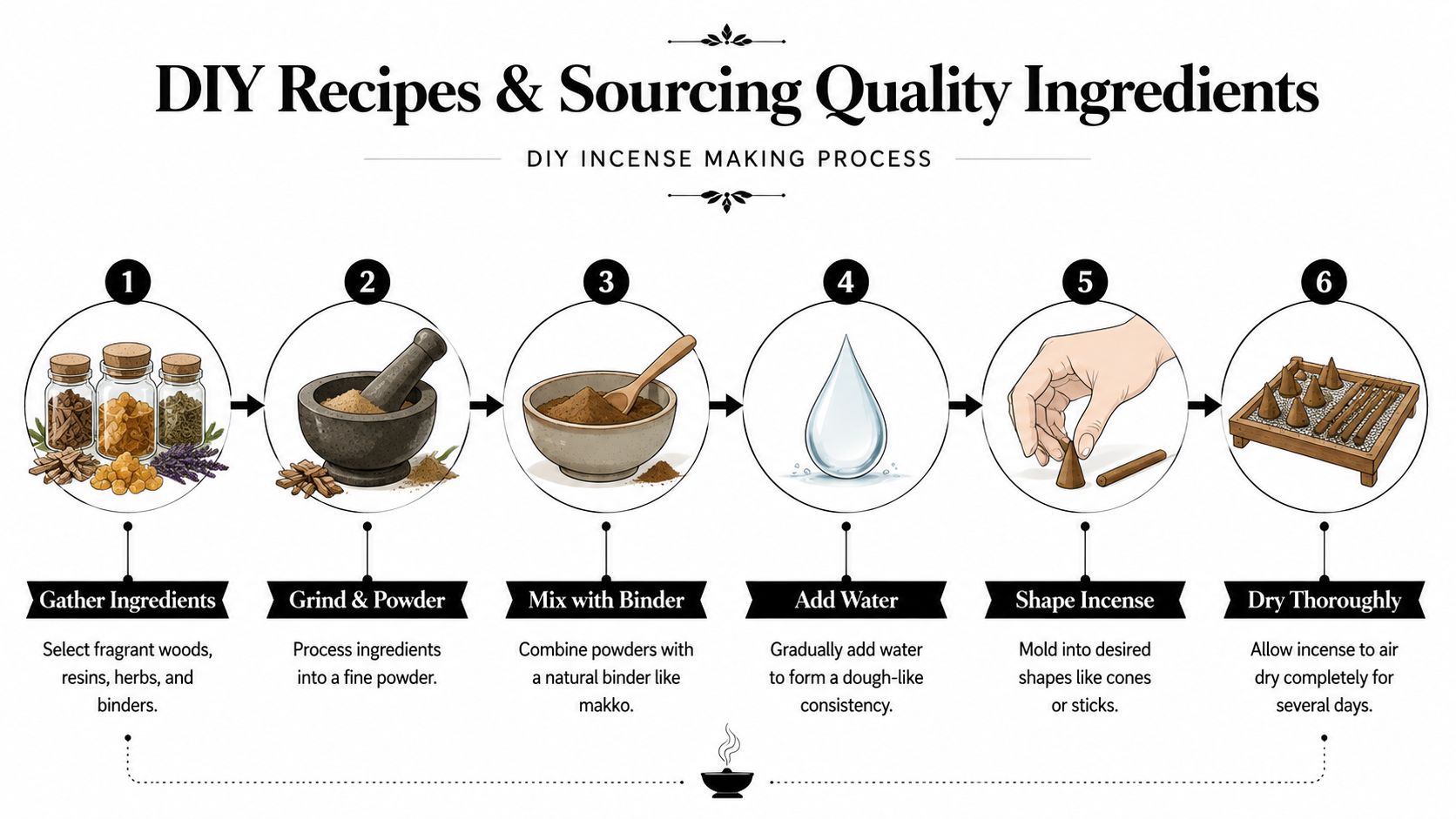
Start small and test the burn
For home blending, begin with an unscented base, then add fragrance in a measured way instead of soaking everything at once. That keeps the stick or cone from turning brittle or producing uneven ash. If you're making product for resale, small-batch testing matters even more because burn quality, scent throw, and drying time all affect customer satisfaction.
The internal walkthrough on how to make natural incense at home from scratch is a sensible technical companion for hobbyists and small sellers. It pairs well with the basic rhythm most makers follow, gather, grind, mix, shape, and dry.
Good DIY incense is a materials problem first. If the powder blend is weak, no amount of pretty labeling will fix it.
What tends to go wrong
Uneven burning usually comes from poor powder consistency, a bad binder balance, or rushed drying. Weak fragrance often comes from using oils that aren't suited to incense substrates, or from loading scent too heavily and destroying combustion. Storage matters too, because heat and moisture both can dull potency before the product ever gets burned.
For sourcing, look for fragrance materials with stable oil characteristics and base ingredients that are meant for incense, not just general perfume use. If you're selling, label clearly and keep the product description tied to scent family and burn format. That helps customers know whether they're buying a resinous cone, a woodsy stick, or a lighter seasonal blend.
Real-World Applications and Success Stories
A yoga studio using Halloween incense for a month-long seasonal program would usually do better with a light rotation than a constant heavy burn. A single cone before class, then fresh air before students enter, keeps the room seasonal without making the practice space feel smoky. The right move is restraint, not volume.
A metaphysical shop can bundle a frankincense stick, a sandalwood cone, and a small burner as a themed set, which gives shoppers a ready-made experience instead of a loose product pile. That kind of bundle works because it answers the essential question on the counter, which is not “Do you like incense?” but “What do I need to make this feel complete?”
A home user can do the same thing at a smaller scale. One well-chosen stick in the entryway, a stable holder, and a cracked window can turn a first impression into a seasonal moment without overwhelming guests. The mistake I see most often is burning too many sticks at once, then wondering why the room feels flat and sharp instead of rich.
These examples all point to the same lesson. Halloween incense sells and performs best when the user respects the room, the scent family, and the audience. That means matching intensity to space, choosing a format that fits the length of the event, and remembering that fragrance should support the setting, not dominate it.
Five New Frequently Asked Questions
How long should you burn Halloween incense at one time?
Burn time depends on the incense format and room conditions. Shorter formats such as cones can work well for brief seasonal scenting, while sticks can be used for longer sessions. Follow the product's directions and avoid burning continuously in poorly ventilated spaces.
What Halloween incense scents are best for a small room?
Lighter woody, herbal, or moderately earthy scents are generally better suited to small rooms than very strong spicy or resinous fragrances. Use less incense and provide adequate airflow to prevent the scent and smoke from becoming overwhelming.
Can Halloween incense be used in a retail store?
Yes, but retailers should consider ventilation, customer sensitivities, fire safety, and store policies. Moderate scents can complement seasonal displays, especially when incense is merchandised alongside burners, candles, décor, and other fragrance products.
What type of Halloween incense is best for beginners?
Incense sticks or sampler packs are practical starting points because they are easy to use and allow beginners to compare scent families. Earthy, woody, and warm fragrances can provide an approachable introduction to seasonal incense.
How should Halloween incense be stored before the holiday?
Store incense in a cool, dry location away from excess moisture, heat, and direct sunlight. Proper storage helps preserve fragrance quality and keeps seasonal inventory in better condition until it is ready for sale or use.
Aroma Warehouse carries incense sticks, incense cones, fragrance oils, and unscented bases that fit seasonal displays, DIY blends, and wholesale assortments for Halloween. If you're building a fall scent lineup or stocking a shop for October, visit Save on Scents Incense to compare formats and source the pieces that fit your space or shelves.


