

Cucumber Melon Fragrance Oil: A Complete Guide

You've probably seen cucumber melon on candle shelves, soap labels, and diffuser listings, then discovered that the same scent can behave very differently once it's in wax, surfactants, or skin products. That gap is where a lot of product mistakes start. A buyer can love the freshness on paper, then end up with weak throw, a flat soap bar, or a lotion formula that needs a much tighter safety check than expected.
The practical answer is to treat cucumber melon fragrance oil as a formulation system, not just a pretty scent. Its appeal comes from a modern fragrance structure, not a single fruit extract, and that gives makers flexibility when they match it to the right base. If you want a broader consumer context for how mood and scent intersect, Aroma Warehouse's mood-enhancing scents guide is a useful companion read.
Table of Contents
The History Behind Cucumber Melon Fragrance - Why that matters in production
Breaking Down the Signature Scent Profile - What the top notes are doing
Choosing the Right Product Applications - Where it usually performs well - What doesn't work well
Formulation Guidelines and Dilution Best Practices - How to use the limits correctly - A simple formulation check
Safety Standards and Storage Practices - What to check before you bottle or sell - Storage habits that preserve quality
The History Behind Cucumber Melon Fragrance
Cucumber melon fragrance oil is a modern commercial accord, not a centuries-old natural extract. Fragrance references place cucumber notes in perfumery in the 1970s through synthetic cucumber aldehyde, then describe melon-style freshness as being reshaped in the 1990s by calone, a synthetic ingredient used to recreate watery melon qualities. That timeline explains why the scent feels so familiar now, even though the structure behind it is relatively recent. The commercial name “Cucumber Melon” was already appearing in fragrance encyclopedias by 2000, which shows how quickly it moved from novelty to a retail staple. Cucumber ingredient history

Why that matters in production
A synthetic foundation gives formulators consistency. You're not waiting on seasonal fruit material, and you're not fighting the batch drift that can show up with many natural aroma materials. That's why this family works so well in candles, soaps, and personal-care products where buyers expect the same clean profile every time.
Practical rule: the newer the accord, the more important it is to respect the supplier's documentation instead of assuming every “fresh fruit” oil behaves the same.
That's also why the scent tends to travel well across retail channels. It reads clean, familiar, and easy to place on a shelf without needing a complicated fragrance story.
Breaking Down the Signature Scent Profile
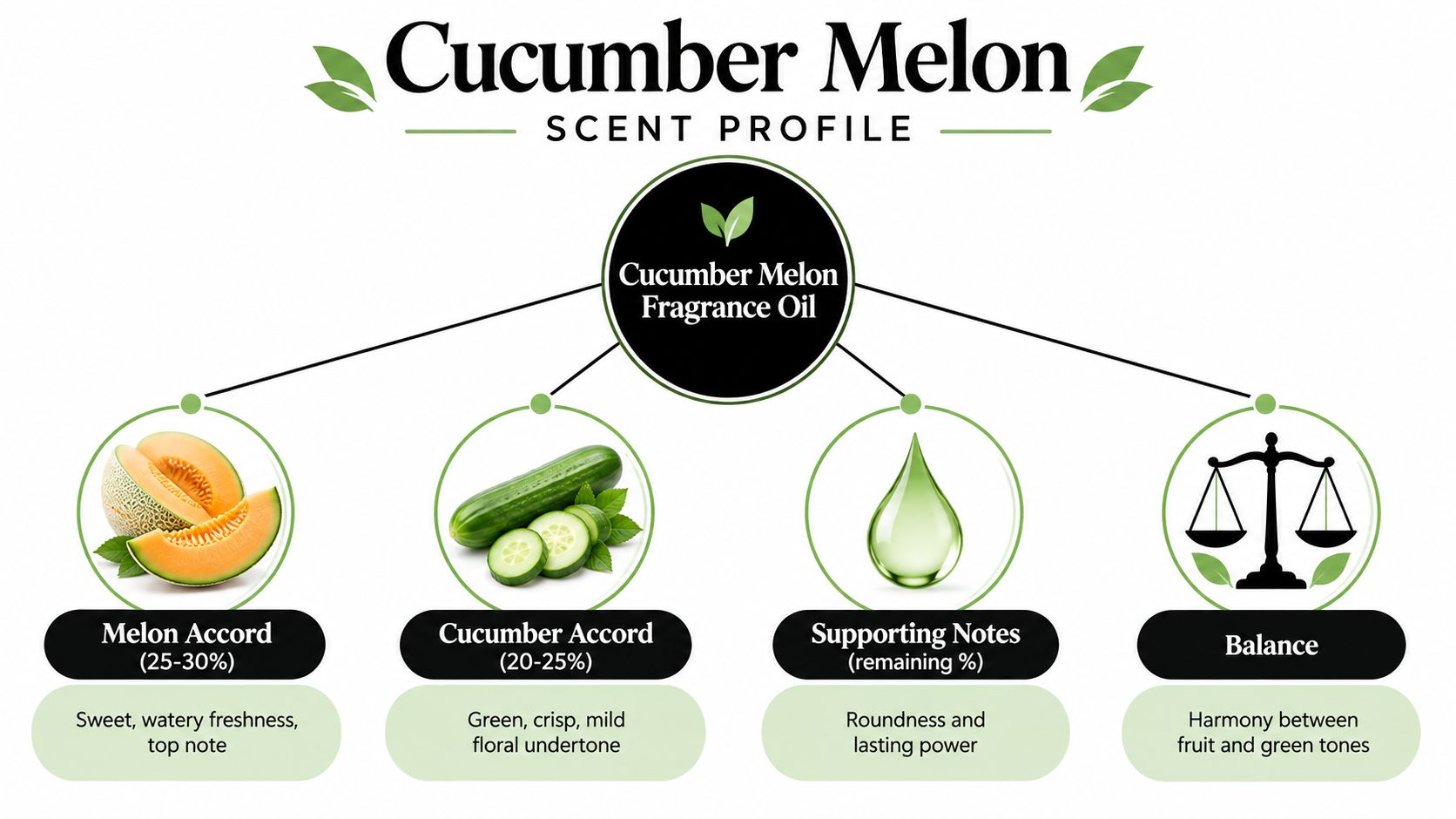
A cucumber melon blend works because the top, middle, and support notes pull in different directions without fighting each other. One perfumery guide describes a melon accord built from 25 to 30% melon, 20 to 25% cucumber, 20 to 25% peach, and 25 to 30% lemon to create the watery-green effect many shoppers recognize. That structure gives the fragrance a bright opening while keeping it controlled enough for spa and home formats. The lemon component here connects to broader citrus-profile work, see our lemon fragrance oil guide for related formulation insights. Melon accord composition
What the top notes are doing
A separate industry reference describes the scent as crisp cucumber with sun-ripened melon, plus top notes of lemon and apple and supporting notes of mixed berries, jasmine, lily, and balsam. That mix explains the first impression. It opens bright, then settles into a rounder, more wearable finish. Cucumber melon aroma notes
The practical point is volatility. Low-threshold top-note materials announce themselves fast, so the same oil can seem sharper in a diffuser than in a lotion base, even before the rest of the accord changes. That is not a flaw in the oil, it is the normal behavior of volatile materials. In wax, the fruit-green profile can read airy and polished. In soap, the same accord often feels cleaner and less sweet because the base trims some of the softer edges. In body products, the opening can feel smoother, but only when the dilution and IFRA limits fit the format.
The scent is built to feel fresh first and fruity second. Push it too hard, and the green top can crowd out the softer melon body.
That is why experienced buyers test cucumber melon in the actual base, not just on a blotter strip. Candle wax, soap batter, and skin-contact products each reveal different weaknesses, and the safest use rate depends on the category, not on the scent name.
Choosing the Right Product Applications
Most listings oversimplify the decision. A single cucumber melon fragrance oil can work across multiple formats, but the use rate and sensory result change a lot from one product type to another. One current listing shows 6 to 10% for candles, 1 to 3% for soaps, 10 to 15% for personal perfumes, and 15 to 25% for reed diffusers. Cucumber melon usage ranges
Where it usually performs well
Candles: the scent typically gives the most predictable retail result here because wax can support the bright opening without the formula needing to touch skin.
Soaps: the profile often stays cleaner and more straightforward, which helps when you want a fresh retail identity rather than a layered perfume effect.
Diffusers: the fragrance can feel intense in this format, so the same oil may seem stronger than it does in a bar soap or body wash.
Personal fragrances: this format rewards restraint and careful testing, because the top notes can dominate if the blend is pushed too far.
A major supplier also states that its Cucumber Melon fragrance was revised effective June 30, 2020 to meet stricter safety standards and remove ingredients with characteristics similar to those on California's Proposition 65 list. Supplier revision notice
If you need room-spray production as a reference point, this fragrance oil room spray guide can help you think through atomization and scent carry without assuming candle behavior will translate directly.
What doesn't work well
Trying to force one use rate across all categories usually causes trouble. A candle load that smells lively in wax can be too aggressive on skin, while a skin-friendly dilution may feel underpowered in a diffuser. The smarter move is to decide the product first, then set the fragrance dose around that use case.
That approach saves time, reduces rework, and keeps retail expectations realistic.
Formulation Guidelines and Dilution Best Practices
A bottle of cucumber melon fragrance oil can behave very differently once it moves from wax into soap or skin care. The safest formulation starts with the final product category, then the current IFRA limit for that exact use. Consult the current IFRA standard document directly for category-specific maximum limits, because a candle-safe load may still be too high for a rinse-off or leave-on formula.
The trade-off is practical. Higher loads can give candles better throw, but the same dose in lotion, body wash, or shampoo can push you into a tighter compliance range or make the scent feel harsh. That is why retail buyers should build formulas around the product first, then set the fragrance dose to match the base.
How to use the limits correctly
Start with the category, then confirm the supplier's latest IFRA sheet before you mix. If you need a process for balancing fragrance in wax, this candle blending guide is useful because it keeps the focus on load, throw, and stability rather than guesswork.
A simple formulation check
Verify the category: match the product to the correct IFRA line before blending.
Check the SDS: sensitizer-relevant ingredients matter more once skin contact is involved.
Test in base: wax, surfactant systems, and emulsions can all change how the scent reads.
Keep a margin: if the formula touches skin, stay below the ceiling rather than aiming for the highest possible odor impact.
Bottom line: the right use rate is the one that fits the product type and the latest supplier documentation.
That difference matters most for bath and body makers. A fragrance that behaves well in a candle can become a compliance problem once it is moved into leave-on products, where the margin for error is much smaller.
Safety Standards and Storage Practices
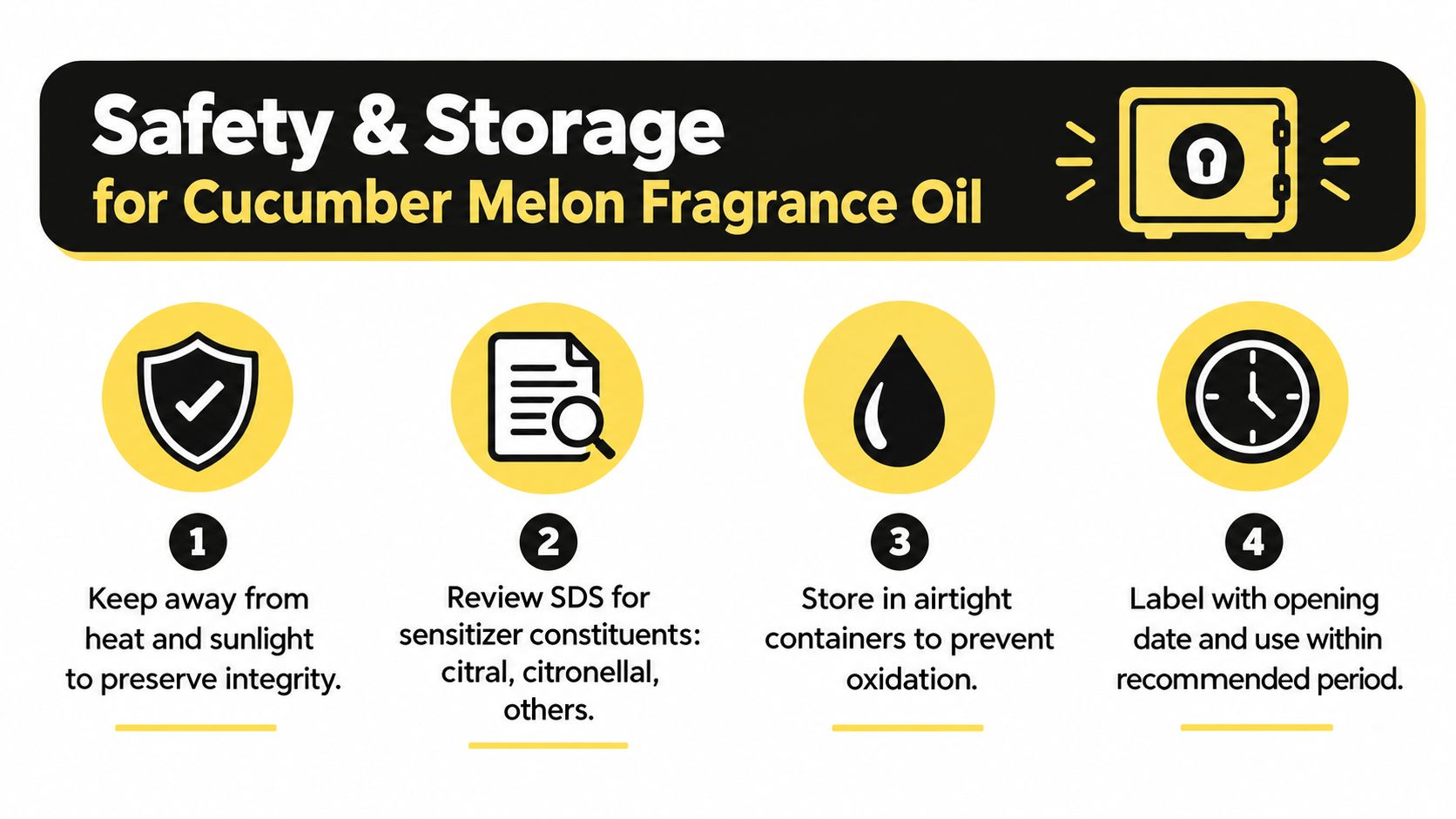
Safety documentation, not label design, is where you start with this fragrance oil. The SDS for a cucumber-melon premium fragrance oil identifies sensitizer-relevant constituents, including citral, citronellal, geraniol, linalool, limonene, carvone, and multiple aldehydes, and it notes that the material may cause an allergic reaction. Verify the SDS and the IFRA sheet before you put the oil into any skin-facing formula. For category matching and compliance checks, use the supplier documentation alongside fragrance labeling requirements so the finished product record stays consistent.
What to check before you bottle or sell
A clean safety process stays practical. Keep the documentation attached to the product record, verify the intended category, and avoid reading the scent family as a compliance shortcut. If a formula will touch skin, the IFRA category matters more than how fresh the name sounds.
Storage habits that preserve quality
Keep fragrance oils in cool, dark conditions and in airtight containers. Heat and sunlight can dull the bright top notes that make this scent work in candles, soaps, and body products. Label each bottle with the opening date so older stock moves out first.
Stability also depends on handling. A fragrance that sits too long near heat, light, or air can drift from lot to lot, which makes testing harder and can blur the difference between a fresh batch and one that has started to oxidize.
Marketing and Merchandising Strategies
Cucumber melon sells best when it's positioned as a clean, flexible scent rather than a one-season novelty. It works in summer displays, but it also fits wellness counters, spa gift sets, and everyday home-fragrance assortments because the freshness reads as tidy and approachable. Retail buyers do better when they merchandise it as a year-round refresh scent, not just a warm-weather impulse buy.
One practical move is to build a small family around the note profile. Pair it with bath salts, reed diffusers, candle accessories, or complementary scent options so shoppers can move from one format to another without leaving the aisle. That creates a more coherent retail story and gives customers a reason to buy more than one item. If you're writing product copy and want a lighter creative angle, these quotes about fruit for creators can spark phrasing without turning the listing into fluff.
What helps it sell
Clean packaging: pale greens, whites, and clear containers signal freshness quickly.
Format clarity: spell out whether the product is a candle, soap, diffuser, or body item, because buyers want immediate use-case recognition.
Cross-sell logic: place matching accessories nearby, especially where shoppers already expect a scent routine.
Consistent naming: keep “Cucumber Melon” prominent so the scent reads instantly on shelf and online.
A retail line built this way feels more intentional than a scattered assortment. That matters for wellness centers, gift shops, and online sellers who want an easy product story customers can repeat.
Merchandising rule: if the scent feels fresh but the packaging feels generic, the product loses half its shelf appeal.
Conclusion, Building Confidence with Cucumber Melon
Cucumber melon works because it sits at the intersection of familiarity, freshness, and technical control. Its history explains why it's consistent, its blend structure explains why it smells so clean, and its IFRA limits explain why the same oil can't be treated the same way in every format. Once you separate candles, soaps, diffusers, and skin products into their real use cases, the scent becomes much easier to sell and much safer to formulate.
That's the practical edge retailers often miss. Buyers don't just want a popular fragrance, they want one that performs predictably, ships cleanly, and matches the product they're making.
Frequently Asked Questions
1. Does cucumber melon fragrance oil smell more like cucumber or melon? Cucumber melon fragrance oil is generally designed as a balanced fresh-fruity accord rather than smelling exclusively like cucumber or melon. The exact balance varies by fragrance formula, so comparing the supplier's scent description and testing a small amount in the intended product base is the best way to evaluate it.
2. Can cucumber melon fragrance oil be blended with other fragrance oils? Yes. Cucumber melon can be used as part of a custom fragrance blend. Fresh, fruity, floral, aquatic, and some clean fragrance profiles can create different variations, but small test batches are recommended because another fragrance can change the character and strength of the finished blend.
3. How should I test cucumber melon fragrance oil before making a large batch? Make a small test batch using the actual base and intended fragrance concentration. Allow the product to develop for the appropriate testing period, then evaluate the scent, appearance, stability, and overall performance before committing to a larger production run.
4. Does cucumber melon fragrance oil change color when added to products? The finished appearance depends on the fragrance itself, its concentration, and the base being used. Because fragrance oils can behave differently in wax, soap, emulsions, and other formulations, testing a small sample is useful before producing a larger batch.
5. How long does cucumber melon fragrance oil typically stay fresh in storage? Storage life depends on the specific formulation and supplier recommendations. Keeping the oil tightly sealed in a cool, dark location away from heat and direct sunlight can help preserve its fragrance quality. Always follow the supplier's storage and product documentation for the specific oil.
Aroma Warehouse carries fragrance oils, incense, diffusers, and related aromatherapy supplies for retail and wholesale buyers who need dependable product options. If you're building a cucumber melon line or comparing fragrance formats for candles, soaps, and body products, visit Aroma Incense Warehouse to review what's available and choose the right fit for your next batch.


