

Yellow Sage Flower: Identification, Uses, and Care

You're comparing supplier listings, and each one promises a “yellow sage flower.” One shows a compact woodland perennial, another offers dried aromatic material, and a third lists an extract made from a yellow-flowered shrub. The names look interchangeable, but the plants aren't.
Yellow sage flower is a common name rather than a dependable botanical identity. For an independent retailer, aromatherapy business, or wellness store, that distinction affects everything from cultivation and product descriptions to traceability and safety documentation. The scientific name, plant family, plant part, and intended use should appear together before you buy or sell the material.
Table of Contents
The Yellow Sage Flower Identity Crisis - Why the name matters in retail
Distinguishing the Main Species - Salvia koyamae - Salvia nubicola - Lantana camara
Botanical Characteristics and Growth - A practical identification sequence
Aromatherapy and Smudging Applications - What the laboratory result does and doesn't mean
Cultivation and Care Tips - Growing Salvia koyamae - Matching Salvia nubicola to its habitat
The Yellow Sage Flower Identity Crisis
A customer may ask for yellow sage expecting a fragrant bundle for a cleansing ritual. A gardener may search the same phrase and find a shade-loving ornamental. A product developer may encounter yellow-flowered Lantana camara in a botanical paper. All three searches can be technically valid while pointing to different plants.
One well-documented interpretation is Japanese yellow sage, Salvia koyamae. The Missouri Botanical Garden plant profile for Salvia koyamae describes a woodland, ground-covering salvia with trailing stems, hairy arrow-shaped leaves, and pale-yellow, two-lipped flowers. Its leaves reach approximately 6 inches long and 5 inches wide, while flower spikes rise on stiff stems approximately 18 to 24 inches tall, usually from late summer through early fall.
That description points to an ornamental garden plant, not automatically to a commercial smudging herb. The phrase “yellow sage” can also refer to Himalayan yellow sage, Salvia nubicola, or to Lantana camara, an aromatic plant from a different family. A listing that says only “yellow sage” leaves the buyer to guess which identity is intended.
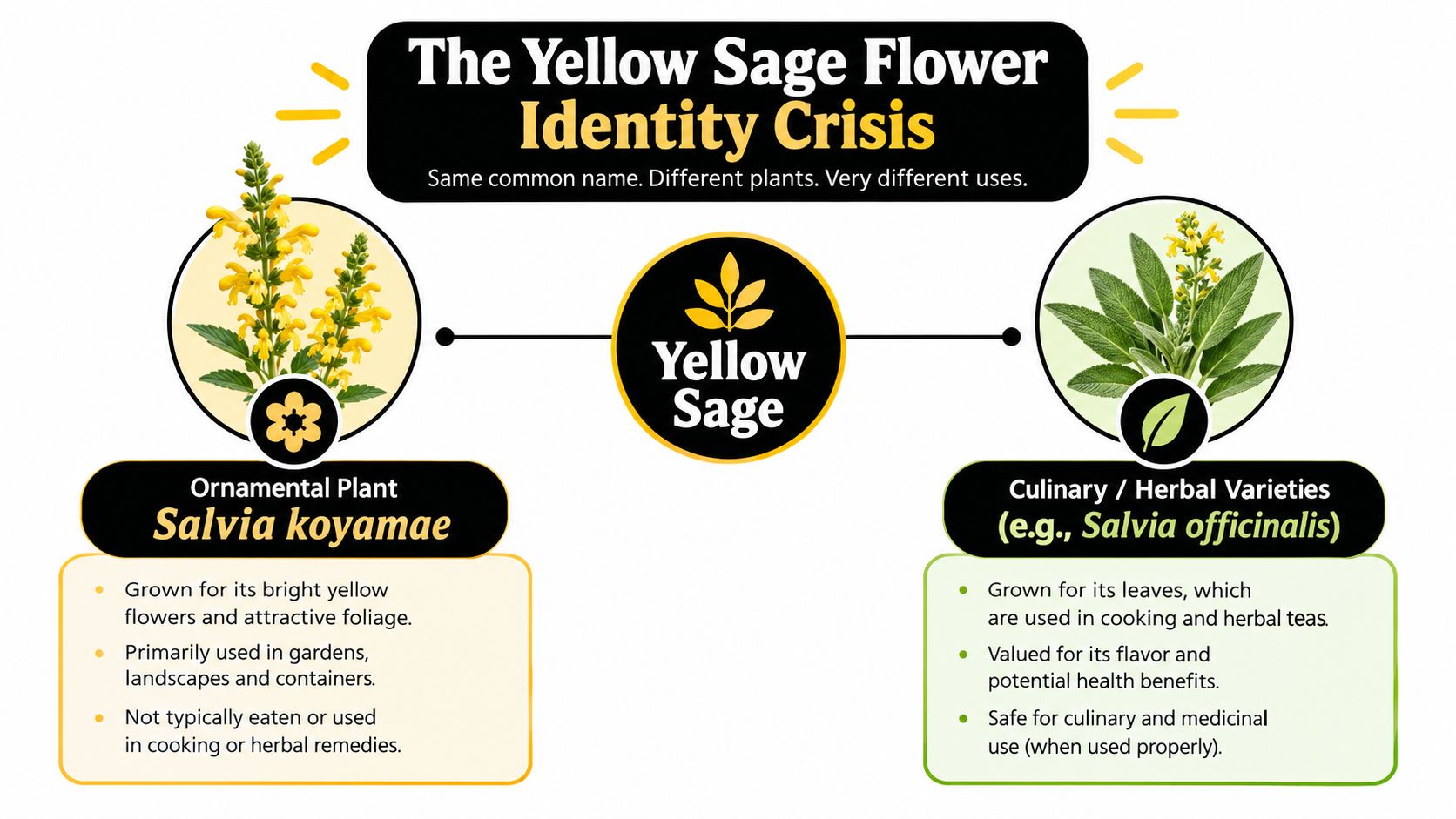
Why the name matters in retail
Misidentification can produce a mismatched customer experience. Someone ordering an ornamental Salvia koyamae may expect a dried aromatic bundle, while someone buying an extract may assume it came from a true Salvia species. Those assumptions can affect labeling, storage instructions, intended-use statements, and customer trust.
Before listing a product, record:
Scientific name: Include the full species name, not only “yellow sage.”
Plant family: Salvia belongs to Lamiaceae, while Lantana camara belongs to Verbenaceae.
Plant part: Flower, leaf, stem, root, or whole aerial portion can represent different materials.
Intended use: Ornamental planting, fragrance, ritual use, or laboratory research should be stated separately.
For smoke-based rituals, botanical naming matters just as much as it does for any other aromatic material. A clear guide to smudging instructions can support customer education, but it can't correct an ambiguous supplier label. Start with the plant identity first.
Distinguishing the Main Species
A supplier sends a wellness store “yellow sage flower,” but the batch could represent a woodland ornamental, a Himalayan perennial, or an aromatic shrub from a different plant family. The label therefore needs more than flower color. The genus Salvia contains approximately 700 species worldwide, according to the U.S. Forest Service botanical reference on Salvia dorrii. Common names alone cannot identify the material's botanical origin or intended retail use.
Salvia koyamae
Japanese yellow sage, Salvia koyamae, is the compact woodland candidate. Its hairy, arrow-shaped leaves, trailing growth, and pale-yellow, two-lipped flowers create a low ground-cover profile, with flowering stems rising above the foliage. The plant suits shaded ornamental borders and is best presented to customers as a cultivated woodland salvia, not automatically as an aromatic ingredient.
A nursery or product listing should use Salvia koyamae as the primary name. That detail helps prevent an ornamental plant from being mistaken for dried sage intended for fragrance, ritual use, or extraction.
Salvia nubicola
Himalayan yellow sage, Salvia nubicola, has a taller, more upright structure. It is a hardy perennial reaching approximately 60 to 120 centimeters, with yellow flowers that may have orange upper lips on branched terminal spikes. Its height and form distinguish it from the low-growing Japanese species. Habitat information places it in moist, shaded, rich-soil environments at approximately 2,100 to 4,300 meters, with flowering generally from June through August.
For a retailer, the distinction affects purchasing records and labels. A supplier should identify Salvia nubicola, specify the plant part, and separate ornamental material from any product marketed for aromatic use.
Lantana camara
Lantana camara presents the greatest naming risk because it is not a Salvia. In documented usage, “yellow sage flower” can refer to this aromatic shrub in the family Verbenaceae. Its botanical identity, plant parts, habitat, and chemical profile differ from those of Salvia species, so a yellow bloom does not justify using “sage” as the sole product name.
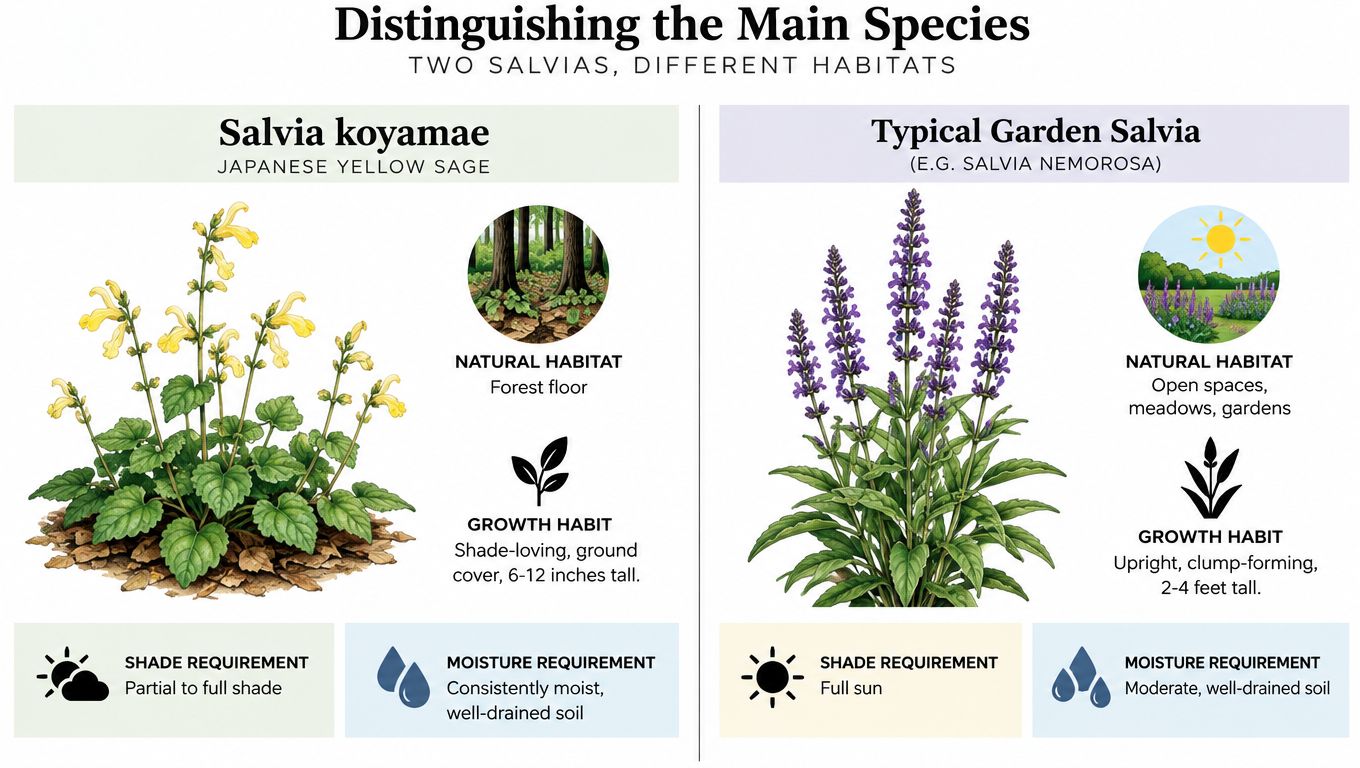
Practical rule: If a purchase order says only “yellow sage,” pause the order and request the scientific name and plant part.
Historical naming also supports careful recordkeeping. The U.S. Forest Service reference records several earlier names for Salvia dorrii, before the accepted name became established. For adjacent ritual products, guidance on the difference between palo santo and white sage reinforces the same retail lesson: familiar aromatic names can conceal different plant identities.
Botanical Characteristics and Growth
A supplier delivers a box labeled only “yellow sage flower.” Before accepting it for an aromatherapy range, compare the plant's structure, leaves, flower arrangement, and habitat. Flower color identifies none of the three reliably. These details work like a botanical checklist, helping separate Salvia koyamae, Salvia nubicola, and the aromatic shrub Lantana camara.
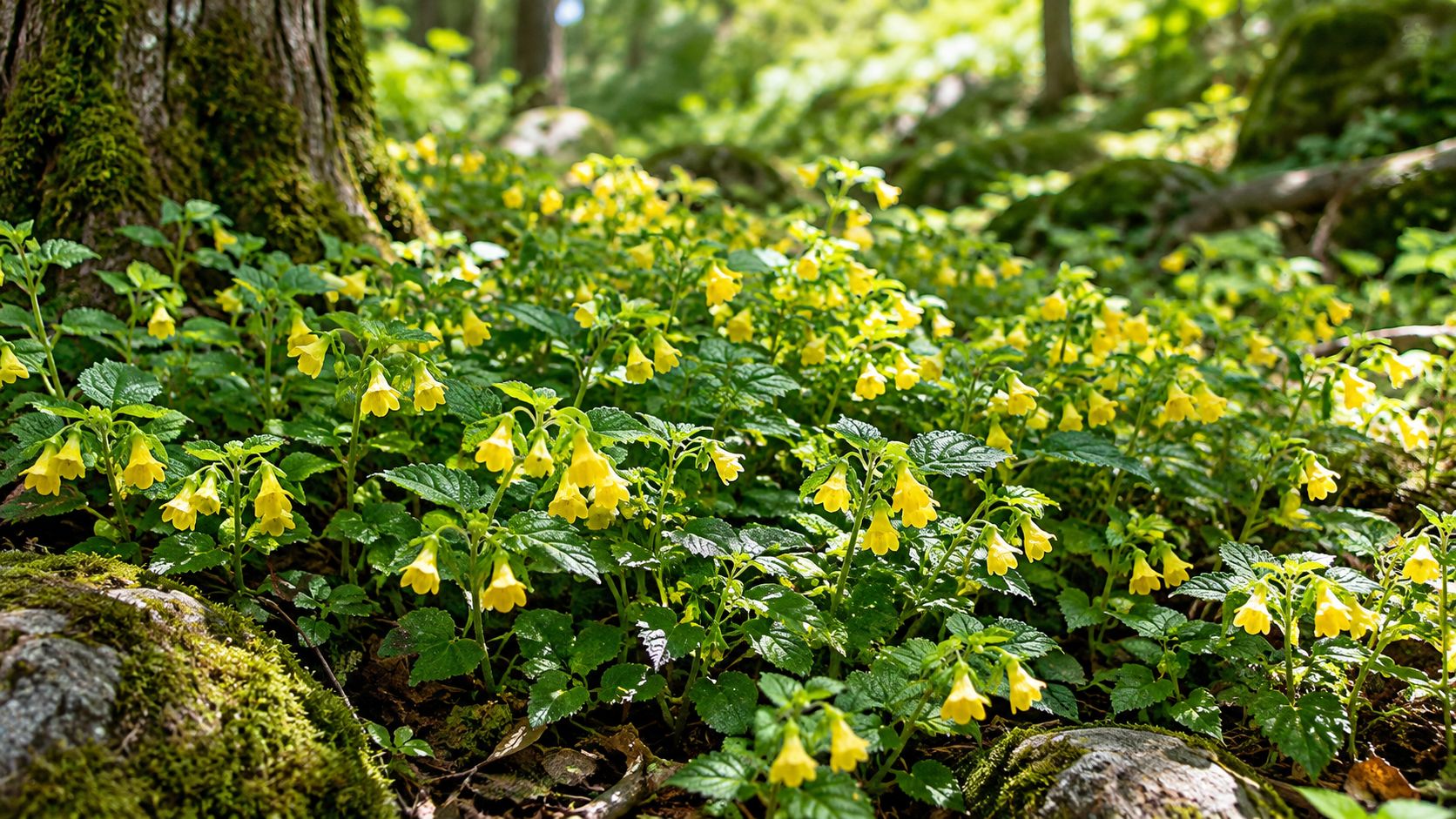
A practical identification sequence
Start with the plant's shape. A low, spreading form with trailing stems and arrow-shaped, hairy leaves supports an identification as Salvia koyamae. Its pale-yellow, two-lipped flowers rise on upright spikes, giving the plant a ground-covering profile rather than the outline of a large shrub.
Examine the flowering stem. Salvia nubicola is taller, with branched terminal spikes, yellow flowers, and orange upper lips. Its more upright structure fits a Himalayan perennial and differs from the compact woodland habit of S. koyamae. Habitat comparison can support this distinction: S. nubicola is associated with cool, moist, shaded, rich soils at high elevations, whereas S. koyamae is described as a woodland ornamental.
Check the family before assigning a product name. Lantana camara is an aromatic shrub in Verbenaceae, not a Salvia in Lamiaceae. Its yellow blooms therefore cannot justify labeling the material as sage. The botanical reference for Himalayan yellow sage records this family-level difference and helps clarify why the names should remain separate.
For retail intake, photograph the living plant or package, retain supplier documentation, and record the plant part. Growing conditions can reveal a mistaken identity, but a yellow flower alone cannot support an aromatherapy label. A purchase record should name the species, not merely the color or trade name.
Aromatherapy and Smudging Applications
The safest way to discuss yellow sage in aromatherapy is to separate ritual tradition, fragrance use, ornamental gardening, and laboratory research. These categories overlap in customer language, but they don't establish the same safety or performance claims.
A dried material sold for smoke use needs a verified species and a clear plant part. Salvia koyamae is documented primarily here as a woodland ornamental, so its pale-yellow flowers and attractive foliage shouldn't be treated as proof that it's an appropriate smudging ingredient. Salvia nubicola has a different structure and habitat, but even its name alone doesn't establish that a particular commercial bundle was responsibly harvested, correctly dried, or suitable for inhalation.
Lantana camara requires especially careful separation from true sages. A preliminary in-vitro study examined a methanolic flower extract from yellow-flowered Lantana camara using UV-visible diffuse-transmittance spectroscopy across 200 to 400 nanometers. The reported absorbance peaks were approximately 0.706 near 270 nanometers and 0.953 near 330 nanometers, and qualitative screening detected flavonoids. The study of yellow-flowered Lantana camara extract/%5B103%5D.pdf) reported total phenolic content of approximately 9.53% ± 0.892% and flavonoid content of approximately 6.72% ± 0.79%.
What the laboratory result does and doesn't mean
The proposed explanation is that flavonoid and phenolic chromophores contributed to ultraviolet absorption in the laboratory assay. That result describes an extract tested in vitro. It doesn't show that the flower is a finished sunscreen, provides human photoprotection, or is safe for topical application.
It also shouldn't be used to justify burning Lantana camara as though it were a traditional sage. Extract chemistry, smoke exposure, topical exposure, and fragrance use are different questions. The study's material was methanolic flower extract, not a finished consumer product.
Labeling boundary: A laboratory absorbance result is not a sunscreen claim, and an aromatic plant is not automatically a safe smoke ingredient.
For a wellness business, product copy should state the verified species, plant part, preparation method, and intended use. Avoid describing Lantana camara as “true sage,” and don't imply that research on its extract validates a ritual product. A separate educational resource on white sage with lavender can help explain how aromatic materials are combined in ritual contexts, but it doesn't remove the need for species-specific documentation.
Sourcing and Ethical Harvesting
A reliable purchasing process begins before the material reaches your inventory. Ask the supplier to identify the plant by its scientific name, then match that name to the invoice, specification sheet, packaging, and product page. If one document says “yellow sage” while another names Lantana camara or Salvia nubicola, resolve the discrepancy before selling the product.
Use this intake checklist:
Identity: Confirm the accepted scientific name and plant family.
Plant part: Record whether the material contains flowers, leaves, stems, or another portion.
Preparation: Ask whether it's fresh, dried, powdered, distilled, or extracted.
Intended use: Separate ornamental, fragrance, ritual, and research materials.
Traceability: Keep the lot or harvest information supplied with the purchase.
Quality review: Check for visible contamination, unexplained fillers, and inconsistent labeling.
A supplier who can answer these questions makes it easier to write accurate product descriptions and respond to customer questions. If the seller can provide only a common name, treat the material as unverified rather than guessing from its color or scent.
Ethical sourcing matters most when plant material comes from sensitive habitats. The documented range and high-elevation habitat of S. nubicola make origin information particularly useful for buyers evaluating collection practices. Ask whether the material is cultivated or wild-collected, how harvesting is managed, and whether the supplier can describe the source region without making unsupported sustainability claims.
For customers seeking a smokeable botanical, don't substitute a visually similar ornamental or unrelated aromatic shrub. A well-documented guide to smudging sage alternatives can support safer product education, especially when a preferred species isn't available.
Cultivation and Care Tips
Choose the plant according to your purpose, not just the flower color. Salvia koyamae suits a shaded ornamental bed, Salvia nubicola requires conditions resembling its cool mountain habitat, and Lantana camara follows a different shrub-growing pattern altogether.
Growing Salvia koyamae
Give Japanese yellow sage a shady, moist, rich-soil position that supports its woodland habit. Its trailing stems and low profile make it useful near paths, beneath taller plantings, or along a shaded border. Water consistently enough to prevent the soil from becoming dry, but avoid treating moisture as a substitute for drainage.
The late-summer-to-early-fall flowering period adds color after many spring displays have faded. Its ornamental value is the sensible reason to grow it. If your garden plan needs more flowering plants for exposed, bright areas, you can browse low-maintenance flowering options suited to full sun rather than forcing a shade plant into the wrong site.
Matching Salvia nubicola to its habitat
Himalayan yellow sage is adapted to moist, shaded, rich soils at high elevations. Gardeners in warmer or drier settings may struggle to reproduce those conditions, so assess climate, soil temperature, humidity, and summer stress before treating it as a dependable harvest crop.
The plant's upright form may look more suitable for gathering than S. koyamae, but appearance doesn't replace an evaluation of yield, aroma, contaminants, and intended use. Grow it as a correctly identified botanical first, then decide whether the harvested material meets your product standards.
A short care routine can prevent avoidable mistakes:
Label the planting immediately with the scientific name.
Separate species physically so cut stems and dried material can't be confused.
Record flowering and harvest observations without assuming they apply to another species.
Dry and store material by batch with the plant identity and plant part attached.
For storage guidance after harvesting, consult information on how to properly store California white sage herbs, while remembering that storage practices should still be adapted to the specific material.
The following video can supplement hands-on observation of watering and plant care:
Lantana camara may be easier to grow in warm conditions, but check local rules before planting because its behavior can vary by region. Never turn home-grown plant material into a wellness, topical, or smoke product without confirming identity and conducting the appropriate safety review.
Frequently Asked Questions About Yellow Sage Flower
1. How can botanical databases help verify the identity of yellow sage flower?
Botanical databases can help confirm an accepted scientific name, plant family, and known synonyms. Compare the supplier's name against a recognized botanical reference, and check that the information matches the plant material being purchased. Database verification supports identification but does not independently confirm the identity of a specific commercial batch.
2. Can yellow sage flower be used in homemade skincare products?
Do not assume yellow sage flower is suitable for homemade skincare simply because it contains naturally occurring plant compounds. Suitability depends on the exact species, preparation method, concentration, and available safety data. Confirm the botanical identity and obtain an appropriate safety assessment before considering topical use.
3. What information should a botanical certificate of analysis include?
A useful certificate of analysis should identify the material and batch, describe the tests performed, report the results, and identify the applicable testing methods or acceptance criteria. Depending on the intended application, additional testing for contaminants or chemical composition may be necessary. A certificate should be reviewed alongside supplier specifications rather than treated as automatic proof of every safety claim.
4. How should retailers distinguish yellow sage flower from similarly named botanical products online?
Retailers should use the accepted scientific name in the product title or description, identify the plant part, and explain the material's intended application. Product photographs, supplier specifications, and batch records can provide additional context. Avoid relying on flower color, scent, or a common name as the sole basis for identification.
5. Why should botanical inventory records include synonyms and alternative plant names?
Botanical synonyms and historical names can appear in older research papers, supplier catalogs, and purchasing documents. Recording verified synonyms alongside the accepted scientific name helps retailers reconcile documentation, locate relevant research, and reduce confusion when comparing suppliers. Each synonym should be checked against a reliable botanical reference before being added to inventory records.
Aroma Warehouse supplies wholesale incense, fragrance oils, aromatherapy accessories, burners, diffusers, bottles, and packaging support for wellness businesses and independent retailers. Visit Aroma Incense Warehouse to find clearly categorized aromatic products and practical supplies for building a more consistent, well-labeled product line.


