

Indian Scented Oils Explained: Types, Uses, and Buying Tips

A buyer can spend an afternoon comparing amber bottles, ornate attar vials, agarbatti boxes, and brightly labeled fragrance oils, yet still leave with the wrong product for the intended use. One bottle may contain a concentrated plant extract, another a traditional oil-based perfume, and a third a laboratory-created blend designed for candles. They may all smell “Indian,” but they won't behave the same way.
The safest way to choose Indian scented oils is to start with the application, then work backward to the oil type, ingredients, documentation, and handling requirements. This guide separates the categories, connects them to India's long perfumery heritage, and gives retail and wholesale buyers a practical way to judge what belongs in a diffuser, on skin, in incense, or in a commercial product.
Table of Contents
What Indian Scented Oils Actually Are
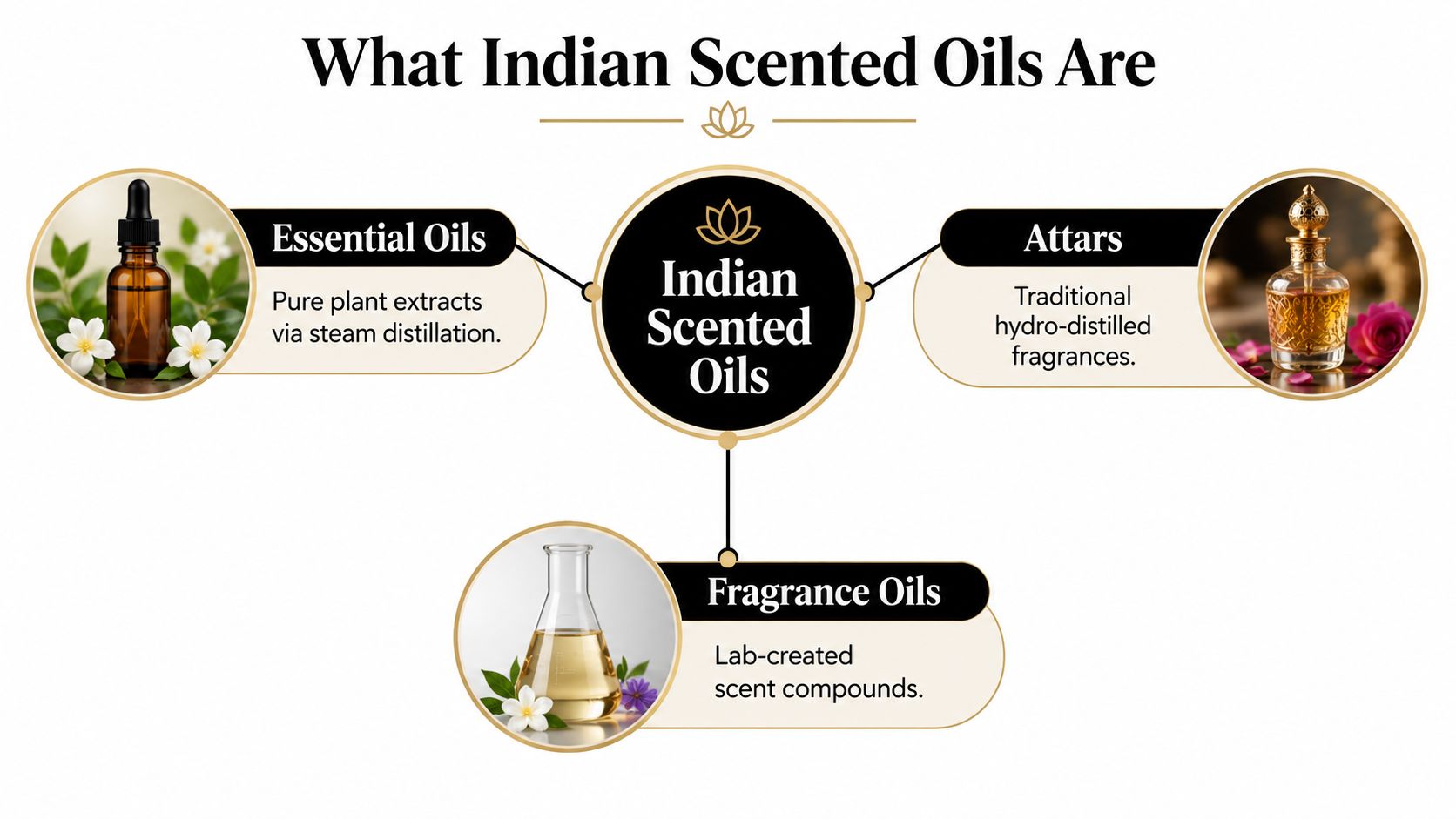
Indian scented oils are a broad family of aromatic liquids used in perfumery, ritual practice, home fragrance, personal care, and commercial products. The word “Indian” may describe the oil's origin, its botanical materials, its production tradition, or its scent style. It doesn't identify one universal ingredient or guarantee that a product is natural.
Start with three categories.
Essential oils are concentrated aromatic extracts from plant material. Producers commonly obtain them through steam distillation, while some materials require other extraction approaches. These oils contain volatile plant-derived compounds, so they evaporate and diffuse readily. Their chemical makeup may include terpenes, terpenoids, alcohols, aldehydes, ketones, and esters, all of which influence the way the oil smells and develops over time. A buyer comparing products should consult a clear guide to fragrance oils and essential oils before treating the labels as interchangeable.
Attars are oil-based perfume concentrates associated with traditional Indian perfumery. They can combine aromatic flowers, woods, spices, resins, or other materials with a base such as sandalwood oil or another carrier. Their rounded texture and lingering character make them familiar in roll-on perfumes, personal rituals, and heritage fragrance collections.
Fragrance oils are formulated scent blends. They can combine synthetic aroma molecules, natural extracts, or both, with a carrier selected for the intended product. A candle fragrance, incense dip, room spray blend, and skin perfume may each need different performance and safety documentation.
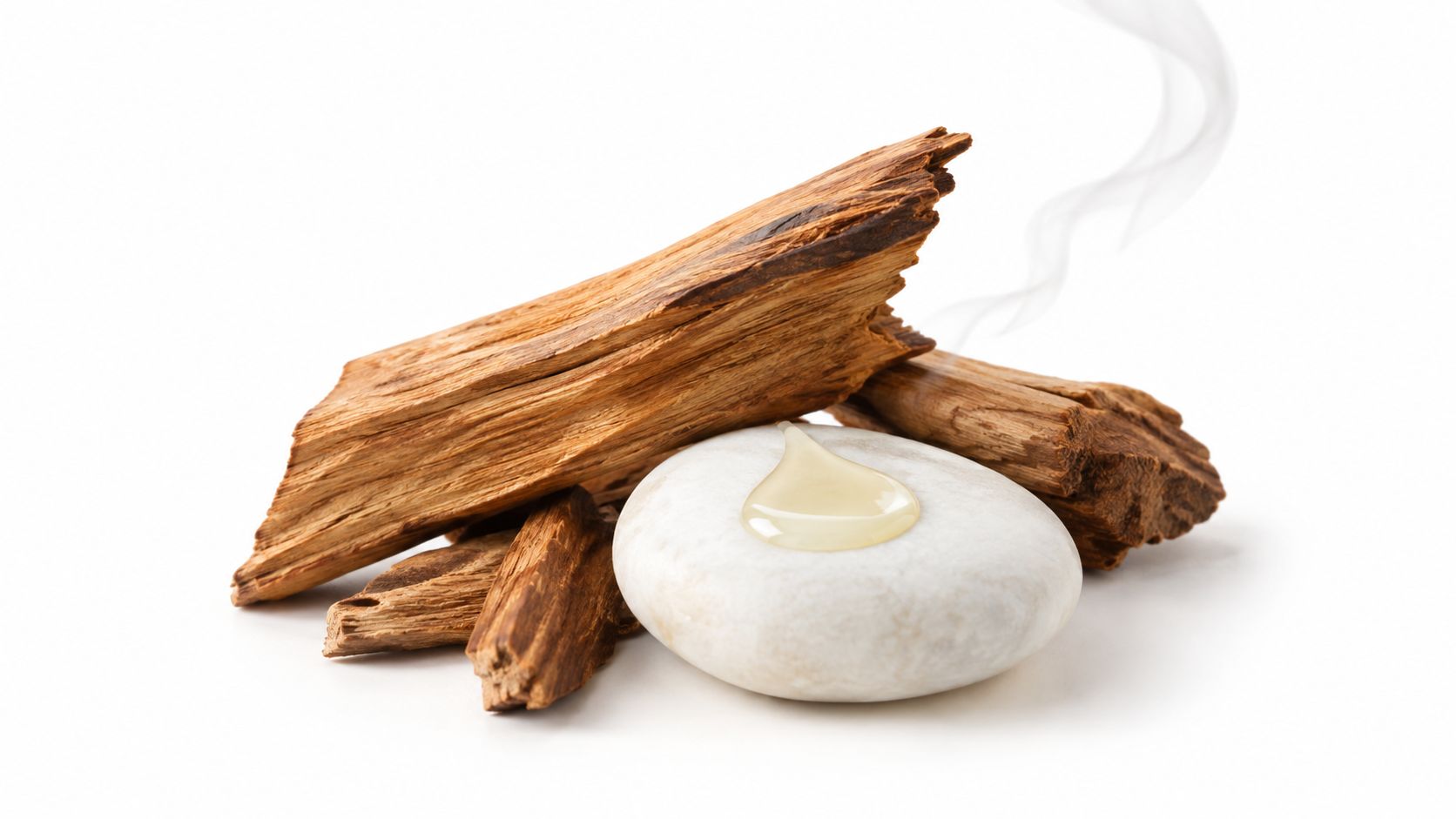
The heritage behind these products is substantial, but tradition doesn't remove the need for modern buying discipline. Mysore sandalwood oil became an important industrial milestone through distillation work and a government distillery established in the 1910s, giving Indian scented-oil production a lasting connection between craft, agriculture, and manufacturing. The history of Mysore sandalwood oil helps explain why sandalwood remains such a powerful reference point, but it doesn't tell you whether a particular bottle is suitable for skin, candles, or wholesale resale.
Attars, Essential Oils, and Fragrance Oils Compared
The easiest comparison starts with the base material. An attar is a perfume composition carried in oil. An essential oil is primarily a plant-derived aromatic extract. A fragrance oil is a designed formula built to deliver a particular scent and performance profile.
That difference affects buying decisions more than the word “premium” on a label. An attar may feel soft and intimate on skin, an essential oil may provide a sharp botanical note in a diffuser, and a fragrance oil may deliver the strongest consistency across a line of candles. None is automatically the right choice for every application.
Attribute | Attar | Essential Oil | Fragrance Oil |
|---|---|---|---|
Base material | Oil-based perfume concentrate | Volatile plant extract | Blended aromatic formula |
Production method | Traditional perfume compounding, often involving botanical materials and an oil base | Steam distillation, expression, or another suitable extraction method | Blending of synthetic aroma molecules, natural materials, or both |
Scent character | Rounded, layered, often warm and persistent | Botanical, direct, and variable by crop and extraction | Designed for a consistent fragrance profile |
Skin suitability | Depends on ingredients, carrier, and safety documentation | Requires careful dilution and application-specific guidance | Depends on its formulation and IFRA guidance |
Typical retail position | Heritage perfume, roll-on, personal scent | Aromatherapy, botanical formulation, diffuser blend | Candle, soap, incense, room fragrance, and commercial product |
Best-fit uses | Roll-on perfumery and personal fragrance | Diffuser blending and carefully formulated personal-care products | Candles, soap, incense, room sprays, and repeatable wholesale ranges |
Main buying priority | Authenticity and composition | Botanical identity and analytical profile | Intended-use performance, stability, and compliance |
A buyer seeking natural identity may prioritize an attar or essential oil, but “natural” isn't a substitute for testing. Plant chemistry changes with the botanical source, extraction method, and growing conditions. Research on Indian essential oils has documented a very broad chemical profile, with 3,420 unique chemicals across 554 plants and 778 studies, so a common name alone can't establish that two oils are equivalent. See the Indian essential-oil composition research for the scale of that variation.
Buying rule: Choose the oil for the finished product first. Choose “natural” or “synthetic” second.
For wholesale buyers, fragrance oils often make sense when every candle, incense stick, or room spray needs a predictable scent. For a heritage perfume collection, an attar may communicate more cultural character. For a botanical diffuser line, an essential oil may be the better fit, provided the supplier gives identity, safety, and batch information. A related comparison of perfume oil and spray perfume can also help clarify why an oil-based product wears differently from an alcohol-based one.
Signature Raw Materials Behind the Scents
Indian fragrance identity often comes from contrast. Creamy woods meet bright flowers. Earthy roots sit beneath sweet resins. Spices and smoke add warmth without necessarily dominating the composition.
Sandalwood is the familiar creamy, smooth foundation. Its soft woodiness can make a blend feel meditative and polished, while its role as a traditional carrier gives it importance beyond a simple fragrance note. Buyers looking for this profile should distinguish genuine sandalwood materials, sandalwood-style fragrance oils, and blends where sandalwood is only one part of the formula. A sandalwood fragrance oil may be the practical choice for a candle or incense product, while a traditional sandalwood-based perfume serves a different purpose.
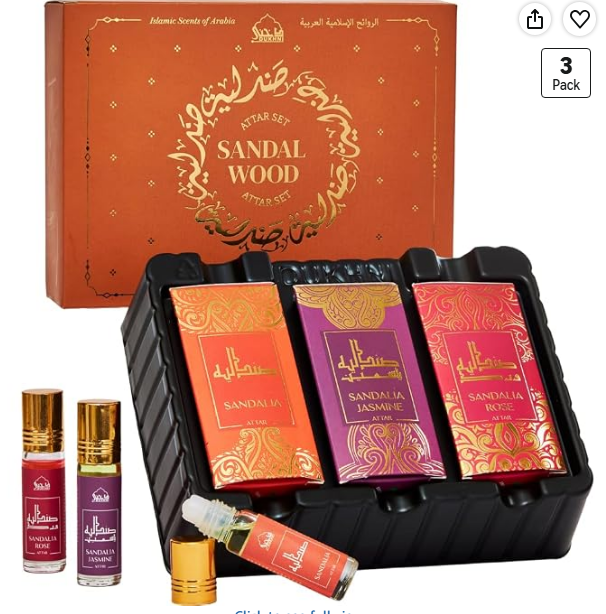
Rose brings a rich floral heart. In an oil perfume, rose can smell lush, honeyed, jammy, or slightly green depending on the material and the surrounding notes. Buyers shouldn't assume that a product labeled “rose attar” contains only one rose extract. It may be a traditional composition or a modern blend built around a rose accord.
Jasmine and tuberose create the more intoxicating side of Indian perfumery. Jasmine often feels warm, heady, and animalic, while tuberose can add creamy sweetness with a sharper green edge. These materials typically play prominent heart roles, so they can define a perfume even when the opening notes fade.
Vetiver, often called khus, gives a blend an earthy, rooty, cool, and sometimes smoky drydown. It works well beneath citrus, rose, sandalwood, and spice. Nag champa usually signals an incense-oriented family built around floral, woody, and resinous impressions. The exact formula can vary, so buyers should treat the name as a scent direction rather than a universal recipe.
Other materials help expand the palette. Oud adds dark wood and resin, patchouli brings damp earth and depth, saffron contributes dry spice, and mitti attar suggests the mineral, rain-on-earth character many buyers associate with petrichor. Requesting the desired note family is often more useful than asking for “Indian oil” alone.
How Indian Scented Oils Are Made
Production method shapes both the scent and the buying requirements. Steam distillation is a familiar route for essential oils. Plant material sits in or above heated water, vapor carries volatile compounds into a condenser, and the cooled vapor becomes liquid again. The operator's choices around heat, pressure, plant condition, and distillation time can change the balance of the final oil.
That matters because a delicate floral material and a dense wood don't release their aromatic compounds in exactly the same way. A product description that names only the plant but not the extraction method leaves an important part of the story unanswered.
Hydro-distillation places plant material directly in water, a method associated with traditional aromatic production. Modern producers may also use carbon dioxide extraction for materials that benefit from a different approach. Expression can suit some citrus materials, while other botanicals respond better to steam or water-based processes.
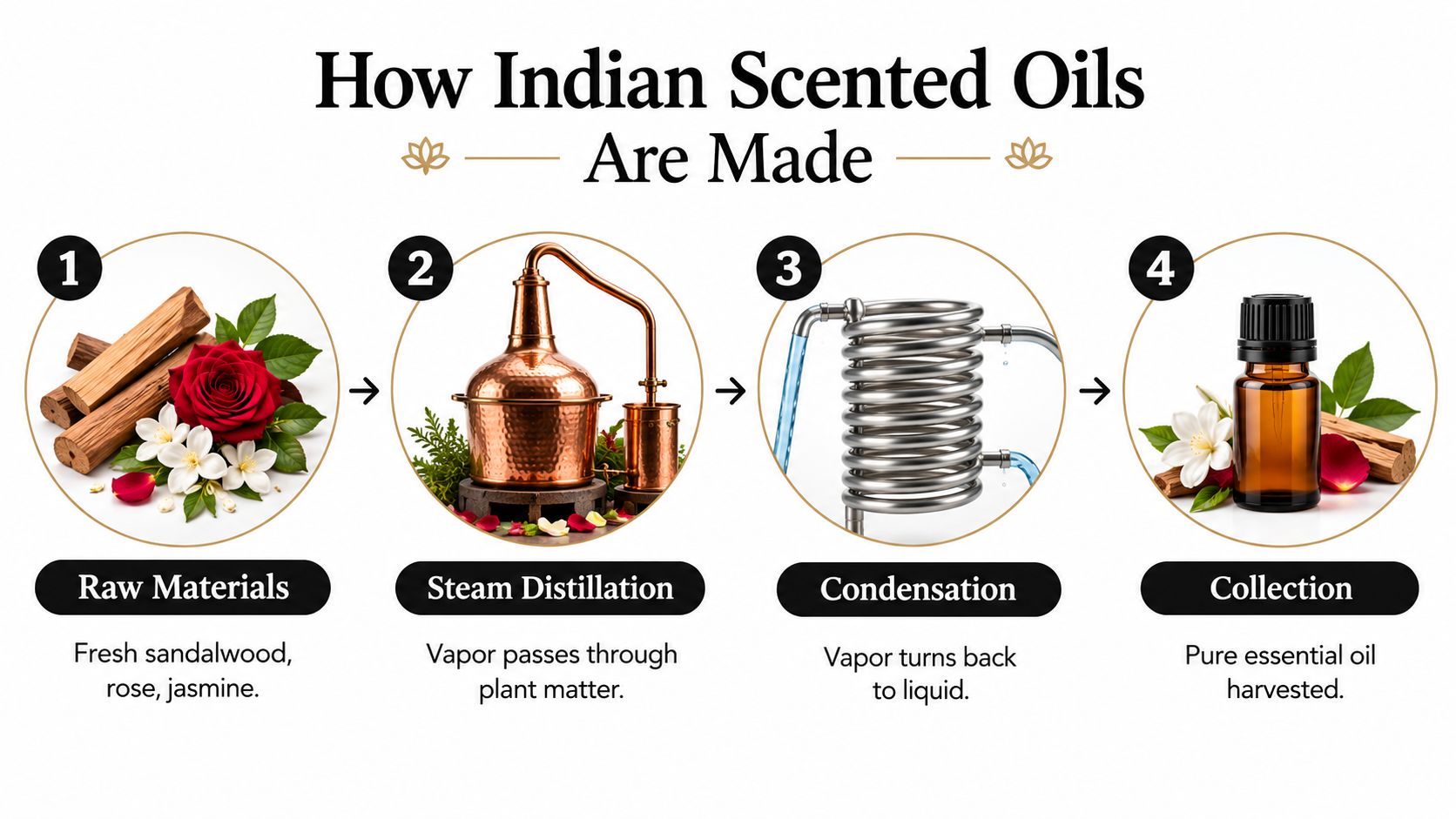
Traditional attar making follows a different logic. Aromatic flowers or other materials are introduced repeatedly into a warm oil base, allowing the base to absorb their scent over time. The result is not merely a distilled essential oil. It's a perfume concentrate whose character depends on the botanical material, the receiving base, the repetition of the process, and the final maturation.
Fragrance oils aren't extracted from one plant. A formulator combines aroma materials to reach a target such as sandalwood, nag champa, rose, or a custom incense profile. This approach can improve repeatability and make a scent more practical for candles, soaps, incense, and other products where consistent performance matters. Anyone experimenting with formulation should treat guidance on making fragrance oils at home as a starting point, not a replacement for product-specific safety documentation.
A short video can make the distillation sequence easier to visualize:
Quality control begins after extraction or blending. Ask for a GC-MS profile where relevant, batch identification, stability information, and documentation for the intended application. The base oil and the volatility of the aromatic fraction jointly affect diffusion, persistence, and perceived strength, so scent alone can't confirm quality.
Practical Uses Across Home, Ritual, and Business
Use-case boundaries prevent most buying mistakes. A product that works beautifully in incense may be unsuitable for skin. A concentrated essential oil may smell elegant in a large, ventilated room but feel overwhelming in a small space. A fragrance oil designed for candles may not be approved for topical use.
Oil Type | Diffuser | Skin Use | Ritual | Candle and Soap | Wholesale |
|---|---|---|---|---|---|
Attar | Suitable when the diffuser and formula allow oil-based materials | Only with ingredient and safety guidance | Well suited to personal fragrance and oil-based rituals | Usually not the first choice | Useful for roll-ons and heritage perfume ranges |
Essential oil | Suitable with application-specific guidance | Requires dilution and careful selection | Common in aromatic and meditation routines | Use only when the supplier approves the application | Useful for botanical lines with strong documentation |
Fragrance oil | Often suitable for products designed for home fragrance | Only if specifically documented for skin use | Suitable for incense and room fragrance products | Frequently selected for predictable scent performance | Useful for repeatable candles, soaps, incense, and room sprays |
For home use, start with the room and the delivery method. An ultrasonic diffuser, reed diffuser, oil warmer, and brass burner don't expose the scent in the same way. Follow the equipment maker's instructions, use ventilation, and keep oils away from children and pets.
Ritual products often call for woods, resins, flowers, or incense-oriented blends. Nag champa, sandalwood, vetiver, and resinous profiles can support meditation or ceremonial atmospheres, but the cultural meaning of a material doesn't remove ordinary fire, inhalation, or storage precautions.
Skin use demands the most restraint. Attars and essential oils must be evaluated for their ingredients, carrier, intended body area, and documented limits before application. A “pure” label doesn't mean undiluted use is appropriate, and a fragrance oil shouldn't be applied to skin just because it smells pleasant.
For businesses, define the product before ordering. Candle makers need wax compatibility and hot-throw information. Soap makers need the correct application documentation. Incense producers need a blend that performs on the chosen base material. Retailers need labels, batch records, and usage instructions that customers can understand.
Safety, Dilution, and Allergen Awareness
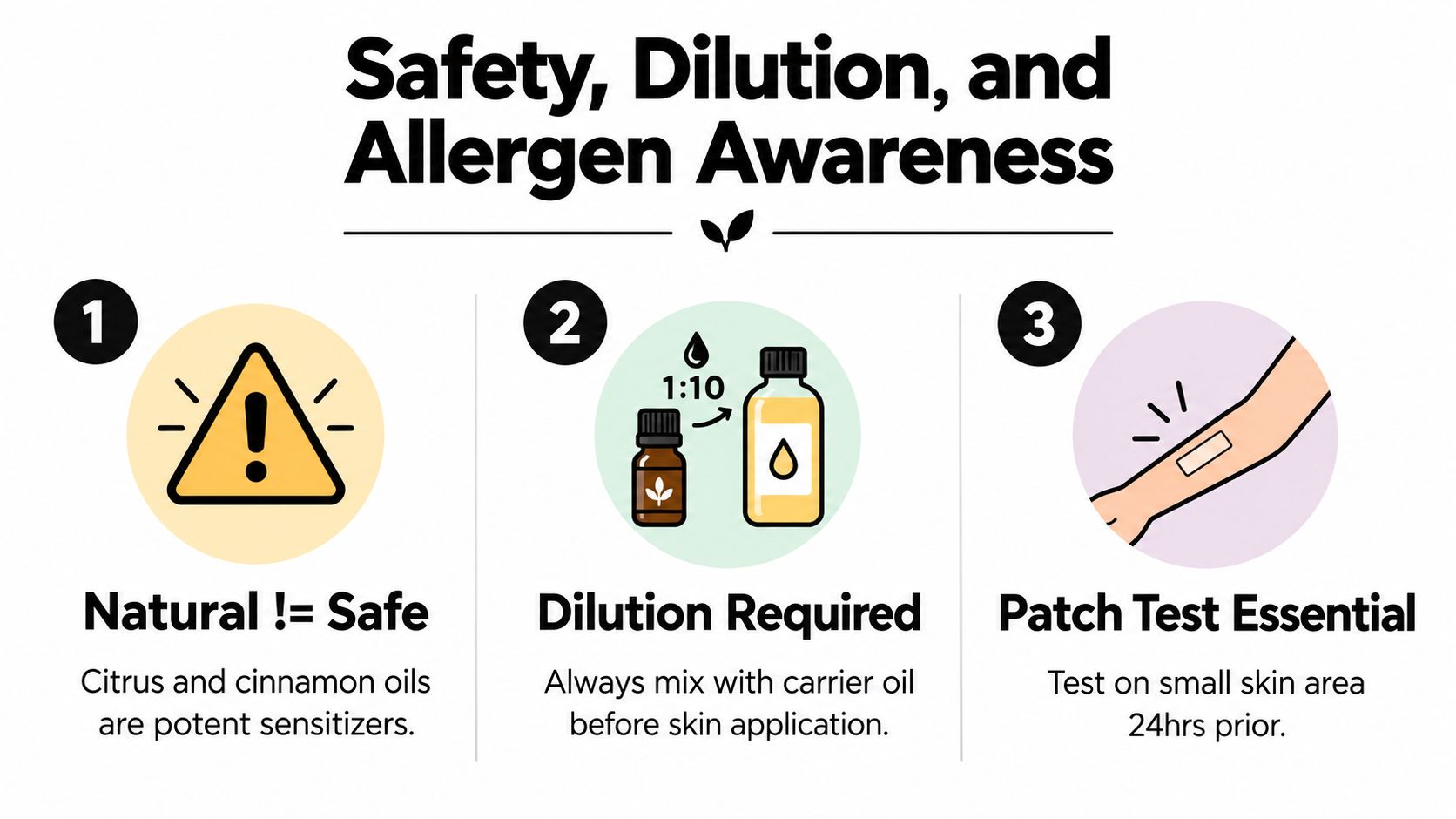
Natural doesn't automatically mean safer. Plant extracts can be highly concentrated, oxidize during storage, and cause irritation or sensitization in susceptible users. A carefully formulated synthetic blend can be more consistent and, for a specific application, may present a more manageable safety profile than a poorly characterized natural extract.
Start with the supplier's documentation. IFRA guidance, a safety data sheet, intended-use information, and allergen disclosure are more useful than a vague promise that an oil is “chemical-free.” In India, disclosure requirements include 26 fragrance allergens above certain thresholds, a point relevant to domestic and export buyers and documented in the market background supplied for this guide.
Common declared materials may include limonene, linalool, geraniol, eugenol, citral, and coumarin. Their presence doesn't automatically make a product unacceptable. It means the formula needs accurate labeling, appropriate limits, and clear directions.
Natural is a source description, not a safety verdict.
Dilution is a practical control, not an optional finishing step. Use a suitable carrier such as jojoba or fractionated coconut oil when a product is approved for topical use, measure consistently, and follow the supplier's application limits. Face products, body oils, rinse-off soap, room fragrance, and incense each have different exposure patterns, so one dilution decision can't cover all of them.
Take extra care with citrus materials and spice-rich oils. Some can increase sensitivity, and some citrus materials may create phototoxicity concerns. Oxidized oils can also behave differently from fresh material, which makes airtight, cool, dark storage important.
Retailers should provide accurate labels, allergen information, and child-resistant or child-safe packaging where appropriate. Customers also need a clear warning not to ingest oils, apply undiluted products, or assume that a diffuser blend belongs on the skin.
Authenticity, Sourcing, and Wholesale Buying Tips
A credible buyer doesn't ask only, “Is this natural?” The better questions are, “What exactly is in it, what was it made for, and can the supplier prove that?”
Begin with the product identity. The label should distinguish an essential oil, attar, fragrance oil, perfume oil, carrier oil, and finished blend. It should identify the intended use instead of leaving customers to infer that a pleasant-smelling oil is suitable for every product category.
For wholesale purchasing, request:
Batch documentation: Ask for a batch or lot reference that connects the inventory to its test records.
Composition information: Request GC-MS results for applicable essential oils and a clear ingredient or allergen statement for finished blends.
Safety paperwork: Look for an SDS and IFRA documentation where the intended application requires it.
Sourcing details: Confirm botanical identity, country of origin, extraction or blending method, and the type of carrier used.
Samples: Test scent, clarity, performance, and consistency before committing to a larger order.
Label support: Make sure the supplier can provide information needed for your own retail packaging and customer instructions.
Unusually low pricing deserves questions, especially for materials that are costly or difficult to source. Missing paperwork, vague “perfume” labeling, and a supplier who can't explain whether a product is for candles, skin, incense, or diffusion are practical warning signs. These issues matter even more when a small brand puts its own label on the bottle.
Sourcing isn't an act of suspicion. It protects customers, inventory, and the reputation attached to your name. A retailer who checks documentation before purchase can answer customer questions with confidence and reduce avoidable returns.
For buyers building a broader supplier process, product sourcing guidance can help turn those questions into a repeatable purchasing checklist. The goal is not to reject every blended or synthetic product. The goal is to know what you're buying and whether it matches the finished product.
Storage, Shelf Life, and Simple Blending Ideas
Good storage protects both scent quality and cash flow. Keep attars and other oil perfumes in tightly closed, dark glass at a stable room temperature. Protect essential oils from heat, light, oxygen, and repeated exposure to air. Citrus materials often need more careful temperature control than heavier woods or resins, while fragrance oils vary according to their carrier and formula.
Watch the oil, not just the calendar. Color changes, cloudiness, separation, a sharp stale note, or a fragrance that has lost its expected character can indicate deterioration or incompatibility. Don't pour questionable stock into a customer product. Record opening dates, lot numbers, storage conditions, and any changes observed during routine checks.
Beginner blending works best when one note has a clear job:
Sandalwood and rose: Use the creamy wood as the foundation and let rose provide the expressive floral center. This pairing suits a personal oil perfume or a small gift set.
Vetiver and nag champa: Combine earthy depth with a warm incense profile for an evening room fragrance or burner blend.
Citrus and mint: Use a bright citrus direction with a cooling mint impression for an energizing home fragrance, subject to the safety requirements of the chosen product format.
Test every blend in the actual medium. A scent that smells balanced on a blotter may change in wax, soap, incense, a reed diffuser, or a carrier oil. Label test batches clearly and keep the successful formula separate from experimental stock.
Frequently Asked Questions
1. Why can the same Indian scent smell different from one product to another?
The name of a scent does not guarantee an identical formula. Differences in botanical materials, extraction methods, carriers, aroma ingredients, and blending can change how the finished oil smells. For consistent purchasing, compare the actual formulation and supplier documentation rather than relying only on the scent name.
2. Should I test Indian scented oils in the finished product before buying wholesale?
Yes. A scent can perform differently depending on whether it is used in incense, wax, soap, room fragrance, a diffuser, or another medium. Testing a sample in the actual product format can help you evaluate scent character, consistency, and performance before committing to a larger wholesale order.
3. What should an Indian scented oil label tell a buyer?
A useful label should clearly identify what the product is, such as an attar, essential oil, fragrance oil, perfume oil, carrier oil, or finished blend. It should also make the intended application clear instead of leaving buyers to assume that every pleasant-smelling oil can be used the same way.
4. Why is batch information important when buying scented oils?
Batch or lot information helps connect the inventory you receive with its supporting documentation and testing records. This becomes particularly useful for retailers and makers who need to track consistency, investigate changes, or reorder a product with greater confidence.
5. What are the first signs that an Indian scented oil may have deteriorated?
Changes such as unexpected color, cloudiness, separation, a sharp stale odor, or a noticeable loss of the expected fragrance character can indicate that an oil has changed. Keeping oils tightly closed and protected from heat, light, and excess air can help preserve their quality.
For retailers and makers, a practical supplier should support the product format you sell. Aroma Warehouse offers fragrance oils, incense, aromatherapy accessories, bottles, droppers, burners, and related wholesale supplies for home users, small retailers, wellness businesses, and resellers. Visit Aroma Incense Warehouse to compare Indian-inspired fragrance options and sourcing supplies for your next retail, incense, candle, or home-fragrance range.


