Gum and Resin Guide: History, Uses, and Sources
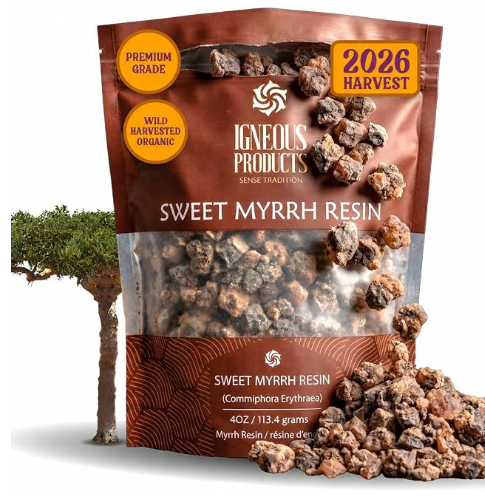
A beginner can spend ten minutes in an incense shop comparing a jar of pale golden tears with a dark, sticky-looking block, then still have no idea which one belongs on charcoal, which one dissolves in a formula, or why one smells powerful while the other barely smokes. The labels often make the confusion worse. “Natural gum,” “tree resin,” “gum resin,” and “incense resin” can appear side by side even though these materials behave very differently.
The practical distinction is simple once you understand the chemistry. Natural gums are primarily polysaccharide materials, while resins are aromatic, terpene-rich exudates. That difference affects whether a material dissolves in water, softens with heat, binds a powder, releases fragrance during burning, absorbs moisture, or changes character during storage. It also affects how you should evaluate a supplier.
Table of Contents
Understanding the Core Differences - Gums are water-friendly materials - Resins respond to heat and solvents
History and Global Trade of Aromatic Materials - Production has moved across regions
Key Varieties and Their Burning Characteristics - Heat changes the result
Sourcing and Quality Considerations - Inspect the material before buying volume - Treat sustainability as a quality question
Blending and Formulating with Gums and Resins - Build by function
The World of Gum and Resin Explained
A shelf of aromatic ingredients often looks like a collection of related products. It isn't. A handful of frankincense tears, a piece of benzoin, a spoonful of gum arabic, and a powdered binder may all come from plants, but they serve different technical roles.
Resins are usually the aromatic performers. They contain compounds that soften, melt, volatilize, or decompose under heat, producing the concentrated smoke and fragrance associated with traditional incense. Frankincense, myrrh, benzoin, copal, and pine-derived materials belong to the resin side of the conversation, although natural products can contain overlapping components and aren't always chemically tidy.
Gums behave more like functional formulation materials. They tend to contribute binding, thickening, stabilizing, or emulsifying properties rather than acting as the main fragrance source. Gum arabic, for example, is a water-soluble plant exudate used for its formulation behavior, while guar gum and tragacanth gum can help hold incense mixtures together.
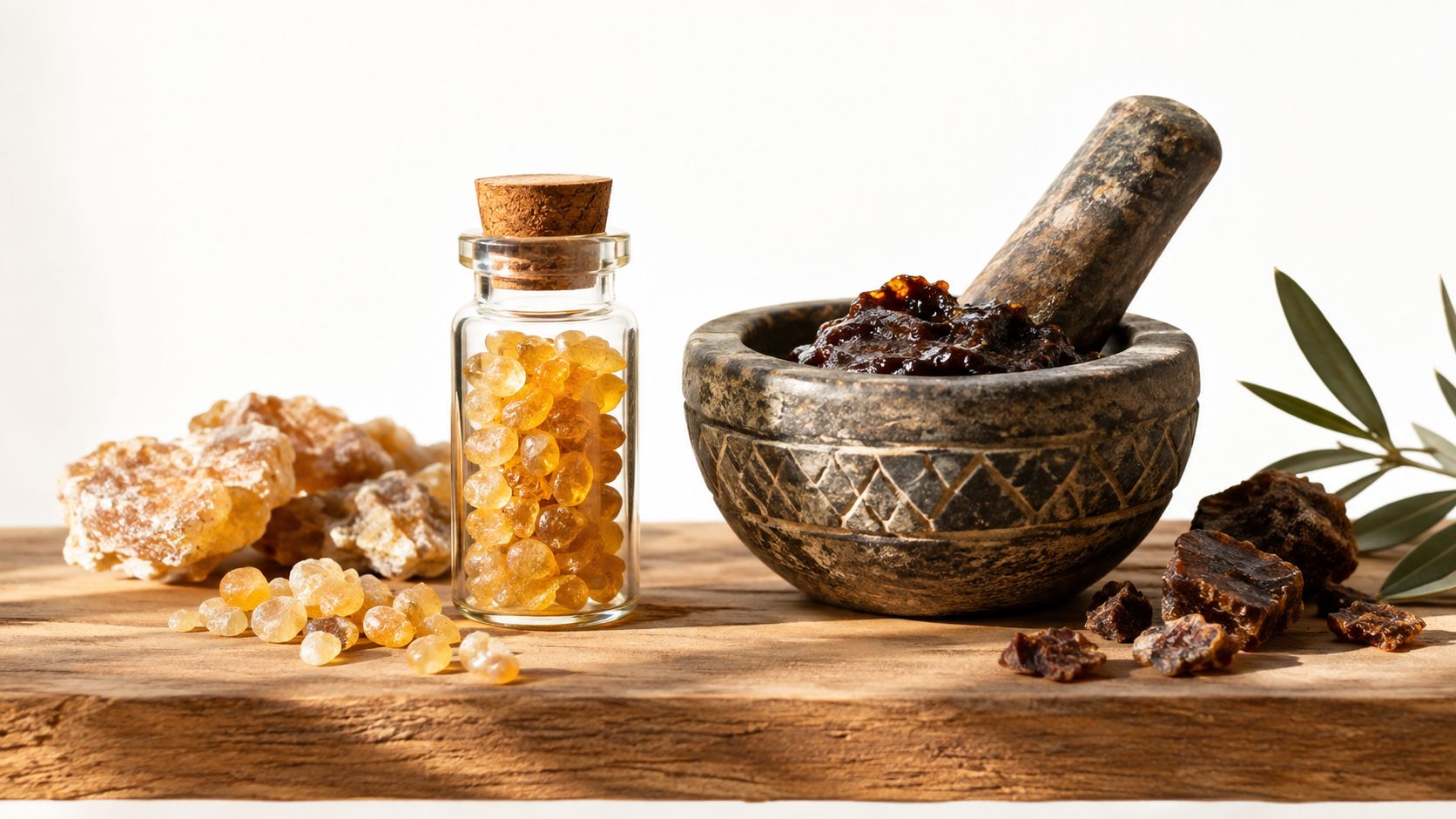
This matters most when you're buying for a specific outcome. If you want a fragrant material to burn on charcoal, start with a resin. If you're trying to bind a powdered incense blend into cones or sticks, a gum may be more useful. If you want a product that combines body, aroma, and controlled combustion, you may need both.
A resin can be sticky, glassy, brittle, or wax-like depending on its origin and age. A gum can be granular, fibrous, flaky, or powdery. Those physical differences aren't just cosmetic. They tell you how the material will handle heat, moisture, grinding, and mixing.
For a practical introduction to burning raw aromatic materials, the guide to resin incense preparation and use is a useful companion. The central lesson is to stop treating every plant exudate as interchangeable. Gum and resin are categories with different jobs, and choosing correctly starts with identifying which category you're holding.
Understanding the Core Differences
The easiest way to remember the chemistry is to compare a gum with a bundle of soluble plant fibers and a resin with a concentrated aromatic sealant. The analogy isn't perfect, but it predicts behavior surprisingly well.
Gums are water-friendly materials
Natural gums are primarily polysaccharide-based substances. Their large carbohydrate structures interact readily with water, which is why gums are commonly used as thickeners, stabilizers, emulsifiers, and binders. Gum arabic comes from Acacia senegal and related Acacia species. Its calcium, magnesium, and potassium salts hydrolyze into smaller sugar-related components, and its branched structure supports film-forming behavior.
That chemistry explains why a gum can swell, disperse, or dissolve in water while remaining comparatively uninteresting as a direct incense fragrance. In a wet incense dough, the gum can help particles adhere. During drying, it can create a cohesive matrix around powders and aromatic ingredients. During burning, however, much of that structure tends to char or break down instead of releasing the smooth, resinous vapor that makes a raw aromatic resin so distinctive.
Resins respond to heat and solvents
Resins are generally terpene-based or resin-acid-rich materials with limited water solubility. Many soften or melt when heated, and some dissolve more readily in alcohol, oils, or other suitable organic solvents. Their thermoplastic behavior makes them valuable in adhesives, varnishes, inks, paper sizing, sealing wax, soaps, perfumery, and incense. Botanical gum and resin descriptions from the University of California also describe rosin-derived systems as thermoplastic and useful for tack, adhesion, and heat performance.
That doesn't mean every resin burns cleanly or smells pleasant at every temperature. A resin may bubble, flare, smoke heavily, or leave a dark residue if the charcoal is too hot or the dose is too large. A small piece on a steady heat source usually gives better control than a heap that overwhelms the room.
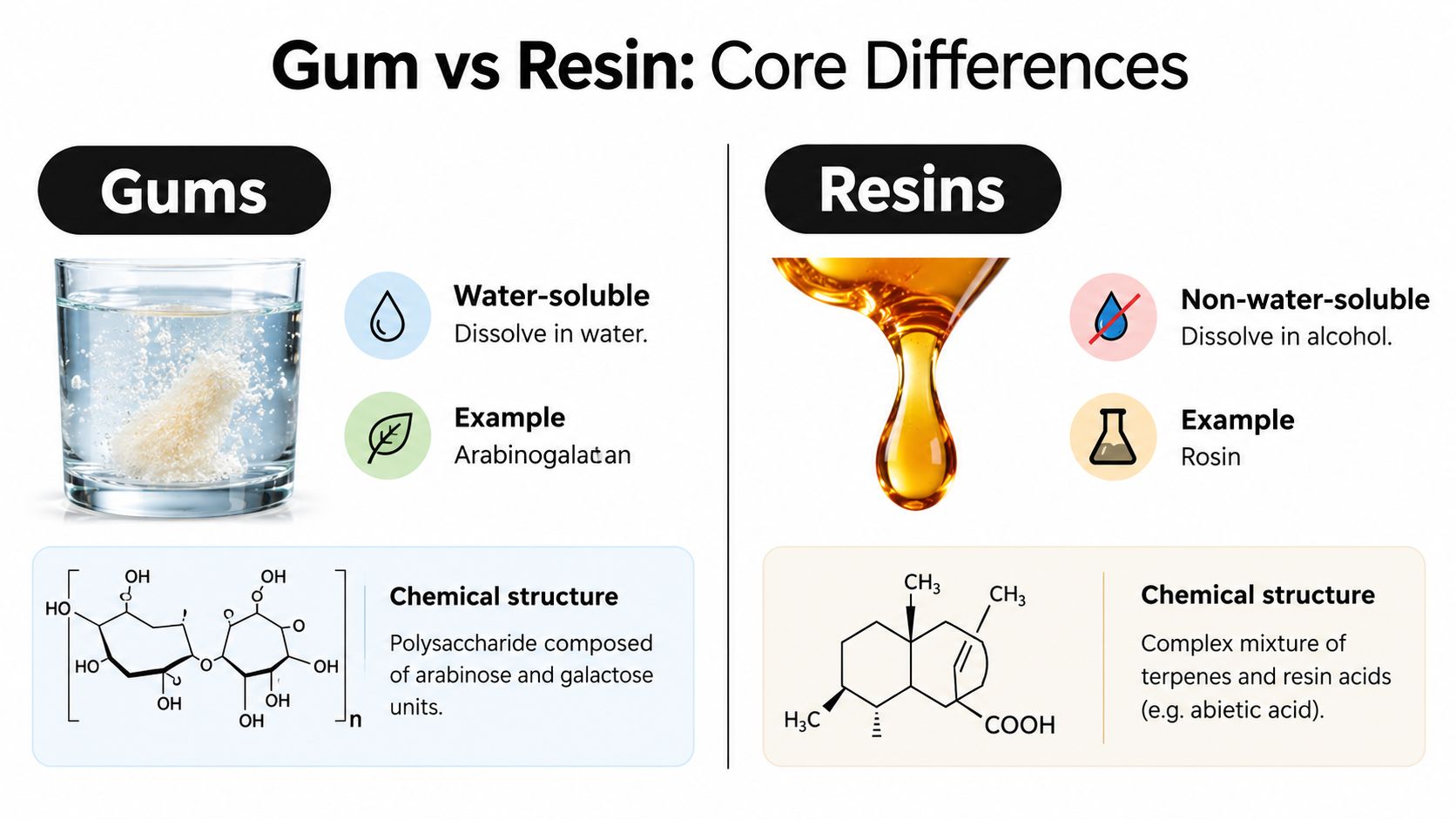
Practical rule: If water is the intended processing medium, investigate a gum. If heat, alcohol, or oil is central to the process, investigate a resin and check its grade.
A common mistake is adding gum arabic to a charcoal-burning blend expecting it to create a stronger fragrance. It may improve cohesion in a formed incense product, but it won't substitute for a fragrant resin. Another mistake is trying to dissolve a resin in water, then concluding that the material is poor quality when it separates or floats.
Benzoin illustrates the distinction well. It can soften into a tacky, balsamic mass and contribute sweetness and fixation to a blend, but it won't behave like gum arabic in a water-based formula. For a closer look at one aromatic resin in practice, see this guide to benzoin resin incense.
History and Global Trade of Aromatic Materials
The movement of gum and resin began long before modern ingredient catalogs. Fragrant exudates traveled through religious, medicinal, cosmetic, and commercial networks because they were compact, durable, and valuable relative to their physical size. Frankincense and myrrh became associated with ancient ceremonial routes, while rosin, gum arabic, and related materials developed broader industrial roles.
The modern market is larger and more technical than the incense shelf suggests. In 2023, the broad HS 1301 category for natural gums, resins, gum-resins, and oleoresins exceeded $1.06 billion in world imports and $660 million in world exports, according to UN Comtrade trade data for natural gums and resins. A narrower gum and resin subgroup, HS 130190, still exceeded $576 million in imports and $370 million in exports during that year.
Those figures include industrial and ingredient flows, not just materials sold for home fragrance. Buyers may encounter the same broad family of plant-derived substances in adhesives, coatings, food formulations, cosmetics, paper processing, rubber products, and perfumery. The commercial context explains why appearance alone isn't enough. A material selected for devotional incense may be evaluated primarily by aroma and smoke, while a manufacturer may care more about viscosity, softening behavior, color, consistency, and compatibility with another ingredient.
Production has moved across regions
Gum rosin offers a clear example of changing supply geography. A 2014 industry review records that the United States led gum rosin production during the 1930s and 1940s, but China, the wider Asia-Pacific region, and Latin America later became the dominant producing areas as lower labor costs changed the economics of harvesting. The same review stated that the United States had no gum rosin production at that time. A separate market report places global gum rosin output above 1.2 million metric tons in 2023, with China supplying more than 65% of production. These figures are reported in the gum rosin market overview.
Trade concentration matters at the purchasing desk. In the narrower HS 130190 subgroup, India accounted for 41% of global imports in 2023, worth about $241 million, while China and the United States each represented 6.38%, or about $36 million. A retailer who buys from a wholesaler may not see the original harvest country, processing route, or blending history unless the supplier provides it.
The historical lesson is practical. Origin can influence availability, grading, labor practices, and price, but it doesn't guarantee a particular sensory result. Ask for the material specification and sample the lot. A famous origin with inconsistent sorting is less useful than a clearly documented grade that performs reliably in your product.
Key Varieties and Their Burning Characteristics
Burning characteristics depend on more than whether a material is called gum or resin. Moisture, particle size, charcoal temperature, age, contamination, and the amount used can change the result. Two samples with the same name may produce noticeably different smoke.
Frankincense usually gives the clearest high notes in a resin blend. I use it when a formula needs lift, brightness, and a dry mineral quality rather than heavy sweetness. Myrrh tends to bring a darker, bitter-balsamic depth, while benzoin rounds sharp materials with a warm, sweet character and a softer finish. Copal can feel brighter and more direct, though its aroma varies substantially by species and origin.
Material | Scent profile | Best use |
|---|---|---|
Bright, resinous, lightly citrus-like, with a dry finish | Meditation blends, ceremonial burning, and a clear top note | |
Deep, earthy, bitter-balsamic, and persistent | Rich incense formulas and blends that need weight | |
Sweet, warm, vanilla-like, and rounded | Softening sharper resins, fragrance blends, and fixation | |
Bright, pine-like, fresh, or lemony depending on grade | Focused single-resin burning and uplifting blends | |
Green, woody, turpentine-like, and forceful | Traditional aromatic use when a strong forest note is wanted |
Heat changes the result
A resin that smells elegant from the jar can become harsh over direct flame. Charcoal is more controllable than an open flame, but it still produces intense heat. Place a small amount on the surface only after the charcoal has stabilized, and add more gradually if the smoke is too light.
The finest pieces aren't always the best pieces for every use. Large tears can release aroma more slowly and make it easier to observe the material. Small granules offer faster scent release but can burn quickly. Powder creates more surface area, which often means a stronger initial impact and less control.
Burning test: Evaluate the raw aroma first, then test a small piece, then test the material inside a blend. A resin can smell beautiful cold and turn acrid when overheated.
For a practical method covering charcoal, burners, and portion control, use this guide to burning incense resin safely and consistently. Don't judge a supplier from one rushed burn. Repeat the test at a lower heat and compare the residue, smoke density, and scent after the first burst has settled.
A gum-based incense product follows a different path. The gum may help form the stick, cone, or pellet, but the fragrance usually comes from resins, woods, herbs, oils, or a combination of these. This is why a finished incense product can contain natural gum without smelling like gum arabic or tragacanth on its own.
Sourcing and Quality Considerations
A wholesale order can fail before the material reaches the burner. Specify the named material, intended use, physical form, acceptable variation, packaging, and sensory result before requesting quotations. “Natural resin” does not describe a usable purchasing standard.
Inspect the material before buying volume
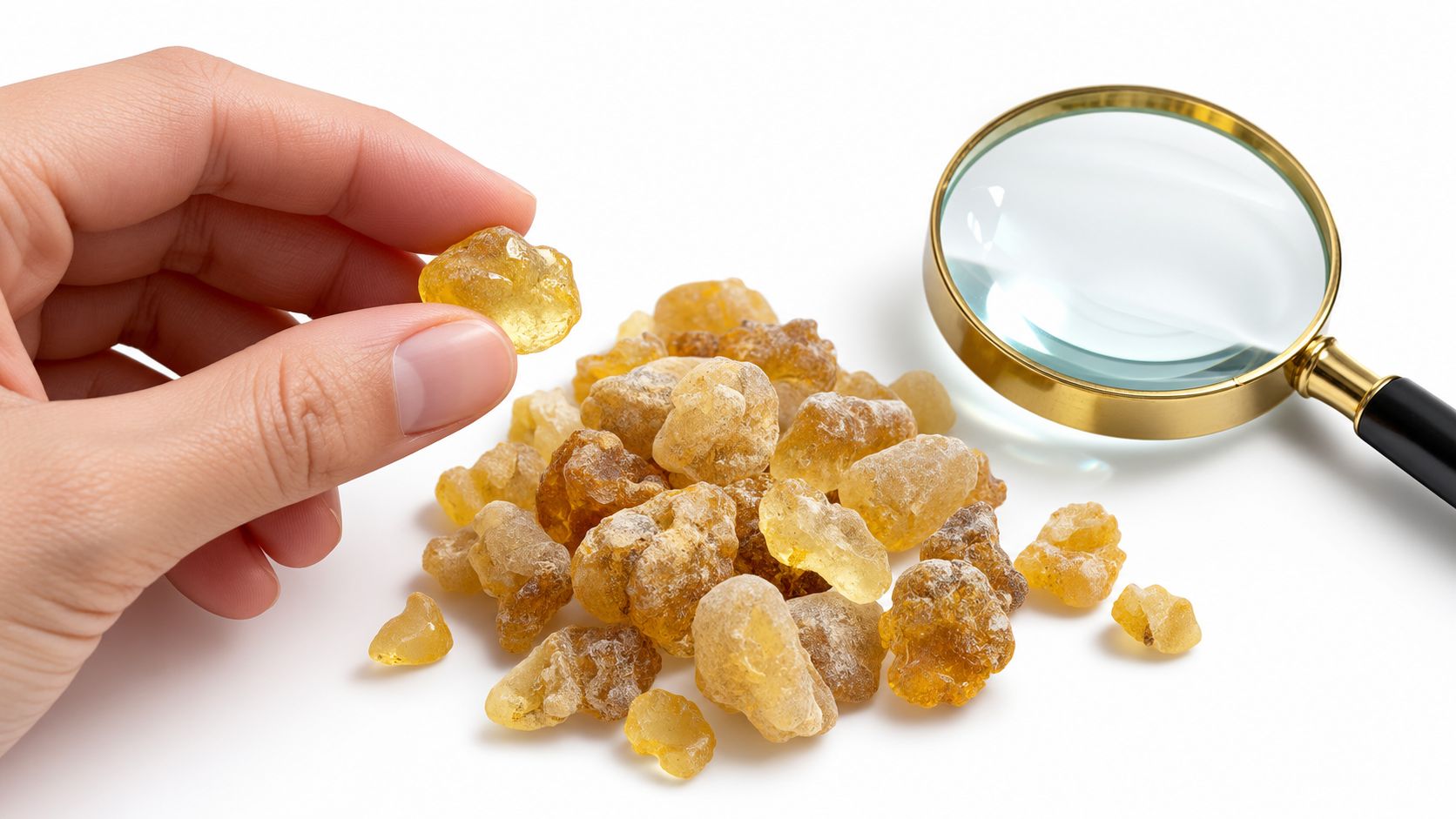
Request a sample from the current lot, not a generic product photograph. Raw resin tears should show a believable range of color and surface texture. Natural variation is expected, while foreign matter, heavy dust, visible filler, unusually uniform pieces, or a flat, solvent-like odor deserve investigation.
Chemistry affects what you should inspect. Polysaccharide-rich gums generally absorb moisture and serve as binders, while terpene-rich resins supply much of the aromatic burn. A gum that has picked up humidity may clump or weaken a formed incense product. A resin may soften, oxidize, or lose its brighter notes during poor storage.
Use a magnifying glass, clean glass dish, small scale, and controlled sample test. Check the cold aroma, first heated note, middle of the burn, smoke character, and residue. Powder may be genuine, but it removes visual evidence of origin and makes fillers or adulteration harder to identify.
For oils and extracts, ask whether the product is distilled, solvent-extracted, diluted, or compounded. See the guide to frankincense and myrrh oil for how those forms differ and are not interchangeable. A resin selected for charcoal may be unsuitable for a diffuser, and an oil made for fragrance formulation should not automatically be burned as raw incense.
Treat sustainability as a quality question
Harvest method and origin affect supply consistency as well as environmental pressure. Repeated wounding, poor collection, weak sorting, and opaque middlemen can produce variable lots. Ask where the material was harvested, how it was cleaned, whether lots are blended, and how the supplier handles seasonal variation. A transparent answer is more useful than a vague sustainability label.
Market reporting identifies adhesives and sealants as accounting for over 40% of gum rosin usage, and describes modified gum rosin as the fastest-growing segment from 2026 to 2035, a projection rather than a completed result. The same gum rosin market analysis places the broader natural gums, resins, and oleoresins market at US$0.52 billion globally in 2024 and US$40.83 million in the United States.
Blending and Formulating with Gums and Resins
A good blend gives each ingredient a job. Resins provide aroma, body, sweetness, bitterness, lift, or persistence. Gums provide structure when you're making a shaped incense product, especially when the dry ingredients need to hold together after adding water.
Start with a small dry batch. Grind hard tears separately from soft, sticky materials, because benzoin can smear in a mortar while frankincense fractures cleanly. Screen the powders if you need an even burn, then add the gum binder gradually rather than dumping it into the mixture.
Build by function
Frankincense and benzoin make a practical starting pairing. Frankincense supplies lift and clarity, while benzoin fills the middle with sweetness. Myrrh can add depth, but too much may dominate the blend and make the smoke feel dense. Copal can brighten a heavy formula, while a gum can improve cohesion without becoming the main scent.
Don't assume more resin means better incense. A heavily loaded mixture may burn unevenly, smoke aggressively, or soften during storage. A lower aromatic load with a well-distributed binder can produce a more consistent product, especially in cones and sticks.
For perfumery, the gum and resin roles shift. A gum may stabilize or thicken a water-containing system, while a resin may contribute fixative behavior, color, or a warm base note. Test compatibility in the actual carrier. A resin that dissolves in alcohol may remain cloudy in water, and an ingredient that works in a dry incense blend may stain a liquid formula.
FAQs
1. Can gum and resin be used together in incense? Yes. Gums and resins can complement each other in incense formulations. A gum can help provide structure and cohesion, while aromatic resins contribute fragrance, body, and character. The right balance depends on the finished product and how it will be burned.
2. How can you tell if a natural resin is fresh? Look for a natural appearance, believable variation in color and texture, and a characteristic aroma. A sample should also be tested for its cold scent, heated aroma, smoke behavior, and residue. Unusual fillers, heavy dust, foreign material, or an unexpected solvent-like odor can warrant further investigation.
3. Does the size of resin pieces affect how they burn? Yes. Larger resin tears generally release aroma more gradually, while small granules can release fragrance faster. Powder has even more surface area, which can create a stronger initial release but offers less control during burning.
4. How should unused gums and resins be stored? Keep them in sealed containers in a cool, dry location away from excessive heat, light, moisture, and strong odors. Gums can be particularly affected by humidity, while resins may soften, stick together, oxidize, or lose some of their brighter aromatic qualities.
5. What should you ask a supplier before buying gum or resin in bulk? Ask for the specific material name, grade or intended use, physical form, current-lot sample, acceptable variation, packaging details, origin, cleaning or processing information, and whether different lots are blended. These details can help you evaluate consistency before committing to a larger purchase.
Formulation habit: Keep a retained sample of every batch, record the lot, and test the finished product after it has rested. Natural materials change as they equilibrate with air and moisture.
Storage and Safety Best Practices
Storage problems usually begin with moisture, heat, light, or an unsealed package. Gums are especially sensitive to humidity because they can clump, swell, or lose their easy-to-measure texture. Resins may soften, stick together, oxidize, or lose their brighter aromatic notes when exposed to heat and air.
Use airtight containers with enough headspace to avoid crushing delicate tears. Opaque packaging helps protect light-sensitive materials, while a cool, dry cabinet is preferable to a windowsill, bathroom, or warm workshop shelf. Keep powders separate from whole tears so dust doesn't coat the surfaces of the larger pieces.
Label every container with the material name, lot or purchase reference, date received, and intended use. Don't store a resin beside strongly scented cleaning products or essential oils. Natural materials absorb surrounding odors more readily than many buyers expect.
When burning, use a stable heat-resistant burner, keep the setup away from curtains and paper, and provide ventilation. Smoke that smells harsh or causes irritation is a reason to stop, not a sign that the material is “working.” People with asthma, allergies, or fragrance sensitivity should take extra care, and no burned aromatic should be treated as harmless just because it comes from a plant. Follow practical guidance on incense safety and ventilation before using a new material indoors.
Conclusion - Embracing Natural Aromatics
The most useful distinction in the gum and resin category is also the simplest. Gums generally support structure and water-based formulation, while resins supply concentrated aromatic and thermoplastic behavior. Once you understand that divide, many purchasing and production decisions become easier.
Choose a resin when the goal is a fragrant raw material for charcoal, perfumery, coating, adhesive, or another heat- or solvent-driven application. Choose a gum when you need binding, thickening, emulsifying, or film-forming performance. Use both when a shaped incense product needs reliable structure as well as a distinctive aromatic profile.
Natural variation remains part of the job. Color, tear size, softness, moisture, aroma, and burn response can shift between lots. The practical answer isn't to reject natural materials or accept inconsistency blindly. Sample the lot, test it in the intended application, document the result, and ask suppliers direct questions about origin and processing.
The strongest product decisions come from matching the ingredient to the outcome. A retailer needs dependable customer experience. A wellness studio needs controlled smoke and safe handling. A formulator needs compatibility and repeatable performance. A home user needs an aroma that works in the actual room, not merely one that sounds appealing on a label.
Aroma Warehouse offers raw incense resins such as frankincense and myrrh, finished incense, burners, ash catchers, fragrance oils, and related supplies for home users, studios, retailers, and resellers. Visit Aroma Incense Warehouse to compare aromatic materials and choose the tools that fit your gum and resin practice.