

Rose Incense Cones: A Practical Guide for Buyers and Sellers

You're standing at a shelf with two rose cone tins in your hand. Both say rose, both look neat enough to gift, and both promise a calm, floral room, but one is priced like a casual impulse buy and the other asks for a real decision. That's where many get stuck with rose incense cones, because the scent is only half the product. The other half is the format, the smoke, the ingredient load, the packaging, and whether the cone fits the way you burn incense in a shop, spa, studio, or living room.
Table of Contents
Why Rose Incense Cones Deserve a Closer Look - Why the same rose label can sell very differently
What Rose Incense Cones Actually Are - Standard cones and backflow cones are not the same product
The Rose Ingredient and Why It Costs What It Does - Why true rose scent has to be diluted in cones
How to Burn Rose Incense Cones Safely - The cleanest way to set up the burn
Smoke, Scent, and Indoor Air Trade-Offs - What makes rose cones easier or harder to live with
Quality Markers and How to Compare Suppliers - What to check before you buy again
Storage, Bundling, and Merchandising Rose Cones - Storage that protects the scent - What sells on a shelf and online
Writing Product Descriptions That Sell Rose Cones - A listing format that actually converts
Why Rose Incense Cones Deserve a Closer Look
I've watched buyers treat rose cones like a simple yes-or-no item, then come back confused when one version smells soft and elegant while another reads as sharp, smoky, or weak. Rose is often the most requested floral note on the shelf, but it's also one of the easiest scents to misread because the cone format changes how the fragrance lands. A customer who wants a bedtime ritual, a giftable tin, or a quick room refresh isn't asking for the same thing, even if they only say “rose.”
The bigger picture matters too. Rose incense cones sit inside a global incense market estimated at about USD 2.1 billion in 2023, with reports projecting continued expansion and a strong cone-and-stick base in the category Zipdo industry summary. That tells buyers and sellers something useful. This isn't a novelty SKU, it's part of a mature product class that already has room for premium floral scents, wellness retail, and gift merchandising.
Why the same rose label can sell very differently
Two tins can both say rose and still behave like different products on the burner. One may be tuned for a steady, standard burn, while another is made for visual smoke effects or a tighter fragrance burst. That's why shelf placement, scent expectation, and price need to line up with the format, not just the label.
Practical rule: if the customer's use case isn't clear, the cone will be judged on the wrong standard.
For retailers, spas, and resellers, the question is not whether rose sells. It's whether the specific cone format, fragrance load, and packaging support the margin and the customer's actual burn setting. That's the decision lens this guide uses throughout.
What Rose Incense Cones Actually Are
A rose incense cone is a small combustible cone made to smolder from the tip downward, carrying rose fragrance through smoke rather than vapor. In trade language, the body is usually a mix of combustible powder and binder, then scented with rose material, which might be essential oil, absolute, or a fragrance blend designed to mimic rose. The cone shape is practical because it stands on its own, burns in a compact footprint, and packs easily for retail.
Standard cones and backflow cones are not the same product
The most important split in the category is between standard cones and backflow cones. Standard cones burn downward and release fragrance in a regular smoke trail. Backflow cones have a hollow channel that forces smoke downward for the waterfall effect, which means they need the right burner to work properly. For a concise format overview, the industry explainer at Aroma Warehouse's cone guide is useful because it distinguishes cone structure from the burner it needs.
Here's the practical side of the category:
Attribute | Standard Cone | Backflow Cone |
|---|---|---|
Burn path | Downward | Downward through a hollow channel |
Smoke look | Regular plume | Waterfall cascade |
Burner need | Flat, heat-safe holder | Special backflow fountain burner |
Best use | General fragrance, ritual, retail gift sets | Visual display, décor, novelty gifting |
Common buyer confusion | Low | High |
The base materials matter more than the cone shape alone. Charcoal, wood powder, makko, jigat, or similar binders affect how cleanly a cone smolders and how much ash it leaves behind. A cone can look polished and still perform badly if the binder is too dense or the fragrance load is too light.
Most retail cones are sold in counted packs, often tins, boxes, or kraft pouches. The exact pack size varies by supplier, but the business logic is always the same. The cone is a short-burn, high-impulse product, and the buyer needs to know whether the format suits a quick room ritual or a decorative presentation.
The Rose Ingredient and Why It Costs What It Does
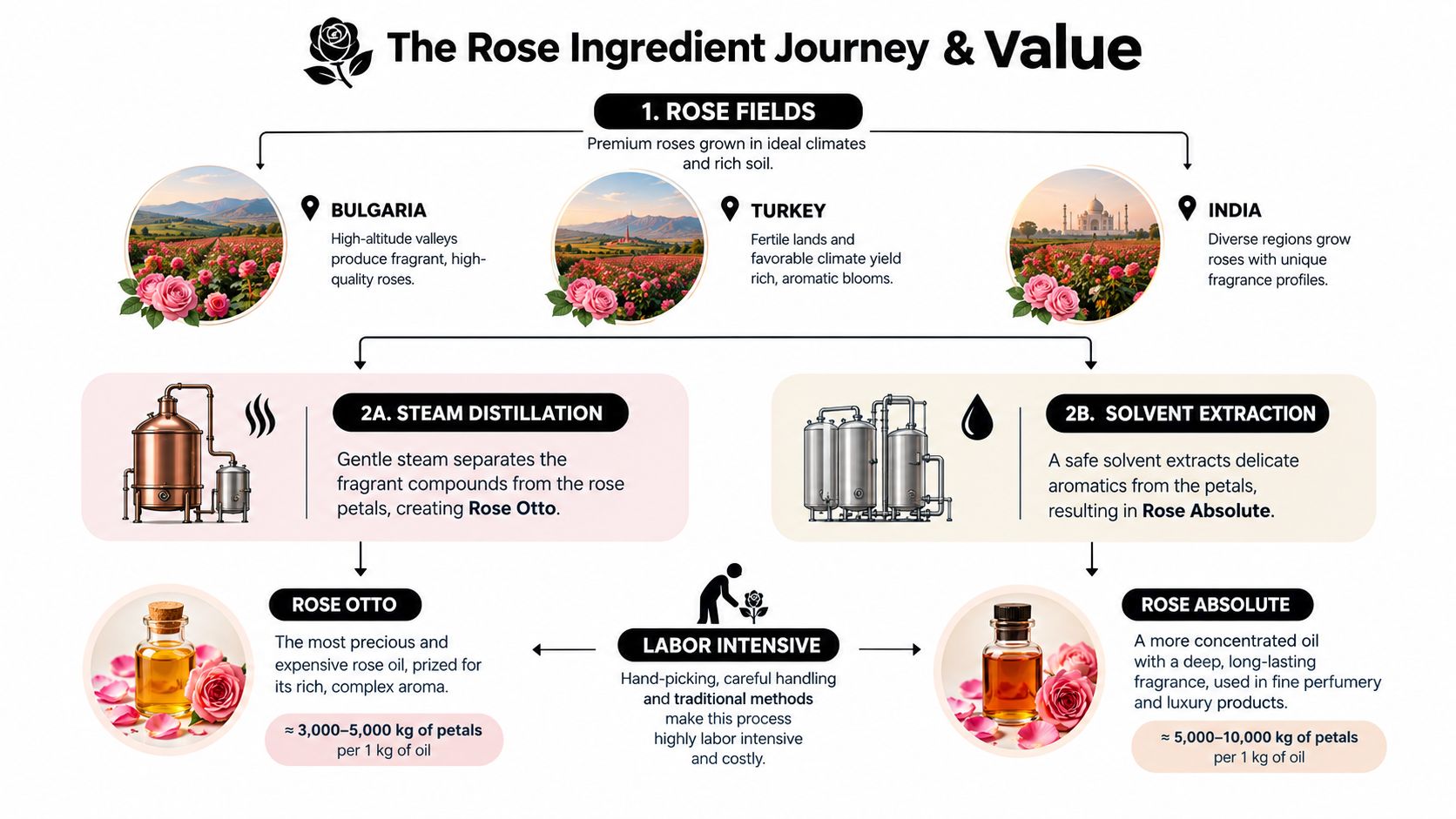
A rose cone starts with a sourcing problem, not a scent problem. If the fragrance is meant to read as real rose instead of a vague floral note, the maker has to decide how much true rose material to use, and that decision affects cost, consistency, and how the cone burns on the shelf or at home. The rose oil trade is widely traced to Iran, while Bulgaria became a cultivation and oil center by the mid-18th century. Today, Bulgaria and Turkey are described as the two main producers, and rose oil remains a scarce material in the category Rose oil background. That scarcity is why many rose cones are built around a rose accord rather than a heavy dose of true rose extract.
Why true rose scent has to be diluted in cones
Rose extraction is expensive because the plant material requirement is high. Verified data in the brief notes that 3,500 to 4,000 kg of fresh roses may be needed for 1 kg of rose essential oil, with other sources putting the requirement at about 5 tons of roses or around 200 million petals per kilogram Rose oil background. A cone cannot hold much of that material without driving up cost and making the blend harder to work with, so makers usually fold a small amount of true rose into a longer-lasting base.
That is also where flower fragrance oil comes in. In retail incense, it often fills the gap between a literal rose ingredient and the softer, more affordable floral impression buyers expect. A supplier may use natural oil, an absolute, synthetic materials, or a mix of all three, depending on the target price and burn profile.
The market usually ends up in three practical tiers. Premium cones use a small amount of natural rose oil or absolute blended into a rose accord. Mid-market cones rely mostly on synthetic or nature-identical materials. Budget cones keep the fragrance load light enough that smoke carries more of the experience than the rose note itself.
For a buyer, that shows up in the wholesale sheet. A rose cone priced unusually low is probably carrying less true floral material. A higher price may reflect stronger fragrance oil, tighter blending, or packaging that helps the aroma hold up in storage.
The burn changes the picture too. Rose compounds are delicate, and once they hit heat, the scent sits alongside the cone's own smoke character. A pretty label does not tell you whether the cone was built with enough fragrance to stay recognizable after ignition, or whether the base will muddy the result.
That is the pressure point for sellers and shoppers alike. A rose cone is not priced like a generic fragrance cone because the ingredient story behind it is labor intensive and uneven in quality. I would rather see a supplier describe the fragrance base plainly than hide behind a romantic name.
How to Burn Rose Incense Cones Safely
A good cone is wasted if it's burned badly. I've seen rose cones scorched on open shelves, buried in ash, and lit in rooms with no airflow, then blamed for smelling harsh. The burn routine matters, especially with rose, because a softer floral profile can get flattened fast if the cone smolders too hot or sits in a draft.
The cleanest way to set up the burn
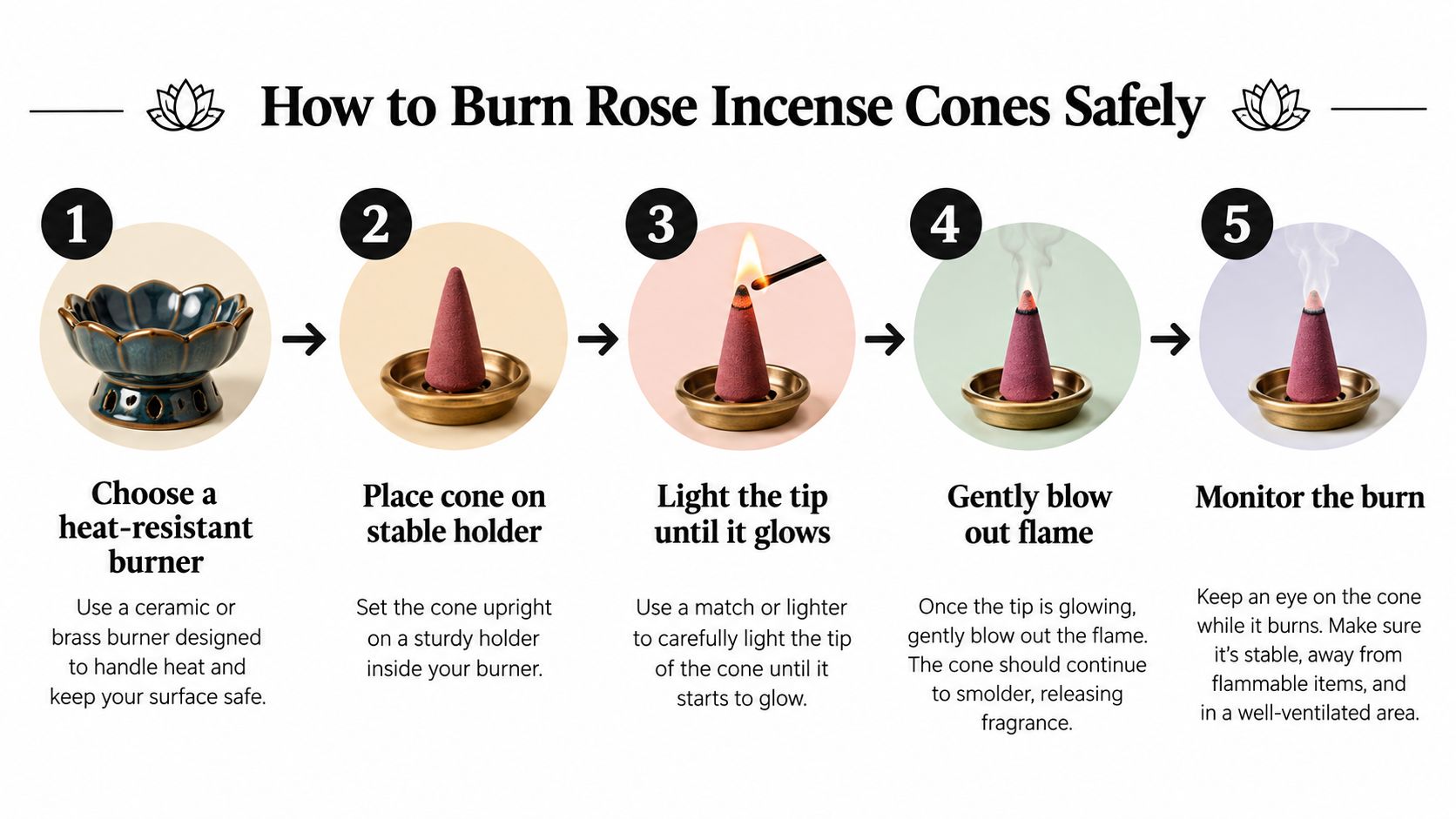
Start with a heat-resistant burner. Ceramic and brass are the safest everyday choices, and a backflow fountain is the right match only if you're using backflow cones. Set the cone on a stable ash bed or a holder made for cones, not on wood, paper, or anything that can scorch.
Light the tip until it catches fully, then gently blow or fan out the flame so the cone smolders instead of flaring. If the cone tunnels, it usually means the ember didn't establish evenly, so relight the tip and let it build before moving it again. If it self-extinguishes, the room may be too drafty or the cone may be too tightly packed.
Here's the safety standard I use on a shop floor and recommend at home:
Never leave a burning cone unattended. A quick errand is still enough time for trouble.
Keep it away from curtains, paper stock, and pets. The ash zone is small, but it's not harmless.
Ventilate after use. Open a window or door when the burn ends.
Douse spent cones fully. Sand or a little water works before disposal.
Watch wood shelves and display risers. Scorch marks usually come from poor placement, not the cone itself.
The EPA-cited indoor-air study in the brief also notes that emissions are highest during combustion and for about an hour afterward, then fall as ventilation removes pollutants EPA HERO study. That's another reason not to burn cones in sealed retail back rooms or tiny treatment spaces without airflow.
For backflow pieces, timing matters. The waterfall effect looks best when the burner is matched correctly and the cone is allowed to finish its full cascade before it burns down.
Here's a quick visual reference for burner compatibility and setup: Aroma Warehouse's cone burner guide.
If you want a visual walk-through, this short tutorial is handy for new staff or first-time buyers.
Smoke, Scent, and Indoor Air Trade-Offs
Rose cones are sold for scent, but the room feels the smoke first. Indoor-air research in the brief shows incense pyrolysis measured at about 840 to 2,900 μg of VOCs per stick equivalent, including compounds such as benzene, toluene, xylene isomers, and trimethylbenzenes ScienceDirect study. That doesn't mean every cone behaves the same, but it does mean the burn process itself shapes what people breathe, not just the fragrance oil.
What makes rose cones easier or harder to live with
A rose cone with a lighter fragrance load and a cleaner binder usually feels softer in the room than a dense resin-heavy blend. Backflow cones often look dramatic, but the visible cascade can also create a heavier smoke presence than a plain standard cone. That matters in smaller rooms, treatment spaces, and gift shops where the burn happens near customers.
The practical fix is simple. Burn farther from seated people, keep airflow moving, and choose the format that matches the room instead of forcing the room to match the product. In a closed meditation nook, a standard cone can be enough. In a spa lobby or open retail floor, the scent throw may need more room to disperse.
Format | Visible Smoke | Scent Throw | Best Room Size | Ventilation |
|---|---|---|---|---|
Standard cone | Moderate | Even, controlled | Small to medium rooms | Open window or door after burn |
Backflow cone | High, decorative | Stronger visual emphasis | Larger display areas | Better airflow needed |
Dense fragrance cone | Higher | Stronger aroma burst | Open spaces | Keep away from seated users |
Lighter fragrance cone | Lower | Softer scent | Close-range ritual spaces | Brief airing out still helps |
The consumer side is changing too. One market summary notes that nearly 28% of global incense users buy cones for meditation, aromatherapy, and devotional use, and that the North American market is expected to grow 4 to 6% annually through 2035 Global Growth Insights. Even if a buyer loves rose, they still need to know whether the cone fits a wellness room, not just a fragrance preference.
For small apartments and treatment rooms, this guide to incense for compact spaces lines up with the same practical concern, keep the burn controlled and the airflow honest.
A rose cone should make the room feel usable, not fogged out.
My rule is simple. If the room already feels tight, choose the lighter cone and burn it once, not twice.
Quality Markers and How to Compare Suppliers
A good rose cone looks boring in the right way. The cones are uniform, the fragrance is clean, and the ash finishes without collapsing or crumbling into the holder. A bad supplier can hide a lot behind a pretty box, so the inspection has to happen before the SKU reaches the shelf.
What to check before you buy again
Look for these quality markers on a sample box or invoice:
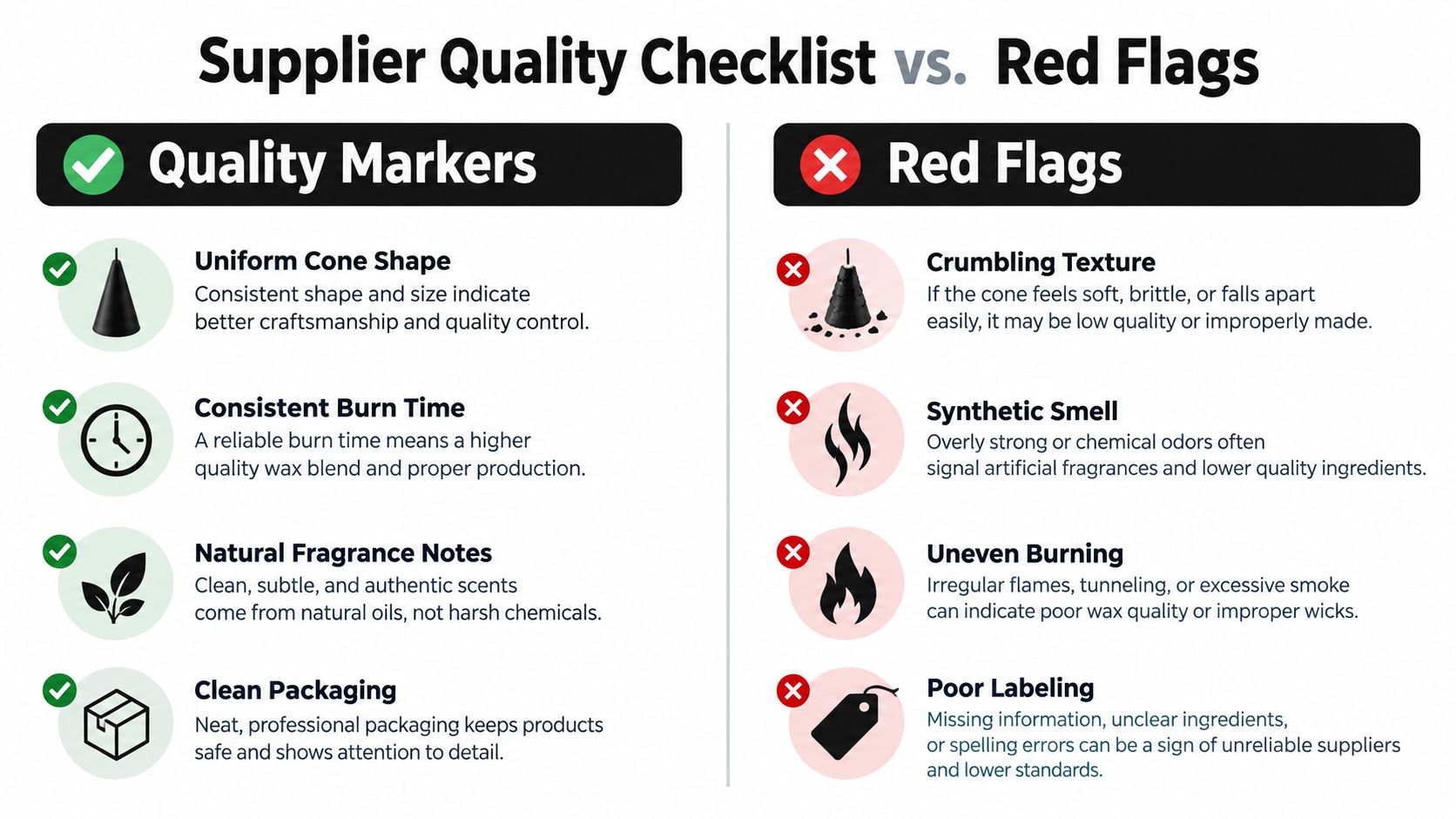
Uniform cone shape and density. This usually means the batch was pressed consistently.
Clean rose scent. It should read floral, not harsh or chemically sharp.
Clear ingredient labeling. Rose otto, rose absolute, or plainly labeled fragrance oil is better than vague “fragrance.”
Protected packaging. Cones need humidity protection and fragrance retention.
Sample burn consistency. The burn should feel steady across several cones, not just the first one.
Red flags are easier to spot than a bad retail return. Crumbly cones, over-dry cones, missing safety details, and suppliers who can't answer origin questions all point to weak process control. If the price is oddly low, ask what was cut from the recipe or packaging.
Indian, Chinese, and smaller artisan producers often sit at different price and quality levels, but the country name alone doesn't tell the whole story. I've seen excellent cones from smaller makers and rough cones from bigger factories. The better test is repeatability, not the label.
A simple sample protocol keeps the buying decision grounded. Burn five cones from one box, then score scent throw, ash color, and burn completion. If two cones behave well and three don't, that's not a fluke, it's batch inconsistency.
For sourcing conversations, this product-sourcing reference is worth keeping nearby because it pushes the conversation toward what the supplier can prove.
FAQs
1. Can rose incense cones be used in wedding or event gift bags?
Yes. Rose incense cones can work well as a small fragrance-themed addition to wedding favors, bridal gifts, spa packages, and event gift bags. Choose a compact, well-sealed package so the scent remains protected until the recipient opens it.
2. How should rose incense cones be packaged for mail-order sales?
For online sales, packaging should protect the cones from crushing, moisture, and fragrance loss during transit. A rigid outer container or protective packaging around the retail package can help prevent damaged cones from arriving at the customer's door.
3. Can rose incense cones be included in a self-care gift basket?
Yes. Rose cones can complement gift baskets built around relaxation, bath products, candles, journals, or other fragrance-oriented items. A small pack can add variety without taking up much space.
4. What information should customers see before ordering rose incense cones online?
A useful online listing should clearly show the number of cones, package size, scent description, cone type, ingredients or fragrance type when available, and any burner requirements. This gives shoppers enough information to determine whether the product matches their intended purchase.
5. How can retailers prevent rose incense cones from becoming a slow-moving inventory item?
Retailers can reduce slow-moving inventory by starting with smaller quantities, tracking which pack sizes sell fastest, and pairing rose cones with complementary fragrance products or giftable items. Testing customer response before committing to larger quantities can also reduce excess stock.
If the supplier dodges basic questions, that's your answer. Better to walk away than explain bad cones to customers later.
Storage, Bundling, and Merchandising Rose Cones
Rose cones lose value fast when they sit in the wrong place. Moisture softens the cone body, fragrance oils oxidize, and the scent gets dull before it ever reaches a customer. That's why I treat rose cones as a humidity-sensitive SKU, not a throw-in item.
Storage that protects the scent
Keep cones in airtight tins or kraft tubes with a dark cabinet and a dry shelf. Silica gel packets help, especially if the back room runs humid. A steady room temperature around the comfortable household range is usually enough to keep oils from degrading too quickly, as long as you avoid heat, sunlight, and damp storage.
Bundling works best when it gives the buyer an easy next step. A 6-pack is good for trial. A 12-pack is better for repeat users. A 24-pack starts to make sense for studios, resellers, and gift bundle builders. Pairing rose with lavender or sandalwood makes the selection feel less narrow, and adding a small brass burner creates a simple spa-ready kit.
What sells on a shelf and online
Shelf placement matters more than most retailers admit. Rose cones sit naturally beside candles and essential oils, where the customer already expects scent-driven products. Boxed cones do well on vertical peg displays, while tester cones on a clip strip let the buyer smell before they commit.
Online, the conversion details are different. The hero image should show the cone mid-smoke, not just the box. Dropdowns should include 3-pack and 12-pack options. Cross-sell burners and backflow fountains where relevant, then offer refill or subscription options for repeat customers.
If you're choosing fixtures, Display Guru's retail merchandising stands is a practical reference point because stand choice changes how visible a compact item like a cone really is.
Bundle Format | Pack Count | Best Buyer | Recommended Placement |
|---|---|---|---|
Trial pack | 6 | First-time buyer | Near testers and small gift items |
Standard pack | 12 | Home user | Candle and fragrance aisle |
Value pack | 24 | Studio, reseller, repeat buyer | Back bar or wholesale shelf |
Kit bundle | Mixed cones plus burner | Gift shopper | Endcap or spa display |
For wholesale, keep a checklist for case packs, carton size, and lead times. If the supplier can't answer those basics, the cone is not ready for reliable retail.
Writing Product Descriptions That Sell Rose Cones
The product name should do more work than most listings do. Start with rose incense cones, then add one modifier that tells the buyer what kind of cone it is, such as backflow, natural, or hand-rolled, followed by the pack count. That structure helps shoppers understand the SKU before they even open the listing.
A listing format that actually converts
Use this order in the description:
Scent profile first. Tell the buyer if the rose reads soft, full, fresh, or sweet.
Burn behavior second. Note whether it's standard or backflow, and mention the setup it needs.
Ingredients third. Say whether the fragrance is essential oil, absolute, or synthetic fragrance.
Use case last. Connect the cone to meditation, gifting, room scenting, or décor.
Trust signals matter because rose cones are easy to oversell. Include country of manufacture, cone dimensions, net weight, burn time in minutes, and a plain statement on fragrance type. If you know the cones are 1-inch scented cones or a backflow line, say so directly instead of wrapping it in lifestyle copy.
For resellers, the long-tail terms should read naturally, not stuffed. Phrases like rose backflow cones, rose-scented incense cones for meditation, and natural rose incense cones work when they answer real buyer intent. They don't work when they're repeated every other line.
Here's a clean template you can adapt:
Rose Incense Cones, 12-Pack, Soft Floral Scent for Meditation and Home Rituals. These cones release a gentle rose aroma with a steady smolder and a clean retail-friendly presentation. Choose them for bedrooms, altars, gift sets, or quiet spaces that need a floral note without a heavy perfume feel. Each pack includes clear product labeling, consistent cone sizing, and a burn profile suited to short daily rituals.
When the objections come up, answer them with product facts. Short burn time is normal for cones. Smoke level depends on burner placement and ventilation. A strong artificial note usually points to fragrance load or cheap blending, not to the rose idea itself.
For copy workflows, Web Mage's landing page copy tools are a useful starting point if you need a faster draft, but the final listing still needs the specific product details only the supplier can confirm.
Use the same keyword family in alt text, meta descriptions, and URL slugs, then keep the tone plain. Buyers don't need poetry here, they need confidence that the rose cone will smell right, burn right, and fit the space.
Aroma Warehouse carries incense cones, backflow cone options, and accessory formats that fit the way rose cones are sold and used, from home rituals to retail displays. If you're building a shelf, a spa cart, or a wholesale listing around this category, visit Rose Incense Sticks and Cones to compare cone formats, burners, and related incense supplies before you place your next order.


