

Men's Body Oil Cologne: A Complete Guide
You're ready for work, dinner, or a night out, but the traditional spray cologne on your dresser creates a familiar tradeoff. It may feel sharp on freshly shaved skin, fill the room for a short while, and then become difficult to notice. Men's body oil cologne offers a different approach, one that treats fragrance as part of a skin-care routine rather than only a cloud of alcohol-based scent.
The appeal is practical. An oil formula can feel softer, stay closer to the body, and make layering easier, while still giving you a recognizable fragrance profile. The challenge is knowing what you're buying, because “body oil,” “perfume oil,” and “fragrance oil” don't always describe the same product.
Table of Contents
What Men's Body Oil Cologne Actually Is - Why the oil base changes the scent
From Eau de Cologne to Oil-Based Formulas - A heritage format with a modern purpose
Body Oil Cologne Compared With Traditional Spray - Longevity is not the same as projection - Match the bottle to your routine
Ingredients, Carriers and Scent Families - Choose the carrier by skin feel - Let the scent family guide your search
How to Apply and Layer Men's Body Oil Cologne - Build contrast carefully
Safety, Labeling and Skin-Smart Buying - A practical safety screen
Wholesale and Private Label Insights for Retailers - Vet the formula and the operation
Buying Checklist and Final Takeaways - Consumer checklist - Retailer checklist
What Men's Body Oil Cologne Actually Is
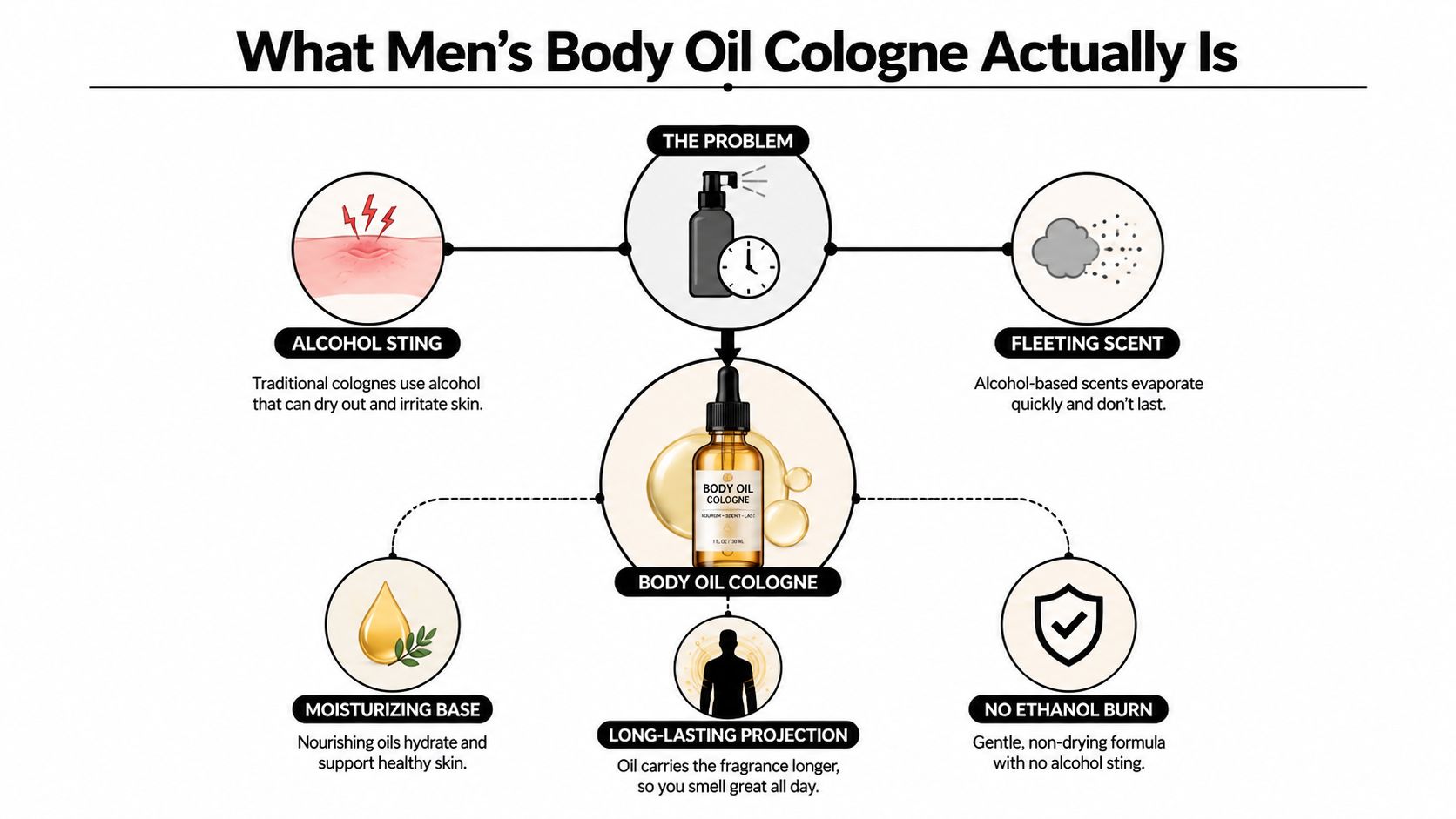
A man applies a conventional spray after shaving and immediately notices the alcohol sting around his neck. By lunchtime, the bright opening has faded, and he's left wondering whether he applied too little or chose the wrong format. A body oil cologne changes the delivery system. Instead of suspending aromatic materials primarily in a fast-evaporating alcohol base, it places them in a carrier oil such as jojoba, argan, or fractionated coconut oil.
The result usually has three defining traits:
An alcohol-free or low-alcohol base, which can feel gentler on dry or freshly cleansed skin.
Skin-close sillage, meaning the fragrance stays more personal instead of projecting broadly.
A dual role, combining scent with the softening feel associated with a body oil.
That last point creates an important distinction. A beard oil is designed around facial hair and the skin beneath it. A massage oil prioritizes glide and may carry only a light aroma. An aftershave addresses post-shaving care and often has a different cooling or astringent profile. A genuine body oil cologne is formulated for broader body application, with fragrance performance considered alongside the skin feel.
Why the oil base changes the scent
Traditional cologne has a long-standing identity as a lighter fragrance. The history of Eau de Cologne traces the modern concept to 1709, when Giovanni Maria Farina created Eau de Cologne in Cologne, Germany. Classic descriptions generally place its aromatic oil concentration at about 2% to 4%, which helps explain its airy character.
Oil formats unfold differently because the carrier slows evaporation. Citrus and herbal top notes may appear less explosively, while heart and base notes can feel rounder as the hours pass. The product isn't necessarily stronger. It's often more intimate and gradual.
For shoppers comparing formulas, ask whether the product is a finished skin oil, a diluted perfume oil, or a fragrance concentrate intended for mixing. If you're building a broader personal-care routine, single-use care solutions such as bath and body products can help you keep the cleansing and moisturizing steps compatible with your chosen fragrance, as shown in Avistar's bath and body collection.
From Eau de Cologne to Oil-Based Formulas
Modern men's body oil cologne has an old foundation. In 1709, Giovanni Maria Farina created Eau de Cologne in Cologne, Germany. During the 18th and 19th centuries, cologne became a refreshing body splash and linen spray, and the term later developed into a general label for men's fragrance in North America. Freshness shaped the category from the start.
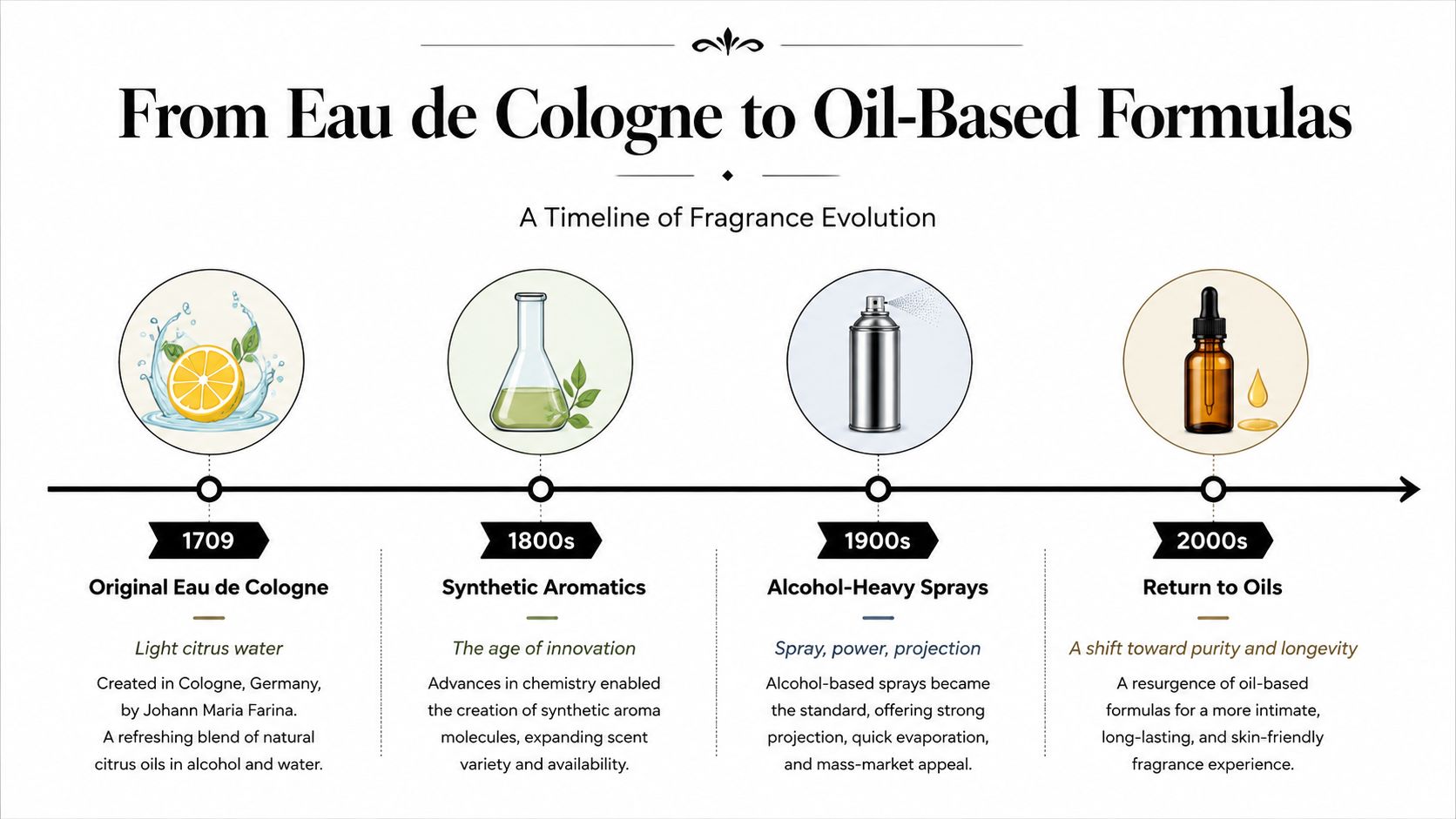
Alcohol became central to modern fragrance because it evaporates quickly and carries volatile aroma molecules into the air. That process creates the familiar opening burst from a spray. Carrier oils release aromatic materials more slowly, keeping them near the skin as the fragrance warms and develops.
The opening makes the distinction easy to notice. A spray can deliver citrus, herbs, or spices immediately, while an oil usually begins with a smoother, closer effect. As it develops, woods, musks, resins, and other deeper materials may become more apparent.
A heritage format with a modern purpose
Oil-based formulas answer several current grooming preferences. They suit shoppers seeking alcohol-free fragrance, a restrained scent trail, or a formula that pairs with moisturizing. They also support layering, allowing someone to apply a neutral skin base before adding a fragrance that stays personal and skin-close.
That combination affects buying decisions. Individual consumers can judge whether the finish and diffusion suit daily wear, while wholesale buyers can assess whether the format fits customers who prefer controlled application and compact packaging.
The category now connects classic perfumery with apothecary-style body care. A well-made formula uses a carrier chosen for spreadability and finish, then balances aromatic materials so it feels deliberate rather than like plain oil with perfume added. The carrier-oil guide breaks down spreadability, absorption time, and finish for each base, so you can match the oil to your skin type before buying. For a focused explanation of the benefits of oil-based perfume for skin, compare the carrier with the aromatic concentration instead of judging the scent alone.
Body Oil Cologne Compared With Traditional Spray
The right format depends on the situation. Body oil cologne makes sense when you want a close, controlled fragrance that works with a skin-care routine. Spray cologne remains useful when you want a faster application and more immediate projection.
Criterion | Body Oil Cologne | Spray Cologne |
|---|---|---|
Longevity | Gradual diffusion can keep the scent present for much of the day, depending on the formula and skin. | Stronger initial release, followed by a quicker-feeling decline as the alcohol evaporates. |
Sillage | Usually close to the skin and easier to keep discreet. | Often broader, especially immediately after application. |
Skin feel | Can leave a smooth, conditioned finish when the carrier is lightweight. | Dries quickly and may feel sharper on freshly shaved or dry skin. |
Climate suitability | Comfortable in dry conditions and cooler weather, though a heavy oil can feel rich in heat. | Convenient in warm settings where quick drying and stronger projection are useful. |
Layering | Blends naturally with unscented lotion, body oil, and compatible beard products. | Works well alone, but added products may compete with its alcohol-based fragrance profile. |
Travel and packaging | Roll-ons and small droppers are precise and compact, with little overspray. | Sprays cover a larger area quickly but can be less controlled during travel. |
Longevity is not the same as projection
A spray may smell more powerful because it fills the air quickly. An oil may remain detectable to you for longer because the aromatic materials diffuse gradually from the skin. Neither format automatically wins. Your preference depends on whether you want people across a room to notice the scent or want the fragrance to appear mainly during close conversation.
Body oil cologne also changes the application habit. You place a small amount on pulse points instead of misting a large area. That makes it easier to control the result in an office, restaurant, or shared vehicle.
Match the bottle to your routine
Choose an oil when your skin feels tight after showering, when you prefer subtle fragrance, or when you enjoy combining products. Choose a spray when speed, broad coverage, and immediate impact matter more. The practical distinctions in perfume oil versus spray perfume can help you compare the formats before you commit to a full-size bottle.
Price also deserves attention. Compare cost per milliliter, expected application area, packaging, and how often you'll reapply. A small roll-on may reduce waste and prevent over-application, while a spray may offer faster coverage for someone who applies fragrance to clothing and the torso.
Ingredients, Carriers and Scent Families
A men's body oil cologne has three working parts: the carrier, the aromatic materials, and the way those materials interact with your skin. Start with the carrier because it controls much of the first impression. A formula can smell excellent but feel uncomfortable if the base is too heavy, sticky, or slow to absorb for your skin type.
Choose the carrier by skin feel
Jojoba and fractionated coconut oil usually feel relatively light and spread easily. They're sensible starting points for combination or oilier skin, especially if you dislike a noticeable film. Argan and sweet almond oils tend to feel richer, which can suit dry skin that becomes tight after bathing. Grapeseed oil is another lightweight option for shoppers who want a less rich finish.
These are general formulation preferences, not guarantees. Read the full ingredient list and test the finished product rather than assuming that an oil's name predicts how the blend will feel. The guide to carrier oils for skin offers useful background when you're comparing bases.
Let the scent family guide your search
You don't need to memorize every note. Begin with the mood you want:
Woody: Sandalwood, cedarwood, and vetiver create a dry, grounded profile.
Aromatic: Lavender, rosemary, and clary sage feel herbal and clean.
Citrus: Bergamot, grapefruit, and petitgrain give a bright opening.
Spicy: Black pepper, cardamom, and cinnamon leaf add warmth and texture.
Resinous: Frankincense, myrrh, and oud bring depth and a darker finish.
Heavier woody and resinous materials often remain noticeable longer than bright citrus materials because they evaporate more slowly. Citrus can make an oil feel fresh at the beginning, but the deeper structure determines how the fragrance reads later.
Skin Type | Best Carrier Oil | Recommended Scent Family | Example Notes |
|---|---|---|---|
Combination or oily | Jojoba or fractionated coconut | Citrus-aromatic | Grapefruit, petitgrain, clary sage |
Dry | Argan or sweet almond | Woody-resinous | Sandalwood, frankincense, vetiver |
Sensitive or easily irritated | A simple, clearly labeled carrier | Soft aromatic or restrained woody | Lavender, cedarwood |
Lightweight-feel preference | Grapeseed | Crisp citrus-woody | Bergamot, cedarwood |
Skin chemistry can shift the balance. Cooler-feeling skin often makes crisp citrus-woody blends seem especially clean, while warmer skin can amplify amber-like, spicy, and resinous impressions. Treat those pairings as a starting point, then test before buying in volume.
How to Apply and Layer Men's Body Oil Cologne
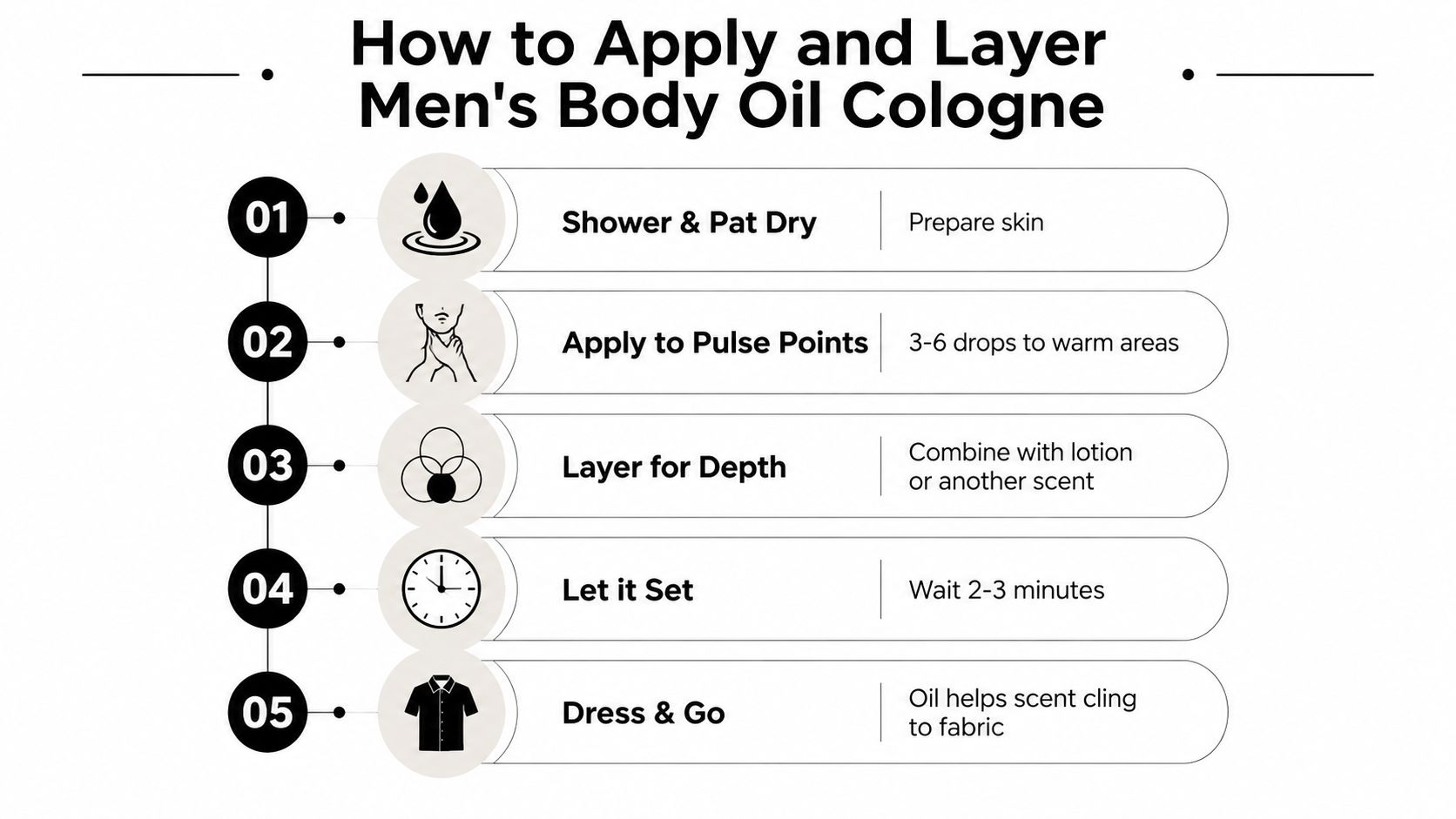
Application determines whether an oil feels elegant or excessive. Start after a shower, then pat your skin until it's slightly damp. Damp skin helps the oil spread more evenly, while fully wet skin can make the product bead and dry skin may encourage you to use too much.
Use a small amount first. Apply a few drops to pulse points such as the chest, neck, inner elbows, wrists, and behind the ears. The plan notes for this guide recommend 3 to 6 drops, but the correct amount depends on the formula and your skin.
Press instead of rubbing. Gently press the oil into the skin. Vigorous rubbing creates heat and friction, which can make the opening feel harsher and less balanced.
Moisturize before fragrance. Apply an unscented or lightly scented moisturizer first, allow it to settle, then add the body oil cologne.
Add spray only when needed. If you want more evening projection, use a compatible spray after the oil has settled. Keep the spray in the same general scent family.
Let the layers settle. Give the products a short moment to merge before dressing.
Build contrast carefully
Citrus and aromatic oils pair naturally with fresh lotions and clean sprays. Woods and resins work better with warm, unscented moisturizers or complementary beard products. Combining bright citrus with a powerful musk can create an interesting fresh-to-dark contrast, but it can also become disjointed if both products compete.
Application rule: Start with less than you think you need. You can add one drop later, but you can't remove an over-applied oil without washing.
For a lighter spray-style approach, the discussion of essential oil body spray provides another way to think about scent placement and dilution.
Store the bottle away from heat and direct light. For a gym bag or overnight trip, a clean roller vial gives you better control than carrying a large bottle. If the scent fades during the day, place a single drop on a pulse point or near a clothing edge instead of reapplying everywhere.
Safety, Labeling and Skin-Smart Buying
The phrase “oil” doesn't automatically mean “ready for direct skin use.” A finished body oil cologne should identify its carrier base and provide directions for external use. A fragrance oil may be a synthetic aromatic blend, while an essential oil is a concentrated plant-derived material that may require dilution. The label needs to tell you which category you're holding.
Look for a complete ingredient list, clear usage instructions, and warnings that match the product. Neutral fragrance guidance distinguishes oils intended for direct skin contact from concentrates that must be mixed into a carrier, which is why vague labels deserve caution. A product described only as “fragrance oil” isn't necessarily a finished body product.
A practical safety screen
Patch test first: Apply a small amount to the inner forearm and observe your skin for a full day before broader use.
Avoid compromised skin: Don't apply fragrance to cuts, rashes, eczema flares, or freshly shaved areas that sting.
Treat citrus carefully: Some citrus materials can create sun sensitivity. Follow the label's sun-exposure guidance and ask the manufacturer about the finished formula.
Check the audience: Children, pregnant people, and anyone with fragrance allergies may need individualized medical guidance before use.
The safety concern isn't limited to essential oils. Synthetic fragrance materials can also irritate sensitive skin, and natural ingredients can trigger reactions. If you already know that limonene, linalool, citral, coumarin, geraniol, or eugenol causes problems for you, check whether the label discloses them.
For more detail on how brands communicate ingredients and usage, review these fragrance labeling requirements. A reputable seller should be able to explain whether the oil is skin-ready, what it contains, and how it should be applied.
Frequently Asked Questions
1. Can men wear body oil cologne to work without it being too strong?
Yes. A body oil cologne can be a good choice for an office when you want a controlled, close-to-skin fragrance. Start with a small application and choose a scent with a restrained profile rather than an especially dense or heavy fragrance.
2. How should men choose a body oil cologne for a first date?
Choose a fragrance that fits the setting and your usual grooming style rather than automatically choosing the strongest scent. Clean aromatic, fresh citrus-woody, or understated woody profiles can be easier to wear in close conversation. Testing the fragrance on your own skin beforehand is the best way to see how it develops.
3. Can men's body oil cologne stain shirts or other clothing?
It can, particularly when an oil is applied heavily or before it has absorbed. Allow the product to settle on the skin before getting dressed, and avoid saturating fabric directly unless the product's instructions specifically allow it.
4. How long should you wait before deciding whether a body oil cologne suits you?
Give the fragrance enough time to move beyond its initial opening. Smelling it immediately can give you a very different impression from smelling it later as the fragrance develops. Testing it during a normal day also helps you judge whether the scent and skin feel remain comfortable over time.
5. Is a roll-on body oil cologne better than a dropper for travel?
A roll-on is often more convenient for travel because it allows controlled application with little mess or overspray. A dropper can be useful when you want more flexibility over the amount applied. The better format depends on how precisely you want to control each application.
Wholesale and Private Label Insights for Retailers
Retailers should treat men's body oil cologne as a formulation and merchandising decision, not just another scent purchase. Boutiques, barbershops, spas, and online sellers need to know whether customers want a ready-made product with established packaging or a private-label item that can support a distinct brand identity.
Stock wholesale keeps the process simpler. You select existing scents, packaging, and labels, then test demand with less creative responsibility. Private label gives you more control over the name, scent direction, bottle, and customer experience, but it usually requires more coordination around samples, minimum orders, artwork, compliance documents, and replenishment.
Factor | Stock Wholesale | Private Label |
|---|---|---|
Brand control | Limited to the supplier's existing presentation | Greater control over scent, label, and packaging |
Launch speed | Usually faster once products are selected | Requires development and approval steps |
Minimum order considerations | Often easier to test with existing products | May require larger commitments or custom production |
Differentiation | Competes through selection and merchandising | Can create a distinctive store-owned identity |
Compliance review | Supplier materials still need checking | Retailer must approve and maintain final label accuracy |
Restocking | Based on available stock | Depends on production lead time and forecast quality |
Vet the formula and the operation
Ask for a certificate of analysis when appropriate, current IFRA documentation, allergen disclosure, batch identification, and manufacturing-quality information. If the supplier claims a facility follows good manufacturing practices, request documentation rather than relying on a badge or sales phrase. Cruelty-free claims also need a clear definition and supporting policy.
Packaging affects both usability and shelf appeal. UV-protective glass can help protect light-sensitive materials, while a dropper supports controlled application and a pump can make whole-body use more convenient. Leave enough label space for product identity, ingredients, net contents, warnings, and directions required for the markets where you sell.
Retail test: Keep one opened sample and one sealed sample. Compare scent, color, texture, and leakage during storage before expanding the order.
Pricing should reflect landed cost, packaging, labor, platform fees, and expected markdowns. A retailer can position the product beside beard oils, deodorant, bath salts, or grooming sets, but the bundle should make functional sense. Before negotiating, clarify exclusivity, custom scent work, lead times, restocking cadence, and who owns the final artwork. The distinction between white-label and private-label products helps frame that conversation.
Buying Checklist and Final Takeaways
A practical purchase starts with the job the oil must perform. Choose between a post-shower moisturizer with fragrance, a concentrated pulse-point oil, and a layer beneath a spray. Each format creates a different skin feel and scent effect, so the label should state its intended use clearly.
Consumer checklist
Start with skin feel: Pick a lighter carrier if residue bothers you. Choose a richer base if cleansing leaves your skin tight.
Read the formula: Look for named carrier oils, aromatic ingredients, directions, and external-use warnings.
Test before committing: Patch test first, particularly if fragrance has caused problems before or known allergens affect your skin.
Apply with restraint: Use a small amount on pulse points, press it into the skin, and wait before adding more.
Layer intentionally: Combine an unscented moisturizer with one main scent family. Add a spray when you want greater projection.
Protect the bottle: Store it away from heat and strong light. Close the cap or dropper firmly after use.
Synthetic fragrance materials are not safe for sensitive skin. Limonene, linalool, and citral appear in both natural and synthetic forms and can trigger reactions in anyone. Read the allergen information instead of treating “natural” or “oil-based” as a guarantee of gentleness.
Common mistakes include applying too much to clothing, overlooking how the carrier behaves on acne-prone or oily skin, and mixing unrelated scent families without testing them first. Humid weather can make a rich oil feel heavier and a strong fragrance seem more noticeable, so test the product under conditions close to your normal routine.
Retailer checklist
Retail buyers need a second screen focused on repeatable quality and customer fit:
Request supplier paperwork: Confirm ingredient disclosure, batch information, safety documentation, and applicable fragrance standards.
Order samples: Check scent, absorption, packaging, leakage, label legibility, and consistency between sealed and opened units.
Define the customer: A barbershop may suit masculine woods and controlled application, while a wellness shop may prefer softer aromatic or citrus profiles.
Plan the shelf story: Place body oil cologne beside grooming, bath, or travel products that support its skin-close purpose.
Set a margin target: Include freight, packaging, marketplace fees, promotions, and damaged units before selecting a retail price.
Create a replenishment plan: Track the formats that sell, then agree on restocking terms before a popular scent runs out.
The wider men's cologne market provides a useful category signal. It was valued at USD 6.013 billion in 2024 and is forecast at USD 6.520 billion by 2032, with a projected 1.2% compound annual growth rate, according to this 2026 men's cologne market forecast. For buyers, the more useful test is on the product itself: Can it go directly on skin, does the texture feel comfortable, and does the scent suit the customer's daily routine?
Use those questions to separate attractive packaging from a product people will finish and repurchase. Consumers can prioritize skin feel and habits. Retailers can prioritize documented quality, clear positioning, and supply they can order again with confidence.
Aroma Warehouse offers fragrance oils, carrier materials, bottles, droppers, and related accessories for personal fragrance routines, sampling, and small-batch retail projects. Visit Save on Scents Incense to compare supplies for men's body oil cologne, layering experiments, and product presentation.


