

Difference Between Yellow and White Shea Butter Explained
Updated: Aug 22
Most buying advice around shea butter gets the biggest thing wrong, it treats color like proof of quality. That's a bad shortcut. Yellow shea butter isn't automatically more natural, and white shea butter isn't automatically stripped of value. In real sourcing, the difference between yellow and white shea butter usually comes down to processing, filtration, and what was added after extraction, not whether the butter came from a different tree.
Attribute | ||
|---|---|---|
Typical look | Ivory to pale or deep yellow | Off-white to bright white |
Usual process cue | Often unrefined with added coloration | Often refined, deodorized, or simply uncolored |
Scent | Usually more earthy or nutty | Usually neutral or very mild |
Best use case | Traditional products, formula character | Neutral cosmetic bases, sensitive-skin formulas |
Quality signal | Verify ingredients and consistency | Verify refinement method and odor neutrality |
Retailers and formulators do better when they look past the shade and ask practical questions. What's in the jar, how was it processed, and does the batch behave the same way every time? That's the standard I'd use for any oil or butter that's going into skin, hair, or aromatherapy products, and it's the same logic I'd apply when choosing carrier ingredients in general, including the basics covered in carrier oils for skin.
Table of Contents
Why Color Alone Does Not Define Shea Butter Quality - What buyers should read first
Origins and Processing Behind Yellow and White Shea Butter - What refining changes
Side-by-Side Comparison of Yellow and White Shea Butter - How to choose by use case
Best Uses for Yellow and White Shea Butter in Skincare and Aromatherapy - For skin and hair products - For small retailers and formulators
How to Verify Quality and Store Shea Butter Properly - What to check before you buy
Why Color Alone Does Not Define Shea Butter Quality
The easiest mistake is assuming that a darker yellow butter is more authentic and a white butter is more refined in the bad sense. In practice, color can be a weak quality signal because natural shea butter itself doesn't sit in one fixed shade. It can range from off-white to ivory to pale yellow, and brightness alone doesn't tell you whether a batch was handled well or poorly. A butter that looks visually clean can still be heavily processed, while a more rustic-looking batch can still be well made.
What buyers should read first
The label matters more than the tone of the butter. If a supplier tells you a product is yellow, that still doesn't tell you whether the color came from natural butter variation, plant additives, or refinement choices. If a white butter is described as refined, deodorized, or filtered, that's a processing description, not a value judgment.
Practical rule: stop treating shade as a shortcut. Ask for the ingredient list, the processing method, and whether the batch is meant to stay consistent from one order to the next.
That matters especially for retailers selling into sensitive-skin, baby care, or scent-free categories. A supplier can sell a visually beautiful butter that performs inconsistently in finished products, while a plainer-looking butter can make balms, creams, and body butters behave more predictably. Comparison starts with formulation goals, not with the look of the jar.
Aromatherapy buyers tend to notice this faster than casual shoppers, because scent compatibility exposes processing differences immediately. If a butter has a strong natural smell, it can shape the finished aroma of a blend. If it's neutral, it gives you more control. That's why a quality judgment based on color alone often leads to the wrong purchase.
Origins and Processing Behind Yellow and White Shea Butter
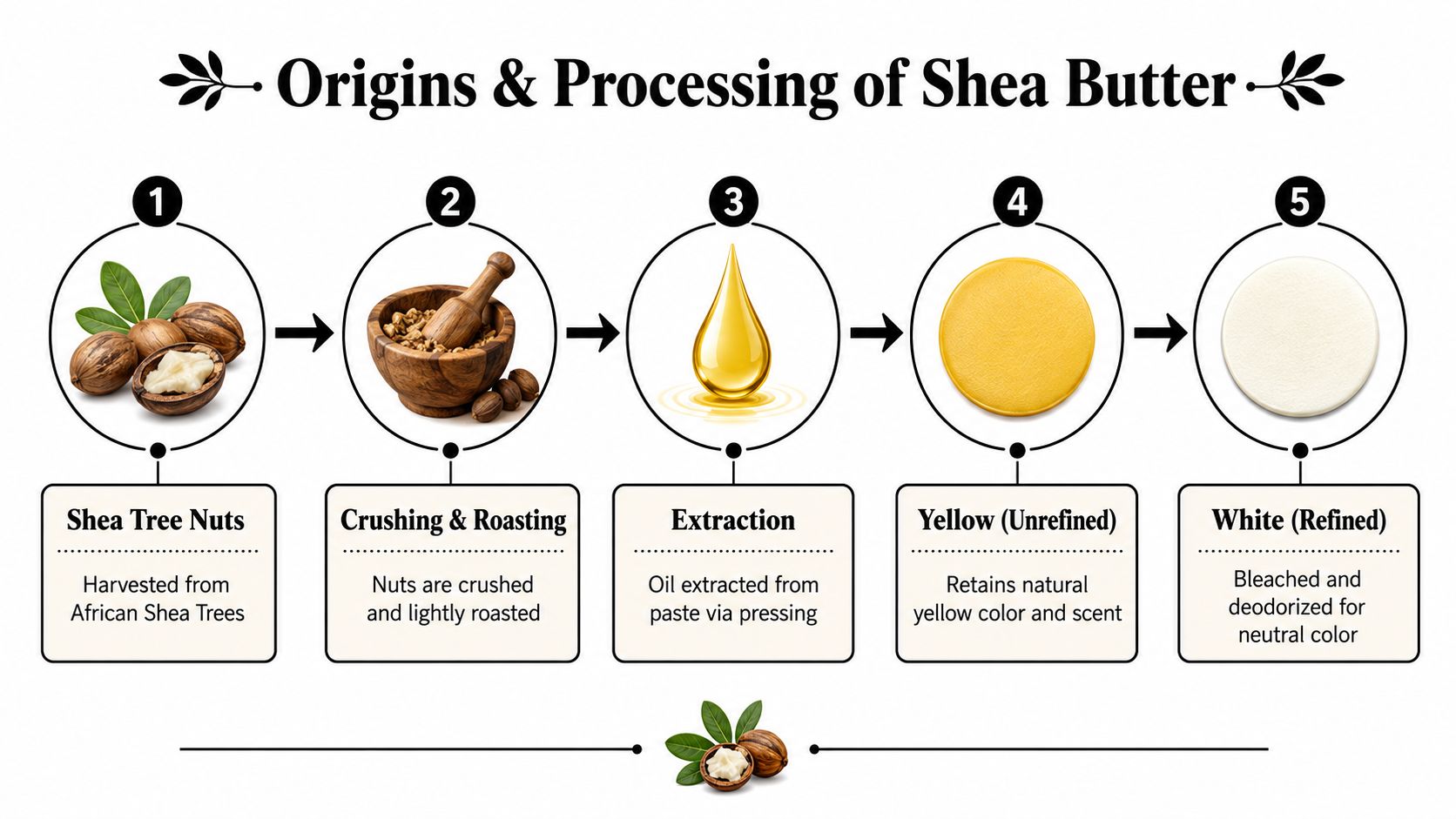
Shea butter starts from the same source, the nuts of the shea tree, but the final appearance changes with handling. Raw butter is typically ivory to cream, while yellow butter is often tinted with natural additives such as borututu root or sometimes palm oil. White butter is usually the same fat without that added color, and it may also be refined or deodorized for a cleaner finish. That's the technical heart of the difference between yellow and white shea butter.
What refining changes
Refining doesn't just change how the butter looks. It can materially change the fat profile and minor compounds in the butter. One source cites a crude shea butter profile of 43.53% stearic acid and 10.06 mg/100 g total tocopherols, compared with refined shea stearin at 60.37% stearic acid and only 1.27 mg/100 g total tocopherols. In plain terms, whitening and refining can strip away many minor components even as the stearic-rich fraction becomes more concentrated. That compositional shift is documented in the reference material provided here.
For formulators, that means the choice isn't about “good” versus “bad.” It's about whether you want a more characterful butter with traditional color cues, or a more neutral ingredient that disappears into the formula. White butter is often preferred when odorless neutrality matters, especially in cosmetics. Yellow butter is often chosen for its traditional look and the presence of pigment-linked plant additives.
White isn't the enemy of quality. It's often the result of a deliberate processing decision designed to make the butter easier to formulate with.
There's also a sourcing reality here that small retailers should respect. A batch described as yellow in one market may be called unrefined in another, while a so-called white butter may be a filtered version of the same fat. If you're buying for resale, treat the processing description as part of the product identity, not as a marketing flourish. For a parallel example of how natural butters can vary by processing and handling, compare it with raw mango butter.
Side-by-Side Comparison of Yellow and White Shea Butter
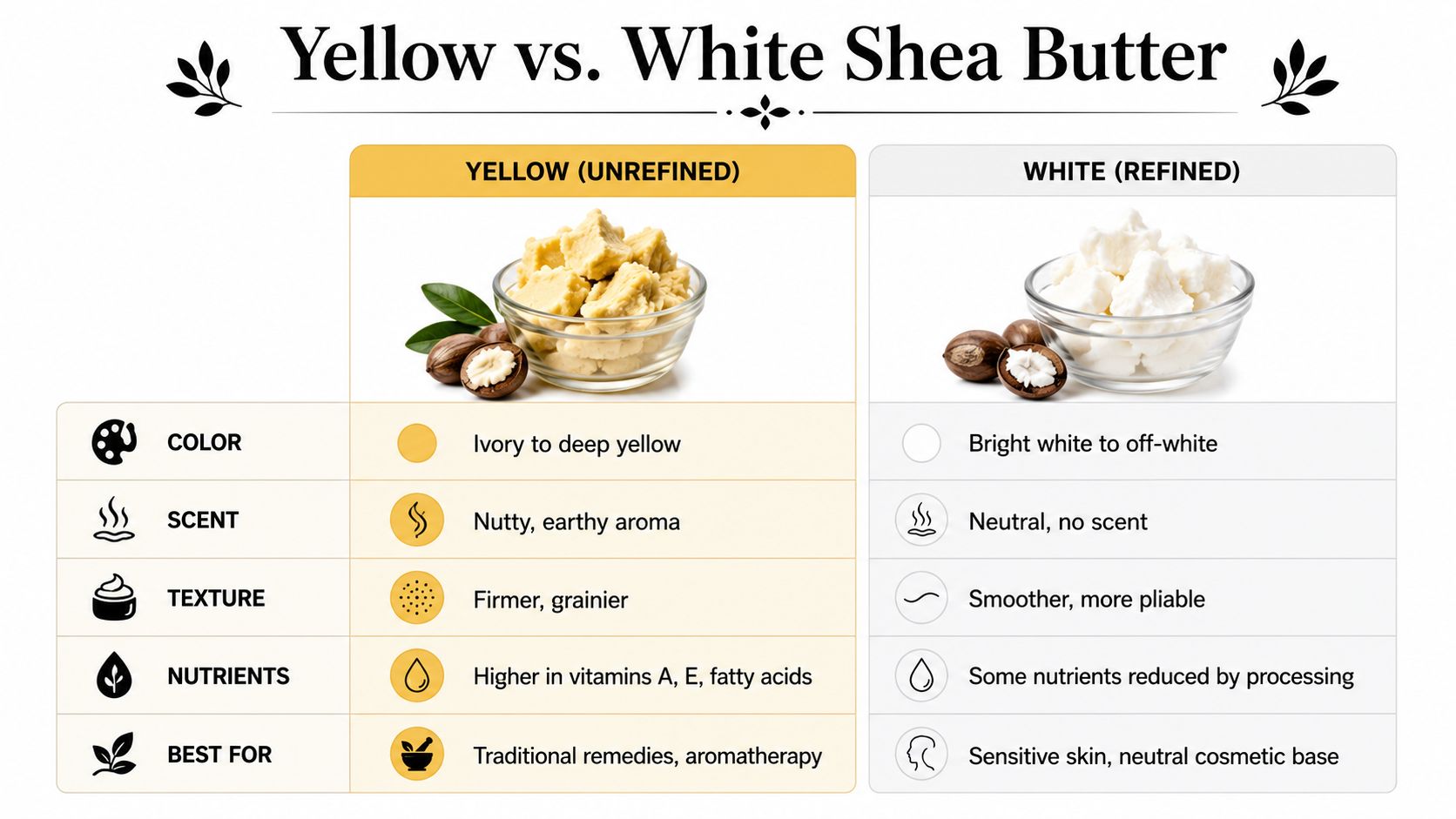
The practical comparison is simpler than most blog posts make it sound. Yellow butter usually keeps more of the traditional character buyers associate with artisanal products, while white butter gives formulators a more neutral base. The trade-off is not just visual, it affects scent, blending behavior, and how much the butter competes with other ingredients in a finished formula.
Attribute | Yellow Shea Butter | White Shea Butter |
|---|---|---|
Color | Ivory to yellow, sometimes deeper | Off-white to bright white |
Scent | Nutty, earthy, more noticeable | Neutral or nearly scentless |
Processing cue | Often unrefined with added coloration | Often refined or deodorized |
Formula role | Adds character and a traditional feel | Acts as a clean base for custom scenting |
Minor compounds | May retain more of the original profile | Can lose more minor components through refining |
A key chemical point matters for suppliers and makers. Refining can concentrate the stearic-rich fraction while reducing other minor compounds, which changes how the butter behaves in a formula. That's useful if you want a firmer or more uniform product, but it also means the refined version isn't a perfect stand-in for the unrefined one.
How to choose by use case
Yellow shea butter works best when you want the ingredient to be part of the product's story. That includes body butters with a rustic identity, traditional-style balms, and products where the natural scent won't clash with your aroma design. It can also suit brands that want a visible, unprocessed aesthetic.
White shea butter works best when you need control. It's the better choice for fragrance-forward creams, unscented products, and formulations for customers who dislike strong nutty notes. For a deeper look at how neutral bases behave differently from aroma-heavy ingredients, the comparison with fragrance oils and essential oils understanding the key differences is useful.
FAQ Questions & Answers
FAQ 1: Does yellow shea butter have a stronger scent than white shea butter?
Yes. Yellow shea butter generally has a more noticeable earthy or nutty scent, while white shea butter is usually more neutral. This can make white shea butter easier to use in fragrance-focused skincare formulations.
FAQ 2: Can yellow and white shea butter be used in the same skincare products?
Yes. Both can be incorporated into products such as body butters, balms, creams, hair products, and other cosmetic formulations. The better choice depends on the desired color, scent, processing characteristics, and overall product design.
FAQ 3: Which shea butter is better for fragrance-forward formulations?
White shea butter is generally better when you want fragrance or essential oils to remain the dominant scent. Its more neutral aroma is less likely to compete with the fragrance profile of the finished product.
FAQ 4: What should wholesale buyers ask a shea butter supplier?
Wholesale buyers should ask about the ingredient list, processing method, whether the butter is refined or unrefined, any added colorants, batch consistency, and recommended storage conditions. These details are more useful for evaluating a bulk ingredient than color alone.
FAQ 5: Does the color of shea butter affect how it should be stored?
No. Storage should primarily focus on protecting the butter from heat, light, air, and moisture. Keeping shea butter sealed in airtight packaging and stored in a cool, dark location can help maintain its quality.
If you're making a face cream, lotion bar, or scented butter, white shea usually gives you more room to work. If you're making a traditional body balm, yellow shea can feel more authentic to the customer experience.
Best Uses for Yellow and White Shea Butter in Skincare and Aromatherapy
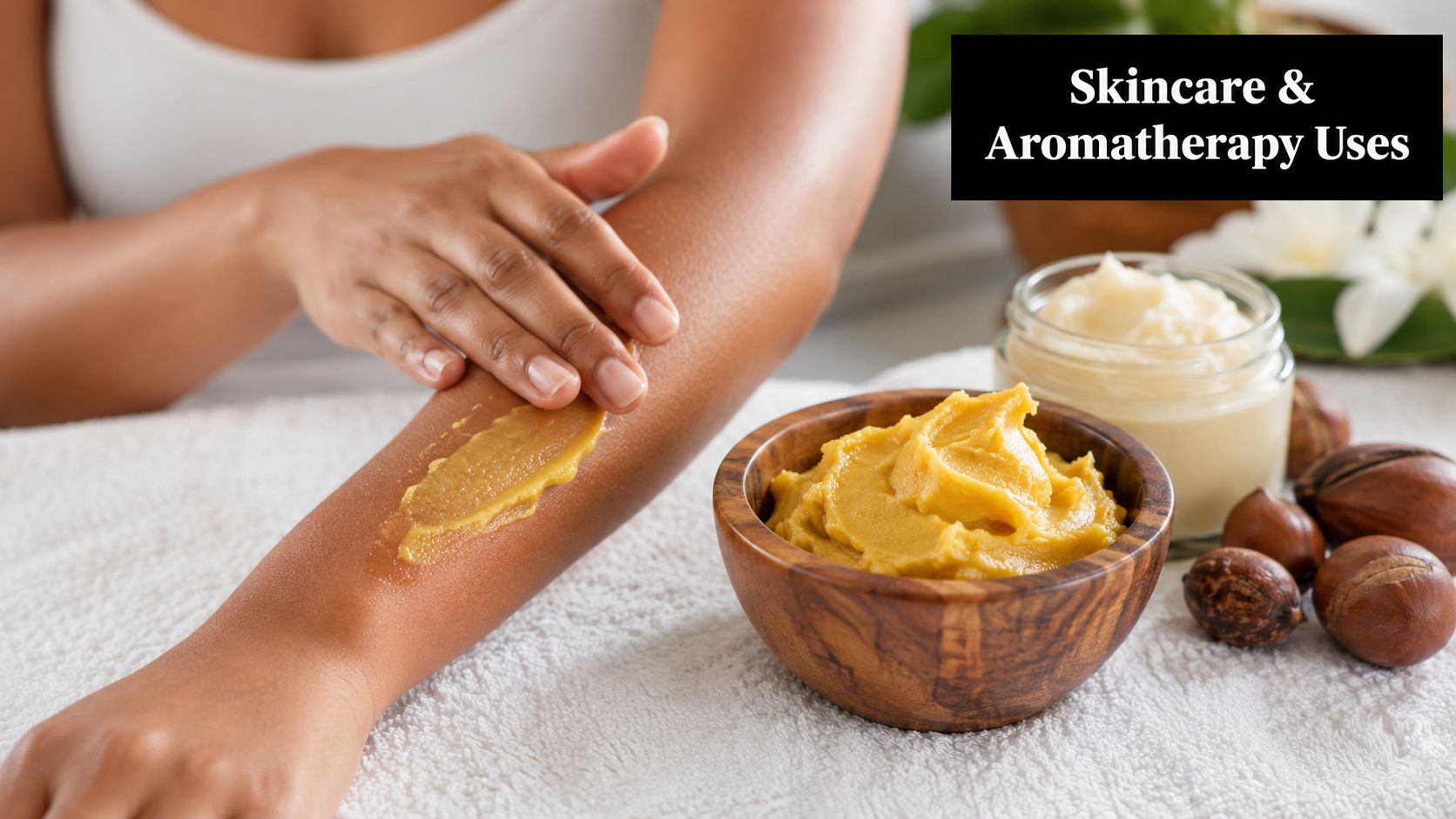
The best use depends on what you want the butter to do in the finished product. Yellow shea butter makes sense when you want a richer visual identity and a naturally earthy scent profile. White shea butter makes sense when your customers expect a cleaner cosmetic base or when another ingredient, such as a fragrance or essential oil, needs to stay in charge of the scent.
For skin and hair products
For body butters, the yellow version can work well in products meant to feel traditional, hearty, and more artisanal. It pairs nicely with formulas where a slight nutty note won't offend the customer. For hair products, it can suit heavier masks or sealing balms where you want the butter to feel substantial.
For face creams and products aimed at sensitive-skin buyers, white shea butter is usually the safer formulation choice from a sensory standpoint. It doesn't fight the rest of the formula, and it's easier to pair with delicate scent profiles. If you're building a lip balm line, the practical considerations around flavor, scent, and base compatibility are different again, which is why flavor oils for lip balm is worth reading before you start batching.
For small retailers and formulators
When you choose between yellow and white, decide based on customer promise. If the brand story leans natural, earthy, and traditional, yellow can reinforce that story. If the line depends on clean aesthetics, low odor, and reliable scent carry, white usually performs better.
A useful way to think about it is this, yellow shea butter often adds personality, while white shea butter adds flexibility. Neither is universally superior. They're tools for different product goals, and the wrong choice usually shows up later as scent conflict, label confusion, or inconsistent customer expectations.
A practical retail point matters here too. If you sell online, the product page has to do the work the jar can't. A clear description of color, scent, and intended use helps reduce returns and sets the right expectation before purchase. That's also where a skincare Shopify conversion tool can be handy for merchants who want their product pages to speak more clearly to buyers without overpromising.
How to Verify Quality and Store Shea Butter Properly
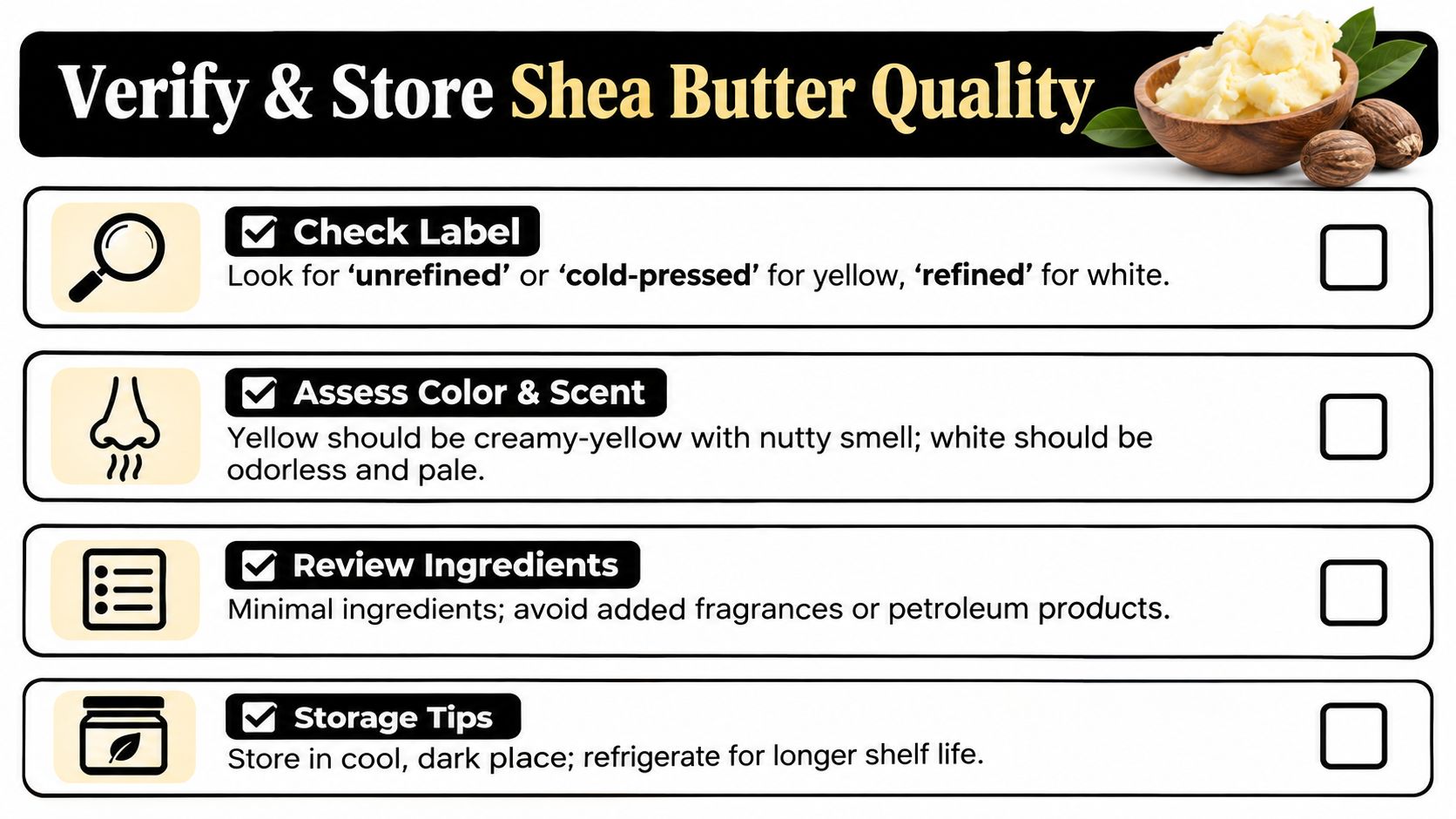
Experienced formulators verify the processing method before they judge color. A useful label should say whether the butter is refined, unrefined, or tinted with an added ingredient. That matters because the market is inconsistent. Some sellers describe yellow shea as raw and unrefined, while others use yellow for white shea butter that has borututu root or another colorant added during processing. That contradiction is exactly why sourcing transparency matters.
What to check before you buy
Start with the ingredient list. Short, specific labeling is easier to trust than broad marketing language. If the butter is meant to be yellow, confirm whether the color comes from a declared botanical additive or from the butter's own natural variation. If it is meant to be white, look for terms like refined, deodorized, or uncolored.
Check consistency across batches as well. Bulk buyers need one lot to behave like the next, because texture, melt point, and blendability affect finished products. Retailers reselling a completed formula need that consistency more than they need a dramatic shade.
Sourcing also matters at the supplier level. A clear product page, a plain ingredient declaration, and a visible origin story make it easier to compare options before you place an order. A practical starting point is this guide to product sourcing, especially if you are comparing similar butters from different suppliers.
Storage is simple, but it is often handled badly. Keep shea butter in a cool, dark place, and use airtight packaging to limit air and moisture exposure. Refrigeration can help if you are holding product for longer periods, especially in warm climates or in a shop where jars sit near heat sources.
Don't judge freshness by appearance alone. A pale jar can still be off if it smells stale, and a rustic-looking batch can still be fine if the scent and texture are stable.
For shelf management, rely on scent and clean packaging habits. If a butter smells sharply rancid or otherwise unusual, do not use it in a customer-facing formula. In retail, that shortcut is costly, because one bad batch can weaken trust in the whole line.
Making the Right Choice for Your Business or Formulation
The right choice depends on what your brand needs the butter to do. Yellow shea butter suits a product with a traditional look, a stronger natural scent, and a more artisanal story. White shea butter fits a neutral cosmetic base that will not compete with fragrance, color, or actives.
For formulators, the rule is simple, don't buy color, buy performance. For retailers, it is just as direct, don't sell shade, sell clarity. Buyers trust you more when you can explain why you chose a particular version and what the customer should expect from it.
Processing realities matter more than the color story. Yellow can reflect added pigments or other ingredients, while white usually points to more filtering or refining. Check the ingredient list, ask how the butter was handled, and look for consistency from one lot to the next. That is the practical way to judge quality, not by a jar's appearance.
The broader market is pushing harder on origin, filtration, and additive disclosure, and that helps anyone sourcing responsibly. The shea butter category remains sizable and globally relevant, so product labeling, consistency, and honest positioning are part of how you compete.


