Incense Bottle Burner Guide for Beginners: How to Use, Clean & Choose the Best Bottle Incense Burner
You're probably looking at an incense bottle burner for one of two reasons. Either you saw one in a shop or online and loved the way the smoke moved inside the glass, or you're trying to decide whether it's practical enough for daily use in a home, spa, yoga room, or retail display.

That curiosity is justified. A bottle burner sits in an interesting middle ground. It's part craft object, part functional burner, and part visual ritual tool. It can look far more polished than a flat wooden ash catcher, but it also raises sensible questions about airflow, heat, stability, cleanup, and whether it's suited to the incense you want to burn.
Used well, an incense bottle burner can become a calm focal point in a treatment room, a strong add-on product in a gift shop, or a simple evening ritual tool at home. Used poorly, it becomes a frustrating piece of decor that clogs, extinguishes itself, or feels riskier than it should. If you already use incense to shape atmosphere, support meditation, or soften transitions in the day, this guide to incense in everyday living spaces pairs naturally with bottle-burner use.
Table of Contents
The Allure of the Incense Bottle Burner - The three buying motives I see most often
Understanding How a Bottle Burner Works - The three parts that matter - Why airflow decides everything
Exploring Materials and Burner Styles - Glass, ceramic, and metal compared - Matching the style to the setting
Your Step by Step Guide to Using a Bottle Burner - Before you light anything - The daily use method
Choosing Compatible Incense for Your Burner - Which incense formats fit best - Why cones and resins need caution
Cleaning Maintenance and Styling Inspiration - A simple cleaning routine - Three display ideas that feel intentional
Troubleshooting and Retailer FAQs - Common questions with practical answers
The Allure of the Incense Bottle Burner
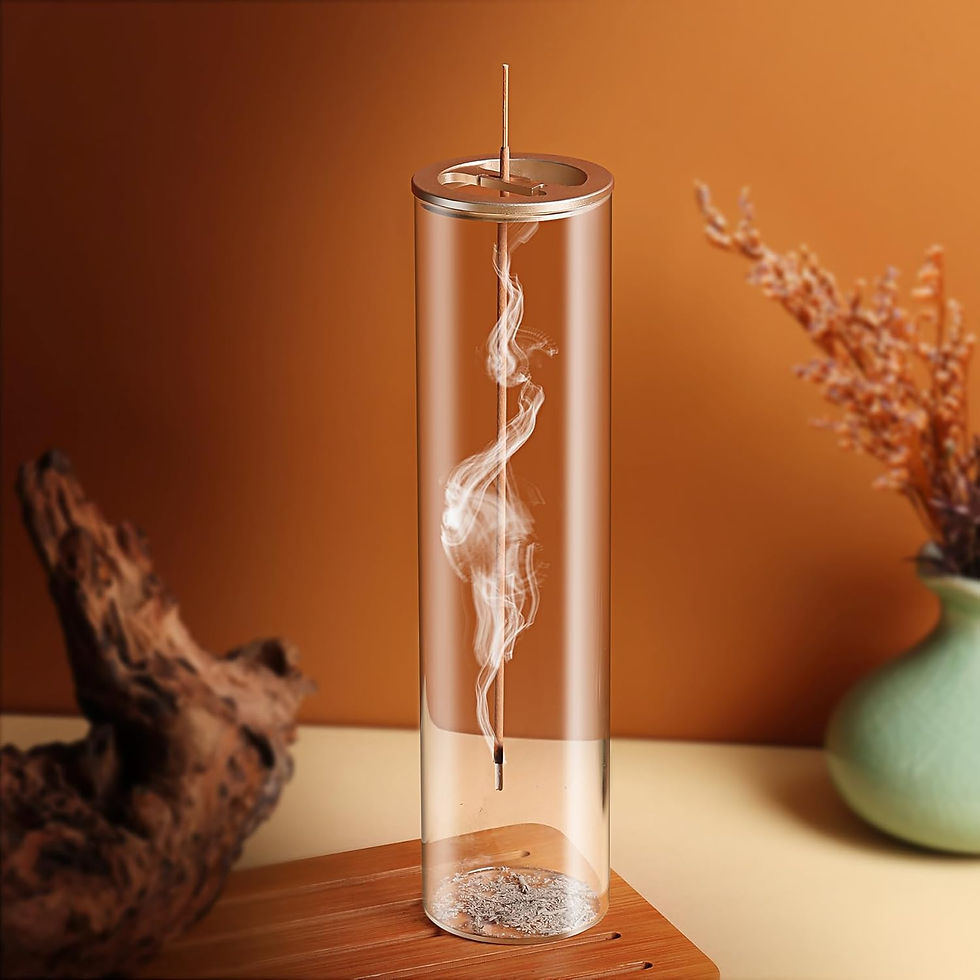
A client steps into a treatment room, notices the burner before the scent fully reaches them, and immediately reads the space as intentional. The same thing happens on a shop floor. A well-chosen incense bottle burner signals care, mood, and quality before anyone asks what fragrance is burning.
That visual first impression is a large part of the appeal. The bottle catches light, softens the look of ash, and gives the incense a defined place in the room. In home practice, that can make a short evening ritual feel settled and focused. In retail and spa settings, it helps customers understand that incense is not only fragrance. It is also presentation, pacing, and atmosphere. That is one reason incense can shape everyday living spaces so effectively.
I see bottle burners attract two groups for slightly different reasons. Makers and home users often love them because they feel personal and handcrafted. Retailers, spa owners, and therapists tend to value them because they do two jobs at once. They burn incense while also working as display pieces that support the brand of the room.
That dual role is where bottle burners stand out.

A tray burner is simple and useful, but a bottle burner usually feels more finished on a reception desk, product shelf, bedside table, or meditation corner. It contains visual clutter better. It can also make a modest incense stick look giftable, which matters if you sell bundles, create seasonal displays, or want to show customers how a burner fits into daily use rather than treating it as an accessory afterthought.
The three buying motives I see most often
Visual ritual: Buyers want a burner that looks calm and intentional on a nightstand, altar, reception desk, or treatment shelf.
Cleaner ash control: Many people prefer a vessel that helps keep ash inside the burner instead of across linen, wood, or display surfaces.
Gift and merchandising value: Shop owners often choose bottle burners because they style well with incense sticks, oils, matches, and small ceramics.
A good bottle burner earns its place twice. First as a working tool. Then as an object people are happy to leave in view.
The distinction is important because beauty alone does not make a burner usable. In practice, the better pieces are the ones that balance form with airflow, heat tolerance, and stable construction. That balance matters even more if you plan to stock them for customers, use them in treatment rooms, or recommend them as part of a scent ritual rather than a simple ash catcher.
Understanding How a Bottle Burner Works
At a glance, a bottle burner looks simple. In practice, it behaves more like a small controlled burn chamber. The bottle isn't just decoration. It affects oxygen flow, ash containment, ember stability, and how much attention the burner will need during use.

If you've used a backflow cone piece before, you already know that burner design changes the whole experience. The same principle shows up here, just in a different form. Backflow incense cone burners make airflow visible. Bottle burners make airflow structural.
The three parts that matter
Every working bottle burner depends on three parts.
Part | What it does | What happens if it fails |
|---|---|---|
Bottle or vessel | Holds ash, supports the setup, and creates the enclosed environment | Ash spills, the burner tips, or heat feels poorly managed |
Stick holder or insert | Secures the incense at the correct angle and height | The stick leans, falls, or burns unevenly |
Air intake opening | Feeds oxygen to the ember | The incense weakens, self-extinguishes, or burns erratically |
The easiest way to understand the system is to envision it as a tiny flue. The ember needs enough oxygen to keep smoldering, but not so much rushing air that the burn becomes unstable.
Why airflow decides everything
A technically sound bottle burner relies on controlled airflow. A wine-bottle build should have an intake hole roughly about the size of a dime, according to this bottle incense burner build guide. That opening acts as the combustion control point. Too little air and the stick struggles. Too much, or a poorly cut opening, and the bottle becomes structurally weaker around the drilled area.
Practical rule: If the ember isn't receiving clean, consistent oxygen, no amount of pretty glass will make the burner perform well.
This is the main advantage of a well-made bottle burner over an open tray.
It contains ash, reduces visual mess, and can protect the burning stick from casual bumps. But it only works when the ember and the intake opening are aligned well enough for a stable smolder.
That's why some bottle burners feel effortless and others feel fussy. The successful ones aren't accidental. They balance holder position, vessel depth, and oxygen entry so the stick can burn without constant correction.
Exploring Materials and Burner Styles
A bottle burner that looks beautiful in a product photo can become a poor choice on a treatment-room shelf or a busy checkout counter. Material decides how the piece handles heat, how often it needs replacing, how confidently staff can demonstrate it, and whether customers will continue using it after the first few burns.

For DIY makers, style often comes first. For retailers and spa owners, performance and liability have to come first. The strongest bottle burners do both. They fit the room, hold up to repeated use, and present incense in a way that feels intentional rather than improvised. Shops that already carry cool incense holders in varied styles usually get better results when bottle burners are merchandised as a separate category with a different mood and function, not as a substitute for flat ash catchers.
Glass, ceramic, and metal compared
Glass is the format customers recognize fastest. It catches light well, photographs well, and
suits spa, apothecary, and gift displays where atmosphere matters. It also has the narrowest margin for error. Poor drilling, thin recycled glass, or a design that lets heat collect in one area can shorten the life of the burner. In a shop, I reserve glass for calmer placements where staff can explain use and customers are less likely to handle pieces roughly.
Ceramic bottle-style burners offer a broader safety margin in daily operation. Good ceramic tolerates heat well, hides ash better between cleanings, and gives makers more freedom with glaze, texture, and color. It usually feels more finished than an upcycled bottle, which helps in spa environments where every object contributes to the treatment experience. The trade-off is weight and breakage from drops. Ceramic survives heat better than impact.
Metal earns its place in high-traffic settings. It handles repeated handling, travel, and staff demonstrations better than glass, and it is often the easiest option for stores that want fewer breakage losses. The drawback is surface temperature. A metal burner can get hot enough that placement and customer instruction matter more. Finish matters too. Matte black or brushed brass can read refined, while lighter stamped metals can look souvenir-like if the form is not well chosen.
Material also affects how the burner sells.
Customers buying for ritual at home often respond to appearance first, then ask practical questions. Spa buyers and gift-shop owners usually work in the opposite order. They need to know whether the piece is stable, easy to wipe down, and appropriate for supervised public-facing use.
Matching the style to the setting
Setting | Strong fit | Why it works |
|---|---|---|
Home ritual corner | Glass or ceramic | Decorative presence matters and handling is usually lighter |
Spa or yoga reception | Ceramic, or glass with a broad stable base | Calm appearance, cleaner presentation, and less visual clutter |
Busy retail counter | Ceramic or metal | Better durability during repeated handling by staff and customers |
Shape deserves as much attention as material. A tall narrow bottle can look striking, but if the base is light or the center of gravity sits too high, it becomes harder to place safely in a commercial setting. Wider bases, thicker walls, and clearly defined stick ports tend to perform better in stores and spas because they reduce wobble and make staff training simpler.

For handmade or small-batch inventory, inspect the finishing details before you buy or stock it. Check the bottle mouth or holder opening for chips, rough edges, loose inserts, and any sign that adhesive components are too close to heat. If the burner includes cork, rubber, painted interiors, or decorative wraps, confirm that those materials stay away from the burn path. A piece can be visually appealing and still be a poor retail product if it creates cleaning problems or raises heat-safety questions.
For merchandising, bottle burners sell better with context. Pair them with compatible incense formats, a clear note on heat-safe placement, and simple care guidance. In spas, fewer pieces usually look better and work better. One well-chosen burner at reception or in a retail nook often communicates more confidence than a crowded display of mixed styles.
Your Step by Step Guide to Using a Bottle Burner
A customer walks up to the counter, loves the shape of the bottle burner, and asks the question I hear all the time: “Is it just decorative, or does it burn well?” The answer depends on setup. A bottle burner performs well when the stick fits correctly, the ember has enough air, and the vessel is treated like active heatware, not shelf decor.
For home ritual, that means a calmer burn and less fuss. For spas and retail floors, it means fewer relights, cleaner displays, and a safer routine staff can repeat consistently.
Before you light anything
Set the burner in the exact spot where it will stay for the full session. Choose a stable, heat-safe surface with clear space around the bottle, especially if you style nearby products with linen, paper tags, dried florals, or packaging samples. In a treatment room or shop, I also check the traffic pattern. If sleeves, shopping bags, or cleaning cloths can brush the bottle, the placement is wrong.

Then inspect the burner itself. You are checking function, not just appearance.
The holder is secure. The stick should sit firmly without wobbling or scraping.
The air path is open. Old ash should not crowd the ember zone or block the neck.
The vessel is dry and intact. Do not use a bottle with cracks, loose inserts, or heat-exposed decorative parts.
The room has light ventilation. Fresh air helps. A strong draft can tilt the burn and drop ash where you do not want it.
If you train staff or demonstrate products in-store, keep the explanation simple and repeatable. Customers remember short routines better than technical speeches, even though the technical details matter.
The daily use method
Pick the right incense format for the burner. Bottle burners usually work best with standard sticks that match the insert and leave a clear burn path. If you sell mixed formats, a quick reference to the main types of incense and how they burn helps customers choose something the vessel can handle.
Check the fit before lighting. A loose stick leans and burns unevenly. An overly tight fit can crack a ceramic insert, stress a metal clip, or hold the stick at an awkward angle.
Insert the stick so the lit end has breathing room. The ember should not press into the bottle wall, neck, stopper hardware, or decorative rim. Good airflow keeps the burn steady and reduces the chance of self-extinguishing.
Light the tip, then let the flame settle into an ember. Blow out the visible flame once the tip is glowing. A bottle burner is designed to manage a small ember, not a standing flame inside a narrow vessel.
Watch the first few minutes. This is the point where poor fit, poor airflow, or excess draft usually shows up. If the tip struggles, chars unevenly, or keeps going out, reset the stick and inspect the ash path rather than relighting again and again.
Leave the ash alone while it burns. Shaking the bottle during use can break the ember, scatter hot ash, or shift the stick angle. Let the vessel do its job.
Snuff early if needed. If you need to end the session before the stick finishes, extinguish the ember carefully with a proper snuffer or by pressing the lit tip into a safe nonflammable surface meant for that purpose. Do not wave the bottle, tap it against a bin, or grab heated parts with bare fingers.
Safety Tip Keep the burner away from fabrics, paper tags, dried botanicals, and shelf styling props that can drift close to the ember or hot vessel.
Bottle walls can catch ash, but enclosure alone does not make a burner safe. Safety comes from stable placement, controlled airflow, correct fit, and active supervision.
For retail display, I recommend placing a short care card beside the sample burner. Include three points only: what incense format fits, where to place the burner, and how to empty ash after cooling. That small piece of guidance reduces returns and gives staff a cleaner, more confident sales conversation.
Choosing Compatible Incense for Your Burner
A bottle burner can look beautiful on a shelf and still be the wrong tool for the incense a customer brings home. I see this often in spa and retail settings. The burner gets blamed, but the underlying issue is usually poor format matching, weak airflow, or a holder that was designed for one stick style and asked to manage another.
For most bottle burners, stick incense is the cleanest match. The vessel is built around a controlled ember, a narrow ash path, and a fixed angle. Once you switch to formats that burn hotter at the base or drop irregular residue, performance changes fast.
Which incense formats fit best
Standard incense sticks are usually the safest recommendation for everyday bottle burners. They seat predictably, burn in a steady line, and are easier to test in-store before you stock them beside a burner display. If you want a broader refresher on formats, this guide to the main types of incense, including sticks, coils, resin, powder, and joss sticks is a useful reference.
Angle still matters. Kyarazen explains in this discussion of incense stick angle and burn behavior that orientation affects how a stick burns and where the active fragrance zone sits beneath the lit tip. In a bottle burner, that affects more than burn speed. It changes how smoke gathers in the vessel, how evenly ash falls, and how likely the ember is to stay stable through the full session.
Here is the practical version I give customers and staff:
Standard bamboo-core sticks are the easiest fit for most bottle burners.
Very thick sticks can bind in clips or sit off-center, which leads to uneven burn.
Very long sticks ask more of the burner's balance and are better in stable, low-traffic spaces.
Coreless sticks can work, but only if the holder grips them without crushing or dropping them.
For shops, pair the burner with the exact stick styles it supports. That reduces returns and gives staff a simpler sales conversation. Aroma Warehouse carries incense sticks and classic stick-burning accessories, including ash catchers and burners, which makes that kind of side-by-side merchandising practical on a mixed retail shelf.
Why cones and resins need caution
Cones and resins belong in a different category of burner use. They create concentrated heat at the base, and that heat needs a surface designed to absorb it safely. A bottle burner made for suspended stick incense usually does not have that buffer.
That trade-off matters in both home ritual and professional display. A spa owner may like the look of one vessel style across treatment rooms and reception, but one attractive form cannot safely cover every incense format. If the goal is clean stick burning with visible smoke movement inside the bottle, stay with compatible sticks. If the goal is resin, powder, or cone use, choose a ceramic or metal burner built for direct heat and buffering media such as ash or sand.
Customers often ask for one burner that does everything. I usually advise against it. A bottle burner does its best work when it is matched to the format it was designed to hold.
Cleaning Maintenance and Styling Inspiration
A bottle burner that isn't maintained starts to underperform before it starts to look dirty. Ash buildup interferes with clean drop, soot changes the visual effect, and sticky residue can make an otherwise lovely piece feel neglected.

A simple cleaning routine
Let the burner cool fully before touching the interior. Then work in this order:
Empty loose ash first: Tip out spent ash gently so you're not grinding it against the interior.
Wipe the exterior separately: This keeps oily fingerprints from spreading while you clean the inside.
Remove visible soot with a soft cloth or bottle brush: Don't force abrasive tools into a narrow neck.
Inspect the holder: If the clip or insert has collected carbon or residue, clear it so the next stick seats correctly.
For retail display models, clean little and often. A burner on a shelf doesn't need to look “used to prove the point.” It needs to look functional, cared for, and easy to imagine at home.
Three display ideas that feel intentional
Minimalist home shelfUse one clear or smoke-tinted bottle burner on a tray with matches and a small dish for spent sticks. Keep the surrounding objects low and quiet so the burner remains the focal point.
Spa or wellness receptionPlace a bottle burner on a stone, ceramic, or other heat-safe surface where staff can monitor it. Pair it with one scent profile that matches the space, such as a grounding wood or a soft floral, rather than offering too many competing aromas in one room.
Retail gift shop vignetteBuild a small lifestyle grouping: bottle burner, boxed incense sticks, and a concise care card. Customers often need permission to understand the object quickly. Show the function clearly, and the styling sells itself.
Clean burners sell better because customers can picture using them. Sooty display pieces make the product feel fussy, even when the design is sound.
Troubleshooting and Retailer FAQs
Common questions with practical answers
Why does my incense stick keep going out inside the bottle? Poor airflow is the first suspect. Stick orientation can alter burn speed by up to 25%, and if airflow from the intake opening doesn't reach the glowing ember correctly, the stick may self-extinguish, as explained in this guide to keeping incense lit and burning properly. Check the angle, the holder position, and whether ash or residue is interfering.
What is an incense bottle burner?
An incense bottle burner is a decorative incense holder that uses a glass, ceramic, or metal bottle-shaped vessel to hold incense sticks while containing ash and creating an attractive visual display. Many people use them for meditation spaces, home décor, spas, and retail displays.
How do I clean an incense bottle burner?
Allow the burner to cool completely, empty loose ash, wipe the interior and exterior with a soft cloth, and inspect the holder or insert for residue buildup. Regular cleaning improves airflow and extends the burner's lifespan.
Is smoke collecting inside the bottle a fire hazard? Visible smoke inside the vessel isn't automatically the problem. Concerns include ember placement, oxygen supply, and nearby flammable materials. If the stick is secure, the burner is stable, and the setup has proper ventilation, the enclosed smoke effect is usually just part of the design behavior.
Are incense bottle burners safe to use indoors?
Yes, when used correctly. Always place the burner on a heat-resistant surface, keep it away from flammable materials, ensure proper ventilation, and never leave burning incense unattended.
What should I look for when buying bottle burners wholesale for my shop? Inspect stability first. Then inspect holder quality, airflow design, and whether the product is clearly intended for sticks rather than cones or resins. Ask whether the burner needs a specific stick thickness, whether replacement inserts are available, and how the item should be cleaned before going back on display.
Why is ash missing the interior and falling outside the bottle? The stick may be sitting too close to the opening, angled poorly, or unsupported at the base. A small adjustment in position often fixes a messy ash path.
Can I use every incense style in the same bottle burner? Usually not. Bottle burners are generally most reliable with compatible incense sticks. If versatility matters more than appearance, use a burner built for multiple incense formats instead.
If you're sourcing incense, stick-burning accessories, fragrance oils, or wholesale-ready aromatic supplies for a shop, studio, or home ritual setup, Aroma Warehouse offers retail and wholesale options in one catalog, including incense products and accessories suited to everyday use, resale, and display planning.