Backflow Incense Cone Burner Guide 2026: How to Use, Clean & Choose the Best Waterfall Incense Burner
You're probably here because you've seen that silky ribbon of smoke pouring downward from a tiny cone and thought two things at once: that's beautiful and how does that work?
Maybe you already bought a backflow incense cone burner and the smoke isn't falling the way you expected. Maybe you're deciding whether it's a wellness tool, a décor piece, or both.

Backflow burners sit in an unusual category. They're part scent ritual, part visual object,
and part simple physics experiment. That mix is exactly why people love them, and why they sometimes confuse first-time users.
The magic is real to the eye, but it depends on very practical details like cone design, burner shape, placement, cleanup, and airflow in the room.
Table of Contents
The Magic of Backflow Incense Explained - What makes a backflow burner different - A quick history behind the modern effect
Choosing Your Perfect Backflow Burner - Style matters, but material matters more - Backflow Burner Material Comparison - Which design suits your space
A Step-by-Step Guide to Safe Burning - Set up your space first - How to light it correctly - Safety habits worth keeping
Keeping Your Burner Clean and Beautiful - Why residue happens - A simple cleaning routine - When deeper cleaning helps
Pro Tips for Scent Pairing and Display - Match scent to the moment - Build a small visual ritual
A Retailers Guide to Backflow Incense - Why shoppers stop and stay - How to merchandise them with fewer disappointments
Frequently Asked Questions About Backflow Burners - Do backflow cones scent a room as strongly as regular cones - Why isn't the smoke falling - Is the residue a reason not to buy one - Are backflow burners better for décor or aromatherapy
The Magic of Backflow Incense Explained

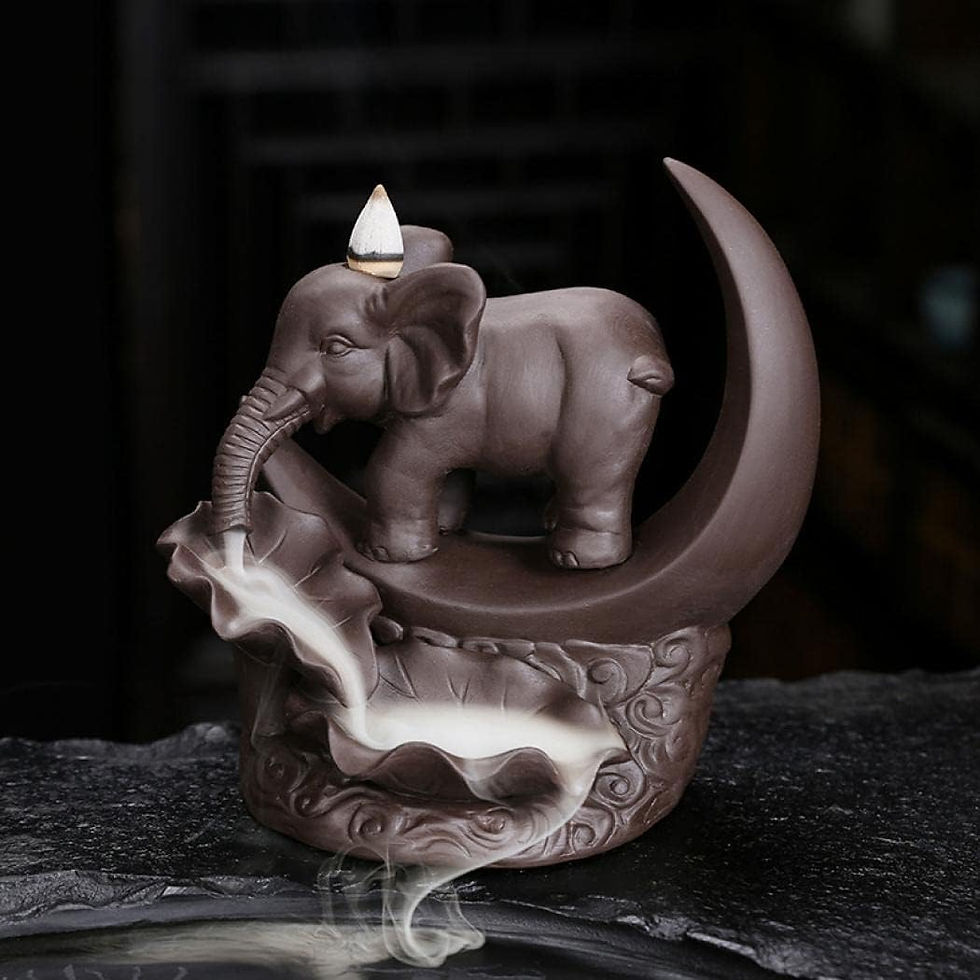
A backflow incense cone burner is a burner designed to make smoke travel downward in a visible cascade. That sounds impossible at first because smoke usually rises. The trick is that the cone and the burner are built as a matched system.
What makes a backflow burner different
A standard cone sends smoke upward from the outside of the cone. A backflow cone is different. It has a hollow channel through the center and a small opening at the base. As explained in this guide to how backflow burners work, the smoke cools inside that channel, becomes denser than the surrounding air, and exits from the bottom to create the falling “waterfall” effect.
That's why a regular cone won't create the same display, even if you place it on a dramatic-looking burner. The visual effect depends on the hidden airflow path.

A simple way to picture it is this: think of ordinary smoke like warm air floating up from a cup of tea. Backflow smoke behaves more like mist spilling over the edge of a cool bowl and sinking into a valley. The burner gives that smoke a path to follow, so what you see looks almost liquid.
Practical rule: The waterfall effect comes from burner design plus cone design. You need both.
If you want a helpful visual overview of cone types and common beginner mistakes, this backflow incense cones guide is a useful companion.
A quick history behind the modern effect

Backflow burners feel modern because the display is so theatrical, but they belong to a
very old incense story. Incense traditions go back to at least the Neolithic era. In China, archaeological evidence shows plant materials burned in ritual or ceremonial use about 6,000 years ago, and the first Chinese incense burners date to roughly 5,000 years ago, according to this historical summary of Chinese incense burners.
That long history matters because it reframes the backflow burner. It isn't a gimmick detached from tradition. It's a newer hardware idea built on a practice people have used for ceremony, atmosphere, and contemplation for thousands of years.
Choosing Your Perfect Backflow Burner
Some people buy the first waterfall-shaped burner they see. That works if you want a casual décor piece. If you plan to use it often, the material and form matter just as much as the design theme.
Style matters, but material matters more

The shape also changes the experience. A steep mountain cascade creates a dramatic flow. A lotus or bowl style tends to look calmer and more symmetrical. Face sculptures and temple scenes turn the burner into a conversation piece before it's even lit.
Backflow Burner Material Comparison
Material | Pros | Cons | Best For |
|---|---|---|---|
Ceramic | Good heat resistance, easy to find, often easiest to clean | Can chip if dropped | Daily home use, meditation corners, gift shops |
Resin | Detailed designs, strong visual personality | More small areas to wipe and maintain | Decorative shelves, novelty gifting, themed retail displays |
Metal | Durable feel, modern look | May show residue clearly on some finishes | Minimalist spaces, contemporary décor |
Wood hybrid | Warm appearance, blends with natural interiors | Needs careful attention around ash and smoke paths | Styled display areas, occasional use |
Which design suits your space
A burner should match how you live, not just how it looks in a product photo.
For daily ritual: Choose a simpler path with open access for wiping and ash removal.
For a gift: Pick a design with immediate visual clarity, such as a mountain stream or lotus drop.
For a small shelf: A compact vertical piece usually reads better than a wide horizontal depiction.
For a retail setting: Offer both calm and playful styles. Some customers want a serene Buddha form, while others will reach for a dragon, moon, or gothic piece.
A beautiful burner that's awkward to clean often ends up unused.
If you'd like inspiration beyond backflow pieces alone, these cool incense holder ideas can help you compare visual styles across incense setups.
A Step-by-Step Guide to Safe Burning
The difference between a soothing backflow session and a disappointing one usually comes down to setup. Small details matter here.

Set up your space first
Place the burner on a flat, heat-resistant surface. Keep it away from curtains, paper, loose fabric, and anywhere a pet or child might brush against it. A stable side table, altar tray, or ceramic dish works better than a soft or uneven shelf.
Air movement is the silent troublemaker. A ceiling fan, open window, or nearby vent can break the smoke stream and make the burner seem faulty even when it isn't. If you want the effect to look clean and continuous, choose a still corner of the room.
For a broader overview of sensible placement and burn habits, this incense safety guide is worth bookmarking.
How to light it correctly
Lighting a backflow cone is easy, but the timing matters. According to this step-by-step backflow cone burning guide, users typically let the cone burn for about 5 to 10 seconds before blowing out the flame. The visible backflow effect often begins after roughly 30 seconds, and drafts can disrupt the smoke stream.
Use this sequence:
Check the cone opening: Make sure you're using a true backflow cone and that its base opening aligns with the burner hole.
Light the tip: Hold the flame to the top until you see a steady ember.
Blow out the flame gently: You want a glowing tip, not an active flame.
Place the cone upright: Seat it carefully so the bottom channel lines up with the burner's opening.
Wait without fussing: At first, some smoke may behave like ordinary incense. Give it a little time before deciding something's wrong.
If the smoke starts by rising, that doesn't always mean you failed. The effect often needs a short moment to settle.
A quick demonstration helps many first-time users see the placement and timing more clearly.
Safety habits worth keeping
A hot burner can still look cool to the eye, especially ceramic pieces with dark glazes. Treat it as hot until fully cooled. Don't move it mid-burn unless you must.
A few habits make a big difference:
Burn one cone at a time: Overcrowding a setup increases mess and confusion.
Let ash settle: Don't wipe or dump ash while the burner is still warm.
Ventilate after use: You want enough fresh air for comfort, especially in smaller rooms.
Store cones dry: Damp cones can burn unevenly and frustrate the effect.
Keeping Your Burner Clean and Beautiful
Backflow burners are gorgeous, but they aren't maintenance-free. The same smoke path that creates the waterfall effect can also leave behind visible residue.
Why residue happens
Backflow burners are designed so smoke moves through narrow pathways. According to this backflow cone use guide, that smoke can leave an oily residue on the burner and nearby surfaces, which makes regular cleaning important for appearance and function.
This surprises people because the burner often looks like a decorative sculpture, not a tool that needs routine upkeep. But once smoke cools and settles, it can leave a film on the carved channel, around the cone seat, and on the tabletop underneath if you burn often.
A simple cleaning routine
You don't need a complicated kit. Most users do well with a soft cloth, cotton swabs, warm water, and mild soap.
Try this routine:
After each cool burn: Remove loose ash and wipe the smoke path with a damp cloth.
For corners and channels: Use a cotton swab or a small soft brush to lift film from tight spots.
For stubborn residue: A little rubbing alcohol on a swab can help, especially on glazed ceramic.
For the surface underneath: Wipe the tray or table regularly so residue doesn't build unseen.
If you already use ceramic holders for other incense formats, some of the same care ideas apply. This article on a ceramic incense stick holder offers useful maintenance habits that carry over well.
When deeper cleaning helps
If the smoke flow starts looking weak or uneven, the issue isn't always the cone. Sometimes the burner path has collected enough residue to interfere with the visual line. A deeper clean usually helps.
Soak only if the material allows it. Many ceramic burners handle a gentle soak well, but decorative finishes and mixed materials may prefer spot cleaning instead. If your burner has painted details, test any cleaning method on a small area first.
Clean for performance, not just appearance. A clear path gives the smoke a better stage.
Pro Tips for Scent Pairing and Display
A backflow burner works best when you treat it as part of a mood, not just a single object on a shelf. The scent, the placement, and the surrounding textures all shape the experience.
Match scent to the moment
Backflow burners often win on visual drama first. Scent performance can feel more subtle than some people expect, especially in larger rooms. That makes fragrance choice important.
A few easy pairings work well:
For quiet evenings: Sandalwood, lavender, or softer resin notes suit reading, stretching, or winding down.
For meditation corners: Frankincense-style, temple-inspired, or earthy blends create a focused atmosphere.
For welcoming guests: Floral or gently sweet cone scents feel approachable and less heavy in shared spaces.
For personal ritual: Pick a scent you'll recognize quickly. Familiarity matters more than complexity.
If you're looking to expand your options, you can discover aromatic cone incense and compare scent families before building a small collection.
Build a small visual ritual

The most satisfying displays are simple. A burner, a stable tray, a few smooth stones, a small plant, and enough open space for the smoke to remain visible usually look better than a crowded arrangement.
Try one of these setups:
Reading nook: Place the burner low and slightly off to the side so the smoke stays visible without sitting directly in your line of sight.
Meditation shelf: Use natural textures like wood, ceramic, linen, or pebbles to support the calm visual.
Front room accent: Choose a sculptural burner that still looks attractive when unlit.
Some home users also keep two kinds of cones around: one selected mainly for fragrance, the other selected for the clearest waterfall effect. That honest split often leads to a better experience than expecting every cone to do both jobs equally well.
A Retailers Guide to Backflow Incense
A customer pauses at the counter, notices smoke flowing downward like a tiny waterfall, and immediately asks two questions: “How does it do that?” and “Will it make my room smell good?” That moment presents a prime retail opportunity. Backflow incense sells best when the display answers the visual question and your signage or staff answers the practical one.
For shops, these burners sit in an unusual category. They are part home fragrance, part moving décor, and part ritual object. That mix gives them strong display value, but it also means customers need honest guidance about scent strength, residue, and cleaning. Retailers who explain the full experience usually get fewer returns and more confident repeat buyers.
Why shoppers stop and stay
Backflow burners are easy to notice from a few feet away. A candle looks still on the shelf. A backflow burner shows motion, and motion draws the eye.
That makes them especially useful in gift shops, yoga studios, spas, metaphysical stores, and boutiques that sell sensory or wellness products. A live setup can do the job of a silent product demonstration, as long as it is monitored, placed away from drafts, and kept clean enough that the effect still looks beautiful instead of messy.
How to merchandise them with fewer disappointments
The strongest retail approach teaches customers what they are buying before checkout. A backflow burner is a little like a fountain pen. It can be delightful, but it works best when the user understands how to use it and how to care for it.
A practical setup often includes:
A clear starter option: Pair one burner with a small set of backflow cones so customers can test the effect right away.
Simple care instructions: Include a printed card that explains airflow, proper cone alignment, cool-down time, and routine wiping after use.
An honest scent note: Let shoppers know the visual effect often leads the experience, while room-filling fragrance may vary by cone quality and room size.
A display plan: Show one burner in action and keep boxed stock nearby, so customers see the magic without creating a crowded or smoky sales area.
A range of styles: Stock a few easy, lower-cost ceramic designs alongside more detailed statement pieces for gifting.
Retailers expanding their assortment can also benefit from broader category planning. This guide on starting an incense business and buying wholesale covers useful buying considerations for stores that want to treat incense as an ongoing category, not just a single novelty item.
One more point matters for long-term success. The visual drama may make the first sale, but trust builds the second sale. If staff can explain why residue appears, why some cones perform better than others, and why a calm spot in the home matters, customers are much more likely to enjoy the burner they bring home and recommend it to someone else.
Frequently Asked Questions About Backflow Burners
Do backflow cones scent a room as strongly as regular cones
Often, people choose backflow cones for the visual effect first. The scent may still be pleasant, but many product guides focus on the smoke waterfall rather than measurable room coverage or scent throw, which leaves some shoppers uncertain about what to expect. In practical terms, a backflow setup is often most satisfying in smaller spaces or as a personal-area fragrance ritual rather than as a room-filling solution.
Why isn't the smoke falling
The usual causes are simple. You may be using a regular cone instead of a backflow cone, the cone may be misaligned with the burner opening, or the room may have enough air movement to break the cascade. Give the ember a little time, check the seating, and test the burner in a calmer spot before assuming the product is defective.
Is the residue a reason not to buy one
Not if you know what you're buying. A backflow burner creates a distinct visual path with real smoke, so some residue is part of ownership. For many people, that trade-off is worth it because the object functions as décor, ritual tool, and small sensory centerpiece all at once.
Are backflow burners better for décor or aromatherapy
Usually, they lean more toward décor-supported aromatics than pure scent delivery. If your main goal is strong fragrance throughout a large space, you may prefer other incense formats or oil diffusion. If your goal is a calming visual focal point with gentle scent, a backflow incense cone burner makes much more sense.
How does a backflow incense cone burner work?
A backflow incense cone burner uses specially designed backflow cones with a hollow channel through the center. As the smoke cools and becomes denser, it exits through the bottom of the cone and flows downward through the burner's channels, creating a waterfall-like smoke effect.
Why isn't my backflow incense smoke flowing downward?
The most common causes are using a regular incense cone instead of a backflow cone, improper alignment of the cone with the burner opening, or air movement from fans, vents, or open windows disrupting the smoke cascade.
Do backflow incense burners make a room smell good?
Yes, backflow cones release fragrance just like traditional incense cones. However, many users choose them primarily for the visual waterfall effect. Scent strength depends on the cone quality, fragrance type, and room size.
How often should I clean a backflow incense burner?
For best performance, wipe away residue after every few uses and perform a deeper cleaning when smoke flow becomes uneven. Regular maintenance helps preserve both appearance and functionality.
Are backflow incense cone burners safe to use indoors?
Yes, when used properly. Always place the burner on a heat-resistant surface, keep it away from flammable materials, never leave it unattended while burning, and ensure adequate ventilation after use.
If you're comparing burners, cones, and wholesale-ready incense accessories, Aroma Warehouse offers a broad selection for home users, small shops, and wellness spaces. It's a practical place to explore incense formats side by side, so you can choose what fits your ritual, display style, and maintenance preferences.