

Sacral Chakra Incense: A Guide to Scents & Rituals
Some days the room is set, the journal is open, the music is soft, and nothing moves inside you. You want to create, connect, feel something warm and alive again, but your inner current feels stuck. That’s usually when people reach for sacral chakra incense, not because it sounds mystical, but because scent can shift the body faster than thought alone. For a complete breakdown of scent profiles across all energy centers, explore this complete chakra incense guide for beginners and advanced users.

The Divine Chakra Incense Sticks sacral chakra, or Svadhisthana, is tied to emotion, sensuality, pleasure, and creative flow. When that area feels dull, the right incense can help you slow down, soften, and re-enter your senses. Sweet notes can comfort. Spice can wake up drive. Floral warmth can bring tenderness back into the room.
If you’re drawn to lush, expressive aromas, ylang-ylang’s effect on mood and atmosphere is a useful place to deepen your scent vocabulary before building a ritual of your own.
Table of Contents
Igniting Your Creative Flow with Sacral Chakra Incense - Start with the emotional target
What Is the Sacral Chakra (Svadhisthana) - Your inner wellspring - Signs your sacral energy needs attention
Aromatic Allies for Your Sacral Chakra - Sweet and comforting scents - Spicy and energizing scents - Floral and sensual scents - Earthy and grounding scents
Sticks, Cones, Resins, and Oils Explained - Choosing the right format - What quality looks like
Creating Your Sacral Chakra Ritual - A simple ritual that works - Safety and setup rules
Crafting Your Own Sacral Chakra Incense Blends - Three blend ideas to start with - How to test a custom blend
Sourcing and Selling Sacral Chakra Incense - What sells beyond a single pack - Use story as part of the product
Igniting Your Creative Flow with Sacral Chakra Incense
When sacral energy is low, people often describe the same cluster of feelings. They feel uninspired, emotionally flat, disconnected from pleasure, or oddly hesitant to begin anything expressive. Sacral chakra incense works best when you treat it as a cue for the nervous system, not just room fragrance.
The practical reason scent helps is simple. Aroma changes the atmosphere immediately, and that change gives your mind something tangible to respond to. If your goal is emotional warmth, a cold, sharp incense usually won’t help. If your goal is creative momentum, a heavy resin cloud may feel too ceremonial for a weekday morning. If your practice is shifting toward emotional healing and connection, explore this heart chakra incense guide for love, compassion, and emotional balance.
Start with the emotional target
Choose your incense based on the state you want to move toward:
For emotional softness: lean toward creamy, sweet, or gently floral notes.
For motivation: choose brighter spice or citrus-leaning warmth.
For sensual presence: pick velvety florals or woods with roundness, not harsh smoke.
For emotional steadiness: anchor the blend with an earthy note.
Practical rule: Don’t ask one scent to do everything. Sacral work usually responds better to layered warmth than to a single dramatic note.
A simple routine works better than an elaborate one you never repeat. Light one stick, sit down for a few quiet breaths, and attach the scent to one intention such as “I allow feeling,” “I welcome movement,” or “I’m ready to make something.”
That’s where sacral chakra incense becomes useful. It turns a vague wish for inspiration into a repeated sensory practice.
What Is the Sacral Chakra (Svadhisthana)
The sacral chakra, traditionally called Svadhisthana, is associated with water, emotion, creativity, and sensuality. It’s commonly understood as sitting two inches below the navel, where emotional flow and creative desire meet in the body. In practice, I think of it as an inner wellspring. When it’s moving, feelings are easier to process and ideas come with less strain. If you need grounding before opening emotional flow, this root chakra incense guide for stability, grounding, and security can help.

Your inner wellspring
Water is the most useful metaphor here. Healthy sacral energy doesn’t mean constant intensity. It means there’s movement. You can enjoy, grieve, desire, create, and adapt without feeling shut down or swept away.
Historically, this chakra framework sits inside a long spiritual lineage. Vedic references connected chakras to the elements, with Svadhisthana governing water and emotional life, and many modern practitioners now pair it with notes such as vanilla or cinnamon. If you want a broader scent map beyond this one chakra, this chakra incense scent guide gives helpful context.
A lot of modern interest in these practices isn’t fringe anymore. Katmandu Trading’s overview of sacral chakra incense states that the US aromatherapy sector, including chakra-specific incense, grew 12.5% yearly from 2018-2023, reaching $2 billion in sales. The same source notes that 40% of the over 36 million yoga practitioners in America use scents for chakra balancing, and 65% of spa sessions incorporate aromatics.
Signs your sacral energy needs attention
A blocked sacral chakra usually looks less dramatic than people expect. It often shows up as numbness, reluctance, or creative dryness.
Common signs include:
Low emotional access: you know something’s there, but you can’t quite feel it.
Creative hesitation: ideas stall before they become action.
Pleasure resistance: rest, intimacy, art, and play feel distant.
Rigidity: spontaneity feels uncomfortable instead of freeing.
An overactive sacral pattern tends to feel different:
Emotional flooding: moods spill over quickly.
Attachment swings: connection becomes clinginess or overdependence.
Sensory overload: too much stimulation creates agitation rather than pleasure.
Impulse-driven choices: you chase intensity instead of nourishment.
A balanced sacral chakra feels fluid, not dramatic. You don’t lose your edges. You regain movement.
That distinction matters because scent choice changes with the pattern. Blocked energy often needs warmth and invitation. Overactive energy often needs softness and containment.
Aromatic Allies for Your Sacral Chakra
The best sacral chakra incense doesn’t smell “spiritual.” It smells alive, rounded, and emotionally accessible. Such qualities suggest avoiding scents that are too austere, too powdery, or overly smoky unless they’re grounded by something warm.

Sweet and comforting scents
These are useful when your creativity feels shut down by self-protection.
Vanilla is a classic sacral note because it reads as emotionally safe. It softens the room and helps take the edge off inner tension. It’s a good choice for journaling, evening baths, or any ritual built around receptivity.
Orange brings lift. It doesn’t usually create the same depth as a wood or floral, but it can break stagnation beautifully. I reach for orange-forward blends when someone says they feel heavy rather than tender.
Use this family when you want:
Ease back into feeling
Gentle optimism
A friendlier creative atmosphere
Spicy and energizing scents
This family is for inertia, flatness, and low drive.
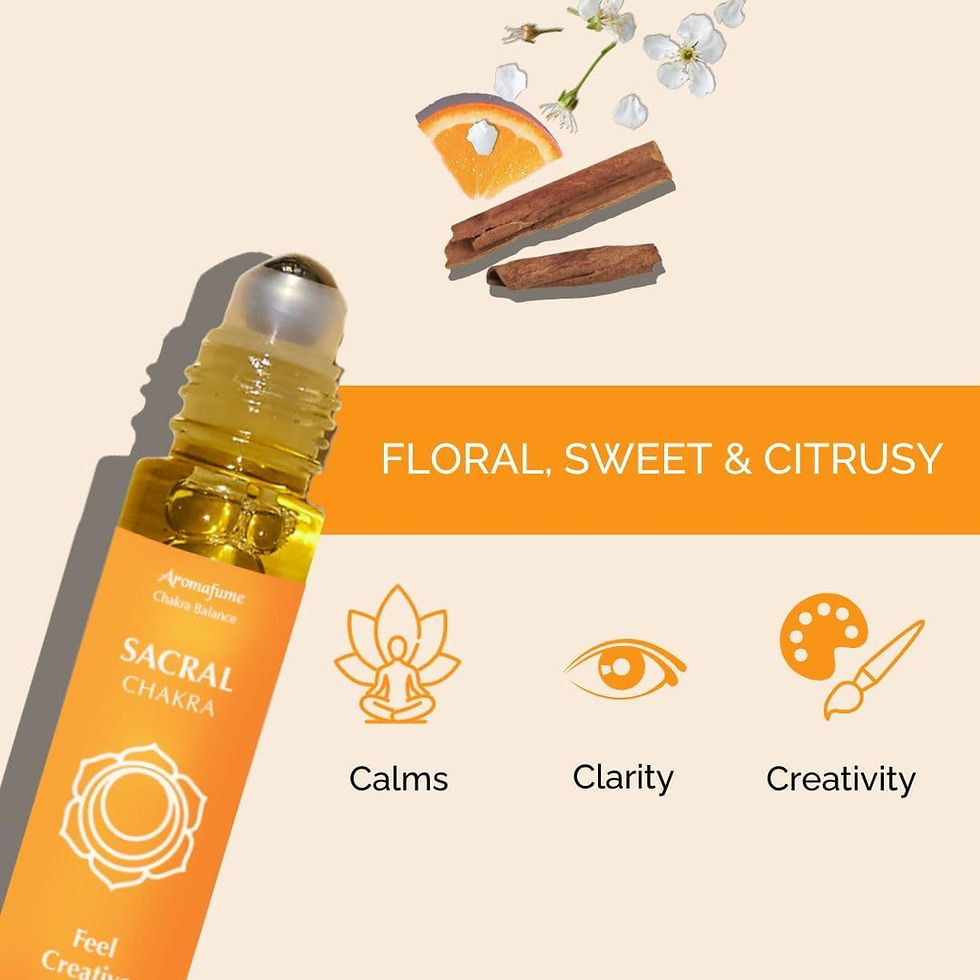
Cinnamon is one of the most recognizable sacral chakra scents because it carries warmth without becoming sleepy. It adds movement. A cinnamon-heavy incense can be excellent before dance, sketching, brainstorming, or intimate rituals, but it can also overwhelm a small room if the formula is sharp instead of rounded.
Ginger works in a similar direction. It feels alert, stimulating, and embodied. If vanilla says “relax,” ginger says “engage.”
What doesn’t work well is using spice alone when you’re already emotionally frayed. In that case, spice can feel pushy. Blend it with something creamy, floral, or woody.
Working guideline: If the scent makes you brace instead of breathe deeper, it’s not the right sacral blend for that moment.
Floral and sensual scents
This is the family often expected, and for good reason. Florals often help reconnect emotion with pleasure.
Ylang-ylang has a lush, almost velvety quality that suits sacral work well. It invites softness and body awareness. Too much of it, though, can feel heavy or overly sweet, especially in cheap incense where the floral note turns syrupy.
Jasmine feels more intimate and emotionally expressive. It’s often the better option when someone wants sensuality with clarity rather than drowsy sweetness.
These florals are often most effective when paired with a stable base. On their own, they can drift. With a wood or resin underneath, they feel intentional.
Earthy and grounding scents
Not every sacral ritual should feel airy or romantic. Sometimes the missing piece is containment.
Sandalwood gives shape to softer notes. It’s especially helpful if you tend to feel emotionally scattered once ritual begins. Sandalwood doesn’t flatten a blend. It steadies it.
Patchouli is richer and darker. Good patchouli adds depth and body. Poor patchouli smells muddy and can overpower everything else, which is why balance matters more here than with almost any other sacral note.
Use earthy anchors when you want:
Creative focus with less drift
Emotional grounding
A warmer, more meditative base for florals or spice
Sticks, Cones, Resins, and Oils Explained
Format shapes the ritual as much as the blend itself. I have seen the same sacral profile feel warm and emotionally fluid in one format, then become sharp or distracting in another.
Choosing the right format
Start with the setting, not the scent name. A home journaling practice, a yoga studio, and a retail sampling table all need different burn behavior.
Choosing Your Sacral Chakra Incense Format | |||
|---|---|---|---|
Incense Type | Best For | Intensity | Burn Time |
Sticks | Daily ritual, yoga corners, journaling | Moderate and steady | Longer, gradual burn |
Cones | Short, concentrated sessions | Stronger and faster-filling | Shorter, more concentrated burn |
Resins | Ceremonial work, space clearing, altar use | Deep and atmospheric | Varies by charcoal and amount used |
Oils in a diffuser | Smoke-free scenting, treatment rooms, gentle ambient use | Controlled and adjustable | Continues as long as the diffuser runs |
Sticks are the easiest entry point for home users and the simplest format for gift shops and wellness retailers to move consistently. They burn predictably, need little instruction, and usually give enough time for breathwork, journaling, or a short creative reset.
Cones fill a room faster. That can help during a brief practice or a product demo, but it also exposes flaws fast. If the blend is overloaded with perfume oils or weak base materials, cones tend to smell harsher than sticks.
Resins give the richest ceremonial atmosphere. They also ask for more skill. You need charcoal, a heat-safe burner, and good airflow. For practitioners running sessions, that extra setup can be worthwhile. For casual customers, it can become a barrier unless you teach them how to use it.
Diffused oils work well in treatment rooms, shared homes, and smoke-sensitive spaces. They also make sense for wholesale buyers serving spas, massage practices, or boutiques that want a sacral-themed scent experience without ash, open embers, or heavy smoke.
For a wider overview of physical formats, this guide to sticks, coils, resin, powder, and joss sticks gives a useful format-by-format reference.
What quality looks like
Material quality shows up in the burn, the clarity of the aroma, and the way the scent changes over time. One source cited earlier notes that better incense typically uses natural binders, a moderate essential oil load for diffusion, longer-burning hand-dipped sticks, and careful storage in airtight packaging at a stable room temperature.
That matters in practice. A well-made sacral incense opens in layers. You notice the brighter top note first, then the floral, resinous, or woody body, and finally the base that holds the whole ritual together. Poorly made incense smells loud at first light and thin ten minutes later.
For retailers and bulk buyers, quality often determines returns and repeat sales. Customers may not use technical language, but they notice whether a stick burns evenly, whether the cone turns acrid midway through, and whether the box still smells alive after a few weeks on the shelf.
What tends not to work:
Overly perfumed sticks: they smell strong in the box and flat once lit.
Dry, stale stock: the aromatic material burns off before the blend develops.
One-note formulas: they lack progression, so the ritual feels monotonous instead of immersive.
Fragile resin packs with no usage guidance: they create confusion for new buyers and waste product in professional settings.
For home use, choose the format you will use consistently. For business use, choose the format your customers can understand, store, and enjoy without frustration.
Creating Your Sacral Chakra Ritual
A sacral ritual doesn’t need a perfect altar or a long meditation script. It needs intention, a safe setup, and enough quiet for the scent to register.

A simple ritual that works
Use this when you feel creatively blocked, emotionally frozen, or disconnected from pleasure.
Choose one intention Keep it direct. “I welcome emotional flow” works better than a long affirmation you don’t believe.
Prepare the space Open a window slightly. Place your incense in a stable holder on a heat-safe surface. Turn off competing smells if you can.
Light and settle Let the flame catch, then gently extinguish it so the incense smolders. Sit for a moment before doing anything else.
Breathe low into the body Breathe toward the lower abdomen. You’re not forcing energy. You’re giving attention to a part of the body many people ignore.
Pair the scent with one action Journal. Stretch the hips. Sit in meditation. Move slowly to music. Repetition matters more than complexity.
A short body-based practice can deepen the effect. Hip circles, seated folds, and gentle swaying usually support sacral work better than rigid posture.
Use the incense as a marker. When the scent begins, the ritual begins. Over time, your body learns that cue.
For a guided visual practice, this video fits well after lighting the incense and taking a few settling breaths.
Safety and setup rules
Good ritual habits are simple and essential:
Use a proper holder: ash catchers and heat-safe burners prevent avoidable mess and fire risk.
Keep airflow gentle: you want ventilation, not a strong draft that makes the stick burn unevenly.
Mind children and pets: place incense where it can’t be brushed, knocked over, or inhaled too closely.
Don’t crowd the scent: one burning item is usually enough for a bedroom, studio corner, or treatment space.
The most effective rituals are often the least theatrical. One scent. One intention. One repeated practice.
Crafting Your Own Sacral Chakra Incense Blends
Custom blending is one of the most useful skills in this niche because sacral work is personal. One person needs comfort. Another needs spark. Another needs grounding before any emotional opening feels safe.
That shift toward personalization is real. Incense Sticks’ report on balancing chakras with incense sticks says Google Trends data from early 2026 showed a 40% year-over-year increase in U.S. searches for “DIY chakra incense”, alongside 25% market growth in custom aromatics for metaphysical shops. For home users, that means more interest in making blends that fit real moods. For resellers, it points to demand for unscented sticks, fragrance oils, and private-label options.

If you want the mechanics of making incense from base materials, this DIY incense sticks tutorial is a helpful companion.
Three blend ideas to start with
These recipes work well in a diffuser or for scenting unscented sticks. Keep ratios simple at first.
Creative SparkTry a bright, warm pairing of sweet orange with ginger. Use more orange than ginger so the blend stays uplifting rather than sharp. This is a good daytime blend for writing, planning, and starting a project you’ve been avoiding.
Sensual FlowBlend ylang-ylang with sandalwood. The floral note opens the mood; the wood keeps it from floating away. This is often the better choice for evening rituals, baths, and practices centered on softness.
Emotional WarmthUse vanilla with a touch of cinnamon. Vanilla creates safety. Cinnamon adds movement. If the cinnamon dominates, the blend becomes stimulating instead of supportive, so keep the spice in a secondary role.
How to test a custom blend
Don’t judge a blend from the bottle alone. Warmth, smoke, and air movement change everything.
Use this process:
Start small: scent one stick or run one short diffuser session before making a larger batch.
Test in the actual room: a blend that feels balanced in open air may feel dense in a small studio.
Notice the dry-down: some formulas open beautifully and then collapse into flat sweetness.
Write down the effect: not just “liked it” or “didn’t like it,” but whether it made you feel calmer, more expressive, heavier, or more focused.
Blending for the sacral chakra works best when you build around feeling, not trend names.
Sourcing and Selling Sacral Chakra Incense
Sacral chakra incense sells best when you stop treating it as a single SKU and start treating it as an experience. A plain pack on a shelf might move. A thoughtfully framed offering moves faster and earns more trust.
What sells beyond a single pack
Retailers, yoga studios, and wellness practitioners do well when they build around use-case instead of only scent name.
Strong bundle ideas include:
Creative ritual kits: incense, a small journal, and a simple ritual card.
Studio add-ons: a stick pack plus burner for yoga or meditation clients who want an easy home routine.
Giftable sets: one sensual floral, one grounding wood, and one warming spice so buyers can match the mood.
Sampling also matters. If you sell only sealed product, customers guess. If they can experience a fragrance family first, they buy with more confidence and often trade up to multiple formats.
Use story as part of the product
History gives this category real depth when you use it. Nirvana Mala’s discussion of incense in spiritual traditions notes that incense in spiritual practice traces back 6,000 years to ancient Egypt, while the modern seven-chakra model was detailed in the Ṣaṭ-chakra-nirūpaṇa in 1577 and became more widely known in the West after its 1918 English translation.
That matters because customers don’t just buy scent. They buy meaning, continuity, and ritual language they can use. A product card that explains why vanilla, cinnamon, sandalwood, or ylang-ylang suits the sacral chakra gives a customer a reason to come back for the next purchase.
If you’re building a product line or retail program, this wholesale incense business guide offers practical direction on the operational side.
A good sacral offering feels curated, not generic. It helps the customer answer one clear question. “What do I need tonight?”
Aroma work is easier when you can get reliable incense, fragrance oils, unscented sticks, burners, and bulk supplies from one place. Aroma Warehouse serves home users, studios, retailers, and resellers with retail and wholesale options, fresh-poured fragrance oils, private-label friendly supplies, and a broad selection of incense tools that make both ritual use and product building far more practical.
Frequently Asked Questions (FAQ)
Q1: What scents are best for sacral chakra incense?
The best sacral chakra incense scents include vanilla, orange, cinnamon, ginger, ylang-ylang, jasmine, sandalwood, and patchouli. These aromas support emotional flow, creativity, sensuality, and warmth depending on the blend.
Q2: How does sacral chakra incense help with creativity and emotions?
Sacral chakra incense works by using scent to influence mood and the nervous system. Warm, sweet, and floral notes help soften emotional resistance, while spice and citrus can stimulate creative energy and motivation.
Q3: How do I create a simple sacral chakra incense ritual?
Light one incense stick, set a clear intention, and sit quietly for a few minutes. Focus on breathing into your lower abdomen while journaling, meditating, or gently moving your body to connect with emotional flow.
Q4: What are signs my sacral chakra is blocked or imbalanced?
Common signs include emotional numbness, creative blocks, lack of pleasure, and hesitation to express yourself. Overactivity may show as emotional overwhelm, impulsiveness, or sensory overload.
Q5: Can I make my own sacral chakra incense blends?
Yes, you can create custom blends using essential oils or fragrance oils. Popular combinations include orange and ginger for creativity, ylang-ylang and sandalwood for sensuality, and vanilla with cinnamon for emotional warmth.


