

Root Chakra Incense: A Guide to Grounding & Stability
Your mind is racing, your body feels half a step behind, and even small tasks seem to take more effort than they should. That’s usually the moment people start looking for something grounding. Not something dramatic. Just one reliable practice that helps them settle, breathe, and feel like they’re back in their own body.
That’s where root chakra incense earns its place. Used well, it’s more than fragrance. It’s a ritual cue. The smoke, the scent, the pause before lighting it, and the decision to sit still for a few minutes all work together to shift you out of scattered momentum and into steadier awareness. For home users, that can mean a calmer start to the day or a cleaner transition out of stress. For yoga studios, treatment rooms, and retailers, it can mean offering a sensory tool that people immediately understand and return for.
The practice itself isn’t new. It sits inside a much older aromatic tradition tied to ceremony, healing, and spiritual grounding. What matters now is knowing which scents support that intention, how to use them safely, and, if you buy for clients or customers, how to source products that hold up in real-world use.
Table of Contents
What Is the Root Chakra - The tree root analogy that actually helps - Common signs of balance and imbalance
The Aromatic Profile of Grounding Incense - What grounding scents tend to have in common - Single-note sticks versus blended formulas
How to Use Incense in a Root Chakra Ritual - Set up the room before you light anything - A simple ritual that works
Pairing Incense with Crystals and Oils - Good pairings for a steadier ritual - When more tools help and when they distract
A Sourcing Guide for Retail and Wholesale Buyers - What to ask a supplier before you commit - Private label strategy that makes sense
Incense Safety and Ethical Considerations - Ventilation is part of the ritual - How to judge quality and sourcing
Finding Your Anchor in an Unsettled World
Some days the signs are obvious. You skip lunch, answer messages too fast, and realize you’ve been holding tension in your jaw for hours. Other days it’s subtler. You feel disconnected from your body, restless in your own home, or strangely unsettled even when nothing is technically wrong.
In practice, that’s the state where grounding tools matter most. People often reach for root chakra incense when they want a ritual that feels physical and immediate. You strike a match, light the stick, notice the smoke, and your attention has somewhere concrete to land. That’s useful when your thoughts won’t slow down on their own.
I’ve found that incense works best for grounding when it isn’t treated like background scent. It needs a purpose. If you light sandalwood or vetiver while checking email, the aroma may still be pleasant, but the nervous system doesn’t get the same clear signal. If you light it, sit down, place your feet on the floor, and breathe with intention, the whole experience changes.
Explore our complete guide to chakra incense scents for each chakra and how to use them effectively to understand how grounding fits into the full chakra system.
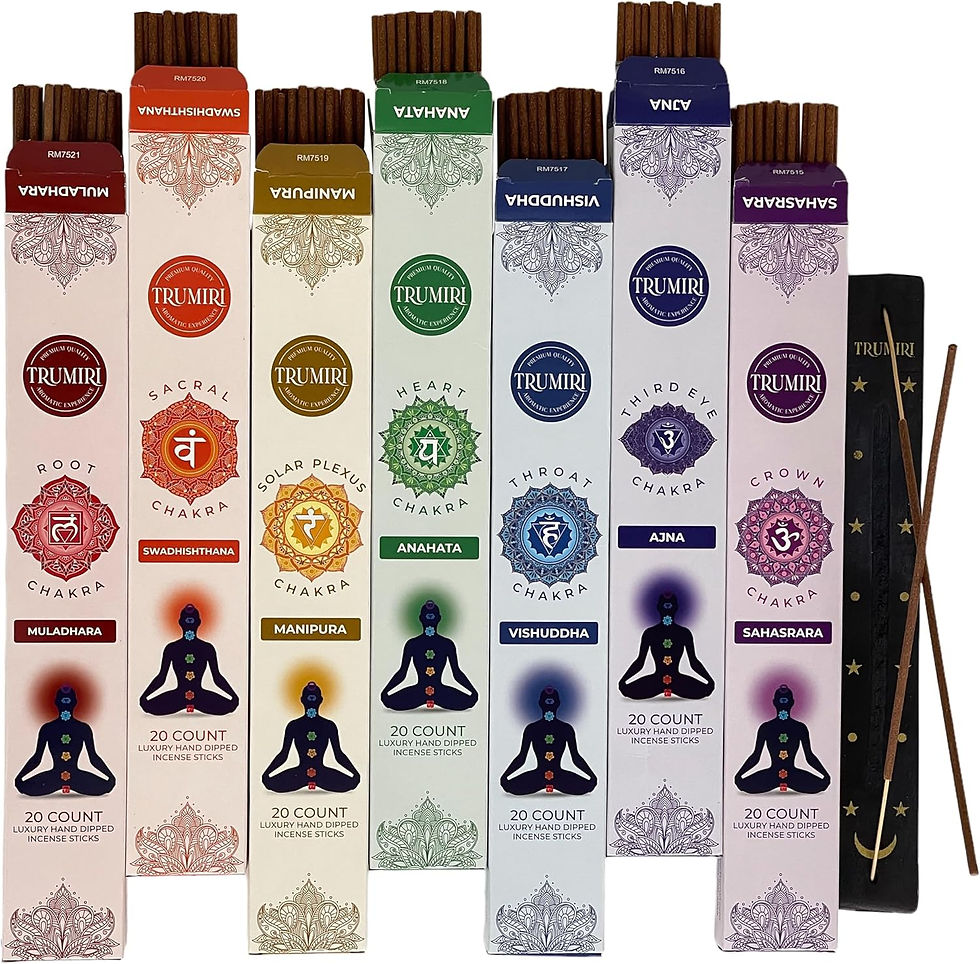
Chakra Incense Sticks - Total 120 Insence-Sticks (20 Insense x 6 Incents) - Incienso Incents-Sticks for 7 Chakra Meditation Muladhara Sacral Manipura Heart BUY ON AMAZON $15.99

Prabhuji’s Gifts - Divine Root Chakra Incense Sticks - Muladhara Root Energy - Handmade Herbal Indian Incense - Agarbatti Sticks for Meditation & Cleansing BUY ON AMAZON $7.99
Root chakra work is simple at its core. It asks you to come back to the body, the breath, and the present environment.
That’s why root chakra incense holds up across very different settings. At home, it supports meditation, journaling, or evening reset. In a studio or wellness room, it can help mark the shift from outside stress to inside practice. In retail, it’s one of the easiest products to explain because customers already know what “grounding” feels like when they need it.
Not every incense sold as grounding is worth using. Some blends smell flat, overly perfumed, or smoky in a way that distracts from the ritual. The useful ones tend to be earthy, woody, and steady rather than sweet or flashy. They don’t try to impress the room. They settle it.
What Is the Root Chakra
The root chakra, or Muladhara, is the foundation point in the chakra system. It’s associated with survival, safety, belonging, and the basic sense that you’re supported by life rather than bracing against it. When people talk about feeling ungrounded, they’re usually describing root chakra themes whether they know the term or not.

The tree root analogy that actually helps
Think of the root chakra like the root system of a tree. The branches can stretch high only if the roots are anchored deep. If the roots are weak, the tree doesn’t stop being a tree, but it becomes easier to shake, dry out, or bend under stress.
That’s a practical way to understand Muladhara. A balanced root chakra doesn’t make life perfect. It gives you a stronger base for handling pressure, change, work demands, money worries, family strain, and the ordinary instability that comes with being human.
Historically, the use of incense for grounding sits inside a very old ritual tradition. The practice dates back over 5,000 years to ancient Nubia around 3300 BCE, where some of the oldest known incense burners were found, and later appears across cultures including Vedic India and ancient Egypt. Queen Hatshepsut also sent expeditions around 1500 BCE to obtain aromatic woods used in ritual life and afterlife practices, as described in this history of incense.
Common signs of balance and imbalance
You don’t need a formal spiritual framework to notice root chakra patterns. These patterns are often recognized quickly when they’re named plainly.
State | What it often feels like |
|---|---|
Balanced | Present, steady, secure, physically aware, less reactive |
Imbalanced | Anxious, disconnected, overextended, tense, preoccupied with basic security |
Overstimulated | Hypervigilant, controlling, unable to relax, stuck in survival mode |
A few signs show up often in practice:
Feeling spacey: You’re physically present, but your attention doesn’t feel fully in the room.
Constant background worry: The mind keeps circling safety, money, work, or stability.
Difficulty settling: Rest doesn’t feel restful because the body never fully powers down.
A stronger sense of support: When root energy is balanced, people usually describe feeling more solid and less easily knocked off center.
Practical rule: If a grounding practice doesn’t help you feel more present in your body, it’s probably too complicated.
This is why root chakra incense can be so effective. It engages the senses directly. You smell wood, resin, root, spice. You breathe more slowly. The body gets a clearer message than it does from abstract thinking alone.
The Aromatic Profile of Grounding Incense
A grounding incense should settle the room within the first few breaths. The profile is usually earthy, woody, resinous, and only lightly spiced. Done well, it creates a sense of weight and steadiness without turning muddy, smoky, or overly sweet.

What grounding scents tend to have in common
The materials that show up again and again in root-focused blends are familiar for a reason. Sandalwood, vetiver, cedarwood, ginger, frankincense, myrrh, and patchouli all bring density, warmth, or dry depth. They pull attention back toward the body instead of scattering it outward.
In practice, sandalwood often forms the base because it burns with a smooth, rounded wood note that helps other ingredients stay coherent. Vetiver adds a rooty, soil-like depth. Cedarwood brings dryness and structure. Ginger, used carefully, keeps the blend awake so it does not feel flat or sleepy. Frankincense and myrrh can add ritual character, but too much resin can make a stick feel heavy in a small treatment room or retail space.
That balance matters. A root chakra incense should smell grounded from the start, then stay stable through the burn. If the opening is pleasant but the drydown turns sharp, perfumey, or ashy, the formula is poorly built for meditative use. I see this often in low-cost private label incense. The first impression sells the stick, but the last twenty minutes determine whether someone burns it again.
Single-note sticks versus blended formulas
Single-note incense can work very well. A clean cedarwood stick is direct and easy to understand. Vetiver can be centering for people who respond well to darker, drier aromas. Patchouli, when it is well sourced, gives a humid earth note that some users find immediately stabilizing.
Blends are usually easier to use consistently.
Here is the practical trade-off:
Single-note incense is useful for personal practice when you already know which material helps you settle.
Blended incense usually performs better in yoga studios, treatment rooms, and shops because it softens extremes and appeals to a wider range of noses.
Resin-forward blends feel more ceremonial and can support slower ritual work, but they often produce a denser smoke and need better ventilation.
Spice-led grounding blends can feel warming and active, though they are less suitable for clients or customers who want a quiet, low-stimulation profile.
For wholesale buyers, this is not just a scent question. It is a sell-through question. A dramatic formula may attract attention at first smell, but a balanced wood-and-resin blend is more likely to earn repeat purchases, fewer scent complaints, and better performance in shared environments. Studios and retailers usually do better with grounding profiles that are recognizable, stable, and easy to recommend.
A good root blend does not need exotic materials or a luxury story. It needs clean raw materials, a consistent burn, and a scent arc that stays centered from lighting to finish.
For readers comparing grounding notes with the rest of the chakra system, this chakra incense guide with scent pairings for each chakra gives useful context.
The best root blends hold steady under real use, on your cushion at home and on a retail shelf.
How to Use Incense in a Root Chakra Ritual
A useful ritual doesn’t need to be ornate. It needs to be repeatable. The point is to give your body the same grounding cues often enough that it starts to recognize them quickly.

Set up the room before you light anything
The typical approach is backward. Incense is lit first, then comes a scramble for a holder, opening a window, and clearing a spot to sit. That breaks the effect.
Prepare the space first. Use a heat-safe holder, move loose paper or fabric away from the burn area, and decide where you’ll sit. If you’re in a small room, crack a window before lighting the stick so the scent can circulate without becoming stale.
If you prefer a denser wood note for grounding practice, this cedarwood incense cones article offers another way to think about scent choice and ritual mood.
A simple ritual that works
Use this when you feel scattered, tense, or mentally overextended.
Choose one clear intention. Keep it short. “I am secure” works. “I return to my body” works too. Long affirmations usually pull you back into thinking instead of sensing.
Light the thicker end if you’re using a stick made in a traditional hand-rolled style. Verified guidance for root chakra formulations recommends igniting the thicker end, allowing it to catch, and letting it self-extinguish after about 30 seconds before placing it on a holder for a grounded session.
Sit with both feet supported. Floor, cushion, chair. It doesn’t matter. What matters is physical contact and an upright but not rigid posture.
Use a short breath pattern. Inhale slowly through the nose, let the belly move, pause briefly, then exhale longer than you inhaled. If your system is agitated, don’t force deep breathing. Smooth breathing is more effective than dramatic breathing.
After a few minutes, bring your attention to simple sensory facts. The weight of your legs. The support under your feet. The temperature of the room. The scent in the air.
This is a good point to add a visual guide if you like practicing with audio or video support.
A few practical adjustments make a difference:
Morning use: Keep the session short and clean. Cedarwood, sandalwood, or a light vetiver blend works well.
Evening use: Choose a quieter profile with more wood and less spice.
Pre-yoga or meditation: Light the incense several minutes before class or practice so the room doesn’t feel freshly smoky when people enter.
If the ritual leaves you dizzier, more stimulated, or irritated by smoke, change the formula or reduce the burn time. Grounding should feel settling, not overwhelming.
Pairing Incense with Crystals and Oils
Incense can stand on its own, but some people respond better when the grounding cue reaches more than one sense at a time. That’s where crystals and oils come in. The goal isn’t to pile on tools. The goal is to create a cleaner signal.
Good pairings for a steadier ritual
For crystals, keep the selection practical. Black tourmaline is often used when you want a stronger sense of energetic boundary. Hematite works well for people who want a denser, more body-based feel. Smoky quartz is a good choice when the room feels mentally cluttered and you want the ritual to feel calming rather than heavy.
Use them directly. Hold one stone in your non-dominant hand while breathing with the incense. Or place it near the base of your seat, journal, or mat. That’s enough. The crystal should support the practice, not become another thing to manage.
Essential oils can deepen the scent field without increasing smoke. Cedarwood and vetiver are strong pairings with root chakra incense because they echo the same earthy and woody profile. Apply a properly diluted oil to pulse points or the soles of the feet if that’s part of your practice, or diffuse it lightly before lighting the incense so the room already feels settled.
When more tools help and when they distract
There’s a clear tipping point where extra elements stop helping. If you’re lighting incense, diffusing three oils, pulling six crystals, and trying to remember a scripted meditation, the ritual turns into work.
A better approach is to build around one primary tool and one secondary tool:
Primary | Secondary | Effect |
|---|---|---|
Incense | Crystal | Good for meditation, journaling, altar work |
Incense | Diluted oil | Good for home grounding routines |
Diffuser | Crystal | Good for smoke-sensitive environments |
I usually suggest this rule. If you’re new to grounding work, start with the incense alone for several sessions. Then add either one crystal or one oil. That makes it easier to tell what helps.
A Sourcing Guide for Retail and Wholesale Buyers
A client walks into a yoga studio after work, picks up a pack labeled “root chakra,” and expects a scent that feels steady, earthy, and clear. If the incense burns harshly, smells overly perfumed, or varies from one order to the next, that trust drops fast. Retailers feel it in repeat sales. Practitioners feel it even sooner in the room.
Shop authentic grounding blends with our Seven Chakra Incense Sticks for balancing energy and daily ritual use.

What to ask a supplier before you commit
Buyers should start with the product itself, not the branding. Ask how the incense is made, what carries the scent, and whether the formula relies on natural powders and resins or a heavy perfume load. A root chakra blend can smell appealing in the carton and still perform poorly once lit.
Smoke output matters just as much as fragrance. A busy metaphysical shop can handle a stronger trail than a treatment room with back-to-back sessions. Ask for samples from the exact production batch if possible, then test them in the same type of space where customers or clients will use them.
I look for four things before I place a larger order:
Cold aroma: The unlit stick should smell grounded and coherent, not sharp, sugary, or chemically sweet.
Burn quality: The stick should stay lit, burn evenly, and leave manageable ash.
Scent consistency: Open more than one pack. If each pack smells different, the formula or storage process is unstable.
Packaging protection: Materials should hold scent without leaking into neighboring products on the shelf.
Margin still matters, especially for studios and small retailers, but poor consistency eats margin quickly through returns, discounting, and weak repeat purchase. Private label can work well here if the supplier can hold scent quality steady across batches and if minimum order quantities fit your cash flow.
Private label strategy that makes sense
Private label incense sells best when the product story matches the actual burn experience. If the box promises grounding and the scent comes across as loud or synthetic, the packaging has done its job and the incense has failed at its job. Buyers who want a practical overview of ordering wholesale, packaging, and setting up inventory can review what to know about starting an incense business and buying wholesale.
For wellness studios, a tighter SKU list usually performs better than a wide one. One dependable root chakra incense, one holder style, and a small number of complementary ritual items are easier to train staff on and easier to reorder. For retailers, the trade-off is different. More variety can raise basket size, but only if the scent families are clearly separated and the shelf does not turn into a wall of near-identical “grounding” products.
Storage is where a lot of otherwise good inventory gets damaged. Keep incense sealed, dry, and away from heat and direct sun. Do not stack open cases beside strong candles or essential oils unless you want the scents to mingle. Earthy blends lose their definition quickly when inventory is handled carelessly.
Wholesale buyers get better results when they test like practitioners. Burn the product. Sit with it for ten minutes. Pay attention to how the room feels after the fragrance settles, because that final impression is what clients and customers remember.
Incense Safety and Ethical Considerations
People often talk about incense as if safety is a small side note. It isn’t. If you burn root chakra incense frequently in treatment rooms, yoga spaces, or small retail environments, ventilation is part of the practice, not an optional extra.
Ventilation is part of the ritual
One verified safety note is especially important for professional settings. A source discussing chakra incense safety points out that incense smoke contains fine particulate matter and states that, for frequent use, studios should ensure proper ventilation, consider low-smoke formulas made with natural binders, or use air purifiers. It also ties that advice to emerging EPA indoor air quality standards in wellness environments, as explained in this incense safety discussion for enclosed spaces.
That guidance lines up with what experienced practitioners already learn by trial and error. A beautiful grounding blend can still be the wrong choice for a small, sealed room or for clients with respiratory sensitivity. In those cases, shorter burn windows, pre-scenting the room before clients enter, or alternating between diffuser use and incense use often works better.
Use a basic safety checklist:
Airflow first: Open a window or create gentle air exchange before the session starts.
Placement matters: Keep burning incense away from drapes, paper goods, treatment linens, and traffic paths.
Watch for sensitivity: If a client coughs, reports irritation, or seems distracted by smoke, stop using that product in-session.
Don’t overburn: A full stick isn’t always necessary. Sometimes a shorter burn gives a cleaner result.
For additional practical guidance on storage, burning, and room setup, Aroma Warehouse’s incense safety page is worth keeping bookmarked.
How to judge quality and sourcing
High-quality incense usually gives itself away in simple ways. The raw scent is coherent. The burn is steady. The smoke doesn’t feel greasy or aggressively perfumed. The ash and scent trail feel natural rather than chemical.
Ethical sourcing matters most with woods and plant materials that carry long harvesting histories. Buyers should ask direct questions about origin, fragrance additions, and whether the supplier can speak clearly about what’s in the blend. If the answer is vague, that’s useful information.
Lower-quality incense often relies on synthetic fragrance to create quick shelf appeal. That may sell once. It rarely creates loyalty in serious wellness settings. People who use incense regularly can tell when a product supports the room and when it merely fills it.
The best standard is simple. Choose incense that respects both the ritual and the lungs of the people in the room.
If you’re choosing root chakra incense for personal practice or for a retail, studio, or wellness setting, Aroma Warehouse carries incense sticks, cones, holders, fragrance oils, and repackaging supplies that fit both home use and wholesale needs.
Frequently Asked Questions
1. How often should you use root chakra incense?
You can use root chakra incense daily, but most people benefit from 5–15 minute sessions. Consistency matters more than duration—short, repeated rituals help train your body to relax and ground faster over time.
2. Can root chakra incense help with anxiety or stress?
Yes, grounding scents like sandalwood, patchouli, and cedarwood are commonly used to calm the nervous system and promote stability. These earthy aromas can help reduce mental overstimulation and bring attention back to the present moment.
3. What time of day is best to burn grounding incense?
Morning is ideal for setting a stable tone for the day, while evening use helps release tension and transition into rest. Choose lighter wood scents in the morning and deeper, richer blends at night.
4. Is root chakra incense safe to use every day?
Daily use is generally safe if you maintain proper ventilation. Burning incense in a well-ventilated space helps prevent smoke buildup and ensures a more comfortable experience.
5. How do I know if a root chakra incense is high quality?
Look for natural ingredients, a smooth and consistent burn, and a scent that remains stable throughout use. High-quality incense typically uses plant-based materials like resins, woods, and essential oils rather than heavy synthetic fragrances.
6. Can beginners use root chakra incense effectively?
Yes. Root chakra incense is one of the easiest entry points into energy work because it engages the senses directly. Even a simple ritual—lighting incense and focusing on your breath—can be effective.


